Parque Seminario (Iguana Park)
Men zou duiven verwachten in een stadspark, maar in Guayaquil houdt een ander reptiel de wacht.
Volledig verhaal ontgrendeld in de tour
 Padaguan / CC BY-SA 3.0, via Wikimedia Commons
Zelfgeleide audiowandeling door Guayaquil — GPS-route, offline afspelen, meeslepende vertelling in 32 talen.
“Guayaquil: Waar smaragdgroene leguanen door stadsparken zwerven en de geschiedenis uit de as ontbrandt.”
Niet de ansichtkaarten. De verhalen die zelfs locals niet kennen — gefluisterd in je oor, precies waar ze gebeurden.
Men zou duiven verwachten in een stadspark, maar in Guayaquil houdt een ander reptiel de wacht.
Onder de grandioze mausolea van de historische begraafplaats van Guayaquil zou een prominent figuur nog steeds taxi's aanroepen.
De naam van de stad zelf, Santiago de Guayaquil, wordt vaak toegeschreven aan een romantische, maar droevige, inheemse legende.
Ontdek elk geheim van Guayaquil
Elk adres, elke onthulling volledig — in je oor, precies waar het gebeurde.
Jij kiest je stops. Jij wandelt. De stem onthult wat de anderen missen.
Je zelfgeleide audiotour van Guayaquil is klaar — kies je bezienswaardigheden, kies je taal en start zodra je aankomt.
KopenLume heeft een ingebouwde augmented-reality-gids. Houd je telefoon omhoog: de camera toont de straat voor je, met een oplichtende pijl over het echte beeld die altijd naar je volgende stop wijst — geen kaart om uit te puzzelen, geen verkeerde afslagen. Zoals alles in Lume werkt het volledig offline.
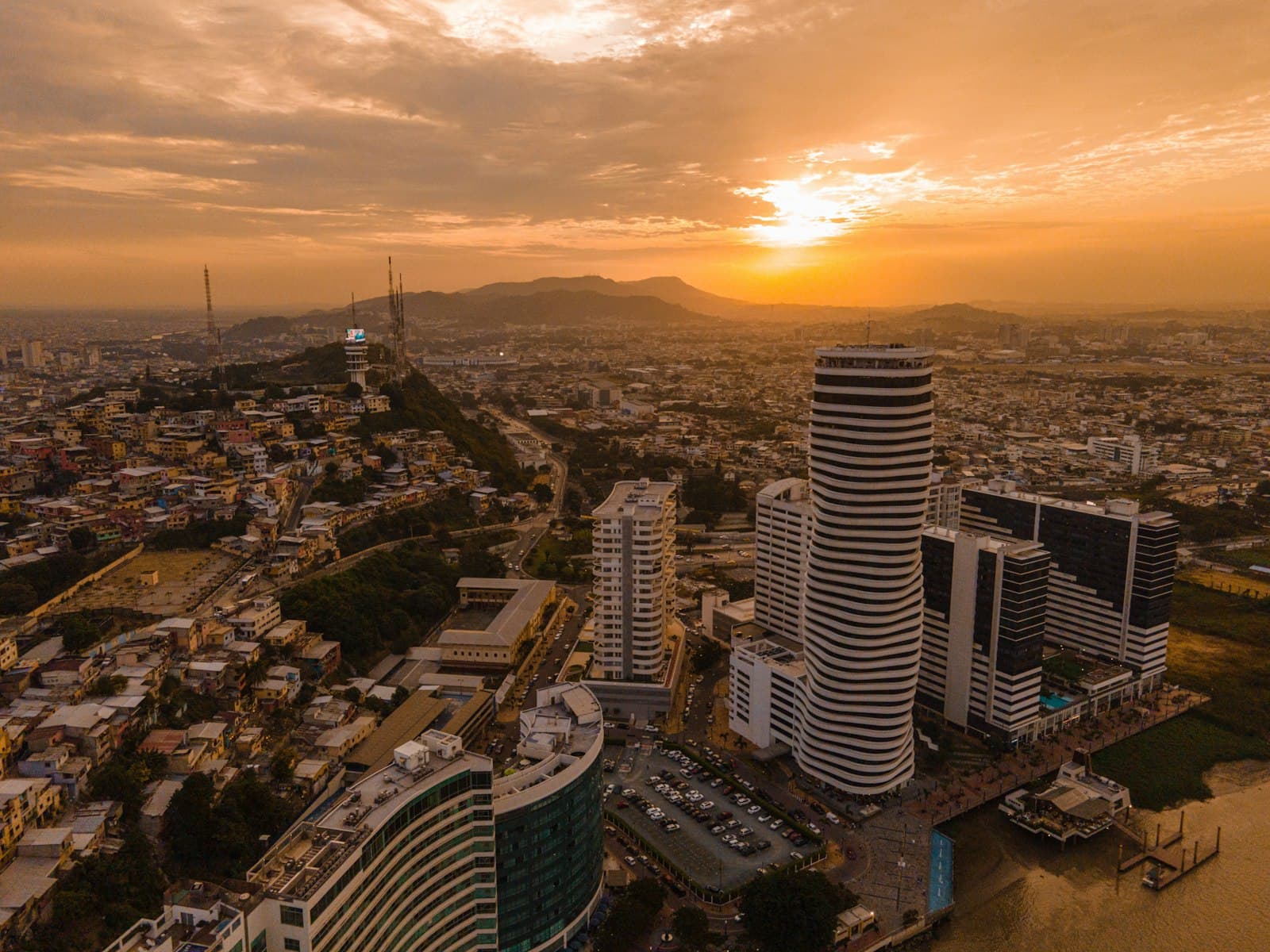
Guayaquil, officieel Santiago de Guayaquil, is de grootste stad van Ecuador en de belangrijkste haven, een bruisend centrum aan de westoever van de Guayas-rivier, ongeveer 72 kilometer stroomopwaarts van de Golf van Guayaquil in de Stille Oceaan. Vaak beschouwd als een drempel naar de Galápagos Eilanden, biedt de stad zelf een boeiende mix van geschiedenis, cultuur en verrassende stedelijke natuur.
Hoewel Guayaquil misschien niet dezelfde koloniale architectonische conservering biedt als zijn tegenhanger in de Andes, Quito, compenseert het met een levendig karakter en een landschap gesmeed door uithoudingsvermogen. De stad heeft aanzienlijke stadsvernieuwing ondergaan, waarbij de waterkant en historische gebieden zijn getransformeerd tot levendige openbare ruimtes. Van de geanimeerde promenades langs de rivier tot de onderscheidende wijken en de bloeiende culinaire scene, Guayaquil nodigt uit tot verkenning, meer dan een simpele tussenstop.
Het gebied waar Guayaquil nu ligt, werd oorspronkelijk bewoond door inheemse groepen, waaronder de Chonos en Huancavilcas, bekend om hun handelsactiviteiten. De Spanjaarden deden verschillende pogingen om hier een nederzetting te stichten, waarbij ze te maken kregen met taai verzet van lokale stammen. De stad werd definitief gesticht op 25 juli 1538 door de Spaanse conquistador Francisco de Orellana, die het "Muy Noble y Muy Leal Ciudad de Santiago de Guayaquil" (Meest Nobele en Meest Loyale Stad van Santiago de Guayaquil) noemde. Het werd in 1547 op de huidige locatie opnieuw gesticht.
Tijdens de koloniale periode groeide Guayaquil snel uit tot een cruciale scheepswerf en haven voor het Spaanse Rijk, en werd het een belangrijk centrum voor handel tussen Azië en Latijns-Amerika. De welvaart maakte het echter ook tot een doelwit voor piratenaanvallen. In 1687 plunderden Engelse en Franse piraten de stad, wat resulteerde in talrijke slachtoffers onder zowel piraten als verdedigers. Een andere aanval in 1709 zag Engelse kapiteins de stad plunderen voordat een uitbraak van gele koorts hen tot een snelle aftocht dwong.
Guayaquil speelde een cruciale rol in de strijd van Ecuador voor onafhankelijkheid van Spanje. Op 9 oktober 1820 verklaarde de stad haar onafhankelijkheid in een bloedeloze revolutie, wat het begin markeerde van de bevrijdingsbeweging voor de hele regio. Gedurende 21 maanden bestond het als de onafhankelijke Vrije Provincie Guayaquil voordat het in 1822 werd geannexeerd door Groot-Colombia. De stad was ook de locatie van de historische Guayaquil Conferentie op 26 juli 1822, waar de Zuid-Amerikaanse bevrijdingsleiders Simón Bolívar en José de San Martín elkaar ontmoetten om de toekomst van het continent te bespreken.
Guayaquil heeft een geschiedenis van veerkracht, aangezien het meerdere keren is herbouwd na verwoestende branden. De Grote Brand van 1896 vernietigde bijvoorbeeld talrijke tempels, drukkerijen, kazernes en fabrieken, wat leidde tot aanzienlijke veranderingen in de architectuur van de stad. Ondanks deze uitdagingen bleef Guayaquil groeien, gevoed door economische expansies zoals de bananenindustrie halverwege de 20e eeuw, die migratie en stedelijke ontwikkeling stimuleerden.
In de afgelopen decennia heeft Guayaquil uitgebreide stadsvernieuwingsprojecten ondergaan, met name de Malecón 2000, een vernieuwde promenade langs de rivier die de openbare ruimtes van de stad heeft getransformeerd en het toerisme nieuw leven heeft ingeblazen. Vandaag de dag wordt Guayaquil erkend als de economische motor van Ecuador en een levendig cultureel centrum, dat zijn diepe verleden combineert met een eigentijds, dynamisch heden.
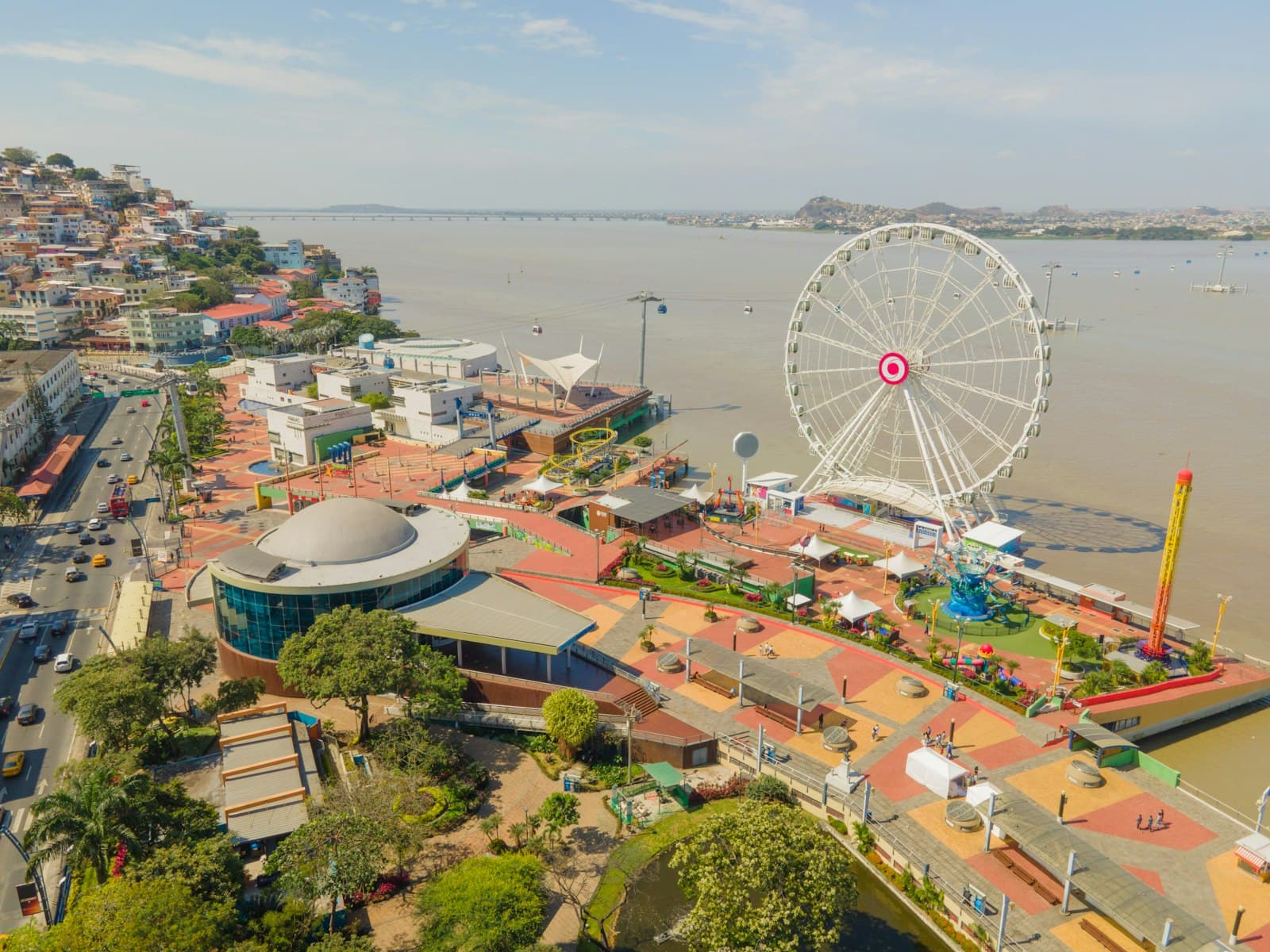
Begin uw verkenning langs de Malecón 2000, een 2,5 kilometer lange gerenoveerde rivierpromenade langs de Guayas-rivier. Deze uitgestrekte promenade beschikt over tuinen, winkels, restaurants en diverse monumenten, en biedt een aangename wandeling met uitzicht op de rivier en de stad. Hoogtepunten zijn het reuzenrad La Perla, dat een weids uitzicht over de stad biedt, vooral na zonsondergang.
Een korte wandeling vanaf de Malecón leidt naar Las Peñas, de oudste wijk van Guayaquil, bekend om zijn kleurrijke houten huizen, met stenen geplaveide paden en artistieke sfeer. Beklim de 444 treden van Cerro Santa Ana in Las Peñas om een vuurtoren en een kleine kerk te bereiken, die een weids uitzicht over de metropool bieden.
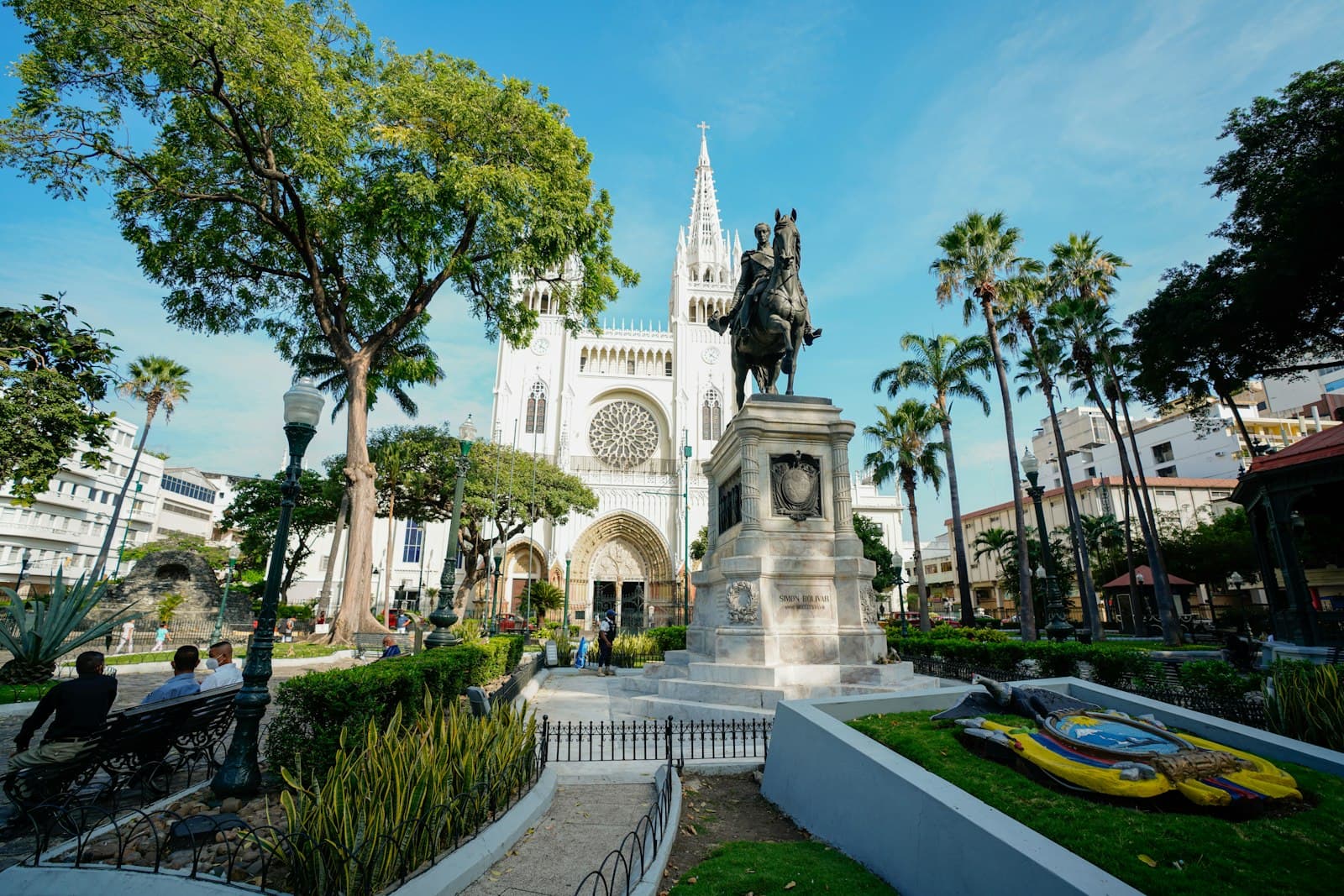
Bezoek voor een werkelijk unieke ervaring Parque Seminario, vaak "Iguana Park" genoemd, waar tientallen grote landleguanen vrij rondlopen tussen de bezoekers. Het park herbergt ook de indrukwekkende neogotische façade van de Metropolitaanse Kathedraal van Guayaquil. Duik in lokale smaken bij Mercado Caraguay, een drukke vismarkt waar vissers hun vangst lossen en verkopers verse gerechten bereiden zoals encebollado en corvina frita.
Overweeg een bezoek aan Parque Histórico Guayaquil, een ecologisch park dat aspecten van het verleden van de stad nabootst, waaronder een dierenpark met kustsoorten en een replica van een oude straat van Guayaquil.
Guayaquil kent het hele jaar door een heet en vochtig klimaat, met temperaturen die over het algemeen variëren van 21°C tot 31°C (69°F tot 88°F). De stad heeft twee verschillende seizoenen: een nat seizoen van januari tot april en een droog seizoen van juni tot november.
Het droge seizoen, van juni tot november, wordt over het algemeen beschouwd als de meest comfortabele tijd om te bezoeken. Gedurende deze maanden kent de stad minder regenval en helderdere luchten, waardoor het ideaal is om te voet te verkennen. Hoewel er een aanhoudende atmosferische nevel, bekend als garua, kan voorkomen, biedt deze natuurlijke schaduw voor dagactiviteiten. Het natte seizoen, van januari tot april, brengt meer zonneschijn, maar ook frequente tropische stortbuien in de late namiddag en hogere luchtvochtigheid.
De lokale munteenheid in Guayaquil is de Amerikaanse dollar. Geldautomaten zijn overal verkrijgbaar, hoewel de opnamelimieten lager kunnen zijn dan u gewend bent. Spaans is de belangrijkste gesproken taal.
Guayaquil is een belangrijk transportcentrum. José Joaquín de Olmedo International Airport (GYY) biedt verbindingen naar diverse internationale en binnenlandse bestemmingen. Veel reizigers gebruiken Guayaquil als een meer betaalbare toegangspoort tot de Galápagos Eilanden, met vluchten die vaak goedkoper zijn dan vanuit Quito. Binnen de stad omvat het openbaar vervoer een bussysteem en de Metrovia, een sneltramsysteem. Taxi's en ridediensten zijn ook beschikbaar.
Bij het verkennen, vooral in drukke gebieden zoals Las Peñas en de Malecón, is het raadzaam om op uw bezittingen te letten en dure items niet te tonen. Blijf 's nachts op goed verlichte straten en overweeg begeleide tours of verkenning overdag als u alleen reist.
Guayaquil — Koreaans, Chinees, Hebreeuws en nog 29 talen, elke stop verteld door een moedertaalspreker. Het grootste taalaanbod van alle zelfgeleide audiotours.
Beschikbaar in: