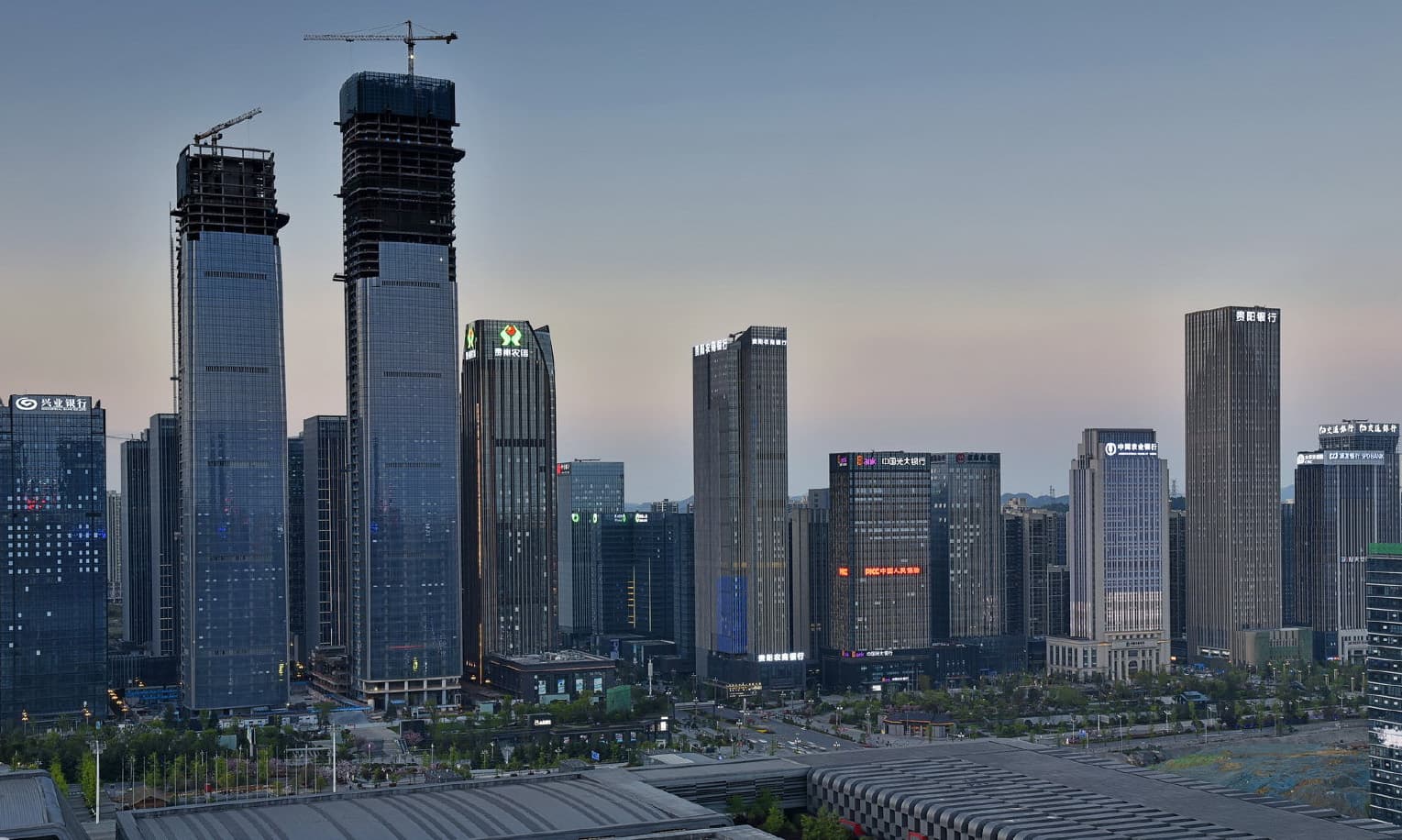
Guiyang, ChinaRyedamien / CC BY-SA 4.0, via Wikimedia Commons
CN

Guiyang

Where karst peaks meet cloud-kissed modernity and a thousand flavors bloom.

The secrets of Guiyang

Guiyang, as no one tells it.

Not the postcards. The stories even locals don't know — whispered in your ear, right where they happened.

3 secrets below. Many more wait inside the tour.
Qianlingshan Park

You might expect a city park to offer a quiet escape, but in Guiyang's largest urban green space, a different kind of local might just snatch your snack.

Full story unlocks in the tour
Qingyan Ancient Town

This ancient town, built entirely of stone, holds a surprising spiritual diversity within its walls.

Full story unlocks in the tour
Guiyang's Night Markets

As the sun sets in Guiyang, the city's true dining rhythm emerges, favoring a unique approach to the evening meal.

Full story unlocks in the tour
The full tour

Discover every secret of Guiyang

Every address, every reveal in full — in your ear, right where it happened.

Get the key to Guiyang

You pick your stops. You walk. The voice reveals what the others miss.

Choose your time

How long do you have in Guiyang?

No tours available yet. Check back soon — we're preparing them.

About Guiyang

The story of Guiyang

Guiyang, the capital of Guizhou Province in southwest China, is a city that frequently delights those encountering it for the first time. Known as the 'Forest City,' it unfolds with abundant vegetation, a gentle climate, and a graceful mingling of contemporary growth with striking natural splendor. Resting on the eastern edge of the Yunnan-Guizhou Plateau, Guiyang extends a refreshing respite, especially celebrated for its cool summers, making it a favored haven from the heat.

While it functions as a significant economic and commercial center with a population exceeding 3 million, Guiyang maintains an easygoing and inviting atmosphere. It is a city where a wide array of ethnic minority groups, including the Miao and Bouyei, contribute to a rich cultural fabric, expressed through spirited traditions, colorful festivals, and distinctive architecture. Guiyang serves as an efficient portal to the broader Guizhou province, connecting travelers to natural marvels like Huangguoshu Waterfall and Fanjing Mountain via its well-developed transportation network.

History

From Military Outpost to Modern Metropolis

The story of Guiyang reaches back centuries, with the valley around the present-day city settled since at least the Spring and Autumn period. Its more formal role began as a military station during the Sui and Tang dynasties in the 7th century, when the area was known as Juzhou. The city, under the name Shunyuan, began to form during the Mongolian Yuan Dynasty between 1279 and 1283.

The name "Guiyang" became established during the Ming Dynasty. When Guizhou officially became a province in 1413, Guiyang was designated its administrative center, transforming it into a political and administrative nexus. This strategic position on the Nanming River, encircled by mountains, allowed command over crucial trade routes connecting central China with the southwestern regions. During the Ming and Qing dynasties, Guiyang blossomed as an important trade center, recognized for local commodities like bamboo, medicinal herbs, and mineral resources.

Guiyang's cultural and religious importance also expanded during these eras, evidenced by the construction of temples such as the Wenmiao Temple (Confucius Temple) in the Ming era and the Hongfu Monastery on Qianling Mountain, founded in 1672. The iconic Jiaxiu Tower, a three-tiered pagoda erected on a rock in the Nanming River, was first constructed in 1598 during the Ming Dynasty and has since been rebuilt multiple times, becoming an enduring emblem of the city.

The city experienced significant expansion during World War II due to the development of China's southwest after the Japanese invasion, and again after economic reforms in the 1990s. In 1949, Guiyang became the capital of Guizhou Province. Today, Guiyang continues to evolve, balancing its historical foundations with contemporary advancements, including its designation as an ecological civilization pilot city and a growing center for big data.

What to see

Begin your exploration at the Jiaxiu Pavilion, Guiyang's most recognizable structure. This elegant three-tiered wooden pagoda, first constructed in 1598, rises from a rock in the Nanming River and is particularly captivating when lit at night. Stroll along the riverside from Hebin Park as evening approaches to observe the city lights dancing on the water.

For a measure of nature and local existence, make your way to Qianlingshan Park. This expansive urban park features Mount Qianling, Hongfu Temple—a Buddhist sanctuary dating back to the 17th century—and a notable population of wild monkeys. You can ascend to the temple for sweeping city views or opt for a cable car ride.

A brief journey outside the city center leads to Qingyan Ancient Town, a well-preserved settlement tracing its origins to the Ming Dynasty. Built entirely of stone, its labyrinthine pathways, city walls, and gates offer a glimpse into traditional architecture and an opportunity to sample local snacks like braised pig's trotters.

Consider a visit to the Guizhou Provincial Museum for an introduction to the region's diverse ethnic heritage and natural history, including impressive dinosaur skeletons and ancient fossils. For a lively evening experience, explore Qingyun Market, a popular night market known for its street food and lively atmosphere.

When to visit

Guiyang enjoys a humid subtropical climate with mild temperatures throughout the year, making it a pleasant destination. The optimal travel season generally extends from March to October. Summers (June to September) are notably cooler than in many other Chinese cities, with average daily highs around 27-28°C (81-82°F) in July and August, offering a welcome reprieve from intense heat. This period also witnesses waterfalls at their most powerful and mountains at their most verdant. While summer is the rainy season, most rainfall occurs in the evenings or at night, rarely disrupting daytime activities. Spring (March to May) and autumn (September to November) offer mild temperatures and stable weather, ideal for both city exploration and day trips. Autumn, particularly September and October, is often recommended for its comfortable temperatures and clearer skies.

Practical

Guiyang Longdongbao International Airport (KWE) serves the city with numerous daily domestic flights and a limited number of international routes. Taxis from the airport to downtown cost approximately ¥60, or you can take the airport shuttle bus for ¥10. The city's public transportation includes an expanding metro system (Guiyang Urban Rail Transit or GYURT), buses, and readily available taxis. Metro fares range from ¥2-8, with children under 1.3 meters riding free and seniors over 70 also enjoying complimentary travel. Ride-hailing applications like Didi are widely used and affordable. High-speed rail connects Guiyang to significant Chinese cities such as Guangzhou, Kunming, Chengdu, and Chongqing.

Mandarin Chinese is the official language, and while English speakers are not widespread, translation applications are highly recommended. Guiyang is recognized for its sour and spicy cuisine, with popular dishes like sour fish soup, Changwang Noodles, and Siwawa. Be sure to protect yourself from UV radiation, as the city sits at about 1000m above sea level.

Good to know
What is Guiyang known for?
Guiyang is known as the 'Forest City' for its abundant greenery and pleasant climate, particularly its cool summers. It is also recognized for its diverse ethnic cultures, spicy and sour cuisine, and as a growing center for big data.
What are the essential foods to try in Guiyang?
Essential Guiyang dishes include Suan Tang Yu (Sour Soup Fish), Changwang Noodles (made with pig intestines and blood pudding), Siwawa (DIY rice wraps with shredded vegetables), and Lian'ai Doufu Guo (Love Tofu, a grilled tofu snack).
Is Guiyang a good base for exploring Guizhou province?
Yes, Guiyang serves as an excellent base for exploring Guizhou province due to its central location and robust transportation network, including high-speed rail and highways, connecting it to attractions like Huangguoshu Waterfall and various ethnic villages.
What is the local language spoken in Guiyang?
Mandarin Chinese is the official and most widely spoken language in Guiyang. Local dialects and minority languages, such as those of the Miao and Bouyei ethnic groups, are also present.
Are there any unique shopping opportunities in Guiyang?
Guiyang offers opportunities to find local crafts such as batik fabrics and silver decorations from ethnic minority groups. Qingyan Ancient Town is also a good spot for souvenir shopping.
What are the transportation options within Guiyang?
Within Guiyang, you can get around using the expanding metro system (Guiyang Urban Rail Transit), public buses, and taxis. Ride-hailing applications like Didi are also widely available and affordable.
Guiyang
From€9.00
No booking · activate anytime · 12h to walk it
Get the key to Guiyang