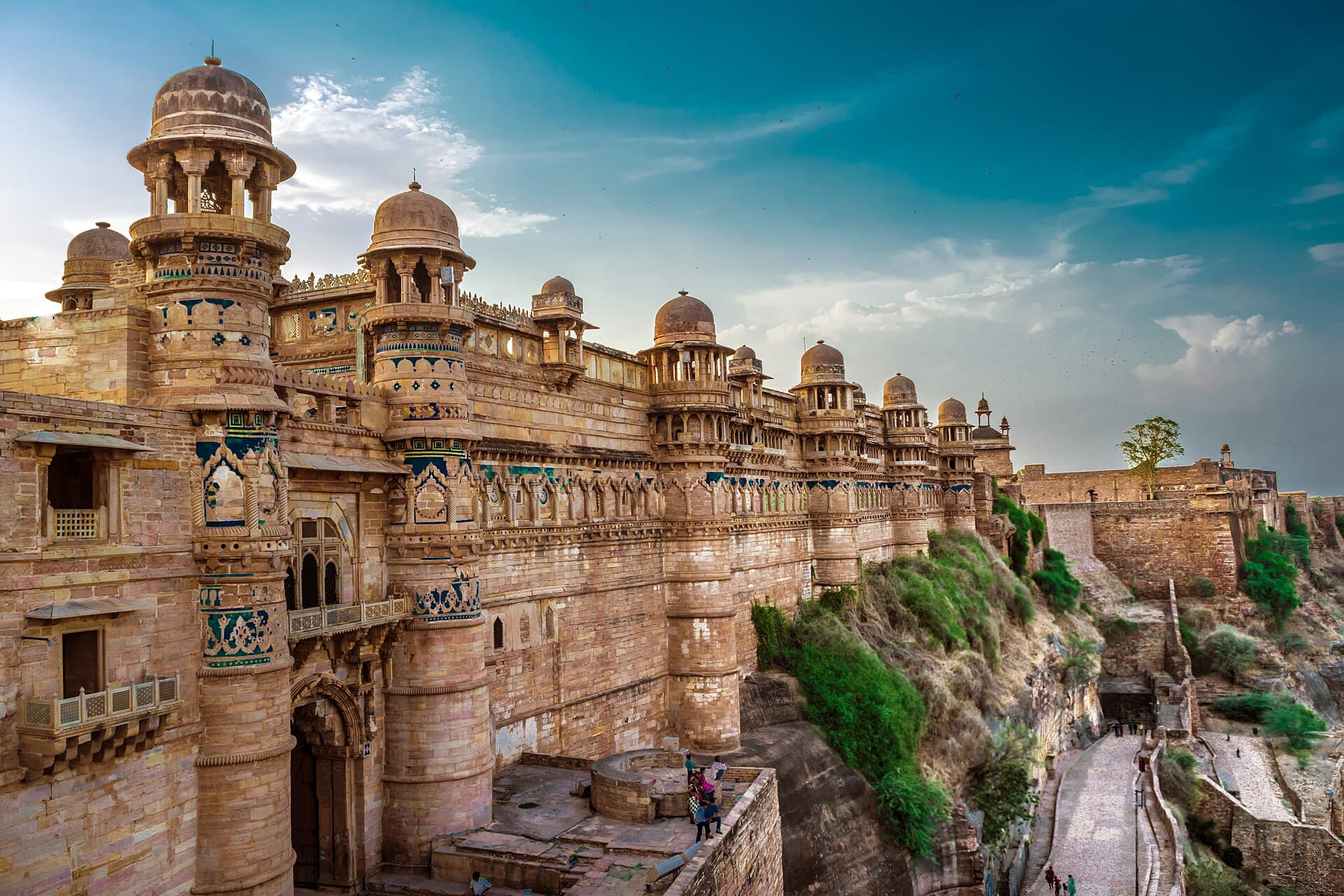
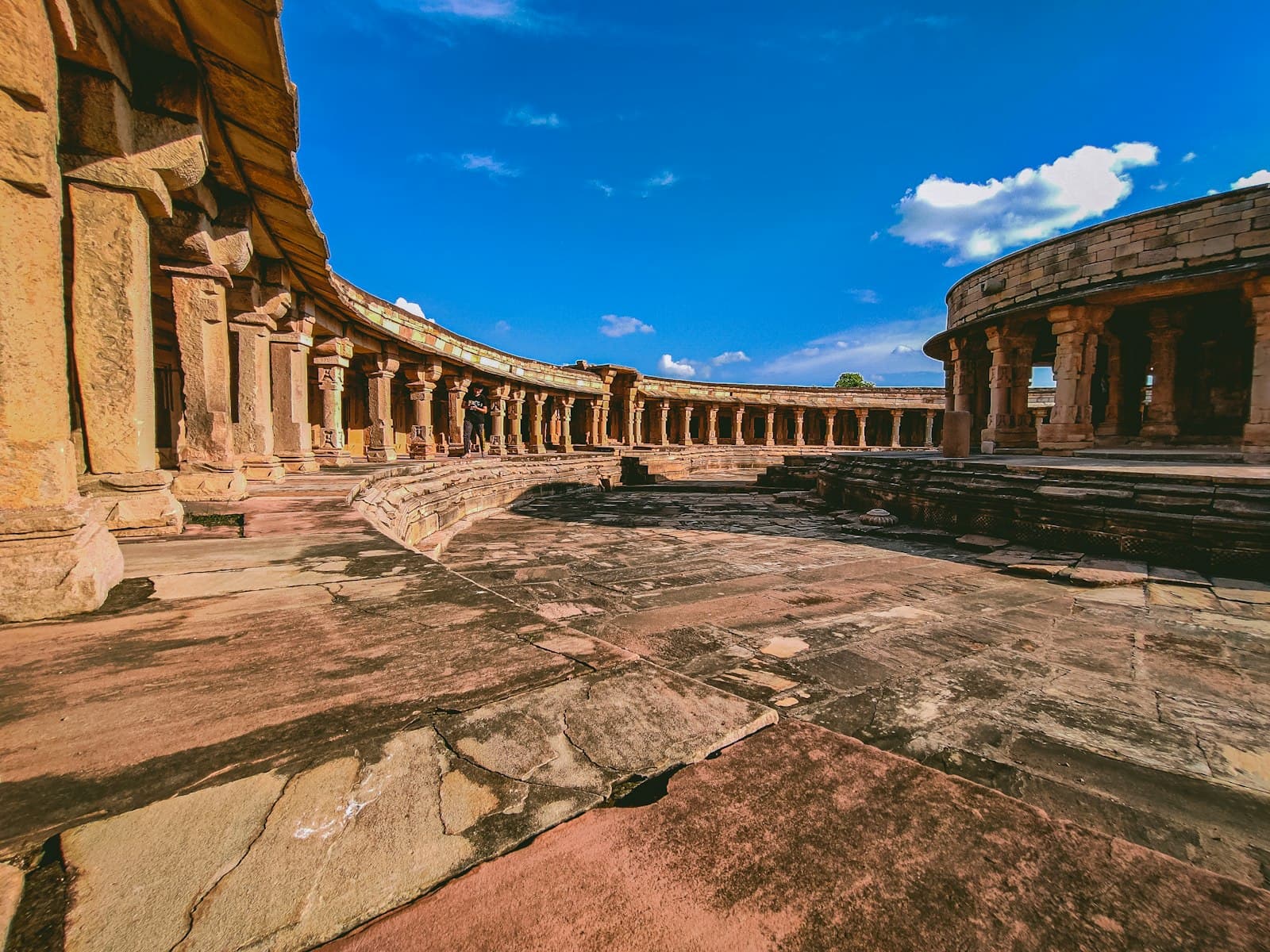
Within the formidable walls of Gwalior Fort, a temple safeguards a mathematical revelation, a cornerstone of our contemporary world.
Anuppyr007 / CC BY-SA 4.0, via Wikimedia CommonsGwalior
“Where ancient stones hum with empires' echoes and melodies drift on the air.”
Gwalior, as no one tells it.
Not the postcards. The stories even locals don't know — whispered in your ear, right where they happened.
Near the resting place of India's legendary musician, Tansen, a particular tree is said to bestow a remarkable gift upon those who taste its leaves.
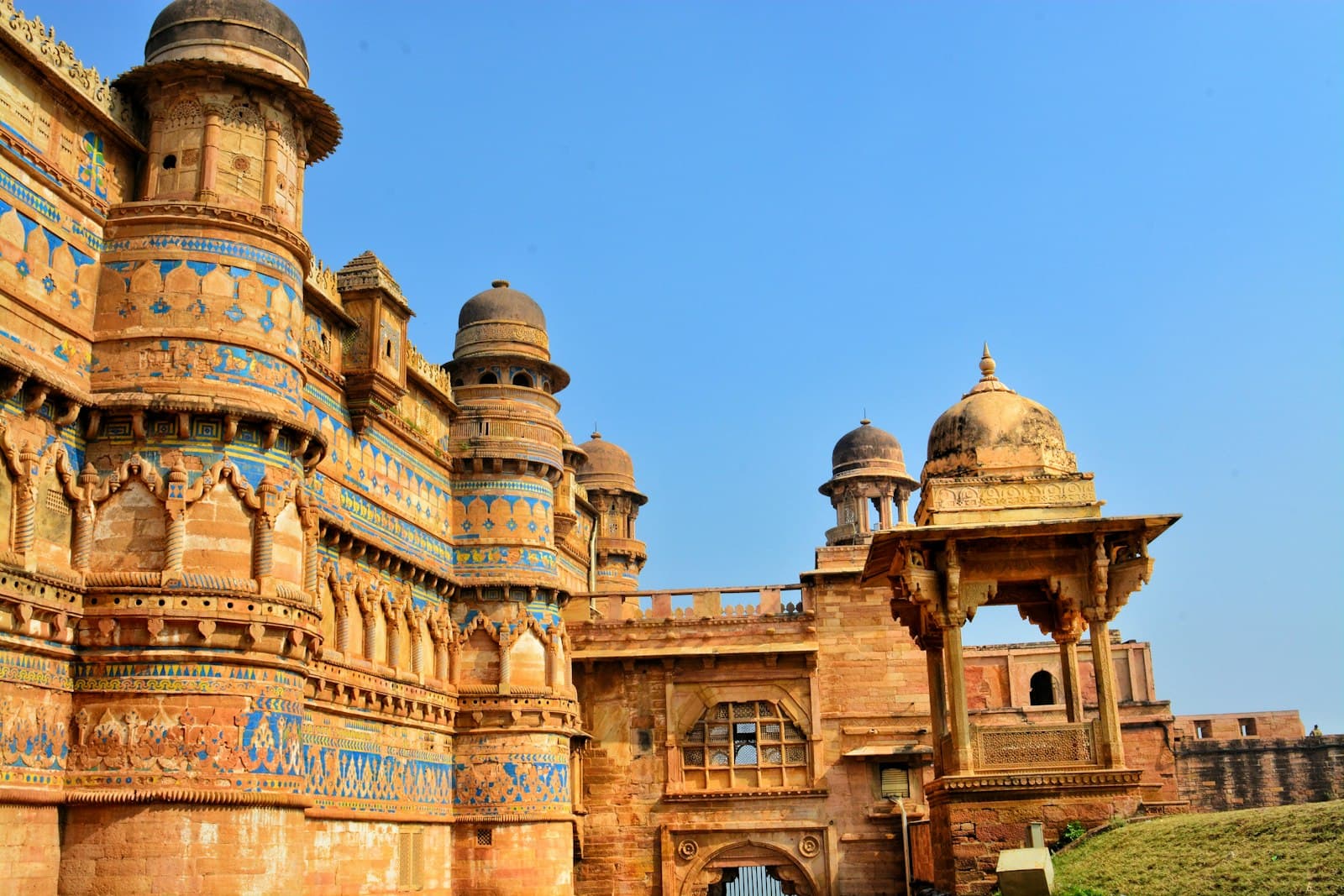
The brilliant blue tiles of the Man Mandir Palace hint at its royal grandeur, but beneath its surface, a darker narrative unfolds in its deep chambers.
Discover every secret of Gwalior
Every address, every reveal in full — in your ear, right where it happened.
You pick your stops. You walk. The voice reveals what the others miss.
How long do you have in Gwalior?
No tours available yet. Check back soon — we're preparing them.
The story of Gwalior
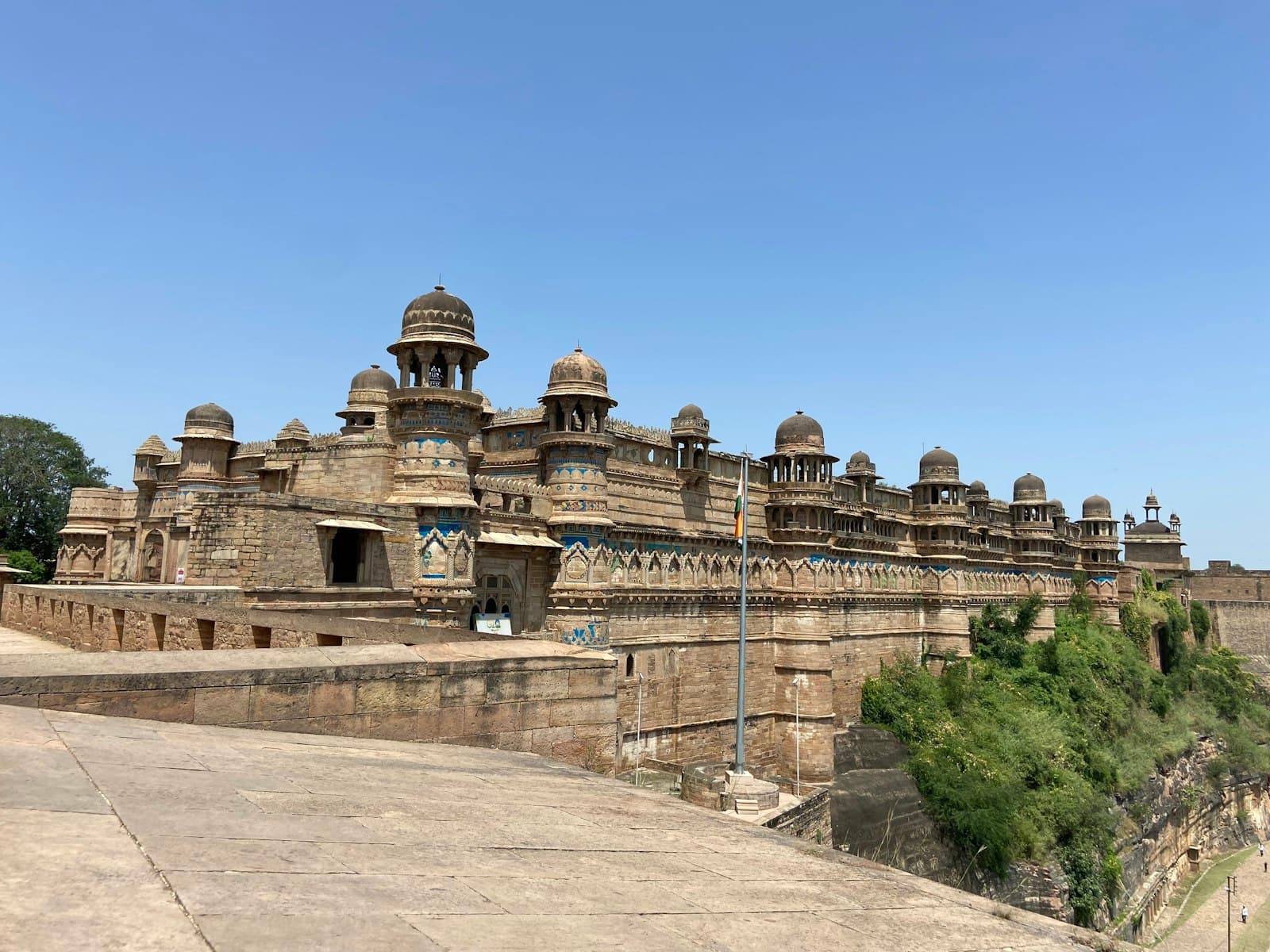
Gwalior, a city in the Indian state of Madhya Pradesh, is a place where history resonates through its ancient architecture and enduring cultural traditions. Mughal Emperor Babur once called the city 'the pearl in the necklace of the forts of India' for its colossal hilltop fort, a testament to centuries of dynastic rule.
Beyond the imposing fortress, Gwalior unfolds as a city of palaces, temples, and tombs, each narrating a chapter of its long past. It is a significant cultural, industrial, and political center, celebrated as India's music city and home to the subcontinent's oldest musical gharana (school of music). Gwalior invites visitors to delve into a lively heritage of art, music, and valor, offering a window into India's royal legacy.
A Legacy Forged in Stone and Song
Gwalior's origins are rooted in legend, tracing back to the 8th century CE when a local chieftain named Suraj Sen was cured of leprosy by the hermit-saint Gwalipa. In gratitude, Suraj Sen founded the city and fort, naming them after the saint. The fort itself, a strategic stronghold, appears in inscriptions as early as 525 CE.
Throughout its long existence, Gwalior has been a prize sought by numerous powerful dynasties. Hindu rulers controlled the city until 1232, after which it frequently changed hands between Muslim and Hindu powers until 1751, when it became a Maratha stronghold. The Tomar clan, under Raja Veer Singh in 1375, ushered in a 'golden period' for Gwalior, during which significant Jain sculptures were carved into the fort's rock faces and the Man Mandir Palace was constructed.
The Scindia dynasty, a Maratha family, rose to prominence in the mid-18th century, controlling a vast territory across northwestern India. Gwalior became a premier princely state under the British Raj, holding a significant position among the 'twenty-one Gun Salute States'. During the Indian Rebellion of 1857, the city was briefly held by rebel forces, including Rani Lakshmibai of Jhansi, who fought bravely there until her death. The Scindias continued to govern Gwalior until India's independence in 1947, when Maharaja Jiwajirao Scindia acceded to the Government of India, and Gwalior was merged into the new state of Madhya Bharat.
Gwalior is also inextricably linked with Indian classical music. It is the birthplace of the legendary musician Tansen, one of the 'nine jewels' in Emperor Akbar's court, and is home to the oldest gharana of Hindustani classical music.
The Gwalior Fort stands as the undeniable centerpiece, a sprawling complex atop a sandstone hill. Explore its palaces like the Man Mandir Palace, known for its intricate blue-tiled mosaic work and subterranean levels, and the Gujari Mahal, now an archaeological museum housing ancient artifacts.
Within the fort, discover ancient temples such as the Sas-Bahu Temple, with its ornate carvings, and the Teli-ka-Mandir, showcasing a distinct blend of North and South Indian architectural styles. Observe the colossal Jain rock-cut sculptures on the fort's cliffs, particularly at Gopachal Parvat and Siddhachal Caves.
Beyond the fort, the Jai Vilas Palace offers a window into royal opulence, with around 40 rooms open to visitors, displaying the Scindia dynasty's grand possessions. Pay homage to musical history at the Tomb of Tansen and the adjacent Tomb of Mohammad Ghaus, both noted for their architecture and tranquil gardens. For a modern architectural marvel, visit the Sun Temple, a contemporary structure built in red sandstone and white marble.
The most pleasant time to visit Gwalior is during the winter months, from October to March. During this period, the weather is warm and dry with clear skies, and temperatures range from approximately 10°C to 29°C, making it ideal for sightseeing and outdoor exploration. December and January offer the coolest temperatures, perfect for exploring the Gwalior Fort on foot. The Tansen Samaroh, a classical music festival, typically takes place in December, adding a cultural highlight to a winter visit.
Gwalior is well-connected by air, rail, and road. Gwalior Airport (GWL) offers domestic flights to major Indian cities. The city is a significant railway junction, with connections to Delhi, Agra, and Bhopal. For local travel, auto-rickshaws are a convenient option, though it's advisable to negotiate the fare before starting your journey as they do not use meters. Ride-hailing apps like Uber or Ola are also available for reliable transport.
Accommodation options range from heritage hotels like the Usha Kiran Palace to various other properties. The Madhya Pradesh Tourism Department (MPTD) offers city tours in a yellow bus, covering major attractions. It's recommended to allocate at least two to three days to fully experience Gwalior's diverse offerings.
- What is Gwalior most known for?
- Gwalior is most known for its majestic hilltop fort, often called 'the pearl in the necklace of the forts of India,' and its deep connection to Indian classical music, being the birthplace of Tansen and home to the oldest *gharana*.
- How many days are enough to explore Gwalior?
- Two to three days are generally considered ideal to explore Gwalior's main attractions, allowing for a thorough experience of the city's diverse offerings.
- What language is spoken in Gwalior?
- The predominant language spoken in Gwalior is Hindi, with approximately 96% of the population speaking it as their first language.
- Is Gwalior safe for solo female travelers?
- Gwalior is generally considered safe for solo female travelers. It is advisable to remain in well-lit areas at night and use reputable transportation options.
- What food is famous in Gwalior?
- Gwalior is known for its local street food, including various *chaat* items, *kachori*, *samosa*, and *laddoos*.
- Which river flows in Gwalior?
- Gwalior is situated on the banks of the Chambal River.