The serene Buddha statue within Seokguram Grotto maintains a perfect internal environment, despite being carved from granite in the 8th century. How did Silla engineers achieve this ancient air conditioning?
Gyeongju
“Where ancient Silla breathes among grass-covered tombs and illuminated palaces.”
Gyeongju, as no one tells it.
Not the postcards. The stories even locals don't know — whispered in your ear, right where they happened.
This 7th-century astronomical observatory is not just an architectural marvel; its construction holds a subtle numerical secret.
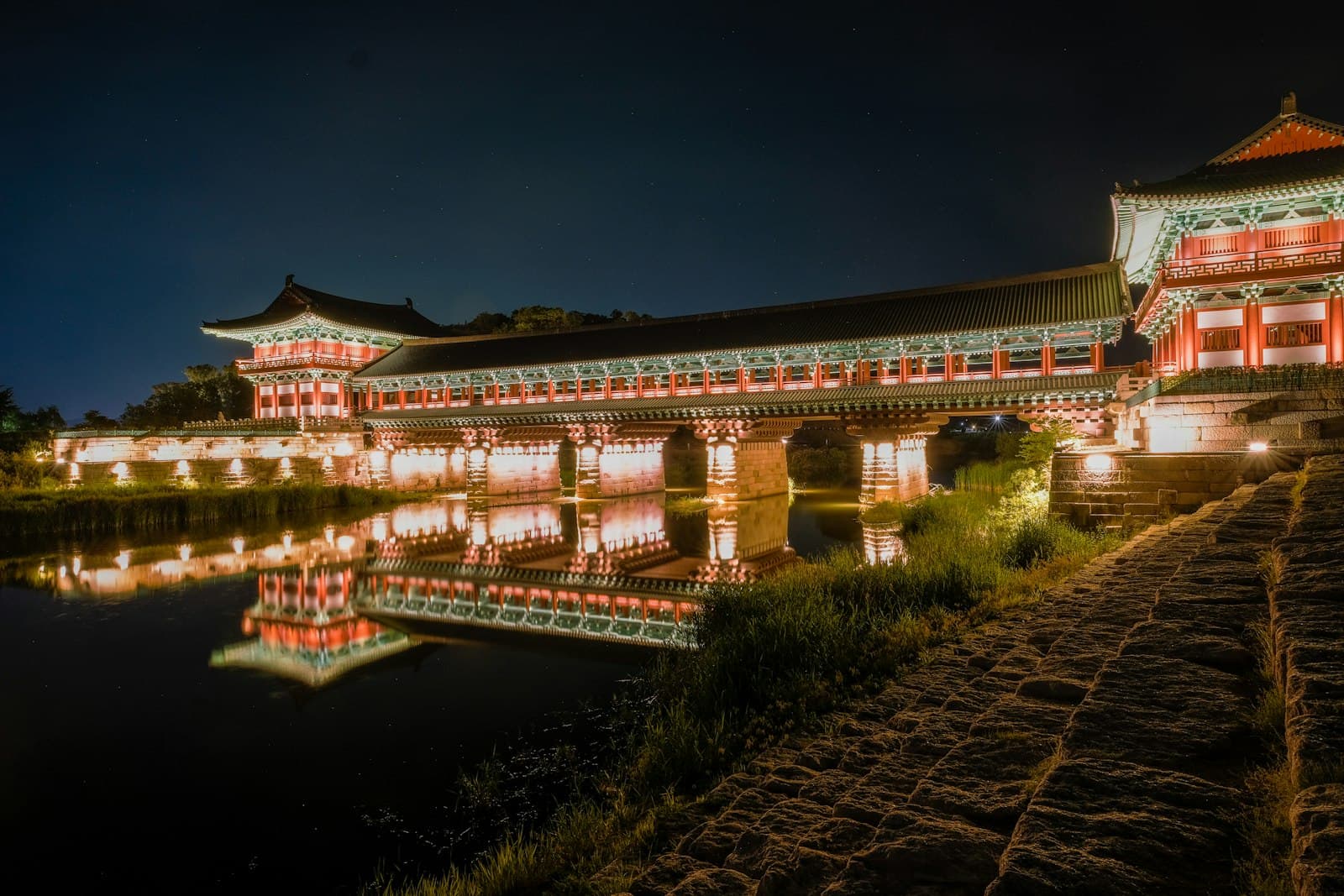
The tranquil Wolji Pond, once a royal playground, was not always as serene as it appears today. Its depths once held a trove of forgotten history.
Discover every secret of Gyeongju
Every address, every reveal in full — in your ear, right where it happened.
You pick your stops. You walk. The voice reveals what the others miss.
How long do you have in Gyeongju?
No tours available yet. Check back soon — we're preparing them.
The story of Gyeongju
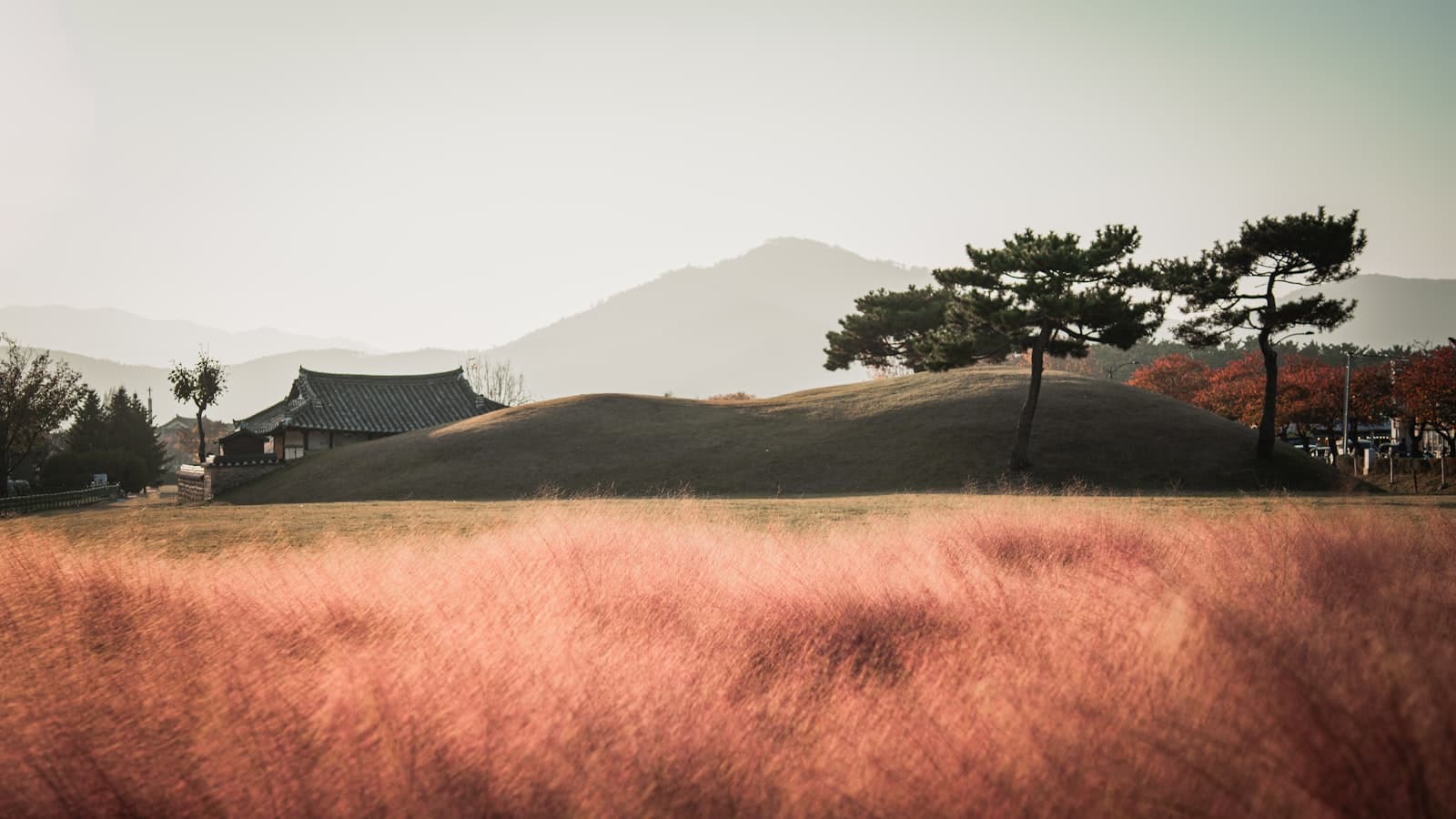
Gyeongju, often called "the museum without walls," is a city where the past is not merely preserved but woven into the fabric of daily life. As the ancient capital of the Silla Kingdom, which reigned for nearly a millennium from 57 BCE to 935 AD, Gyeongju offers a unique journey into Korea's profound heritage. Unlike modern South Korean metropolises, Gyeongju maintains a slower pace, with grassy burial mounds shaping the landscape and ancient temples glowing at sunset.
This historic city, located in southeastern South Korea, is a repository of well-preserved cultural sites, traditional architecture, and a calm, scenic atmosphere. Its significance is recognized globally, with numerous sites inscribed on the UNESCO World Heritage List. Travelers arrive in Gyeongju not for skyscrapers or shopping malls, but to connect with Korea's origins and experience its ancient story firsthand.
The Cradle of Silla
The history of Gyeongju is inextricably linked to the Silla Kingdom, which it served as capital for nearly a thousand years, from 57 BCE to 935 AD. Initially known as Saro-guk, Gyeongju grew from a small tribal state into the political, cultural, and spiritual heart of one of the most powerful kingdoms in Korean history. At its zenith in the 8th century, Gyeongju, then called Seorabeol, was a lively international city, with a population estimated to be as high as one million, rivaling metropolises like Constantinople and Baghdad in its prosperity.
A Millennium of Flourishing Culture
During the Silla period, Gyeongju was a center where culture, science, and the arts blossomed. The city's urban planning during the 7th century even sought to emulate the sophistication of Chang'an (modern-day Xi'an), then the world's largest city. Trade routes connected Silla with China, Japan, and even the Islamic world in West Asia, leading to a boom in religious art and the development of sophisticated craftsmanship. Many of the historic buildings and artifacts still standing today, including grand Buddhist temples, royal tombs, and palace ruins, date back to this golden age.
End of an Era and Modern Rebirth
The Silla Kingdom's long reign eventually ended in 935 AD after a series of peasant revolts. Gyeongju subsequently lost its status as the national capital under the Goryeo and Joseon dynasties, though it remained a regional center. Despite suffering numerous assaults and destruction over the centuries, including the burning of wooden structures at Bulguksa Temple during the Japanese invasions, Gyeongju's historical legacy endured. In 1955, the downtown area was officially designated Gyeongju-si (Gyeongju City), and in 1995, the city and surrounding county were reunited, forming Gyeongju City as it is known today. In 2000, the Gyeongju Historic Areas were designated a UNESCO World Heritage Site, solidifying its importance as a living testament to Korea's ancient past.
Gyeongju presents a remarkable collection of historical sites, many of which are designated UNESCO World Heritage Sites. Begin your exploration at the Daereungwon Tomb Complex, where you can walk among 23 massive, grass-covered royal burial mounds. Experience the Cheonmachong Tomb (Tomb of the Heavenly Horse), the only tomb open to the public, offering a glimpse into Silla burial practices and artifacts.
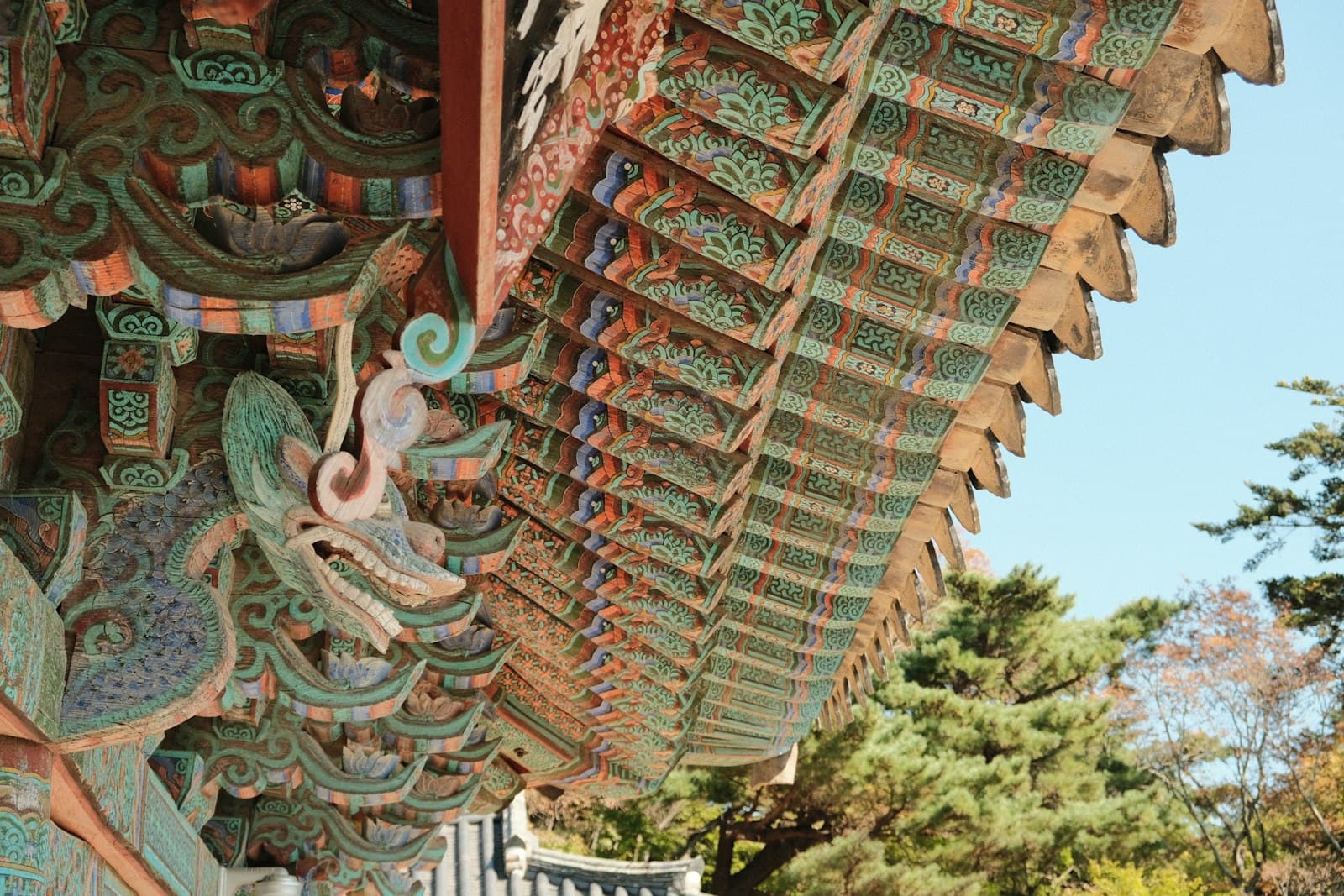
Journey to the foothills of Mount Tohamsan to discover Bulguksa Temple, a masterpiece of Silla Buddhist architecture from the 8th century. Its elegant pagodas, stone bridges, and serene courtyards symbolize the journey to enlightenment. A short distance away lies Seokguram Grotto, an artificial stone cave housing a magnificent granite Buddha statue gazing over the East Sea, considered one of Asia's finest achievements in Buddhist art.
In the city center, visit the Cheomseongdae Observatory, Asia's oldest surviving astronomical observatory, built during the reign of Queen Seondeok in the 7th century. As evening falls, experience the illuminated beauty of Donggung Palace and Wolji Pond (formerly Anapji Pond), a 7th-century royal complex where pavilions reflect on the tranquil water. For a taste of traditional Korean village life, explore Gyeongju Gyochon Traditional Village, home to the historic Choi Clan House and the reconstructed Woljeonggyo Bridge. Finally, delve deeper into Silla's treasures at the Gyeongju National Museum, which houses over 3,000 relics from the Silla period.
Gyeongju experiences four distinct seasons, with spring and autumn generally offering the most pleasant weather for sightseeing. April is particularly popular for its mild temperatures and abundant cherry blossoms, especially around Bomun Lake and the Daereungwon Tomb Complex. October provides a beautiful alternative, with crisp air, comfortable temperatures, and striking autumn foliage, making it ideal for exploring temples like Bulguksa. Summers (June-August) are warm and humid with heavy monsoon rainfall, particularly in July and August, while winters (December-February) are cold and dry, offering a quieter, sometimes snow-covered, experience.
Gyeongju is well-connected by public transportation. From Seoul, the fastest way to reach Gyeongju is by KTX train to Singyeongju Station, a journey of approximately 2 to 2.5 hours. From Singyeongju Station, you'll need to take a bus or taxi to the city center, which is about a 20-30 minute ride. If traveling from Busan, the KTX takes about 30 minutes, or an express bus takes approximately one hour.
Within Gyeongju, many central historic sites are walkable or easily accessible by bicycle. Bike rental shops are available near the express bus terminal and in Gyochon Village. The city also has an efficient local bus system, with routes like Bus 10 and 11 connecting major attractions such as Bulguksa Temple from the Gyeongju Express Bus Terminal. Bus 700 is a good option if arriving at Singyeongju KTX Station, as it travels to the Express Bus Terminal, historic areas, and Bulguksa Temple. T-Money, Cashbee, or Railplus cards can be used for bus fares. Taxis are also readily available and affordable for most in-city rides, and ride-hailing apps like KakaoTaxi are reliable.
- What is Gyeongju famous for?
- Gyeongju is primarily known as the ancient capital of the Silla Kingdom, which ruled for nearly a thousand years. It is famous for its extensive collection of well-preserved historical sites, including royal tombs, Buddhist temples, palace ruins, and cultural artifacts, earning it the nickname "the museum without walls."
- How many days are enough to explore Gyeongju?
- While Gyeongju can be visited as a day trip, especially from Busan, it is recommended to stay 2 to 3 nights to fully experience its allure and explore the highlights at a relaxed pace, allowing time for sites like Bulguksa Temple, Seokguram Grotto, and Namsan Mountain.
- What are the local foods to try in Gyeongju?
- Gyeongju offers several local culinary delights. Be sure to try Hwangnam-ppang (Gyeongju bread), a small pastry filled with sweet red bean paste, and Chalboribbang (sweet barley bread), a chewy barley flour bread also with red bean paste. Ssambap, a meal of rice wrapped in leafy vegetables with numerous side dishes, is another traditional favorite.
- Is Gyeongju walkable?
- Many of Gyeongju's central historic sites are clustered together and are quite walkable. Additionally, cycling is a popular and scenic way to explore areas around the tomb complexes, observatories, and ponds. However, sites like Bulguksa Temple and Seokguram Grotto are further from the city center and require transportation.
- What are the best times to visit Gyeongju for cherry blossoms or autumn foliage?
- For cherry blossoms, the best time to visit Gyeongju is typically April, when the city transforms with blooming trees. For striking autumn foliage, late October to mid-November is ideal, as parks and temple grounds are painted in vivid red, orange, and gold hues.
- What transportation card should I use in Gyeongju?
- You can use a T-Money card, Cashbee card, or Railplus Transport card to pay for local buses in Gyeongju. These cards can be purchased and loaded with credit at convenience stores or train stations.