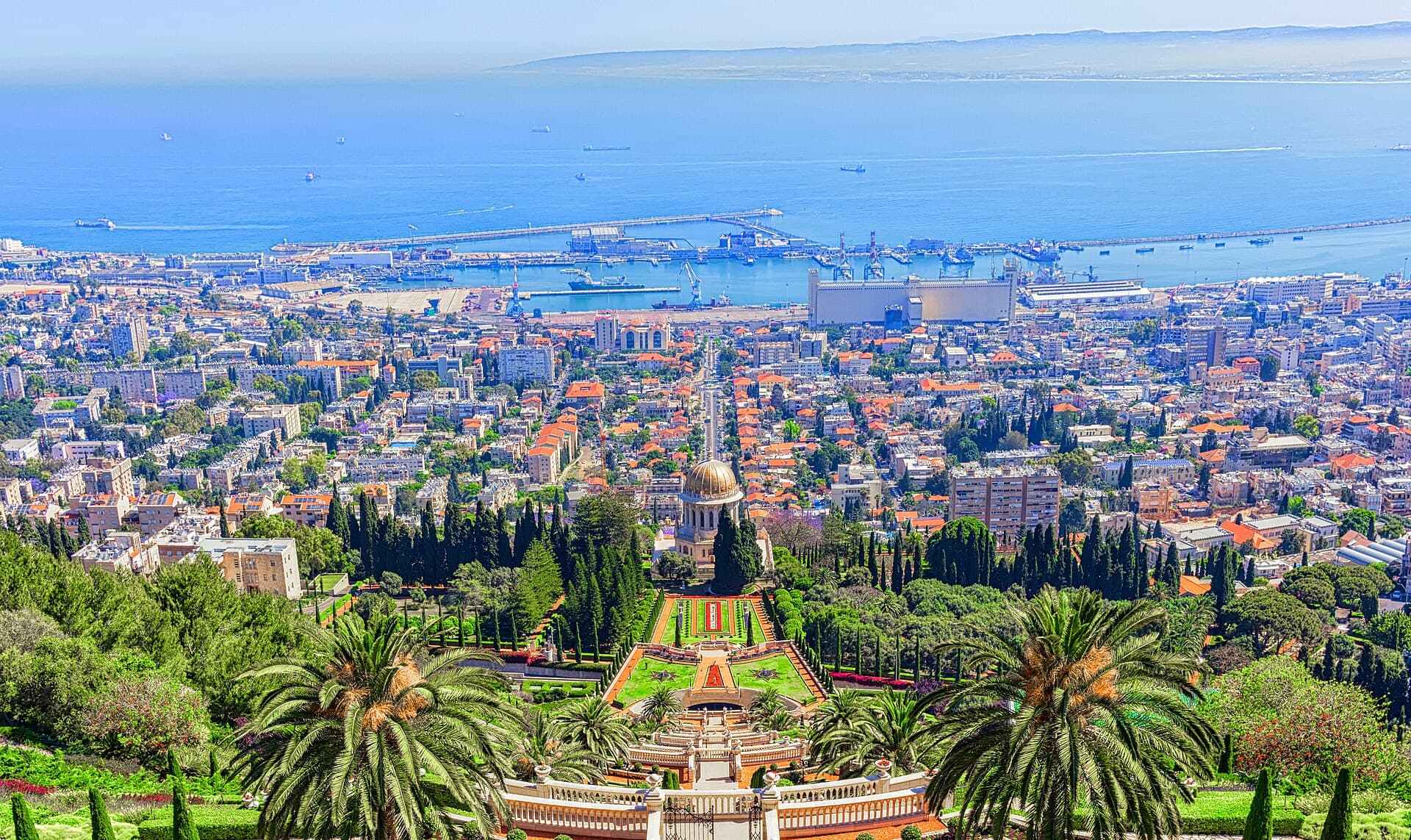
Haïfa, Israel. Ray in Manila / CC BY 2.0, via Wikimedia Commons
IL

Haïfa

Where the slopes of Mount Carmel greet the Mediterranean, a city unfolds, built upon layers of time and shared life.

The secrets of Haïfa

Haïfa, as no one tells it.

Not the postcards. The stories even locals don't know — whispered in your ear, right where they happened.

3 secrets below. Many more wait inside the tour.
The Carmelit

Haifa holds a singular distinction in Israel's public transport, one that ascends directly through the city's very core.

Full story unlocks in the tour
Stella Maris Monastery

Beyond its striking architecture and sweeping views, this monastery on Mount Carmel shares an unexpected link with a distant South American nation.

Full story unlocks in the tour
Wadi Nisnas

This lively Arab neighborhood, celebrated for its food, transforms into a special center of shared festivity towards the close of the year.

Full story unlocks in the tour
The full tour

Discover every secret of Haïfa

Every address, every reveal in full — in your ear, right where it happened.

Get the key to Haïfa

You pick your stops. You walk. The voice reveals what the others miss.

Choose your time

How long do you have in Haïfa?

No tours available yet. Check back soon — we're preparing them.

About Haïfa

The story of Haïfa

Haifa, Israel's third-largest city, spreads across the slopes of Mount Carmel, presenting a distinct fusion of urban existence, natural splendor, and a spirit of communal living. Overlooking the Mediterranean Sea, the city offers expansive views from its terraced neighborhoods, with the renowned Baha'i Gardens flowing down the mountainside.

Often characterized as a 'working city' in contrast to Jerusalem's focus on scholarship and Tel Aviv's on recreation, Haifa is a significant industrial and commercial center, home to Israel's largest port and a flourishing high-tech sector. Yet, it is the city's varied populace—Jews, Muslims, Christians, Druze, and Baháʼís—living side-by-side that truly shapes its essence, fostering an atmosphere of acceptance and consideration. This singular social fabric, combined with its dramatic terrain and coastal situation, makes Haifa a compelling place to explore.

History

Haifa's narrative extends back over 3,000 years, with evidence of settlement from the Late Bronze Age (around the 14th century BCE) at Tell Abu Hawam, a small port city. The city appears in the Talmud around the 1st to 4th centuries CE and was recognized as a dye-making center in the 3rd century CE. Over millennia, Haifa has been shaped by numerous rulers, including the Canaanites, Israelites, Romans, Byzantines, Arabs, Crusaders, and Ottomans.

In the 12th century, the Crusaders conquered Haifa, referring to it as Caiphas. Religious hermits began inhabiting the caves of Mount Carmel, leading to the formation of the Carmelite monastic order in the 13th century. The modern era of Haifa commenced in the late 18th century when Arab ruler Zahir al-Umar rebuilt the town in a new, fortified location. The 19th century witnessed the arrival of German Protestant Templers who established the German Colony, contributing to the city's growth.

Under the British Mandate after World War I, Haifa transformed into a major industrial port city. The British recognized the strategic advantage of Haifa Bay, leading to the construction of a pipeline from Iraq, refineries, and an electric power plant, solidifying Haifa's role as a center for heavy industries. The city's population, both Jewish and Arab, grew considerably during this period. Following the 1948 Palestine War, Haifa became part of the newly established State of Israel. Today, Haifa continues to evolve as a major seaport and a center for high technology, while maintaining its singular cultural diversity.

What to see

Begin your exploration with the magnificent Baháʼí Gardens and Shrine of the Báb, a UNESCO World Heritage site featuring carefully designed terraces descending Mount Carmel. From the Louis Promenade at the summit, enjoy expansive views of the city, the port, and the Mediterranean. Descend to the German Colony, a historic neighborhood with 19th-century Templer buildings now home to restaurants, shops, and galleries.

For a singular urban experience, ride the Carmelit, Israel's only subway, which travels on an incline through the mountain. Explore the Stella Maris Monastery on the western edge of Mount Carmel, known for its vivid interior and the nearby cable car offering scenic journeys down to Bat Galim Beach. Haifa also provides a variety of museums, including the Israel National Museum of Science, Technology and Space (Madatech), the Haifa Museum of Art, and the National Maritime Museum. Do not miss the lively Wadi Nisnas neighborhood, known for its authentic food and cultural events.

When to visit

Haifa experiences a Mediterranean climate with dry, warm summers and mild, wet winters. The most pleasant times to visit are during spring (March to May) and fall (September to November). In spring, temperatures are agreeable, ranging from 17°C to 25°C (63°F to 77°F), and Mount Carmel is adorned with wildflowers. Fall provides a comfortable reprieve from summer warmth, with clear days and temperatures around 25°C (77°F) in October. Summers (May to September) are hot and dry, suitable for beach activities, though visitor numbers are at their highest. Winters (December to February) are mild with more rainfall.

Practical

Haifa is well-served by public transportation. The city's distinct topography means you will often be traveling up and down slopes, making the Carmelit subway and cable car convenient choices. Buses are also widely available, and Haifa is one of the few cities in Israel with public transportation operating on Shabbat (Friday nights and Saturdays). For getting around, consider acquiring a Rav-Kav card for public transport, as buses may not accept cash.

Accommodation in Haifa is generally more affordable than in Tel Aviv or Jerusalem. The city is considered secure, with diverse neighborhoods. While Hebrew is the official language, English is broadly understood, especially in areas frequented by visitors. The local currency is the Israeli New Shekel (ILS).

Good to know
What is Haifa recognized for?
Haifa is recognized for its beautiful Baháʼí Gardens, its standing as a significant port city, and its reputation as an example of coexistence among its diverse Jewish, Muslim, Christian, and Druze populations.
Is Haifa secure for visitors?
Yes, Haifa is generally considered a secure city for visitors. As with any urban area, it is wise to be aware of your surroundings, but the city maintains a low crime rate.
Does Haifa possess a subway system?
Yes, Haifa has the Carmelit, Israel's only subway system. It is a unique funicular that travels on an incline, connecting the lower city to the upper neighborhoods on Mount Carmel.
What are the Baháʼí Gardens?
The Baháʼí Gardens are a UNESCO World Heritage site in Haifa, comprising 19 terraced gardens that descend the slopes of Mount Carmel, culminating at the gold-domed Shrine of the Báb, a sacred place for the Baháʼí Faith.
When is the most opportune time to visit Haifa's beaches?
The most opportune time for beach and warm-weather activities in Haifa is from late May through early July, when sea temperatures are ideal and summer crowds have not yet reached their peak.
Is public transportation accessible on Shabbat in Haifa?
Yes, Haifa is one of the few cities in Israel where public transportation, specifically buses, operates on Shabbat (Friday nights and Saturdays).
Haïfa
From€9.00
No booking · activate anytime · 12h to walk it
Get the key to Haïfa