Mercado Matutino de Hakodate
Puedes comer un tazón de mariscos donde el calamar parece bailar.
La historia completa se desbloquea en el tour
 U.S. Navy photo / public domain, via Wikimedia Commons
Tour de audio autoguiado de Hakodate — ruta GPS a pie, reproducción offline, narración en 32 idiomas.
“Donde el espíritu pionero de Hokkaido se encuentra con el cautivador resplandor de un puerto.”
No las postales. Las historias que ni los locales conocen — al oído, justo donde ocurrieron.
Puedes comer un tazón de mariscos donde el calamar parece bailar.
Este grandioso edificio de estilo colonial ofrece más que solo recorridos históricos.
Más allá de sus aguas terapéuticas, este balneario de aguas termales tiene algunos residentes inusuales.
Descubre todos los secretos de Hakodate
Cada dirección, cada revelación al completo — a tu oído, justo donde ocurrió.
Eliges tus paradas. Caminas. La voz te revela lo que los demás ignoran.
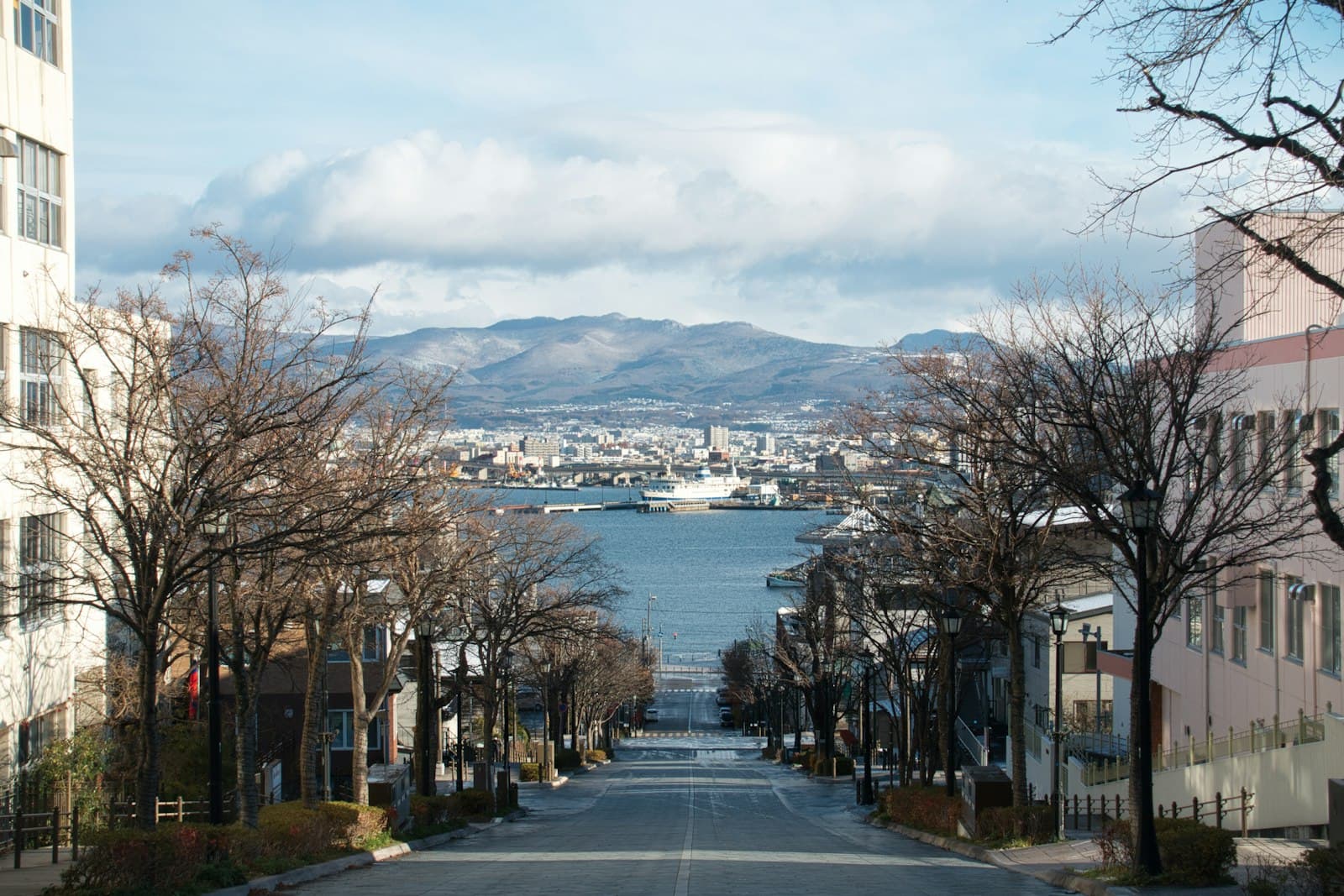


Tu tour de audioguía por Hakodate te espera — elige tus lugares, tu idioma y empieza al llegar.
ComprarLume incluye una guía de realidad aumentada. Levanta el móvil y su cámara muestra la calle que tienes delante, con una flecha luminosa sobre la imagen real que siempre apunta a tu próxima parada — sin mapas que descifrar, sin giros equivocados. Como todo en Lume, funciona completamente sin conexión.
Hakodate, una histórica ciudad portuaria en el extremo sur de Hokkaido, presenta una mezcla distintiva de esplendor natural e influencia internacional. Su singular forma de reloj de arena, enmarcada por dos bahías, resulta particularmente impactante desde arriba. La atmósfera de la ciudad es acogedora y relajada, un suave contraste con las bulliciosas metrópolis del Japón continental.
Antiguamente un pequeño pueblo pesquero, Hakodate floreció hasta convertirse en un puerto significativo, siendo uno de los primeros en Japón en abrirse al comercio exterior en 1854. Esta temprana exposición a Occidente sigue siendo visible en su arquitectura y paisaje cultural. Hoy en día, Hakodate es célebre por sus mariscos frescos, sus dramáticas vistas y una encantadora fusión de herencia japonesa y occidental.
Los orígenes de Hakodate se remontan al pueblo Ainu, que originalmente pobló Hokkaido. El nombre de la ciudad en sí puede derivar de una palabra Ainu, hak-casi, que significa 'fortaleza poco profunda', o de la palabra japonesa para 'caja' o 'edificio', refiriéndose a un castillo del siglo XV. La historia registrada de Hakodate comenzó en 1454 cuando Kono Kaganokami Masamichi construyó una gran casa señorial en el pueblo pesquero de Usukeshi.
Durante siglos, Hakodate siguió siendo un pequeño asentamiento centrado en la pesca. Sin embargo, su destino cambió drásticamente a mediados del siglo XIX. En 1854, bajo la presión de Estados Unidos, Japón puso fin a su largo período de aislamiento y abrió tres puertos al comercio internacional: Nagasaki, Yokohama y Hakodate. Este momento crucial transformó Hakodate en una puerta de entrada para comerciantes, marineros y burócratas occidentales, lo que llevó a una rápida afluencia de cultura y tecnología extranjeras.
Durante el período Meiji, Hakodate floreció como centro de diplomacia, comercio y cultura. Se construyeron edificios de estilo occidental, incluidos consulados, iglesias y residencias, particularmente en el distrito de Motomachi, que aún conserva muchos testimonios arquitectónicos de esta era. Este período también vio a Hakodate desempeñar un papel único en la historia japonesa durante la Guerra Civil Boshin (1868–1869). Los clanes leales al shogunato, después de una serie de derrotas, se retiraron a Hokkaido (entonces llamada Ezo) y establecieron la efímera República de Ezo.
La famosa Fortaleza de Goryokaku, un fuerte en forma de estrella de cinco puntas diseñado por Ayasaburo Takeda, sirvió como bastión para los republicanos. En junio de 1869, las fuerzas imperiales conquistaron la fortaleza, poniendo fin a la república y a la guerra civil. Hoy, Goryokaku es un parque, su distintiva forma de estrella se aprecia mejor desde la Torre Goryokaku, que también alberga una exposición sobre la historia del fuerte.
Hakodate enfrentó desafíos significativos, incluido el Gran Incendio de 1934, que devastó el centro de la ciudad. La posterior reconstrucción resultó en una fusión arquitectónica única, particularmente evidente en Motomachi, donde muchos edificios presentan una mezcla de estilos japonés y occidental. El primer piso a menudo conservaba elementos japoneses tradicionales, mientras que el segundo piso adoptaba diseños occidentales para el entretenimiento, presentando una fachada moderna e internacional desde el mar. Hoy en día, Hakodate sigue siendo una ciudad importante en Hokkaido, conocida por sus pintorescos paisajes, profundidad histórica y animada cultura local.
Comienza tu exploración con la icónica vista nocturna desde el Monte Hakodate. Accesible en teleférico, coche o sendero, la cima ofrece una vista panorámica de la ciudad, que se asemeja a un reloj de arena brillante entre dos bahías. Para una perspectiva diferente, asciende a la Torre Goryokaku para apreciar la singular forma de estrella de cinco puntas del Parque Goryokaku, especialmente impactante durante la temporada de cerezos en flor a finales de abril y principios de mayo.
Pasea por el distrito de Motomachi, una zona histórica que muestra el pasado internacional de Hakodate con su colección de edificios de estilo occidental, incluyendo el Antiguo Salón Público del Distrito de Hakodate, la Iglesia Ortodoxa Rusa y el Antiguo Consulado Británico. Los Almacenes de Ladrillo Rojo Kanemori en la Zona de la Bahía, que alguna vez fueron almacenes de comercio marítimo, ahora albergan tiendas y restaurantes, ofreciendo una mezcla de historia y ocio moderno.
Experimenta la animada atmósfera del Mercado Matutino de Hakodate (Asaichi), donde puedes probar mariscos frescos, incluido el famoso 'Dancing Squid Don'. Para relajarte, visita Yunokawa Onsen, uno de los principales balnearios de aguas termales de Hokkaido, que ofrece aguas terapéuticas y la oportunidad de observar monos amantes de las aguas termales en invierno. Un paseo en el Tranvía de la Ciudad de Hakodate ofrece una forma encantadora y conveniente de navegar entre muchas de estas atracciones.
Hakodate se disfruta durante todo el año, con cada estación ofreciendo experiencias distintas. De finales de abril a mediados de mayo es ideal para presenciar los célebres cerezos en flor en el Fuerte Goryokaku. Octubre trae un aire fresco de otoño, un vibrante follaje otoñal y algunos de los cielos más claros para admirar el paisaje nocturno de Hakodate. El verano (julio a agosto) ofrece temperaturas agradablemente frescas, lo que lo convierte en un escape cómodo del calor del Japón continental, aunque puede experimentar lluvias ligeras. El invierno, de diciembre a febrero, transforma la ciudad en un paraíso nevado, con oportunidades para actividades invernales y visitas a onsen.
Hakodate es accesible por aire, ferrocarril, carretera y mar. El Aeropuerto de Hakodate ofrece vuelos directos desde las principales ciudades japonesas. El Shinkansen de Hokkaido conecta Tokio con la Estación Shin-Hakodate-Hokuto en aproximadamente cuatro horas, con un tren lanzadera, el Hakodate Liner, que completa el viaje a la Estación de Hakodate en unos 20 minutos.
Dentro de la ciudad, el Tranvía de la Ciudad de Hakodate es una forma conveniente de llegar a la mayoría de los principales lugares turísticos, incluyendo la Estación de Hakodate, Motomachi, la Zona de la Bahía, Goryokaku y Yunokawa. Un pase de un día para el tranvía cuesta 600 yenes para adultos y 300 yenes para niños, ofreciendo viajes ilimitados. También hay disponibles pases combinados de tranvía y autobús. Para comer, el Mercado Matutino de Hakodate es un lugar popular para mariscos frescos. Para la vida nocturna, considera un tour guiado de bares para experimentar izakayas y bares locales.
Hakodate en coreano, en chino o en hebreo — y 29 idiomas más, cada parada narrada por una voz nativa. La mayor variedad de idiomas de cualquier audioguía autoguiada.
Disponible en: