Templo Hoysaleswara
O Templo Hoysaleswara exibe milhares de esculturas intrincadas, mas um detalhe sutil revela uma filosofia artística surpreendente.
História completa desbloqueada no tour
 Ms Sarah Welch / CC0, via Wikimedia Commons
Tour de áudio autoguiado por Halebidu — rota GPS a pé, reprodução offline, narração envolvente em 32 idiomas.
“Onde a pedra sussurra epopeias, e a história respira em entalhes intrincados.”
Não os postais. As histórias que nem os locais conhecem — sussurradas ao seu ouvido, exatamente onde aconteceram.
O Templo Hoysaleswara exibe milhares de esculturas intrincadas, mas um detalhe sutil revela uma filosofia artística surpreendente.
Entre os grandiosos templos de Halebidu, um se destaca por sua história de origem única, ligada a uma mulher poderosa.
Os detalhes dos frisos nas paredes externas do Templo Hoysaleswara retratam uma vasta gama de elefantes, mas um olhar mais atento revela um fato surpreendente sobre sua representação.
Descubra cada segredo de Halebidu
Cada endereço, cada revelação na íntegra — no seu ouvido, exatamente onde aconteceu.
Você escolhe as suas paragens. Você caminha. A voz revela o que os outros perdem.


O seu tour áudio autoguiado de Halebidu está pronto — escolha os seus pontos de interesse, selecione o seu idioma e comece no momento em que chegar.
ComprarA Lume inclui um guia de realidade aumentada. Levante o telemóvel: a câmara mostra a rua à sua frente, com uma seta luminosa sobreposta à imagem real que aponta sempre para a sua próxima paragem — sem mapa para decifrar, sem voltas erradas. Como tudo na Lume, funciona totalmente offline.
Halebidu, outrora conhecida como Dwarasamudra, que significa "entrada do oceano" ou "antiga capital", é uma cidade no distrito de Hassan, Karnataka, Índia. Este sítio histórico serviu como capital real do Império Hoysala do século XI ao XIV, e hoje é um testemunho de sua excepcional habilidade artística e arquitetônica.
A cidade é renomada por seus templos Hoysala, particularmente o Templo Hoysaleswara, celebrado mundialmente por suas intrincadas esculturas e detalhes esculturais. Uma visita a Halebidu oferece uma jornada ao passado do sul da Índia, onde devoção, arte e história estão gravadas em cada pedra. Os templos, juntamente com outros em Belur e Somnathapura, são considerados obras-primas do artesanato medieval e estão na Lista Provisória do Patrimônio Mundial da UNESCO.
Halebidu, originalmente chamada Dwarasamudra, tornou-se a capital do Império Hoysala no século XI. Os Hoysalas, que governaram aproximadamente de 1006 a 1346 d.C., foram uma dinastia poderosa no sul do Decão. A cidade foi construída perto de um grande lago artificial, também chamado Dorasamudra, que provavelmente foi criado pelos Rashtrakutas no século IX. Os primeiros reis Hoysala, com o apoio de governadores, mercadores e artesãos, expandiram grandemente este reservatório e construíram grandes templos hindus e jainistas até o século XII.
O período Hoysala, que abrange os séculos X a XIV, deixou uma marca indelével em Halebidu através de seu estilo arquitetônico único. O Rei Vishnuvardhana encomendou o Templo Hoysaleswara no século XII, um projeto que levou quase um século para ser concluído. Este templo, dedicado ao Senhor Shiva, e o Templo Kedareswara, também dedicado ao Senhor Shiva, exemplificam o auge da arte Hoysala. A arquitetura é caracterizada por esculturas intrincadas, relevos elaborados e plataformas em forma de estrela, frequentemente feitas de pedra-sabão. Essas estruturas não serviram apenas como locais de culto, mas também como centros de atividades culturais e administrativas.
A prosperidade de Dwarasamudra foi tragicamente interrompida no século XIV, quando a cidade foi saqueada e pilhada duas vezes pelas forças do Sultanato de Deli Turco-Persa, liderado por Malik Kafur. Essas invasões levaram ao declínio da dinastia Hoysala e à eventual ruína da cidade, ganhando o nome de 'Halebidu', que significa 'antiga capital' ou 'cidade em ruínas'. Apesar da destruição, as maravilhas arquitetônicas perduraram, e os esforços de restauração começaram no início do século XIX para preservar esses monumentos históricos. Hoje, Halebidu, juntamente com Belur e Somnathapura, é reconhecida por suas significativas contribuições à arquitetura Hoysala e é um testemunho de uma era gloriosa passada.
As principais atrações de Halebidu são seus magníficos templos Hoysala, renomados por suas esculturas detalhadas. O Templo Hoysaleswara é uma obra-prima dedicada ao Senhor Shiva, apresentando santuários gêmeos para Hoysaleswara e Shantaleswara (nomeados em homenagem ao Rei Vishnuvardhana e à Rainha Shantala Devi). Este templo, construído sobre uma plataforma em forma de estrela, exibe uma extraordinária variedade de esculturas em suas paredes externas, retratando divindades, seres celestiais, cenas mitológicas do Ramayana e Mahabharata, guerreiros e animais. O volume e a complexidade dessas esculturas são notáveis, com duas esculturas idênticas.
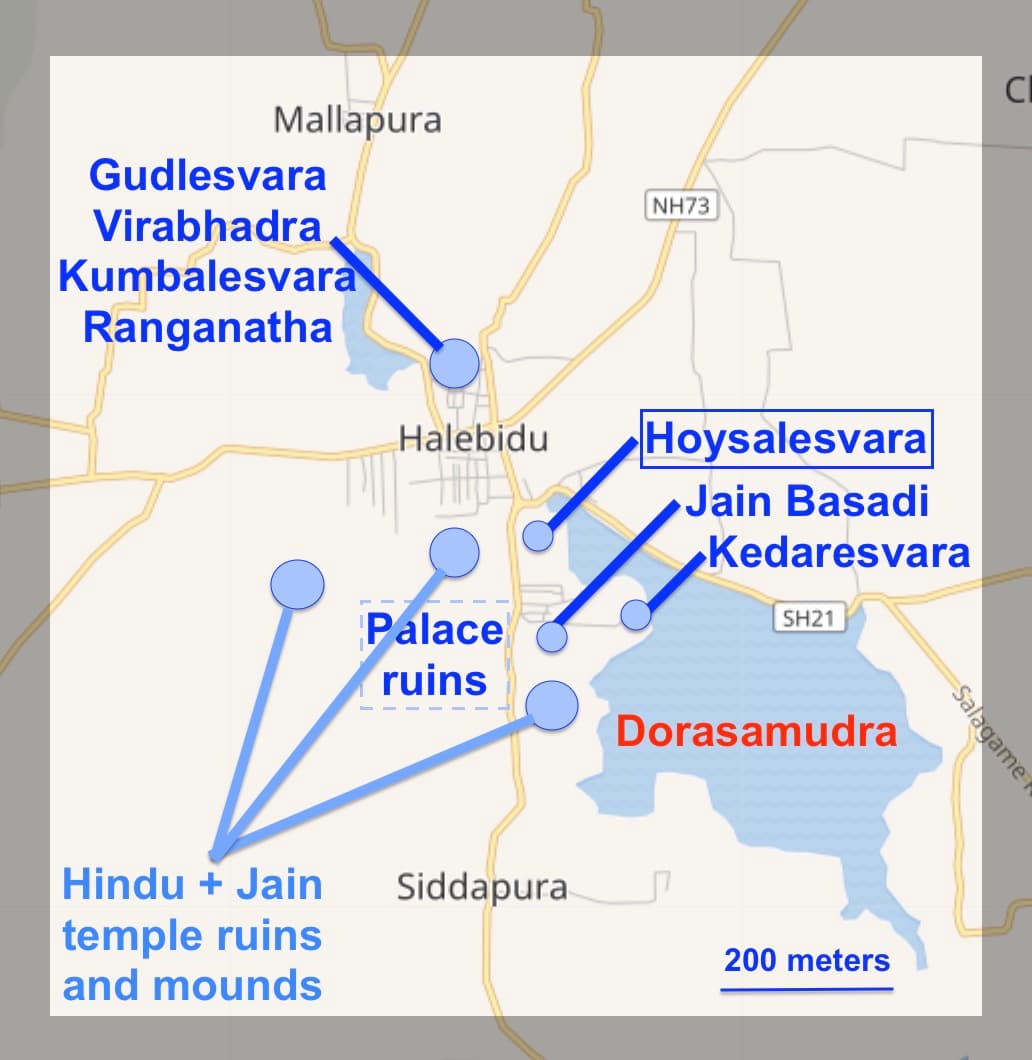
A uma curta distância fica o Templo Kedareswara, outro exemplo requintado da arquitetura Hoysala, também dedicado ao Senhor Shiva. Ele se ergue sobre uma plataforma única em forma de estrela e apresenta pilares intrincadamente esculpidos. O Museu Arqueológico em Halebidu, localizado em frente ao Templo Hoysaleswara, abriga uma coleção de esculturas, inscrições e outros artefatos recuperados da região, oferecendo insights mais profundos sobre a arte e a história indianas. Além disso, os Jain Basadis (Templos Jainistas), situados entre os templos Hoysaleswara e Kedareswara, valem a pena ser explorados por seus detalhes esculturais distintos, incluindo uma figura de pedra preta de 14 pés de altura de Parshwanatha Swamy.
A época ideal para visitar Halebidu é durante os meses de inverno, de outubro a março. Durante este período, o clima é agradável, com temperaturas variando de 10 a 25 graus Celsius, tornando confortável a exploração dos complexos de templos. A estação das monções, de junho a setembro, traz chuvas fortes e geralmente não é recomendada para turistas. Os verões, de março a maio, podem ser quentes e úmidos, com temperaturas atingindo até 44 graus Celsius, e geralmente são evitados pelos visitantes.
Halebidu é bem conectada por estrada. Fica a aproximadamente 210 km de Bangalore, uma viagem que leva cerca de 4-5 horas. A estação ferroviária principal mais próxima é Hassan, a cerca de 30-35 km de distância, com ônibus e táxis frequentes conectando a Halebidu. O Aeroporto Internacional de Mangalore é o aeroporto mais próximo, localizado a cerca de 150-170 km de distância. Uma vez em Halebidu, auto-riquixás ou carros alugados são convenientes para o transporte local.
Planeje passar pelo menos 2-3 horas explorando os principais complexos de templos. É aconselhável visitar no início da manhã ou no final da tarde para evitar o calor do meio-dia, pois os pisos de pedra podem ficar muito quentes. Use calçados confortáveis e fáceis de remover, pois os sapatos devem ser tirados antes de entrar nos templos. Trajes modestos são recomendados ao visitar locais religiosos. Guias locais estão disponíveis na entrada dos templos e podem aprimorar sua compreensão das intrincadas esculturas e da história.
Halebidu — coreano, chinês, hebraico e mais 29 idiomas, cada parada narrada por uma voz nativa. A maior variedade de idiomas entre os passeios de áudio autoguiados.
Disponível em: