Hallstatt Skywalk 'Welterbeblick'
Depuis une plateforme de verre suspendue au-dessus du village, vous admirez Hallstatt et son lac. Mais quel secret repose sous les eaux mêmes que vous contemplez ?
L'histoire complète se débloque dans le tour
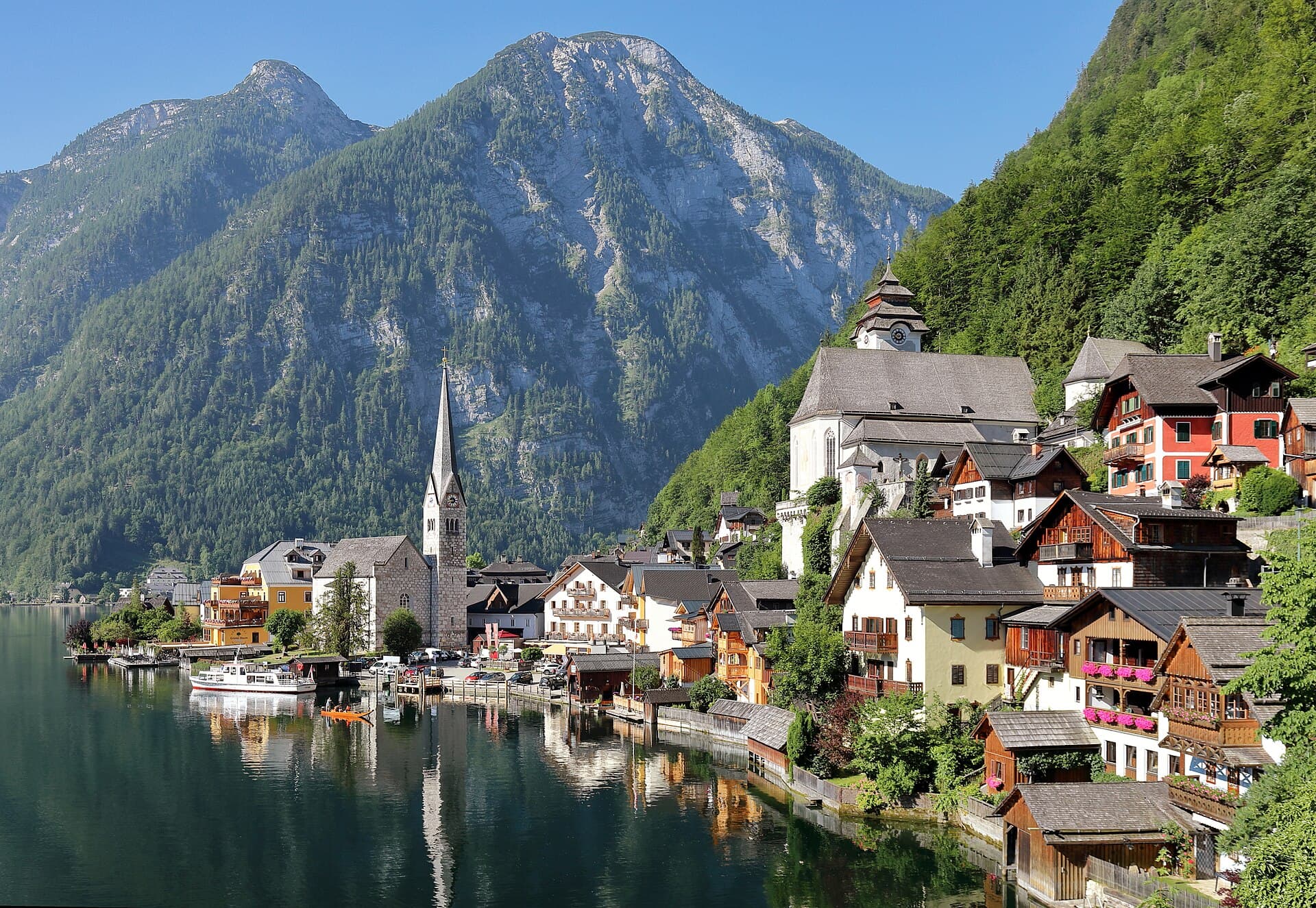 C.Stadler/Bwag / CC BY-SA 4.0, via Wikimedia Commons
Visite audio autoguidée de Hallstatt — parcours GPS à pied, lecture hors ligne, narration en 32 langues.
“Une prospérité façonnée par le sel, reflétée dans un lac miroir.”
Pas les cartes postales. Les histoires que même les habitants ignorent — soufflées à l'oreille, là où elles se sont passées.
Depuis une plateforme de verre suspendue au-dessus du village, vous admirez Hallstatt et son lac. Mais quel secret repose sous les eaux mêmes que vous contemplez ?
Au cœur de la plus ancienne mine de sel du monde, une découverte glaçante fut faite il y a des siècles. Ce n'était ni de l'or ni des bijoux, mais quelque chose de bien plus personnel et parfaitement conservé.
Derrière l'église catholique, une petite chapelle abrite une collection macabre, mais profondément respectueuse. Ce ne sont pas seulement des os, mais un témoignage coloré des traditions durables d'une ville et de son espace limité.
Découvrez tous les secrets de Hallstatt
Chaque adresse, chaque révélation en entier — dans ton oreille, là où elle s'est passée.
Tu choisis tes lieux. Tu marches. La voix te révèle ce que les autres ignorent.


Votre visite audioguidée de Hallstatt vous attend — choisissez vos lieux, votre langue, et lancez-vous dès votre arrivée.
AcheterLume intègre un guide en réalité augmentée. Levez votre téléphone : sa caméra montre la rue devant vous, avec une flèche lumineuse posée sur l'image réelle qui pointe toujours vers votre prochain arrêt — aucune carte à déchiffrer, aucun mauvais virage. Comme tout dans Lume, ça fonctionne entièrement hors-ligne.
Hallstatt, un village taillé dans le paysage alpin, captive les voyageurs depuis des siècles. Ses maisons s'accrochent au bord du lac, se reflétant dans les eaux calmes du lac de Hallstatt, le tout encadré par des montagnes imposantes. Ce site classé au patrimoine mondial de l'UNESCO est bien plus qu'une simple carte postale ; c'est un témoignage de milliers d'années d'ingéniosité humaine et d'un lien profond avec une ressource naturelle précieuse : le sel.
Souvent désignée comme l'une des plus belles villes lacustres du monde, l'attrait de Hallstatt est indéniable. C'est un lieu où l'histoire respire dans les ruelles étroites et l'architecture traditionnelle, vous invitant à flâner et à découvrir son histoire singulière.
L'histoire de Hallstatt ne commence pas avec de grands empires, mais avec un phénomène géologique survenu il y a environ 250 millions d'années. La région était alors submergée par une vaste mer préhistorique. À mesure que les plaques continentales se déplaçaient et que le climat se réchauffait, ces mers intérieures se sont évaporées, laissant d'immenses dépôts de sel profondément enfouis dans les montagnes. Il y a environ 120 millions d'années, la dalle calcaire du Dachstein a glissé sur un dôme de sel massif, poussant le sel mou vers le haut et plus près de la surface.
Des preuves suggèrent que l'établissement humain à Hallstatt remonte au Néolithique, vers 5500 av. J.-C., les premières découvertes incluant une houe en bois de cerf et des haches en pierre. L'exploitation minière organisée du sel a commencé à l'âge du bronze, vers 1300 av. J.-C., faisant de Hallstatt le site de la plus ancienne mine de sel connue au monde, Salzwelten Hallstatt. La découverte d'un grand cimetière préhistorique en 1846 par Johann Georg Ramsauer a encore éclairé le passé ancien de la région.
Le rôle de Hallstatt dans l'histoire européenne ancienne fut si important qu'une ère entière, le début de l'âge du fer (de 800 à 400 av. J.-C.), est nommée la « période de Hallstatt » ou « culture de Hallstatt ». Cette période a vu la communauté prospérer, en grande partie grâce à son économie du sel florissante, qui a soutenu un réseau commercial apportant de l'ambre de la mer Baltique et du verre de la Méditerranée. La richesse générée par « l'or blanc » a accordé aux populations locales certains privilèges et a contribué à la renommée internationale de la ville.
L'exploitation du sel s'est poursuivie pendant la période romaine, bien que les Romains se soient installés au pied de la montagne de sel plutôt que dans la haute vallée comme les locaux. En 1311, Hallstatt a obtenu le statut de bourg, signifiant son importance économique continue. Un exploit remarquable d'ingénierie, un pipeline de saumure, transporte du sel sur plus de 40 kilomètres jusqu'à Ebensee depuis 1595, et il reste le plus ancien pipeline encore actif au monde.
Jusqu'au XIXe siècle, Hallstatt était largement isolée, accessible uniquement par bateau ou par d'étroits sentiers de montagne. La première route le long de la rive ouest n'a été construite qu'en 1890, en partie par dynamitage de roches. En 1997, Hallstatt et ses environs ont été désignés site du patrimoine mondial de l'UNESCO, un honneur qui reconnaît sa tradition de 7 000 ans d'exploitation du sel et son importance culturelle.
Commencez votre exploration dans la Vieille Ville de Hallstatt, une zone piétonne avec des ruelles étroites, des maisons traditionnelles en bois et des boutiques pittoresques. Il est facile de la traverser d'un bout à l'autre en 10 à 15 minutes, mais prévoyez plus de temps pour vous imprégner de l'atmosphère et prendre des photos.
Prenez le funiculaire Salzbergbahn jusqu'au Hallstatt Skywalk 'Welterbeblick' pour des vues imprenables sur le village, le lac de Hallstatt et les montagnes environnantes. L'accès au Skywalk est gratuit une fois que vous avez pris le funiculaire.
À côté du Skywalk se trouve la mine de sel de Hallstatt (Salzwelten Hallstatt), la plus ancienne mine de sel du monde. Une visite guidée offre un aperçu de la tradition séculaire de l'exploitation du sel et comprend la possibilité de glisser sur les toboggans des mineurs. (Remarque : la mine de sel et le funiculaire sont actuellement fermés pour rénovations et devraient rouvrir en juin 2026.)
Visitez l'Église catholique et la chapelle Saint-Michel adjacente, qui abrite l'unique Maison des Os (Beinhaus). Cet ossuaire contient plus de 1 200 crânes peints, une tradition fascinante et respectueuse née du manque d'espace dans le cimetière.
Envisagez une excursion en bateau sur le lac de Hallstatt (Hallstätter See) pour une perspective différente du village et de son décor alpin. Des locations de bateaux électriques sont également disponibles, offrant un moyen serein d'explorer les eaux claires.
Hallstatt est captivant en toute saison, mais votre visite idéale dépend de vos préférences. L'été (juin-août) offre le temps le plus chaud, de longues heures d'ensoleillement et des paysages verdoyants, parfaits pour la randonnée et les excursions en bateau. Cependant, c'est aussi la haute saison, avec des foules importantes, surtout de 11h à 16h.
Les saisons intermédiaires (mai et septembre-octobre) offrent un équilibre entre temps agréable, moins de monde et souvent de meilleurs prix. Mai apporte des fleurs épanouies, tandis que l'automne présente un riche feuillage. L'hiver (décembre-février) transforme Hallstatt en un pays des merveilles enneigé, idéal pour ceux qui recherchent une expérience paisible et pittoresque, bien que certaines attractions comme la mine de sel et le funiculaire puissent être fermées. Pour éviter les périodes les plus achalandées, visez tôt le matin ou le soir, et envisagez de visiter en milieu de semaine.
La vieille ville de Hallstatt est en grande partie piétonne, prévoyez donc de l'explorer à pied. Des parkings sont disponibles en dehors du centre dans des zones désignées (P1 et P2 sont les plus proches), avec des navettes depuis le P1 jusqu'à l'entrée de la ville. Conduire dans le centre du village sans autorisation peut entraîner des amendes substantielles.
Si vous arrivez en train, la gare se trouve de l'autre côté du lac de Hallstatt, nécessitant une traversée en ferry pittoresque de 10 minutes jusqu'au village. Le ferry fonctionne en coordination avec les arrivées et les départs des trains. Des bus relient également Hallstatt aux villes voisines comme Salzbourg et Bad Ischl.
De nombreux restaurants locaux n'acceptent que les espèces, il est donc judicieux d'avoir des euros sur vous. Hallstatt est un petit village d'environ 750 habitants, et bien que ce soit une destination touristique populaire, rappelez-vous que des gens y vivent. Soyez attentif au bruit, respectez la propriété privée et évitez de faire voler des drones, car ils ne sont généralement pas bien accueillis par les habitants.
Hallstatt en coréen, en chinois ou en hébreu — et dans 29 autres langues, chaque étape narrée par une voix native. La plus large gamme de langues de tous les audioguides autoguidés.
Disponible en :