Templo Virupaksha
O gopuram principal do Templo Virupaksha guarda um segredo, anterior à ótica moderna.
História completa desbloqueada no tour
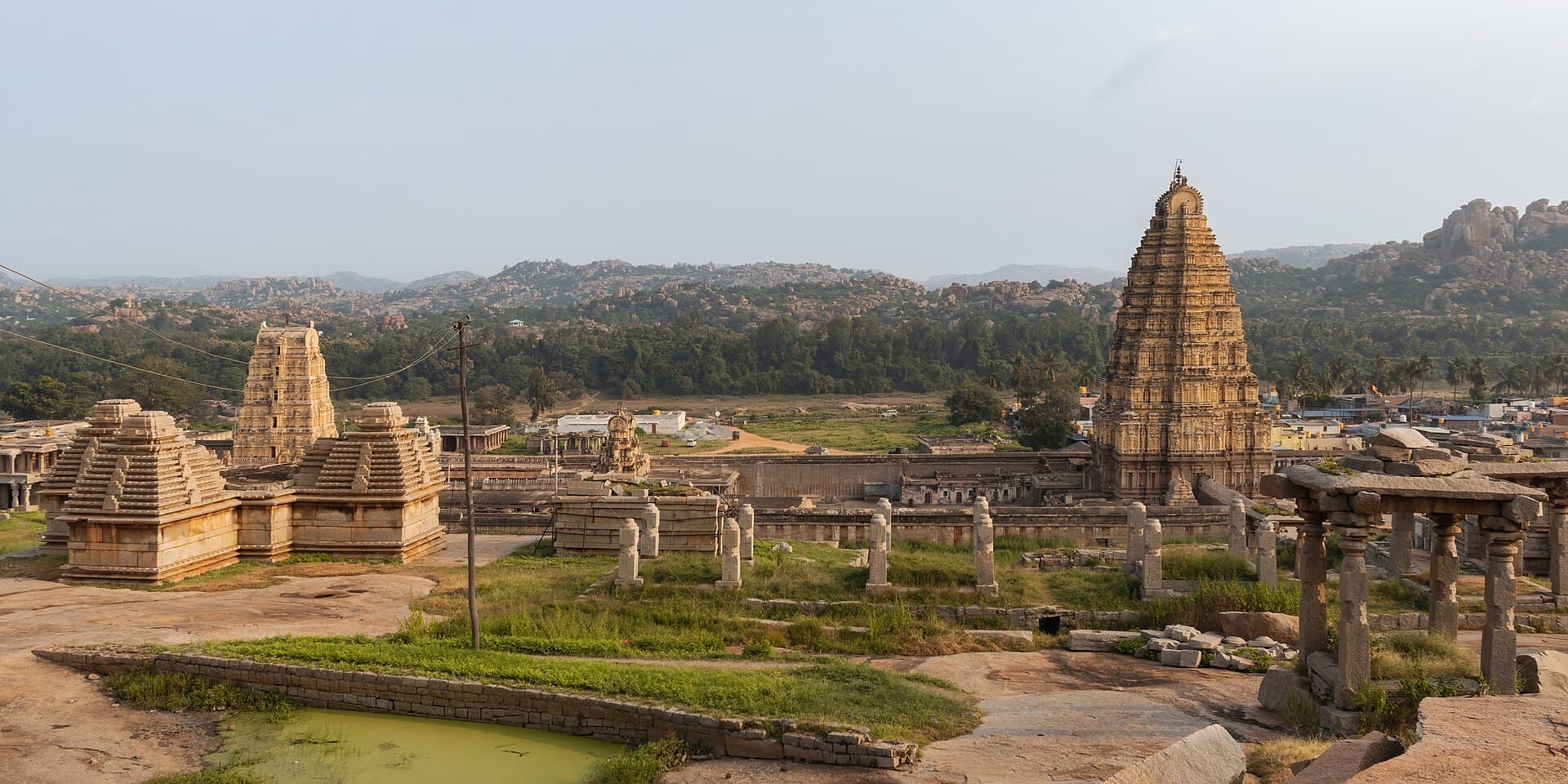 iMahesh / CC BY-SA 4.0, via Wikimedia Commons
Tour de áudio autoguiado por Hampi — rota GPS a pé, reprodução offline, narração envolvente em 32 idiomas.
“Onde rochas colossais guardam os vestígios de um império esquecido.”
Não os postais. As histórias que nem os locais conhecem — sussurradas ao seu ouvido, exatamente onde aconteceram.
O gopuram principal do Templo Virupaksha guarda um segredo, anterior à ótica moderna.
Toque suavemente certos pilares no Ranga Mantapa do Templo Vittala, e você poderá encontrar um som inesperado.
Esta caverna modesta diz-se ter guardado joias preciosas.
Descubra cada segredo de Hampi
Cada endereço, cada revelação na íntegra — no seu ouvido, exatamente onde aconteceu.
Você escolhe as suas paragens. Você caminha. A voz revela o que os outros perdem.


O seu tour áudio autoguiado de Hampi está pronto — escolha os seus pontos de interesse, selecione o seu idioma e comece no momento em que chegar.
ComprarA Lume inclui um guia de realidade aumentada. Levante o telemóvel: a câmara mostra a rua à sua frente, com uma seta luminosa sobreposta à imagem real que aponta sempre para a sua próxima paragem — sem mapa para decifrar, sem voltas erradas. Como tudo na Lume, funciona totalmente offline.
Hampi, um Patrimônio Mundial da UNESCO no centro-leste de Karnataka, Índia, apresenta uma paisagem diferente de qualquer outra, onde imensos rochedos de granito estão espalhados pelo terreno, formando um cenário dramático para os restos de um império outrora grandioso. Este antigo assentamento, situado ao longo do rio Tungabhadra, serviu como capital do formidável Império Vijayanagara de 1336 a 1565. Outrora contada entre as maiores e mais ricas cidades do mundo, atraindo mercadores da Pérsia e de Portugal, Hampi agora se ergue como um extenso museu a céu aberto, convidando viajantes, historiadores e buscadores espirituais a vagar por suas narrativas silenciosas esculpidas em pedra.
Os restos de Hampi se estendem por quase 29 quilômetros quadrados e abrangem mais de 1.600 monumentos duradouros, incluindo templos, palácios, fortificações e estruturas de água. O local é amplamente dividido em Centro Sagrado, com seus muitos templos e locais religiosos, e o Centro Real, que abrigava palácios, recintos reais e edifícios administrativos. A geografia singular, caracterizada por colinas de granito e o rio Tungabhadra, não só ofereceu defesas naturais, mas também contribuiu para a importância espiritual da região, que está profundamente entrelaçada com a mitologia hindu, particularmente o Ramayana.
A história de Hampi remonta muito antes de seu esplendor imperial. A região é tradicionalmente identificada com Kishkindha, o reino mítico dos macacos da epopeia hindu Ramayana, um lugar onde Lorde Rama e Lakshmana teriam encontrado Hanuman e Sugriva em sua busca por Sita. Evidências arqueológicas sugerem presença humana na região de Hampi desde o século II a.C., com inscrições em rocha indicando que fazia parte do Império Máuria no século III a.C. Escritos do início da era medieval Chalukya, dos séculos VI a VIII, referem-se a Hampi como Pampapura e, no século X, já havia evoluído para um importante centro religioso e educacional sob várias dinastias hindus.
A verdadeira ascensão da história de Hampi começou em 1336 d.C. com o estabelecimento do Império Vijayanagara por Harihara I e Bukka Raya I. Hampi foi escolhida como capital, então conhecida como Vijayanagara, devido às suas defesas naturais estratégicas fornecidas pelas colinas circundantes e rochedos de granito, e pelo rio Tungabhadra. Por quase três séculos, prosperou, tornando-se um dos impérios hindus mais poderosos do sul da Índia. Por volta de 1500, Hampi-Vijayanagara foi estimada como a segunda maior cidade do mundo depois de Pequim e, possivelmente, a mais rica da Índia, um nexo movimentado para o comércio de diamantes, seda, especiarias e pedras preciosas, atraindo mercadores de toda a Pérsia e Portugal.
O império atingiu seu zênite sob o reinado do Rei Krishnadevaraya (1509–1529). No entanto, este período de prosperidade terminou abruptamente em 1565. O Império Vijayanagara foi decisivamente derrotado por uma coalizão de sultanatos muçulmanos na Batalha de Talikota. Sua capital, Hampi, foi subsequentemente conquistada, saqueada e devastada pelos exércitos vitoriosos, levando ao seu abandono e eventual transformação em ruínas. O local permaneceu em grande parte esquecido até que arqueólogos britânicos renovaram o interesse no século XIX, ganhando o apelido de "Cidade Perdida" antes de sua designação como Patrimônio Mundial da UNESCO em 1986.
A vasta paisagem de Hampi oferece uma profusão de maravilhas arquitetônicas e históricas. O Templo Virupaksha, datado do século VII, é um dos locais de culto mais importantes e ativos de Hampi, dedicado ao Senhor Shiva. Seu imponente gopuram, com quase 50 metros de altura, é visível de longe. O complexo do Templo Vijaya Vittala é uma obra-prima da arquitetura Vijayanagara, apresentando esculturas intrincadas e o notável Carro de Pedra, um santuário dedicado a Garuda. Não deixe de experimentar os pilares musicais dentro de seu Ranga Mantapa.
Explore o Centro Real, que inclui o elegante Lotus Mahal, uma fusão de estilos arquitetônicos hindu e indo-islâmico que se assemelha a uma flor de lótus desabrochando. Nas proximidades estão os Estábulos de Elefantes, uma estrutura grandiosa que outrora abrigava os elefantes reais. O Templo Lakshmi Narasimha monolítico apresenta uma imponente estátua de 8 pés de altura do Senhor Narasimha esculpida em uma única rocha. Para vistas panorâmicas da cidade antiga, suba a Colina Matanga para o nascer ou pôr do sol. Outros locais significativos incluem o Banhos da Rainha, o Templo Hazara Rama com suas detalhadas esculturas do Ramayana e o Complexo de Templos da Colina Hemakuta, lar de alguns dos santuários mais antigos de Hampi. Um passeio de barco coracle no rio Tungabhadra oferece uma perspectiva distinta das ruínas à beira do rio.
A época ideal para explorar Hampi é durante os meses mais frios, de outubro a março. As temperaturas durante este período são agradáveis, variando de 16°C a 32°C, com noites frescas, tornando a exploração extensiva confortável. Dezembro e janeiro são particularmente agradáveis. O período pós-monção em outubro e novembro traz uma paisagem verdejante, e o rio Tungabhadra está em níveis ideais para passeios de coracle. Hampi experimenta sua temporada turística mais movimentada durante esses meses, com vários festivais como o Vijaya Utsav (Festival de Hampi) em novembro e o Festival do Carro do Templo Virupaksha em março/abril. Os verões, de abril a junho, são quentes e áridos, com temperaturas elevadas, tornando os passeios turísticos desafiadores. A estação das monções, de julho a setembro, traz chuvas moderadas, que podem tornar alguns terrenos escorregadios, embora ofereça uma experiência mais tranquila com menos visitantes.
Hampi é dividida pelo rio Tungabhadra, com o templo principal e as ruínas no lado sul e muitas pousadas e cafés no lado norte, frequentemente referidos como 'Ilha Hippie' (embora alguns negócios lá tenham enfrentado fechamentos recentemente). A cidade mais próxima com conexões ferroviárias é Hospet, a aproximadamente 13 km de distância. O aeroporto mais próximo é Vidyanagar (45 km), oferecendo voos diários de Bangalore e Hyderabad. Navegar pelo extenso local de 42 quilômetros quadrados é melhor feito alugando uma bicicleta, ciclomotor ou contratando um auto-rickshaw. Barcos são essenciais para cruzar o rio Tungabhadra, pois veículos de duas rodas não são permitidos no lado das ruínas, e dirigir ao redor envolve um longo desvio. É prudente sacar dinheiro suficiente antes de chegar a Hampi, pois os caixas eletrônicos são escassos. Contratar um guia local é recomendado para apreciar plenamente as histórias e o significado por trás dos monumentos. Prepare-se para o clima carregando água, protetor solar e um chapéu, especialmente durante as tardes, que podem permanecer quentes mesmo no inverno.
Hampi — coreano, chinês, hebraico e mais 29 idiomas, cada parada narrada por uma voz nativa. A maior variedade de idiomas entre os passeios de áudio autoguiados.
Disponível em: