Église de la Sainte-Croix
L'église principale de l'île raconte une histoire non seulement de foi, mais aussi d'une remarquable fusion culturelle.
L'histoire complète se débloque dans le tour
 XLR8TION at English Wikipedia / Public domain, via Wikimedia Commons
Visite audio autoguidée de Hanga Roa — parcours GPS à pied, lecture hors ligne, narration en 32 langues.
“Là où les gardiens ancestraux veillent sur une culture vivante.”
Pas les cartes postales. Les histoires que même les habitants ignorent — soufflées à l'oreille, là où elles se sont passées.
L'église principale de l'île raconte une histoire non seulement de foi, mais aussi d'une remarquable fusion culturelle.
Même dans un lieu de repos, l'imagerie emblématique de l'île trouve le moyen de perdurer.
Cette artère animée cache un secret sur son propre nom.
Découvrez tous les secrets de Hanga Roa
Chaque adresse, chaque révélation en entier — dans ton oreille, là où elle s'est passée.
Tu choisis tes lieux. Tu marches. La voix te révèle ce que les autres ignorent.
Votre visite audioguidée de Hanga Roa vous attend — choisissez vos lieux, votre langue, et lancez-vous dès votre arrivée.
AcheterLume intègre un guide en réalité augmentée. Levez votre téléphone : sa caméra montre la rue devant vous, avec une flèche lumineuse posée sur l'image réelle qui pointe toujours vers votre prochain arrêt — aucune carte à déchiffrer, aucun mauvais virage. Comme tout dans Lume, ça fonctionne entièrement hors-ligne.
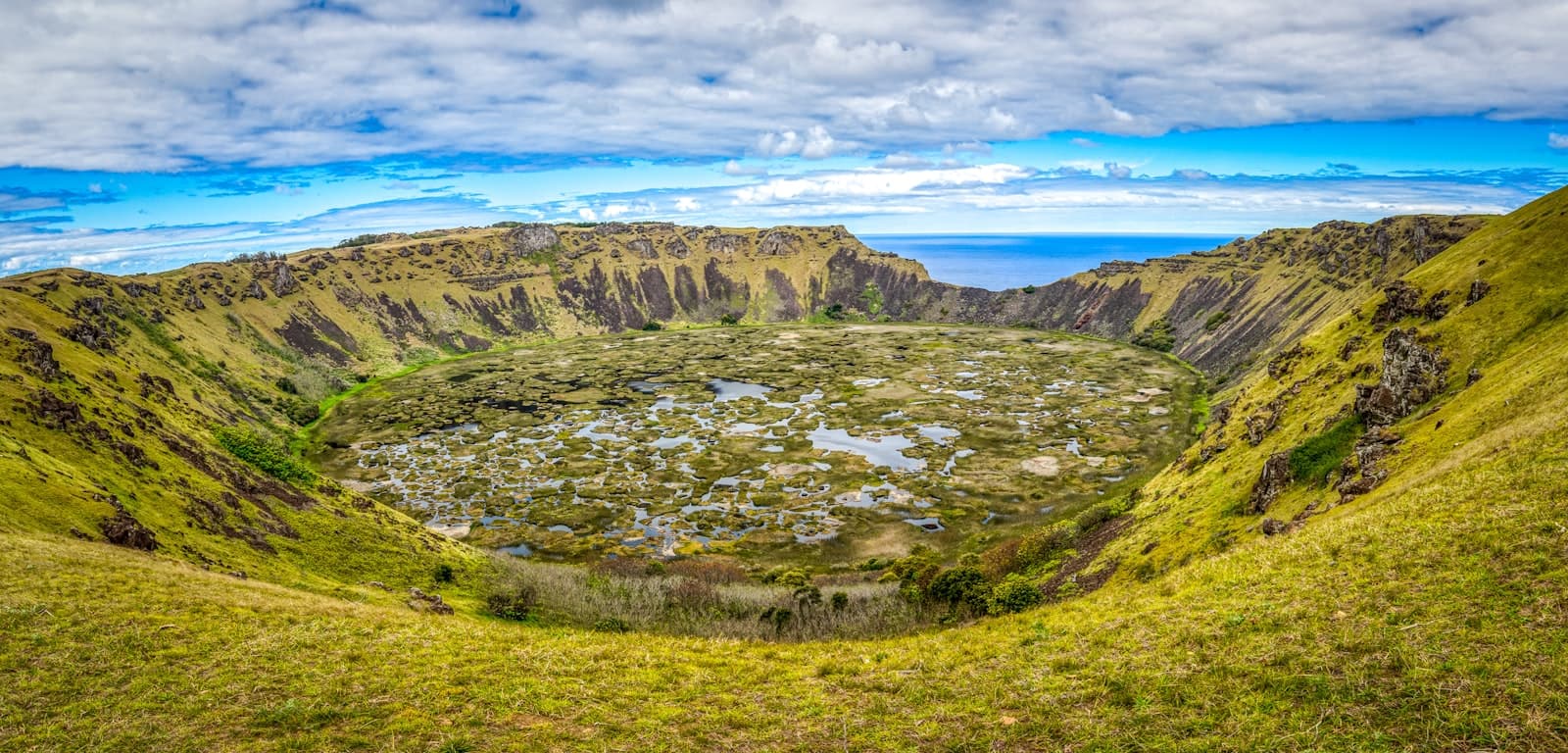
Hanga Roa, la seule ville et le cœur battant de Rapa Nui (Île de Pâques), est bien plus qu'une simple porte d'entrée vers les statues emblématiques de l'île, les moai ; c'est un témoignage vivant de la culture polynésienne entrelacée avec la vie moderne. Abritant la grande majorité des quelque 8 000 habitants de l'île, cette colonie côtière offre un mélange unique de traditions anciennes et de commodités contemporaines. Située sur la côte ouest de l'île, entre les volcans éteints de Terevaka et Rano Kau, Hanga Roa est le principal centre de toutes les activités sociales, économiques et culturelles.
En flânant dans les rues piétonnes de Hanga Roa, les visiteurs découvrent un rythme de vie détendu, où les boutiques locales, les restaurants et le front de mer invitent à l'exploration. L'atmosphère de la ville est celle où le moderne et l'ancestral coexistent, avec des fresques colorées reflétant l'identité locale et des marchés d'artisans présentant l'artisanat traditionnel. De la dégustation d'empanadas de thon locaux à l'observation des bateaux de pêche dans le port, Hanga Roa offre une introduction inoubliable à ce paradis isolé.
L'histoire de Hanga Roa est profondément liée à l'histoire plus large de Rapa Nui elle-même. Contrairement à de nombreuses villes ayant une date de fondation unique, les origines de Hanga Roa remontent à une zone résidentielle pour l'un des clans indigènes. La transformation en une ville plus unifiée a commencé au milieu du XIXe siècle, influencée par les missionnaires catholiques. En 1888, suite à des négociations entre l'officier de marine chilien, le capitaine Policarpo Toro, et le Conseil des Anciens de Rapa Nui, l'île de Pâques fut annexée par le Chili, et Hanga Roa devint officiellement son centre administratif.
Durant une grande partie du XXe siècle, une période difficile et sombre a défini Hanga Roa. Après que l'État chilien ait loué la majeure partie de l'île à la Compañía Explotadora de Isla de Pascua (Compagnie d'Exploitation de l'Île de Pâques) pour l'élevage ovin, le peuple indigène Rapa Nui fut confiné à Hanga Roa. La ville était entourée d'un mur avec des portes d'accès, créant effectivement un « ghetto » où les insulaires étaient interdits de circuler librement dans d'autres parties de l'île et étaient privés de droits fondamentaux. Cette situation restrictive a persisté jusqu'au milieu des années 1960.
En 1966, la promulgation de la Loi 16.441, connue sous le nom de « Ley Pascua », a marqué un tournant. Elle a accordé aux habitants de Rapa Nui la citoyenneté chilienne avec tous les droits, brisant leur isolement et inaugurant d'importants changements sociaux, politiques et culturels. Cette loi a également conduit à la création d'une municipalité insulaire et à l'établissement de divers services publics chiliens. Les premières liaisons aériennes commerciales entre Santiago, Hanga Roa et Papeete ont commencé en 1967.
Au cours des dernières décennies du XXe siècle, Hanga Roa est passée d'un modeste village à une petite ville dotée d'installations urbaines essentielles, notamment un marché, des écoles, une église, des hôtels, une banque et un hôpital. Aujourd'hui, bien que le tourisme soit la principale activité économique, la ville préserve activement son héritage Rapa Nui. Moins de la moitié de la population actuelle est d'origine Rapa Nui, le reste étant principalement chilien continental et un petit groupe d'autres nationalités.
Hanga Roa offre plusieurs sites incontournables qui plongent dans la culture et l'histoire uniques de l'île. Un point de départ naturel est le Musée anthropologique Padre Sebastian Englert, qui abrite une collection d'artefacts, y compris des outils en obsidienne, des hameçons et la seule moai féminine trouvée sur l'île. Il conserve également l'œil original en corail blanc découvert sur la plage d'Anakena, offrant un aperçu de la signification spirituelle des moai.
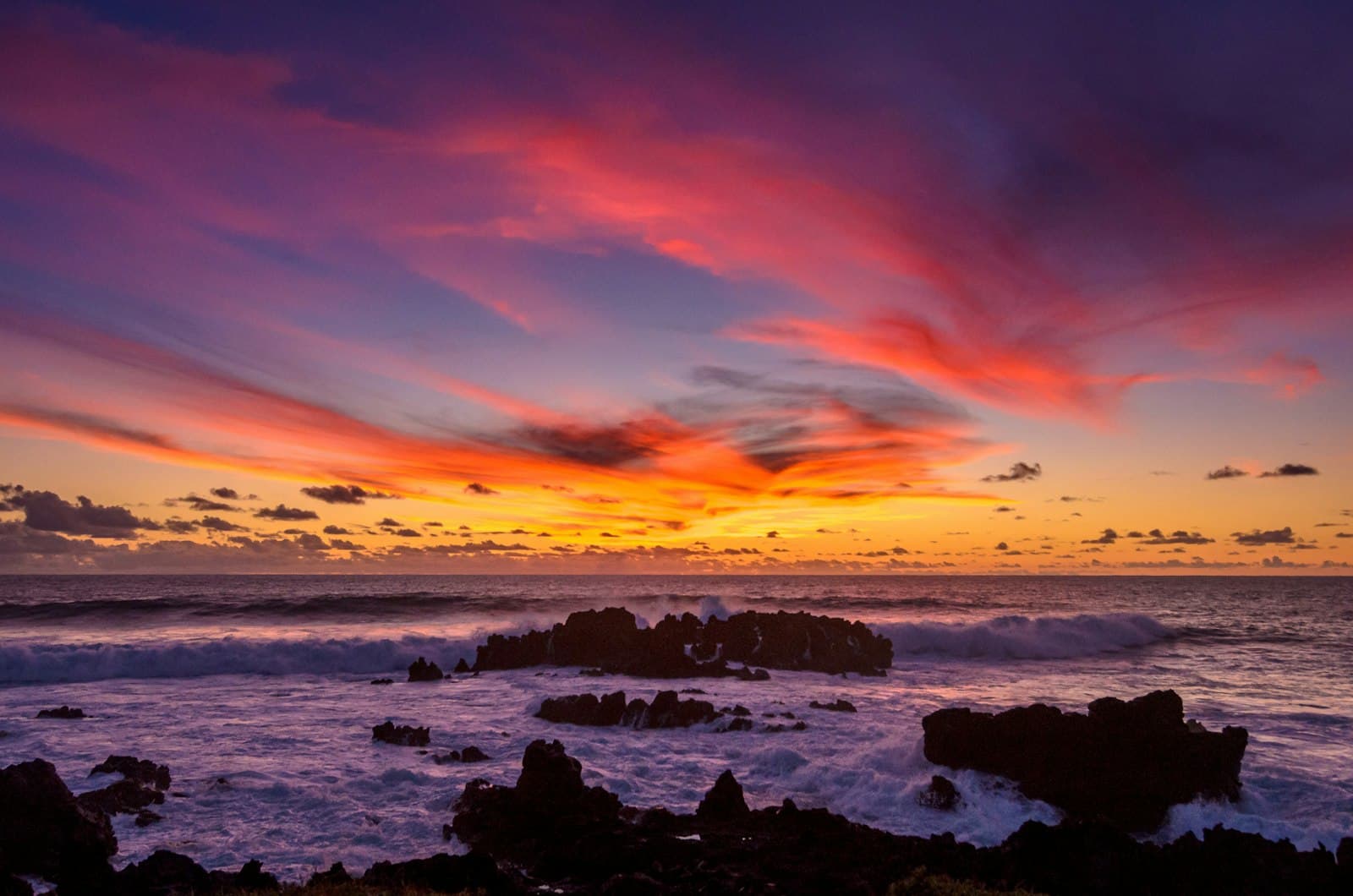
À quelques pas du centre-ville se trouve le complexe cérémoniel Ahu Tahai, un endroit parfait pour admirer le coucher de soleil derrière plusieurs moai. L'une de ces statues est magnifiquement restaurée avec ses yeux en corail blanc, offrant un rare aperçu de leur apparence originale.
L'Église de la Sainte-Croix est un monument remarquable, présentant un mélange fascinant d'esthétique chrétienne et Rapa Nui, avec des sculptures sur bois complexes représentant des saints chrétiens avec des traits et des symboles traditionnels Rapa Nui. À proximité, le Cimetière de Hanga Roa offre un aperçu poignant des coutumes locales, avec des pierres tombales incorporant souvent des motifs de moai.
Le long de la côte, la crique de Hanga Roa Otai offre une atmosphère animée où le poisson frais est vendu aux enchères et où de petites sculptures de moai et de pukao (chignons de pierre rouge) sont exposées. Le plus petit port de Hanga Piko a une atmosphère plus locale, avec des bateaux de pêche colorés et des pirogues traditionnelles. Pour une baignade rafraîchissante, Hanga Vare Vare dispose d'une piscine naturelle abritée entourée de palmiers. La rue principale, l'Avenida Atamu Tekena, est bordée d'agences de voyage, d'hôtels, de boutiques et de cafés, reflétant le rythme de la vie locale.
Hanga Roa bénéficie d'un climat subtropical marin avec des températures agréables et modérées toute l'année, ce qui en fait une destination accueillante à tout moment. Les mois les plus chauds, de janvier à mars, sont idéaux pour les activités de plage et les aventures en plein air, avec des températures maximales moyennes quotidiennes supérieures à 26°C (79°F). Cette période coïncide également avec le populaire festival Tapati Rapa Nui début février.
Pour moins de foule et des températures douces, envisagez de visiter pendant les saisons intermédiaires d'avril-mai ou de septembre-octobre. Bien qu'avril et mai puissent être les mois les plus pluvieux, les averses sont généralement brèves. Les mois plus frais, de juin à septembre, offrent une expérience plus calme avec des maximales moyennes autour de 21-22°C (70-72°F).
Hanga Roa est desservie par l'aéroport international de Mataveri (IPC), situé à seulement 2,0 km du centre-ville, ce qui rend les arrivées très pratiques. Bien que la ville elle-même soit accessible à pied, l'exploration des sites archéologiques de l'île nécessite un moyen de transport. Il n'y a pas de système de bus public ni d'applications de covoiturage comme Uber. Les options incluent la location d'une voiture (les SUV sont recommandés pour les routes non goudronnées), d'un scooter ou d'un VTT. Des taxis sont également disponibles pour de courts trajets.
La monnaie officielle est le Peso chilien (CLP). Bien que les dollars américains soient parfois acceptés, le taux de change peut être défavorable, il est donc préférable d'utiliser des Pesos chiliens. Des distributeurs automatiques de billets sont disponibles, mais il est conseillé d'avoir de l'argent liquide car tous les établissements n'acceptent pas les paiements électroniques. L'eau du robinet à Hanga Roa est potable, mais de l'eau en bouteille est facilement disponible. Le type de prise est européen (deux broches rondes) avec une électricité de 220V. Rapa Nui est généralement sûre pour les visiteurs, avec de faibles taux de criminalité.
Hanga Roa en coréen, en chinois ou en hébreu — et dans 29 autres langues, chaque étape narrée par une voix native. La plus large gamme de langues de tous les audioguides autoguidés.
Disponible en :