Harpers Ferry National Historical Park
La géographie singulière de la ville en a fait un prix stratégique pendant la guerre civile, entraînant un nombre étonnant de changements de commandement.
L'histoire complète se débloque dans le tour
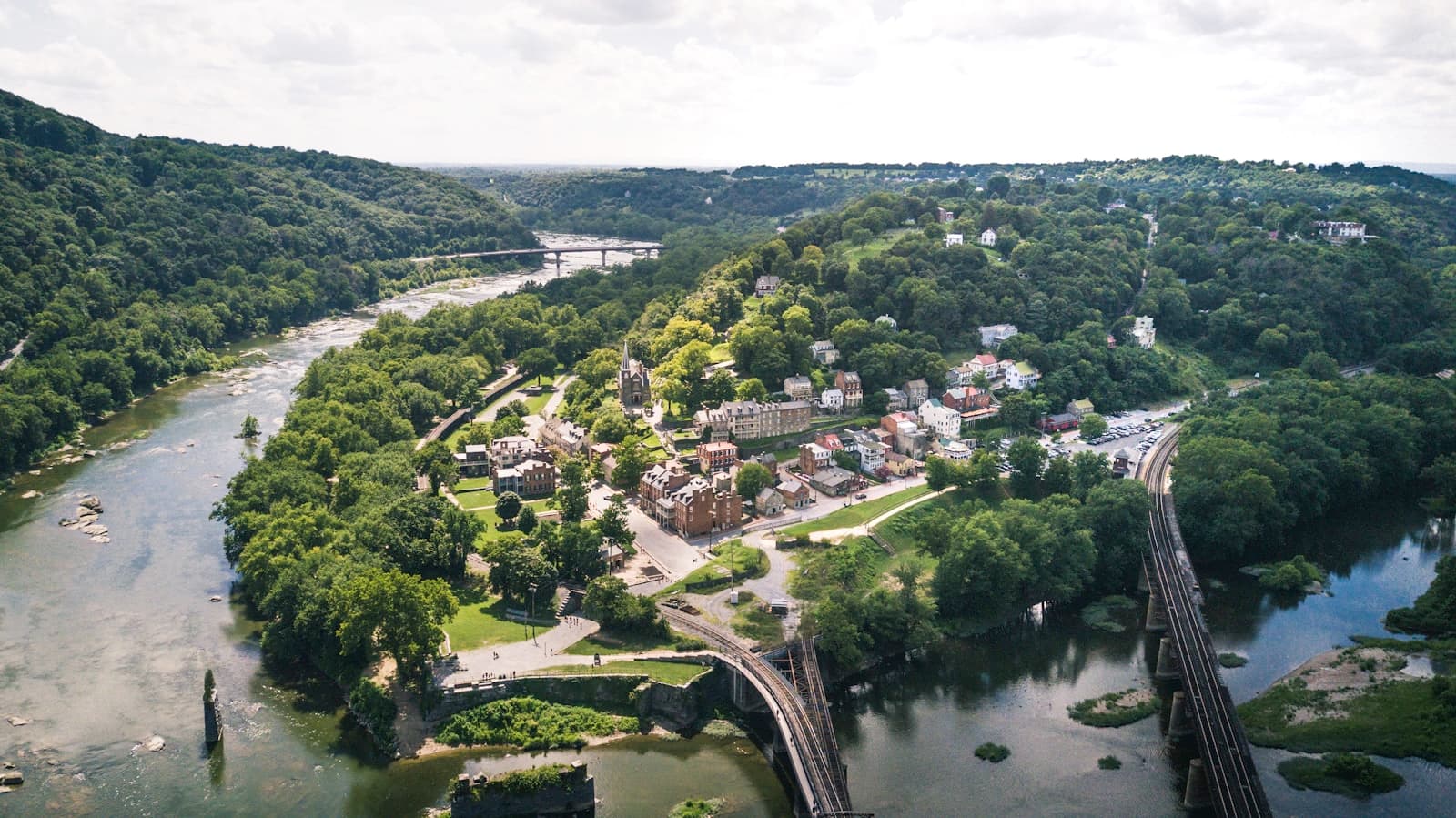 Photo: Ryan Waring / Unsplash
Visite audio autoguidée de Harpers Ferry — parcours GPS à pied, lecture hors ligne, narration en 32 langues.
“Là où les rivières convergent et l'histoire résonne.”
Pas les cartes postales. Les histoires que même les habitants ignorent — soufflées à l'oreille, là où elles se sont passées.
La géographie singulière de la ville en a fait un prix stratégique pendant la guerre civile, entraînant un nombre étonnant de changements de commandement.
Thomas Jefferson a un jour proclamé la vue depuis cet endroit 'l'une des scènes les plus grandioses de la nature'.
Thomas Jefferson once proclaimed the vista from this location 'one of the most stupendous scenes in nature.'
Découvrez tous les secrets de Harpers Ferry
Chaque adresse, chaque révélation en entier — dans ton oreille, là où elle s'est passée.
Tu choisis tes lieux. Tu marches. La voix te révèle ce que les autres ignorent.


Votre visite audioguidée de Harpers Ferry vous attend — choisissez vos lieux, votre langue, et lancez-vous dès votre arrivée.
AcheterLume intègre un guide en réalité augmentée. Levez votre téléphone : sa caméra montre la rue devant vous, avec une flèche lumineuse posée sur l'image réelle qui pointe toujours vers votre prochain arrêt — aucune carte à déchiffrer, aucun mauvais virage. Comme tout dans Lume, ça fonctionne entièrement hors-ligne.
Harpers Ferry, Virginie-Occidentale, est une ville où deux puissantes rivières, le Potomac et le Shenandoah, se rencontrent, et où les États de Virginie-Occidentale, du Maryland et de Virginie convergent. Cette position géographique singulière a sculpté son identité, l'établissant comme un lieu pivot tout au long de l'histoire américaine. Aujourd'hui, une grande partie de la ville est préservée en tant que Harpers Ferry National Historical Park, invitant les visiteurs à voyager dans le temps et à explorer un paysage riche en récits.
L'attrait de la ville réside dans son architecture du XIXe siècle préservée, ses rues piétonnes et un sens palpable de l'histoire qui imprègne chaque recoin. Au-delà de son poids historique, Harpers Ferry sert également de portail vers l'aventure en plein air, avec de vastes sentiers de randonnée, des activités fluviales et des vues imprenables qui attirent ceux qui recherchent l'étreinte de la nature.
L'histoire de Harpers Ferry a commencé en 1732 lorsque Peter Stephens s'est installé dans la région. Robert Harper, à qui la ville doit son nom, a acquis les 'droits de squatter' de Stephens en 1747 et a établi un ferry sur la rivière Potomac vers 1761. Ce ferry est devenu un point d'embarquement crucial pour les colons s'aventurant dans la vallée de Shenandoah et vers l'ouest.
George Washington a reconnu l'importance stratégique de l'emplacement de Harpers Ferry à la confluence des rivières. En 1794, il l'a choisie comme site pour un arsenal et une armurerie nationale. En 1796, l'arsenal a été établi, introduisant l'industrie et une population croissante de marchands, de mécaniciens et de travailleurs immigrés dans la ville. La construction du canal de Chesapeake et Ohio et du chemin de fer de Baltimore et Ohio a encore cimenté la position de Harpers Ferry en tant que plaque tournante importante des transports dans les années 1850.
L'événement le plus célèbre, et peut-être le plus marquant, de la ville s'est déroulé en octobre 1859, lorsque l'abolitionniste radical John Brown a mené un raid sur l'arsenal de Harpers Ferry. Brown avait l'intention de s'emparer d'armes pour armer les esclaves et déclencher une révolte généralisée. Cependant, son raid a finalement échoué, et lui et ses hommes ont été appréhendés. Cet événement, souvent appelé 'l'étincelle qui a allumé la guerre civile', a intensifié les tensions entre le Nord et le Sud.
Durant la guerre civile, l'emplacement stratégique de Harpers Ferry signifiait qu'elle était farouchement disputée. La ville a changé de mains quatorze fois entre les forces de l'Union et de la Confédération de 1861 à 1865. Bien qu'aucun engagement majeur n'ait eu lieu après l'attaque de Stonewall Jackson en 1862, la ville a subi des dévastations dues aux conflits et occupations répétés.
Après la guerre civile, Harpers Ferry s'est lentement reconstruite. À la fin des années 1800, elle a réémergé comme centre industriel, alimentée par les rivières. En 1891, la ville a officiellement perdu son apostrophe lors d'une mise à jour par le United States Board on Geographic Names, devenant 'Harpers Ferry'. En 1944, Harpers Ferry a été désignée monument national, et en 1963, elle est devenue un parc historique national, protégeant son patrimoine culturel et ses sites historiques pour les générations futures.
Le Harpers Ferry National Historical Park offre une gamme d'expériences. Commencez par Lower Town, un village préservé du XIXe siècle avec des musées et des expositions détaillant le passé industriel de la ville, le raid de John Brown et son rôle dans la guerre civile. Le Fort de John Brown est un site historique clé dans cette zone. Pour des vues panoramiques, marchez jusqu'à Jefferson Rock, un point de vue pittoresque nommé d'après Thomas Jefferson, qui a admiré la confluence des rivières Potomac et Shenandoah depuis cet endroit même.
Les amateurs de plein air peuvent explorer plus de 32 kilomètres de sentiers de randonnée, allant de douces promenades au bord de la rivière à des treks exigeants en montagne. Les sentiers populaires incluent Maryland Heights et Loudoun Heights, qui offrent des vues imprenables sur la ville et les rivières. Harpers Ferry abrite également le siège du Sentier des Appalaches, et le sentier lui-même traverse directement la ville. Au-delà de la randonnée, les visiteurs peuvent profiter du rafting en eau vive, de la descente en bouée, du kayak et de la tyrolienne sur les rivières.
Les périodes les plus agréables pour visiter Harpers Ferry sont le printemps (mars à mai) et l'automne (septembre à novembre). Ces saisons offrent des températures douces, ce qui les rend idéales pour la randonnée et les activités de plein air. L'automne est particulièrement recherché pour son feuillage éclatant, qui transforme les contreforts des Appalaches en une toile de rouges, d'oranges et de jaunes, surtout de fin octobre à début novembre. Bien que l'été (juin à août) soit chaud et propice aux activités nautiques, c'est aussi la haute saison touristique, ce qui signifie plus de monde. Les hivers sont plus froids, avec des chutes de neige occasionnelles, offrant une expérience plus calme et plus tranquille.
Le Harpers Ferry National Historical Park facture des frais d'entrée, valables trois jours consécutifs. Les frais peuvent être payés à divers endroits, y compris au centre d d'accueil. Un parking est disponible au centre d'accueil, avec un service de navette gratuit vers Lower Town, où se trouvent de nombreuses attractions historiques. Le parc applique une politique sans déchets, les visiteurs sont donc invités à emporter tous leurs déchets et recyclages. Des toilettes sont disponibles à Lower Town et au centre d'accueil. Les réservations sont recommandées pour les visites guidées et les activités fluviales, en particulier pendant la haute saison. Bien qu'il n'y ait pas d'établissements de restauration ou d'hébergement dans le parc national lui-même, diverses options sont disponibles dans la ville environnante.
Harpers Ferry en coréen, en chinois ou en hébreu — et dans 29 autres langues, chaque étape narrée par une voix native. La plus large gamme de langues de tous les audioguides autoguidés.
Disponible en :