Kadettenplein
La mayoría de las guías te indicarán el Jardín Japonés para encontrar tranquilidad, pero hay un espacio verde más pequeño e íntimo que los lugareños aprecian para un momento de calma.
La historia completa se desbloquea en el tour
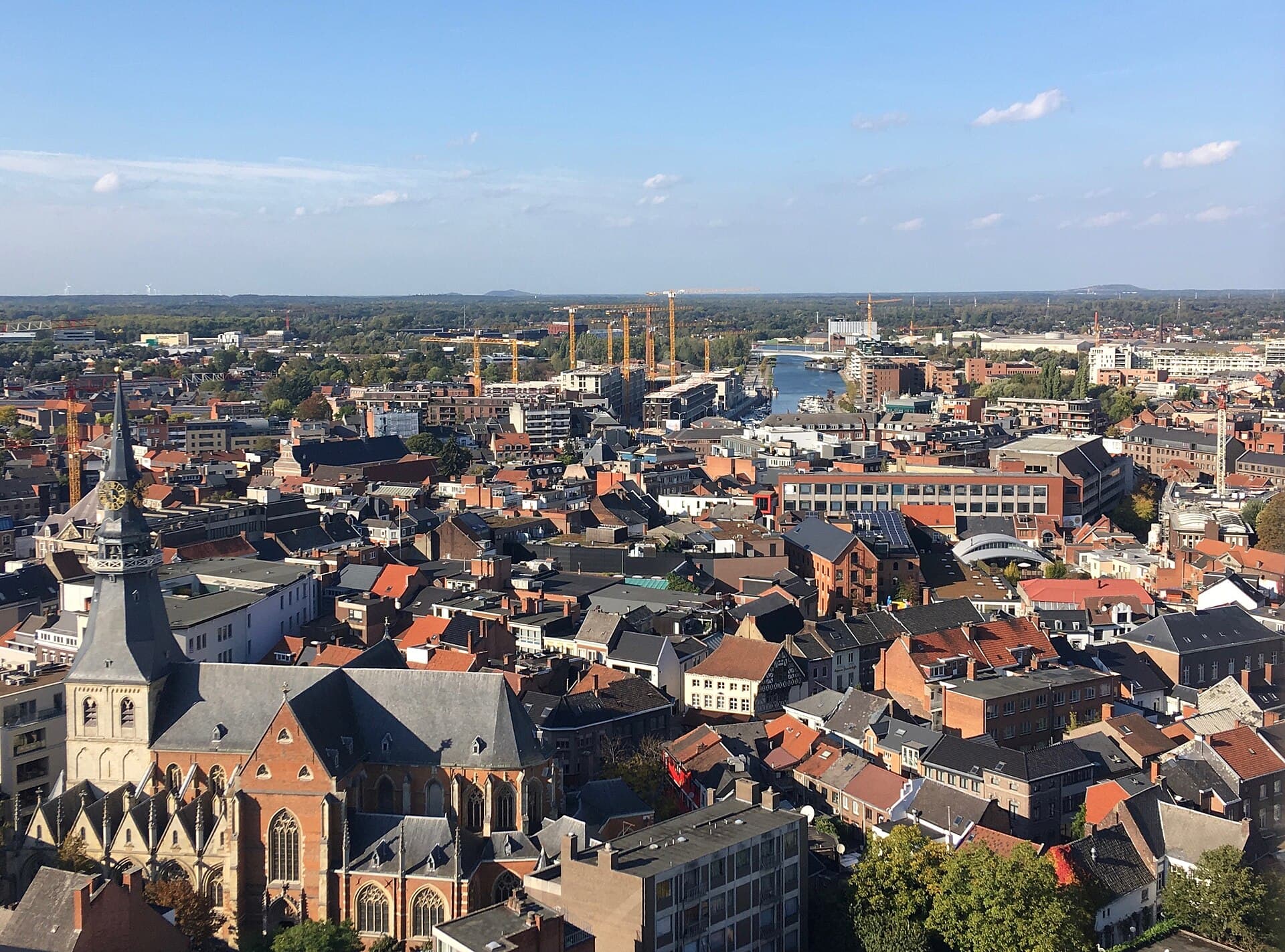 Thebeautyparlorisfilledwithsailors / CC BY-SA 4.0, via Wikimedia Commons
Tour de audio autoguiado de Hasselt — ruta GPS a pie, reproducción offline, narración en 32 idiomas.
“Hasselt: Donde la historia se destila en arte callejero y jardines serenos.”
No las postales. Las historias que ni los locales conocen — al oído, justo donde ocurrieron.
La mayoría de las guías te indicarán el Jardín Japonés para encontrar tranquilidad, pero hay un espacio verde más pequeño e íntimo que los lugareños aprecian para un momento de calma.
Hasselt es conocida como la 'Capital del Jenever' de Bélgica, pero la relación única de la ciudad con este aguardiente de enebro tiene un giro histórico sorprendente.
Mientras muchas ciudades europeas exhiben arte callejero, la colección de Hasselt no es solo unos pocos murales dispersos; es un testimonio de una ambición artística a nivel de toda la ciudad.
Descubre todos los secretos de Hasselt
Cada dirección, cada revelación al completo — a tu oído, justo donde ocurrió.
Eliges tus paradas. Caminas. La voz te revela lo que los demás ignoran.


Tu tour de audioguía por Hasselt te espera — elige tus lugares, tu idioma y empieza al llegar.
ComprarLume incluye una guía de realidad aumentada. Levanta el móvil y su cámara muestra la calle que tienes delante, con una flecha luminosa sobre la imagen real que siempre apunta a tu próxima parada — sin mapas que descifrar, sin giros equivocados. Como todo en Lume, funciona completamente sin conexión.
Hasselt, la capital de la provincia belga de Limburgo, ofrece una mezcla distintiva de carácter histórico y estilo contemporáneo. A menudo llamada la "Capital del Sabor" y la "ciudad más sociable de Flandes", Hasselt invita a los visitantes a explorar su centro peatonal, donde la arquitectura centenaria se encuentra con el diseño moderno y el cautivador arte callejero. La ciudad es célebre por su escena culinaria, particularmente por su tradicional jenever (ginebra belga) y sus galletas speculaas locales.
Más allá de su núcleo urbano, Hasselt es una puerta de entrada a la belleza natural de Limburgo, con extensos espacios verdes, rutas ciclistas y el tranquilo Jardín Japonés, el más grande de su tipo en Europa. Ya sea que busques inmersión cultural, delicias gastronómicas o una escapada urbana relajada, Hasselt ofrece una experiencia estimulante pero tranquila, fácilmente explorable a pie o en bicicleta.
Los orígenes de Hasselt se remontan al siglo VII, cuando surgió un asentamiento a lo largo del Helbeek, un afluente del río Demer. Se cree que el nombre Hasselt deriva de las antiguas palabras holandesas "hasal" (avellano) y "holt" (bosque o arboleda), sugiriendo un paisaje que alguna vez fue rico en avellanos. La ciudad apareció por primera vez en documentos históricos en 1165.
Un hito significativo ocurrió en 1232 cuando el conde Arnold IV de Loon concedió a Hasselt derechos y libertades de ciudad, solidificando su estatus y allanando el camino para su desarrollo. Hasselt creció hasta convertirse en la ciudad más grande del Condado de Loon, en gran parte debido a su ubicación estratégica en el cruce de rutas comerciales y su proximidad a la influyente Abadía de Herkenrode. En el siglo XIV, la ciudad erigió sus primeras murallas defensivas y comenzó la construcción de la Catedral Gótica de San Quintín.
El Condado de Loon, con Hasselt en su corazón, pasó a formar parte del Principado-Obispado de Lieja en 1366, una afiliación política que duró hasta 1794, cuando fue anexionado por Francia. Durante el dominio francés, Hasselt fue designada centro administrativo de un arrondissement. Tras la independencia de Bélgica de los Países Bajos en 1830, y la posterior división de Limburgo en 1839, Hasselt fue designada capital provincial. Los siglos XIX y XX vieron un mayor desarrollo industrial, incluida la apertura de una estación de ferrocarril en 1847 y la finalización del Canal Alberto en 1939, que conecta Lieja y Amberes y pasa por Hasselt. En 1967, Hasselt se convirtió en la sede de su propia diócesis.
Hasselt ofrece una variedad de atracciones dentro de su compacto y transitable centro urbano. La Grote Markt (Plaza Mayor) sirve como el animado corazón de la ciudad, rodeada de cafés y arquitectura notable, incluido el edificio de entramado de madera Het Sweert de 1659. Justo al lado de la plaza principal se encuentra la Catedral de San Quintín, una iglesia gótica con orígenes que se remontan al siglo VIII, que se convirtió en catedral en 1967. En su interior, se puede admirar el órgano Niehoff y una pintura de la Abadía de Herkenrode.
Para saborear la herencia local, el Museo Nacional del Jenever ofrece una visión de la historia y producción de la ginebra tradicional de Bélgica, ubicado en una auténtica destilería del siglo XIX. El Museo de la Moda de Hasselt presenta la evolución de la vestimenta desde la década de 1750 hasta la actualidad en un edificio del siglo XVII, con exposiciones rotativas sobre la historia de la moda y el diseño contemporáneo.
Un escape sereno se puede encontrar en el Jardín Japonés, el más grande de Europa, que ofrece un paisaje tranquilo con estanques de koi, puentes de piedra, cascadas y cerezos. El Sitio de la Abadía de Herkenrode, una antigua abadía cisterciense femenina fundada en 1182, presenta edificios históricos bellamente restaurados y áreas naturales circundantes ideales para caminar. Descubre el impresionante arte callejero de Hasselt, con alrededor de 150 obras de artistas belgas e internacionales que transforman las paredes de la ciudad en una galería al aire libre.
Hasselt es un destino que ofrece experiencias únicas durante todo el año. Para actividades de clima cálido y disfrutar de eventos al aire libre, la primavera y el verano (marzo-agosto) son ideales, con temperaturas diurnas promedio que oscilan entre 15°C y 25°C. Este período es perfecto para ver el Jardín Japonés en plena floración, especialmente los cerezos en primavera. El otoño (septiembre-noviembre) trae un clima templado, agradables colores otoñales y menos multitudes, mientras que diciembre transforma la ciudad en un paraíso navideño con Winterland Hasselt.
Hasselt es fácilmente accesible en transporte público, con servicios directos de tren desde las principales ciudades belgas como Bruselas, Amberes, Lovaina y Lieja. La estación de tren está a poca distancia a pie del centro de la ciudad. Si llega en coche, Hasselt está conectada por las autopistas E313 y E314, con varias opciones de aparcamiento de pago y periféricos disponibles. El Parking Quartier Bleu es una opción recomendada, que ofrece un cómodo acceso a la Grote Markt. El centro de la ciudad en sí es compacto y en gran parte libre de coches, lo que lo hace ideal para caminar. Para distancias más largas, el alquiler de bicicletas y los autobuses públicos están fácilmente disponibles. Considere una estancia de varios días para experimentar plenamente los museos, las compras, la gastronomía y las atracciones circundantes de Hasselt. El HasPas, disponible por 18 €, ofrece acceso a todos los museos y al Jardín Japonés, además de descuentos adicionales.
Hasselt en coreano, en chino o en hebreo — y 29 idiomas más, cada parada narrada por una voz nativa. La mayor variedad de idiomas de cualquier audioguía autoguiada.
Disponible en: