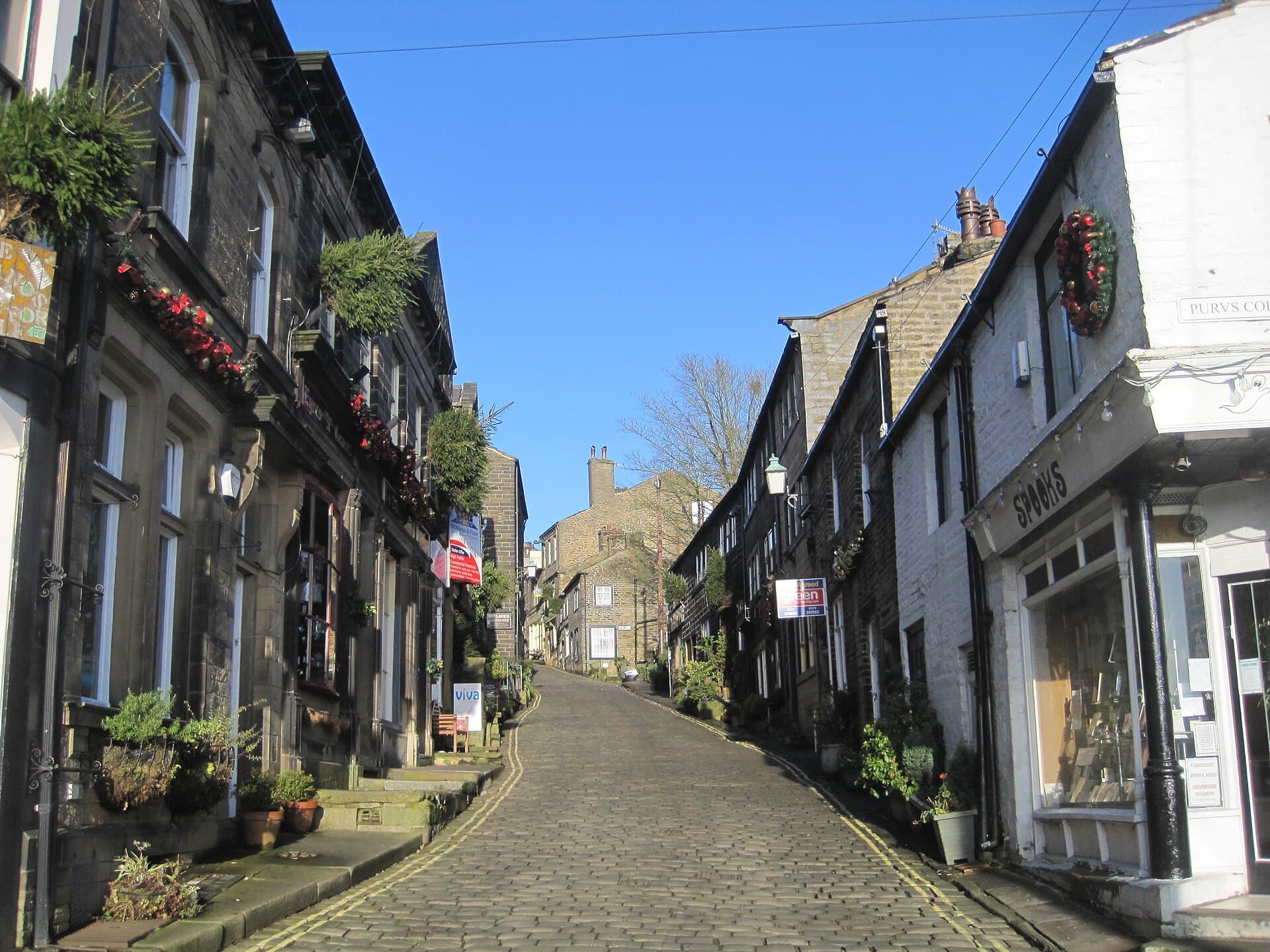
Haworth, United Kingdomianpudsey / CC BY 3.0, via Wikimedia Commons
GB

Haworth

Where the wild moors cradle literary genius.

The secrets of Haworth

Haworth, as no one tells it.

Not the postcards. The stories even locals don't know — whispered in your ear, right where they happened.

3 secrets below. Many more wait inside the tour.
The Black Bull Pub

Branwell Brontë, the sisters' brother, was a regular at the Black Bull. How did he manage to return home after a night of revelry without incurring his strict father's displeasure?

Full story unlocks in the tour
Haworth Main Street

Many of the appealing shops on Haworth's Main Street today occupy buildings that once served very different purposes in the Brontës' era. One particular shop, now a book and record store, holds a surprising former life.

Full story unlocks in the tour
Brontë Parsonage Museum

Inside the Brontë Parsonage Museum, you can observe many personal items of the family. One large piece of furniture, a cabinet, might seem familiar to readers of *Jane Eyre* for a very specific, eerie detail.

Full story unlocks in the tour
The full tour

Discover every secret of Haworth

Every address, every reveal in full — in your ear, right where it happened.

Get the key to Haworth

You pick your stops. You walk. The voice reveals what the others miss.

Choose your time

How long do you have in Haworth?

No tours available yet. Check back soon — we're preparing them.

About Haworth

The story of Haworth

Haworth, a village in West Yorkshire, England, is a place where the dramatic expanse of the Pennine moors intertwines with a profound literary legacy. Known as the home of the Brontë sisters—Charlotte, Emily, and Anne—this evocative village draws visitors from across the globe. Its steep, stone-paved Main Street, lined with enduring stone cottages, independent shops, and traditional tea rooms, offers a tangible connection to the 19th century.

The village's lasting appeal rests in its carefully preserved character, which allows for an immersive journey into the past. Beyond its literary connections, Haworth presents a blend of culture, nature, and Victorian allure, making it a compelling destination for those seeking both historical insight and the wild beauty of the Yorkshire countryside.

History

Haworth's recorded history reaches back to 1209, its name possibly deriving from 'hedged enclosure' or 'hawthorn enclosure.' Initially a modest farming community, its economy relied on agriculture during the Middle Ages. The 18th century saw Haworth expand as a hub for the wool trade, with many of the houses from this period still standing.

The 19th century brought significant transformation with the Industrial Revolution and the arrival of the railway in 1867. This led to a rapid population increase, with many residents finding work in the local mills and factories. Haworth became an industrial center, and while it bordered open countryside, it was also densely populated and suffered from poor sanitation, contributing to a notoriously high death rate. Infant mortality was particularly stark, with 41% of children dying before the age of six in the mid-19th century. Patrick Brontë, the sisters' father, commissioned a report in 1850 that led to crucial health improvements in the village.

The Brontë family moved to Haworth in 1820 when Patrick Brontë became the curate at the village church. They resided in the Georgian parsonage, now the Brontë Parsonage Museum, where Charlotte, Emily, and Anne composed their renowned novels like Jane Eyre, Wuthering Heights, and The Tenant of Wildfell Hall. The wild, windswept moors surrounding Haworth profoundly influenced their writing, becoming almost characters themselves, reflecting themes of freedom, isolation, and tumultuous emotions.

After the Brontës, literary pilgrimages became a significant source of income, especially following the establishment of the Brontë Society in 1893. Today, the village's careful preservation, largely as it was in the mid-19th century, makes it a popular and nostalgic place to visit. The Keighley and Worth Valley Railway, which reopened in 1968 after its closure in 1962, further solidified Haworth's appeal, offering a nostalgic steam train journey through Brontë Country.

What to see

Begin your exploration at the Brontë Parsonage Museum, the former home where Charlotte, Emily, and Anne Brontë lived and wrote. It houses the world's largest collection of Brontë artifacts, including manuscripts and personal items, offering an intimate glimpse into their lives. Adjacent to the Parsonage is St. Michael and All Angels' Church, where Patrick Brontë preached for forty years and where most of the Brontë family are laid to rest.

Wander along Haworth's Main Street, a steep, stone-paved thoroughfare lined with independent shops, cafes, and pubs, many housed in 18th and 19th-century buildings. The street itself has appeared in numerous films and TV productions. For a unique experience, ride the Keighley and Worth Valley Railway, a heritage steam railway that runs through the Worth Valley, with Haworth Station serving as its operational heart and a scenic stop. The railway was famously used in the 1970 film The Railway Children.

No visit to Haworth is complete without walking the Haworth Moors. These wild, heather-covered landscapes inspired the Brontë sisters' novels, particularly Emily's Wuthering Heights. Follow the Brontë Trail to significant landmarks like the Brontë Bridge, Brontë Waterfall, and Top Withens, a ruined farmhouse believed to have inspired the setting for Wuthering Heights.

When to visit

Haworth welcomes visitors year-round, each season offering a distinct atmosphere. For warm-weather activities and clearer skies, the most pleasant time to visit is from early July to late August, when average daily high temperatures hover around 64°F (18°C). September also presents clear skies and agreeable conditions. The village can be particularly enchanting in winter, especially when touched with snow and adorned with Christmas lights, accompanied by seasonal events. Autumn brings crisp air and fall colors, making it an atmospheric time to explore.

Practical

Haworth is easily explored on foot, though its historic center features steep, stone-paved streets, so comfortable shoes are essential. If arriving by public transport, the nearest mainline station is Keighley, which connects to Leeds and Bradford. From Keighley, you can take local bus services or the Keighley & Worth Valley Railway directly into Haworth. If driving, routes typically follow the Aire Valley to Keighley. Parking is available, including at the Parsonage Museum and the main Evans car park in the village center. For those with mobility concerns or pushing prams, it is advisable to park at the top of the village near the Parsonage and explore downhill. The Keighley & Worth Valley Railway offers Day Rover tickets for unlimited hop-on, hop-off travel.

Good to know
What is Haworth primarily known for?
Haworth is primarily known as the home of the Brontë sisters (Charlotte, Emily, and Anne), who composed their celebrated novels here, and for its association with the wild Yorkshire moors that influenced their works.
Can you visit the Brontë sisters' home?
Yes, the Brontë Parsonage Museum is the former home of the Brontë family and is open to the public, housing the world's largest collection of Brontë artifacts.
Is Haworth Main Street stone-paved?
Yes, Haworth's Main Street is famously steep and stone-paved, adding to its historic character and atmosphere.
Can you ride a steam train in Haworth?
Yes, the Keighley and Worth Valley Railway is a heritage steam railway with a station in Haworth, offering scenic journeys through Brontë Country.
What inspired *Wuthering Heights*?
The wild, windswept Haworth Moors and specific locations like Top Withens, a ruined farmhouse, are widely believed to have inspired Emily Brontë's *Wuthering Heights*.
Is Haworth suitable for a day trip?
Haworth is an excellent destination for a day trip, offering a combination of literary history, scenic walks, unique shops, and a heritage railway experience.
Haworth
From€9.00
No booking · activate anytime · 12h to walk it
Get the key to Haworth