Reeder's Alley
One of Helena's oldest streets holds more than just historic brickwork.
Full story unlocks in the tour
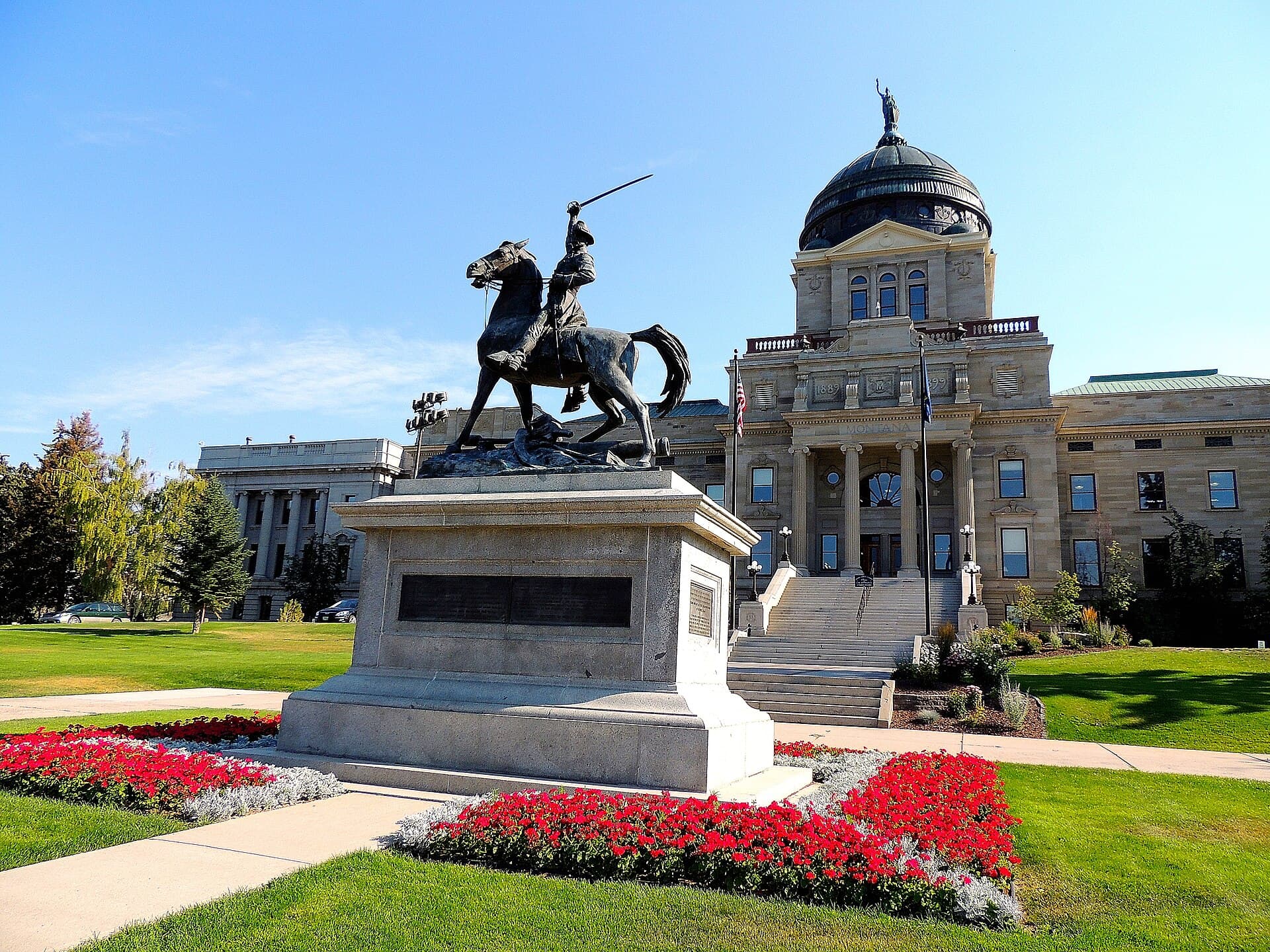 Tracey Elizabeth / CC BY 2.0, via Wikimedia Commons
Self-guided audio walking tour of Helena — GPS route, offline playback, story-driven narration in 32 languages.
“Where gold rush grit meets mountain grandeur.”
Not the postcards. The stories even locals don't know — whispered in your ear, right where they happened.
One of Helena's oldest streets holds more than just historic brickwork.
A gold rush hotspot near Helena is tied to a bizarre legend.
A common tree in Helena once served a grim purpose.
Discover every secret of Helena
Every address, every reveal in full — in your ear, right where it happened.
You pick your stops. You walk. The voice reveals what the others miss.
Your self-guided audio tour of Helena is ready — pick your landmarks, choose your language, and start the moment you arrive.
BuyLume has a built-in augmented-reality guide. Hold your phone up and its camera shows the street ahead of you, with a glowing arrow laid over the real view that always points to your next stop — no map to puzzle over, no wrong turns. Like everything in Lume, it works fully offline.
Helena, Montana, the state's capital, is a city where the echoes of a booming gold rush era blend with the serene beauty of the Rocky Mountains. Originally founded by chance in 1864 by four prospectors who struck gold in what they called "Last Chance Gulch," Helena quickly transformed from a tent camp into a thriving, affluent town. By 1888, it was rumored to have more millionaires per capita than any other city in the world, a legacy reflected in its preserved Victorian architecture and opulent civic buildings.
Today, Helena offers a unique combination of historical exploration and outdoor adventure. Visitors can wander through historic districts like Reeder's Alley, explore the grand State Capitol, or immerse themselves in the region's natural landscapes. The city is a gateway to extensive trail systems, sparkling lakes, and the Missouri River, making it a hub for hiking, biking, and water activities. Helena provides a quieter, more intimate Montana experience compared to larger tourist destinations, yet it remains a lively center of culture and community.
## From Gold Dust to State Capital Helena's story begins in July 1864, when a group of four disheartened gold miners, often called the "Four Georgians," made one "last chance" effort in a gulch and discovered a significant gold deposit. This discovery ignited a gold rush, rapidly transforming the area into a bustling mining camp known as Last Chance Gulch. The influx of prospectors brought immense wealth, and by 1888, Helena was home to an extraordinary number of millionaires, leading to the construction of many elaborate Victorian-style buildings that still stand today.
The city's strategic central location and its position on the Mullan trail attracted merchants and bankers, helping Helena to flourish beyond a typical boom-and-bust mining town. In 1875, Helena was designated the capital of the Montana Territory. When Montana achieved statehood in 1889, Helena engaged in a fierce, protracted battle with Anaconda to become the permanent state capital, a contest it ultimately won, solidifying its importance in the region.
Despite its rapid growth and prosperity, early Helena faced challenges. The first streets were laid out along existing mining paths, resulting in some uniquely shaped city blocks. The city also experienced significant damage from earthquakes in 1935, which led to the demolition of structures like the Hotel Broadwater and its famed Natatorium, once the world's largest indoor swimming pool. Today, Helena continues to honor its past through preserved historic districts and museums, while also embracing its role as a modern state capital and a hub for outdoor recreation.
Begin your exploration in Last Chance Gulch, Helena's historic downtown, which follows the winding path of the original gold-bearing creek. Here, you'll find a pedestrian walking mall lined with shops, galleries, and restaurants. Nearby, Reeder's Alley offers a glimpse into the city's early days with its preserved miners' cabins and brick walkways, making it the oldest section of Helena.
Architectural highlights include the Montana State Capitol Building, a Greek Classical structure completed in 1902, and the imposing Cathedral of St. Helena, inspired by European Gothic cathedrals and known for its twin spires and 59 stained-glass windows. For sweeping views of the city and surrounding mountains, hike or bike the trails of Mount Helena City Park, a 620-acre park accessible from the city's edge.
Delve deeper into the region's history at the Montana Historical Society Museum and the Original Governor's Mansion. For a unique outdoor experience, take a boat tour through the Gates of the Mountains, a rugged canyon on the Missouri River named by Lewis and Clark.
The best time to visit Helena for comfortable weather and outdoor activities is from early July to mid-August, when temperatures are pleasantly warm. Spring and autumn, particularly May and September, also offer mild conditions, though nights can be cool. While winters are cold and snowy, Helena is also a destination for winter sports, with nearby snowmobiling areas and ice fishing opportunities.
Helena is served by Helena Regional Airport (HLN), located two miles northeast of the city. It offers direct flights to major hubs like Seattle, Salt Lake City, and Denver via Delta, United, and Alaska Airlines. For domestic air travel starting February 1, 2026, a Montana REAL ID driver's license, passport, or other acceptable ID will be required. Car rental agencies are available at the airport.
Within the city, the downtown area is walkable. While ride-sharing services exist, they may be less frequent late at night compared to larger cities, so planning transportation in advance for evening outings is recommended. Helena offers a range of accommodation, from hotels and motels to camping and trailer sites.
Helena in Korean, in Chinese or in Hebrew — and 29 more languages, every stop narrated by a native voice. The widest language range of any self-guided audio tour.
Available in: