AU

Hervey Bay

Where humpbacks glide and a sand island calls.

The secrets of Hervey Bay

Hervey Bay, as no one tells it.

Not the postcards. The stories even locals don't know — whispered in your ear, right where they happened.

3 secrets below. Many more wait inside the tour.
Urangan Pier

This long pier, reaching almost a kilometer into the bay, holds a secret from its industrial origins.

Full story unlocks in the tour
Hervey Bay's Suburbs

The names of some Hervey Bay suburbs reveal a deep connection to the land's original inhabitants.

Full story unlocks in the tour
Mount Walsh National Park

Beyond the well-worn paths, a short walk in a nearby national park leads to a natural reward known only to those who live nearby.

Full story unlocks in the tour
The full tour

Discover every secret of Hervey Bay

Every address, every reveal in full — in your ear, right where it happened.

Get the key to Hervey Bay

You pick your stops. You walk. The voice reveals what the others miss.

Choose your time

How long do you have in Hervey Bay?

No tours available yet. Check back soon — we're preparing them.

About Hervey Bay

The story of Hervey Bay

Hervey Bay, a coastal city on Queensland's Fraser Coast, offers a relaxed atmosphere and holds the distinction of being the world's first Whale Heritage Site. Located approximately 3.5 hours north of Brisbane, it serves as a primary entry point to K'gari (formerly Fraser Island), a World Heritage-listed location, and Lady Elliot Island on the southern Great Barrier Reef.

The city is celebrated for its calm, sheltered waters, protected by K'gari, which create safe swimming conditions and a sanctuary for marine life. Hervey Bay presents a blend of natural beauty and a laid-back way of life, appealing to families, couples, and mature travelers seeking outdoor adventures and encounters with wildlife. The city's Esplanade, a long stretch of waterfront, acts as a central point for walking, cycling, dining, and enjoying ocean views.

History

Ancient Roots and European Arrival

The history of the Hervey Bay region extends back thousands of years, with the traditional owners of the land being the Butchulla people. The Butchulla were skilled fishermen, hunters, and gatherers, and evidence of their enduring presence can be found in archaeological locations throughout the region, revealing fish traps, stone tools, and collected shellfish. Their profound spiritual connection to the land and sea, along with sustainable practices like controlled burning, shaped the landscape and sustained a delicate ecological balance.

European contact began in 1770 when Captain James Cook sailed past and named the bay "Hervey's Bay" in honor of Admiral Augustus Hervey, a British naval officer. Cook, however, mistakenly believed K'gari (Fraser Island) was part of the mainland due to the shallow waters. It wasn't until the 1850s that European settlers began to arrive, with the first recorded land sale in 1852. Boyle Martin is recognized as the first permanent European settler in the Pialba area in 1863, engaging in timber harvesting.

Growth as a Port and Resort Town

The town of Hervey Bay was established in the 1860s as a port for the wool and meat trade. Initially, it developed as a series of small coastal villages—Pialba, Scarness, Torquay, and Urangan—each growing independently before merging. The region's fertile volcanic soils supported agriculture, with sugar cane, citrus fruits, and cattle breeding becoming important industries. The construction of a railway line from Maryborough to Pialba in 1896 was a pivotal moment, transforming the coast into an accessible resort destination and facilitating agricultural exports.

In the early 20th century, the economy relied on sugar, timber, and coal. The deep-water Urangan Pier, completed between 1913 and 1917, was crucial for direct export, bypassing intermediaries. By the 1930s, Hervey Bay had developed into a classic resort town, featuring hotels, dance halls, picture theatres, seaside cafes, and popular camping grounds. The post-World War II era, with increased car ownership, led to a surge in tourism, shifting accommodation from boarding houses to motels and holiday flats. Hervey Bay was officially proclaimed a city in 1984.

Whale Watching Capital

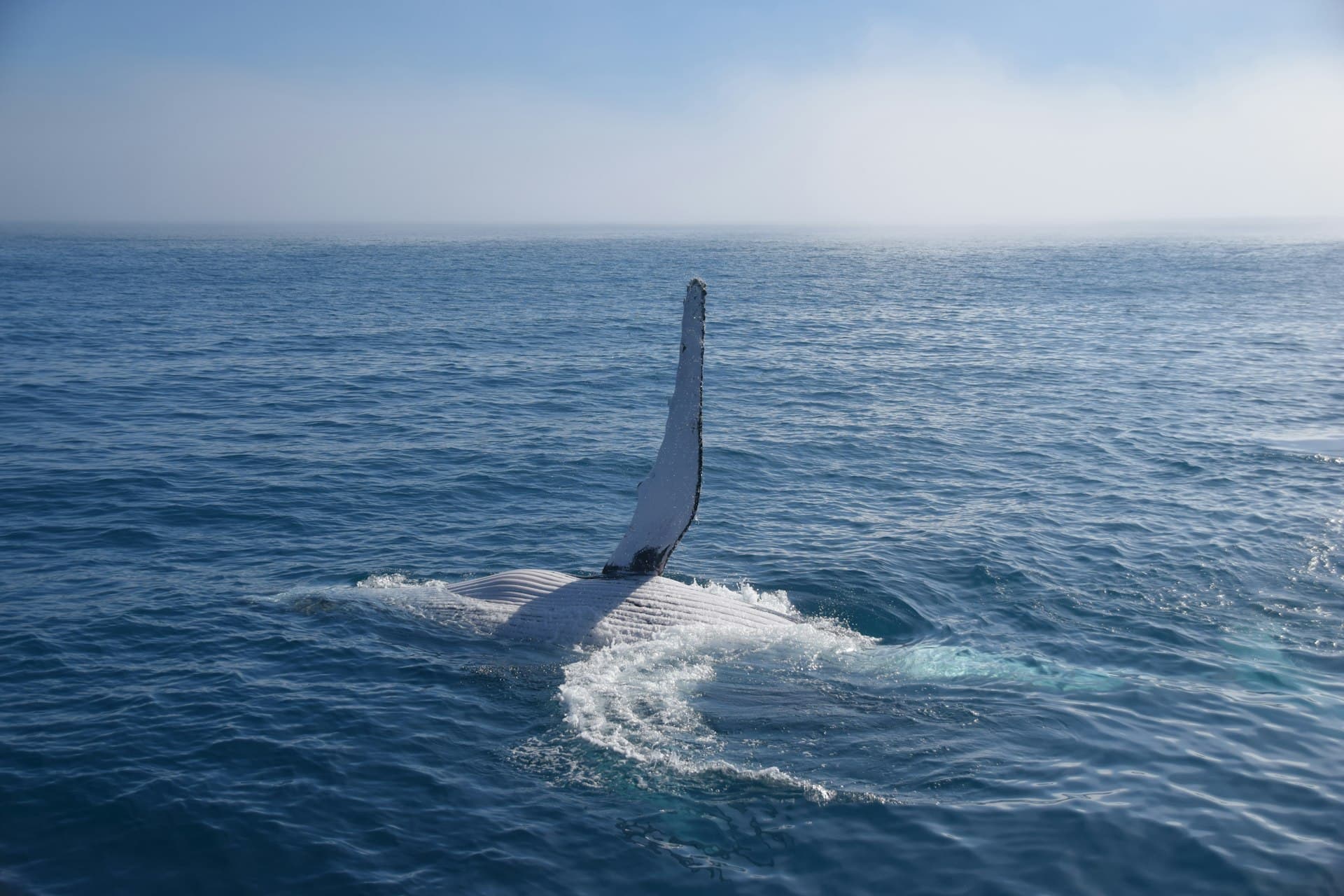
A significant turning point for Hervey Bay's modern tourism specialization was the launch of the first commercial humpback whale watching tours in 1987. The bay's calm, protected waters, shielded by K'gari, provide an ideal stopover for humpback whales during their annual migration, particularly for mothers and calves. This led to Hervey Bay being recognized as the 'whale watching capital of Australia.' In 2019, the World Cetacean Alliance designated Hervey Bay as the world's first Whale Heritage Site, acknowledging its commitment to sustainable whale and dolphin watching.

What to see

Hervey Bay offers a range of attractions, from natural wonders to historical locations. The Urangan Pier stands as a prominent landmark, stretching 868 meters into the ocean. It's a popular place for fishing, walking, and observing marine life like fish, stingrays, and even dolphins.

The Hervey Bay Esplanade extends for approximately 17 kilometers along the beachfront, connecting Urangan to Point Vernon. This paved pathway is ideal for walking, cycling, and enjoying the coastal scenery, with numerous parks, play areas, and cafes along the route.

As the entry point to K'gari (Fraser Island), many visitors embark on day trips or multi-day adventures to explore the world's largest sand island. Tours often include highlights such as Lake McKenzie, 75 Mile Beach, Eli Creek, and the Maheno Shipwreck.

For nature enthusiasts, the Hervey Bay Botanic Garden offers a peaceful space with diverse plant collections, including an orchid house. The WetSide Water Education Park provides family-friendly fun with various water attractions.

During whale season, whale watching cruises are a primary draw, offering opportunities to see humpback whales up close in the calm waters of the bay. Dolphin and turtle encounters are also possible.

When to visit

Hervey Bay experiences a humid subtropical climate, making it a year-round destination. Summers (December to February) are warm and humid, with average temperatures around 25.9°C (78.6°F) and highs reaching 28.6°C (83.5°F), though it is also the wettest season. Winters (June to August) are mild and relatively dry, with average temperatures around 17.1°C (62.8°F).

The peak whale watching season for humpback whales is from mid-July to early November, with August and September offering the highest number of sightings. For those not focused on whales, March and April offer stable weather and potentially cheaper accommodation. Lady Elliot Island sees peak manta ray season from May to August and turtle nesting from November to January.

Practical

Hervey Bay is located about a 3.5-hour drive north of Brisbane. The city is easily navigable, with most resorts, motels, cafes, and restaurants situated along the Esplanade. For exploring the region, tours to K'gari (Fraser Island) and whale watching cruises can be booked online or through local visitor centers. Many tours offer pick-up and drop-off from select Hervey Bay locations.

Given the subtropical climate, lightweight and breathable clothing is recommended for most of the year. During winter months (June to August), a warm jacket or sweater may be needed for cooler evenings. Sun protection, including a broad-brimmed hat, is essential year-round. While many tours can be booked on arrival, it's advisable to book ahead during peak periods like whale watching season and school holidays to secure preferred dates.

Good to know
What is Hervey Bay known for?
Hervey Bay is widely recognized as the 'Whale Watching Capital of Australia' and the world's first Whale Heritage Site, offering exceptional encounters with humpback whales. It is also the primary mainland access point to K'gari (Fraser Island), a World Heritage-listed location.
Can you swim with whales in Hervey Bay?
Yes, some tours in Hervey Bay offer the opportunity to swim with humpback whales, typically from mid-July to mid-September, when conditions permit.
How long is the Urangan Pier?
The historic Urangan Pier extends 868 meters into the ocean, making it one of the longest historic piers in Australia.
Is Hervey Bay a good base for exploring the region?
Yes, Hervey Bay is an ideal base for exploring the wider Fraser Coast region, including K'gari (Fraser Island) and Lady Elliot Island on the southern Great Barrier Reef.
What is the Esplanade in Hervey Bay?
The Esplanade in Hervey Bay is a 17-kilometer stretch of waterfront pathway that runs along the beach from Urangan to Point Vernon, featuring parks, cafes, restaurants, and shops.
Are there other wildlife encounters besides whales?
Beyond whale watching, Hervey Bay offers opportunities to see dolphins and dugongs, often spotted off the shoreline or near the Urangan Pier. Lady Elliot Island is also known for manta rays and turtles.
Hervey Bay
From€9.00
No booking · activate anytime · 12h to walk it
Get the key to Hervey Bay