Frederiksborg Castle Chapel
Most of Frederiksborg Castle was ravaged by a devastating fire in 1859, yet one significant part remained largely untouched.
Full story unlocks in the tour
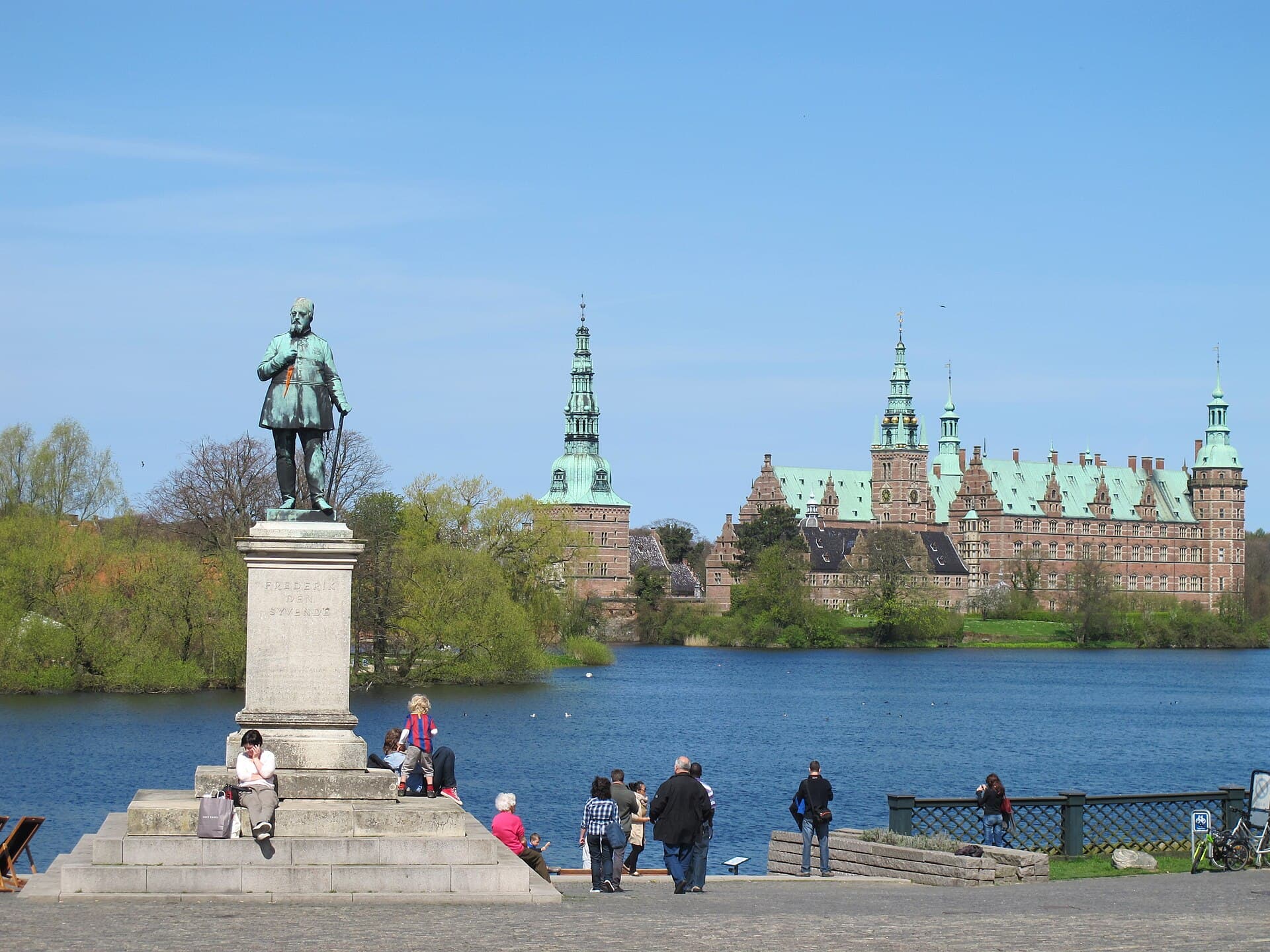 Андрей Романенко / CC BY-SA 3.0, via Wikimedia Commons
“Where royal legacy meets serene lakeside expanses.”
Not the postcards. The stories even locals don't know — whispered in your ear, right where they happened.
Most of Frederiksborg Castle was ravaged by a devastating fire in 1859, yet one significant part remained largely untouched.
Beyond the grand castle, Hillerød holds the eerie remains of a medieval monastery with an unusual collection.
Just a short drive from Hillerød, a Renaissance castle offers a glimpse into a time capsule, often overlooked by visitors.
Discover every secret of Hillerød
Every address, every reveal in full — in your ear, right where it happened.
You pick your stops. You walk. The voice reveals what the others miss.
No tours available yet. Check back soon — we're preparing them.
Hillerød, a Danish town in the heart of North Zealand, offers a captivating blend of royal history, cultural experiences, and natural splendor. Located approximately 30 kilometers (18 miles) northwest of Copenhagen, it serves as a vital regional center and transportation hub. The town is best known for Frederiksborg Castle, a Renaissance complex that appears to float upon the tranquil Slotssøen (Castle Lake).
Beyond the fairytale-like castle, Hillerød provides a serene environment with picturesque streets, local shops, and inviting cafes. It's an ideal destination for those seeking to immerse themselves in Danish culture, whether for a day trip from Copenhagen or a longer stay. The town is also surrounded by expansive forests, Gribskov and Store Dyrehave, offering ample opportunities for outdoor activities like hiking and cycling.
Hillerød's origins trace back to early medieval times, with its name first appearing in writing in 1552 as "Hylderødz." The name derives from the Old Norse male name "Hildi" and the suffix "-rød," meaning "clearing" in a forest, thus signifying "Hildi's clearing."
The town's destiny shifted significantly in 1550 when Crown Prince Frederick (who would later become Frederick II of Denmark) acquired a property known as Hillerødsholm. His son, Christian IV, born at Frederiksborg Castle in 1577, embarked on an ambitious project between 1602 and 1625, transforming the existing structure into the grand Frederiksborg Castle we see today. This palatial complex, built in the Dutch Renaissance style, became the largest Renaissance residence in Scandinavia and a symbol of Christian IV's power.
Although Hillerød was never officially a "market town" with special trading rights, it flourished due to the numerous privileges granted by successive monarchs. However, its prominence experienced a setback in the 1720s when King Frederick IV moved his court to Fredensborg Palace. From 1772 until 1908, the town was even named Frederiksborg after its iconic castle. The establishment of Hillerød's first town council in 1778 and the creation of its town shield, featuring a flowering elder tree, in 1787 marked further steps in its civic development.
The arrival of the railway in 1864, with the North Line connecting Copenhagen and Helsingør, brought renewed growth and prosperity to Hillerød, solidifying its status as a crucial commercial and transportation hub in North Zealand.
A significant event in Hillerød's history was the devastating fire that swept through Frederiksborg Castle in 1859. Large sections of the castle's interior were destroyed, with only the outer walls remaining in many places. Miraculously, the Chapel and the Audience Chamber largely escaped damage. The extensive reconstruction efforts, led by architect Ferdinand Meldahl between 1860 and 1884, were funded by public subscription, royal and state contributions, and a substantial donation from J. C. Jacobsen of the Carlsberg Brewery. Jacobsen's support also led to the establishment of the Museum of National History within the rebuilt castle, which officially opened in 1882.
The undisputed centerpiece of Hillerød is Frederiksborg Castle, a grand Renaissance palace situated on three islets in the Castle Lake. It houses the Museum of National History, where you can explore 500 years of Danish history through art, artifacts, and royal furnishings. Don't miss the opulent Chapel, which remarkably survived a devastating fire in 1859. Surrounding the castle are the meticulously maintained Frederiksborg Castle Gardens, featuring both formal Baroque and more naturalistic landscape sections, perfect for leisurely strolls or a picnic.
For a different historical perspective, venture 6 kilometers (3.75 miles) west of Hillerød to the Æbelholt Abbey Museum, where you can explore the ruins of a medieval Augustinian monastery and its unique collection of monastic skeletons and medicinal herbs. The town center of Hillerød itself offers a pleasant experience with its charming streets, local shops, and cafes. For shopping enthusiasts, the SlotsArkaderne shopping center provides a modern retail experience. Nature lovers can explore the vast Gribskov Forest to the north or Store Dyrehave to the south, both offering extensive trails for hiking and enjoying Denmark's natural landscapes.
The best time to visit Hillerød for warm-weather activities is from late June to late August, when average daily high temperatures are above 18°C (64°F) and the castle gardens are in full bloom. July is the warmest month, with an average high of 20.2°C (69°F) and low of 14.8°C (55°F). Spring (April to May) and early autumn (September) also offer mild weather and fewer crowds, with average temperatures ranging from 10.3°C to 16.6°C (50.5°F to 61.9°F) respectively.
Hillerød is easily accessible from Copenhagen. The S-train (Line A) runs directly from Copenhagen Central Station to Hillerød Station, with a journey time of approximately 40-45 minutes. From Hillerød Station, local buses (like bus 301 or 302) can take you directly to Frederiksborg Castle, or you can enjoy a pleasant 10-minute walk. The town is quite walkable, and a small ferry also operates between the castle and the main square.
For visitor information, the Tourist Inspiration Hillerød is located in Kunsthuset Annaborg, Frederiksværksgade 2A, near Frederiksborg Castle's parking lot. While Danish is the official language, English is widely understood in tourist areas. Public transport within the local area is generally affordable, with day passes available. August, being high season, may see hotel accommodation ranging from DKK 800-1500 per night for a mid-range hotel.