Harbour Town Lighthouse
Der rot-weiß gestreifte Leuchtturm in Harbour Town ist mehr als nur ein markantes Wahrzeichen.
Die ganze Geschichte wird in der Tour freigeschaltet
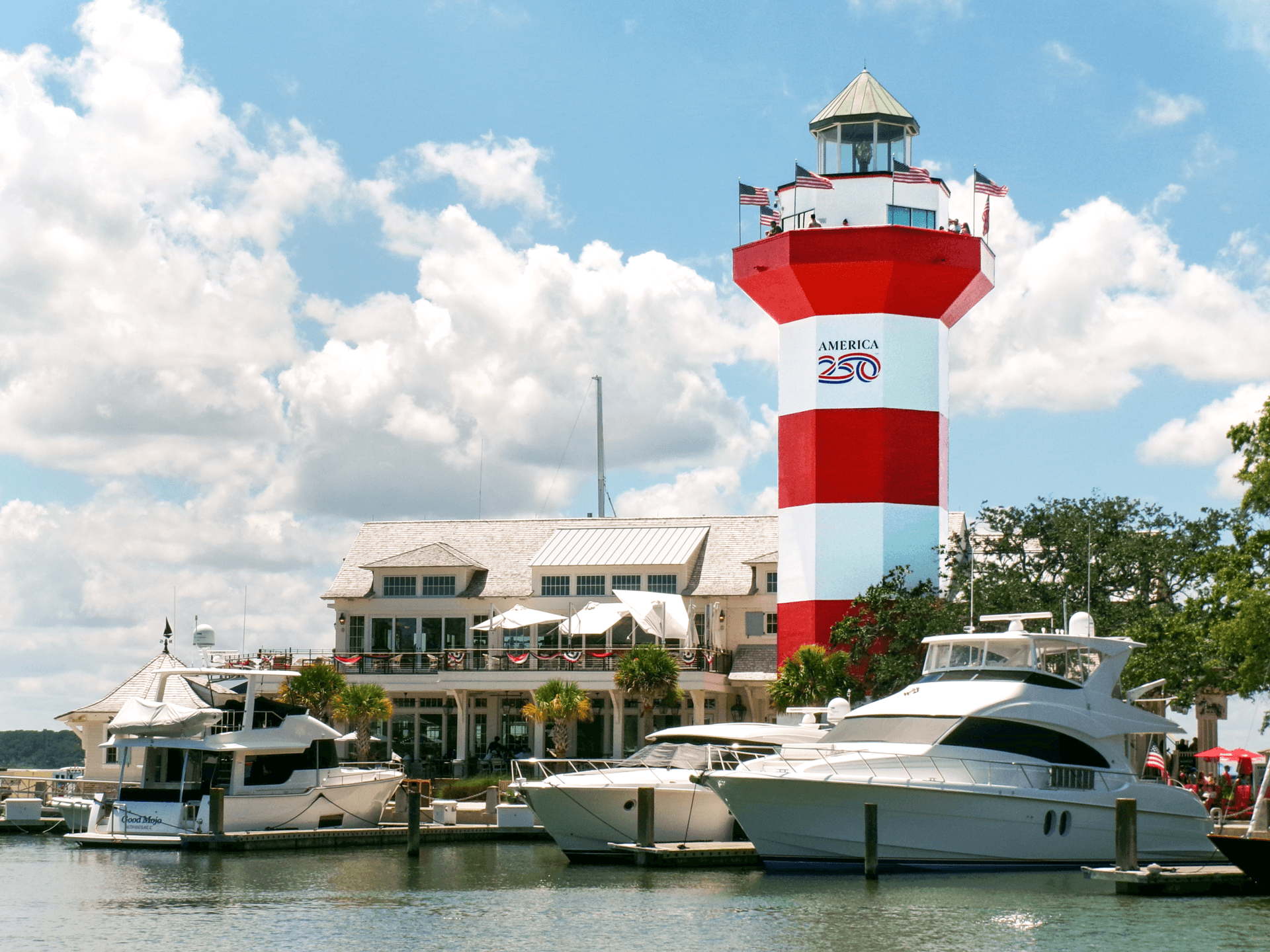 Locust member / CC BY 4.0, via Wikimedia Commons
Selbstgeführte Audio-Walking-Tour durch Hilton Head — GPS-Route, Offline-Wiedergabe, erzählerische Narration in 32 Sprachen.
“Wo die Atlantikbrise Gullah-Geschichten und den Duft von Golfplatzgrüns trägt.”
Nicht die Postkarten. Die Geschichten, die selbst Einheimische nicht kennen – dir ins Ohr geflüstert, genau dort, wo sie geschahen.
Der rot-weiß gestreifte Leuchtturm in Harbour Town ist mehr als nur ein markantes Wahrzeichen.
Vor der Emanzipationsproklamation gedieh auf Hilton Head Island eine einzigartige Gemeinschaft von ehemals versklavten Menschen.
Unter den architektonischen Überresten der Insel soll ein Plantagenhaus einen permanenten, geisterhaften Bewohner beherbergen.
Entdecke jedes Geheimnis von Hilton Head
Jede Adresse, jede Enthüllung vollständig – in deinem Ohr, genau dort, wo es geschah.
Du wählst deine Stationen. Du gehst. Die Stimme enthüllt, was andere übersehen.
Deine selbstgeführte Audio-Tour durch Hilton Head ist bereit – wähle deine Sehenswürdigkeiten, deine Sprache und starte, sobald du ankommst.
KaufenLume enthält einen integrierten Augmented-Reality-Guide. Halten Sie Ihr Handy hoch: Die Kamera zeigt die Straße vor Ihnen, mit einem leuchtenden Pfeil über dem echten Bild, der immer auf Ihren nächsten Stopp zeigt — keine Karte zum Rätseln, keine falschen Abzweigungen. Wie alles bei Lume funktioniert es komplett offline.
Hilton Head Island, eine sichelförmige Barriereinsel vor der Küste South Carolinas, ist ein Ort, an dem die Kunstfertigkeit der Natur mit einem entspannten Lowcountry-Rhythmus verschmilzt. Bekannt für seine zwölf Meilen unberührter Strände, Meisterschaftsgolfplätze und einen tiefen Respekt vor seiner natürlichen Umwelt, bietet die Insel eine besondere Mischung aus Erkundung der Natur und kultureller Immersion. Die maritimen Wälder, Salzwiesen und das komplexe Lagunennetz bieten Zufluchtsorte für eine vielfältige Tierwelt, von Alligatoren und Unechten Karettschildkröten bis hin zu einer lebhaften Vogelpopulation.
Das Engagement der Insel für den Erhalt ihrer natürlichen Pracht zeigt sich in ihren durchdachten Bauvorschriften und zahlreichen Grünflächen, die ein harmonisches Gleichgewicht zwischen Entwicklung und Naturschutz fördern. Über seine natürliche Anziehungskraft hinaus nimmt Hilton Head eine bedeutende Stellung in der amerikanischen Geschichte ein, insbesondere in Bezug auf das Gullah-Volk, dessen einzigartige Kultur und Sprache den Charakter der Insel seit Generationen prägen. Dieses Erbe ist untrennbar mit dem Gefüge der Insel verbunden und lädt Besucher ein, sich mit einem tiefen und beständigen Vermächtnis zu verbinden.
## Von indigenen Ländern zur europäischen Besiedlung Tausende von Jahren vor der Ankunft der Europäer wurde Hilton Head Island von verschiedenen Stämmen amerikanischer Ureinwohner bewohnt, darunter die Edisto und Escamacu. Spuren ihrer Anwesenheit, wie Muschelhaufen, sind noch heute zu finden. Die aufgezeichnete Geschichte der Insel begann 1663, als der englische Kapitän William Hilton die Insel sichtete und sie nach sich selbst in 'Hilton's Head' benannte.
## Die Plantagenära und die Gullah-Gemeinschaft Im 18. und frühen 19. Jahrhundert wurde Hilton Head zu einem Zentrum für Sea Island-Baumwollplantagen, einer äußerst lukrativen Kulturpflanze. Diese Ära brachte eine große Zahl versklavter Afrikaner auf die Insel, deren Nachkommen das Fundament der Gullah-Kultur bilden sollten. Die isolierte Natur der Sea Islands ermöglichte es dem Gullah-Volk, einen Großteil seiner westafrikanischen sprachlichen und kulturellen Traditionen zu bewahren und eine einzigartige Kreolsprache und eigene Bräuche zu schmieden, die bis heute Bestand haben.
## Der Bürgerkrieg und Mitchelville Mit dem Ausbruch des Bürgerkriegs spielte Hilton Head eine zentrale Rolle. Im November 1861 sicherten Unionstruppen die Insel in der Schlacht von Port Royal. Dies führte zu einem bedeutenden Ereignis in der amerikanischen Geschichte: der Gründung von Mitchelville im Jahr 1862. Mitchelville war die erste selbstverwaltete Stadt für ehemals versklavte Menschen in den Vereinigten Staaten und bot ihren Bewohnern das Recht zu wählen, Land zu besitzen und ihre eigenen Gesetze zu erlassen. Sie diente als leuchtendes Vorbild der Hoffnung und als Modell für Selbstversorgung in einer turbulenten Zeit.
## Entwicklung im 20. Jahrhundert Nach dem Bürgerkrieg verschob sich die Wirtschaft der Insel, und viele Jahre blieb sie relativ unentwickelt. Erst Mitte des 20. Jahrhunderts begann Hilton Head seine Verwandlung in ein Urlaubsziel. Charles Frasers Vision für Sea Pines Resort in den 1950er Jahren priorisierte eine harmonische Entwicklung mit der Natur und setzte damit einen Präzedenzfall für das zukünftige Wachstum der Insel. Dieser Ansatz führte zur Schaffung sorgfältig geplanter Gemeinden, Golfplätze und einer Betonung des Erhalts der natürlichen Pracht der Insel, was Besucher und Einwohner gleichermaßen anzog.
Beginnen Sie Ihre Erkundung am Harbour Town Lighthouse, einem ikonischen rot-weiß gestreiften Wahrzeichen mit weitem Blick über den Calibogue Sound und den Atlantischen Ozean. Steigen Sie zur Spitze auf, um einen einzigartigen Aussichtspunkt zu genießen, und erkunden Sie das kleine Museum im Inneren. Tauchen Sie tief in das bedeutende Erbe der Insel im Mitchelville Freedom Park ein, dem Standort der ersten selbstverwalteten Stadt für ehemals versklavte Menschen in den Vereinigten Staaten. Informationstafeln und Wanderwege erzählen die eindrucksvolle Geschichte dieser Pioniergemeinschaft. Für ein tieferes Verständnis der Gullah-Kultur besuchen Sie das Gullah Cultural Works oder nehmen Sie an einer geführten Tour teil, um mehr über ihre Sprache, Traditionen und Geschichte zu erfahren. Naturliebhaber werden das Coastal Discovery Museum zu schätzen wissen, das interaktive Ausstellungen, Naturpfade und geführte Touren bietet, die die Ökologie und Tierwelt des Lowcountry präsentieren. Erkunden Sie die unberührten Strände, die sich perfekt zum Spazierengehen, Radfahren oder einfach zum Entspannen eignen. Beobachten Sie Delfine, die in der Brandung spielen. Für eine andere Perspektive sollten Sie eine Kajak- oder Paddleboard-Tour durch die Salzwiesen in Betracht ziehen, wo Sie eine vielfältige Vogelwelt und Meeresbewohner beobachten können.
Die günstigsten Reisezeiten für Hilton Head Island sind im Allgemeinen Frühling (April bis Mai) und Herbst (September bis Oktober). In diesen Monaten ist das Wetter angenehm warm, ideal für Outdoor-Aktivitäten, und die Menschenmengen sind kleiner als in der Hauptsaison im Sommer. Der Sommer (Juni bis August) bringt wärmere Temperaturen und höhere Luftfeuchtigkeit mit sich, zusammen mit größeren Menschenansammlungen, insbesondere Familien. Der Winter (November bis März) ist milder und bietet ein ruhigeres Erlebnis mit kühleren Temperaturen, obwohl einige Attraktionen möglicherweise reduzierte Öffnungszeiten haben.
Hilton Head Island ist über den Hilton Head Island Airport (HHH) erreichbar, mit Verbindungen zu wichtigen Drehkreuzen. Alternativ ist der Savannah/Hilton Head International Airport (SAV) etwa eine Autostunde entfernt. Sobald Sie auf der Insel sind, wird ein Auto für ausgiebige Erkundungen empfohlen, obwohl ein umfassendes Netz von Radwegen das Radfahren zu einer beliebten Option macht. Die Insel ist sehr fahrradfreundlich mit über 60 Meilen öffentlichen Wegen. Öffentliche Verkehrsmittel sind begrenzt. Die Unterkünfte reichen von Luxusresorts und Hotels bis hin zu Ferienwohnungen und Villen. Die gastronomischen Angebote sind reichlich vorhanden und reichen von frischem Fisch und Meeresfrüchten bis zur Lowcountry-Küche. Reservierungen sind für beliebte Restaurants ratsam, insbesondere während der Hauptsaison. Seien Sie vorsichtig im Umgang mit Alligatoren, insbesondere in der Nähe von Lagunen und Süßwasserquellen.
Hilton Head — Koreanisch, Chinesisch, Hebräisch und 29 weitere Sprachen, jede Station von einer muttersprachlichen Stimme erzählt. Die größte Sprachauswahl aller selbstgeführten Audiotouren.
Verfügbar auf: