Saigon Central Post Office
This grand French colonial building remains a fully functional post office, but its interior maps hold a secret.
Full story unlocks in the tour
 Lê Minh Phát / CC BY 2.0, via Wikimedia Commons
“Ho Chi Minh City: A symphony of scooters, street food, and stories echoing through colonial facades.”
Not the postcards. The stories even locals don't know — whispered in your ear, right where they happened.
This grand French colonial building remains a fully functional post office, but its interior maps hold a secret.
A striking pink church emerges in District 3, a cheerful exception among the city's architecture.
An unassuming apartment block on a busy walking street conceals a vertical village of creativity.
Discover every secret of Ho Chi Minh City
Every address, every reveal in full — in your ear, right where it happened.
You pick your stops. You walk. The voice reveals what the others miss.
No tours available yet. Check back soon — we're preparing them.
Ho Chi Minh City, frequently referred to as Saigon by its residents, stands as Vietnam's largest and most dynamic metropolis. It is a city that engages all senses in the most exhilarating manner—a constant, resonant energy fueled by millions of motorbikes, the fragrant sizzle of street food, and the rich fabric of daily life unfolding on every corner. While its official name honors the revolutionary leader, the spirit of 'Saigon' persists in its cosmopolitan character and undeniable appeal.
From its French colonial architecture to its towering modern skyscrapers, Ho Chi Minh City is a place where history and progress intertwine. It is a destination that demands active participation, not mere observation, providing a profound journey into Vietnamese culture, resilience, and an unparalleled culinary landscape.
The area now known as Ho Chi Minh City began as a Khmer (Cambodian) seaport. In the late 17th century, it was incorporated by the Vietnamese and officially separated from Cambodia in 1698, then named Gia Định. The city began to thrive as Vietnamese and Chinese settlers cleared the marshy land and established a new urban center.
The mid-19th century marked a significant turning point with the arrival of the French. In 1859, French and Spanish forces conquered Vietnam, and by 1862, the French controlled what is now southern Vietnam, naming the region Cochinchina. Saigon became its capital, and later, from 1887 to 1902 and again from 1945 to 1954, it served as the capital of French Indochina. This period left an enduring mark on the city's architecture, with many grand French-style buildings still standing, including the Central Post Office and Notre Dame Cathedral.
After Vietnam achieved independence from France in 1954, the country was divided, and Saigon became the capital of South Vietnam, known officially as the Republic of Vietnam from 1955. During the Second Indochina War, often referred to as the Vietnam War, Saigon served as the headquarters for U.S. military operations. The city experienced intense conflict, with parts damaged in 1968. On April 30, 1975, North Vietnamese troops captured Saigon, signaling the conclusion of the war.
Following the reunification of Vietnam in 1976, Saigon was officially renamed Ho Chi Minh City in honor of the communist leader. While the official name change occurred then, many locals, particularly in the south, continue to refer to the city as Saigon. Since its renaming, Ho Chi Minh City has developed into Vietnam's economic engine, a bustling commercial hub driving manufacturing, trade, and tourism.
Ho Chi Minh City offers a blend of historical landmarks and contemporary attractions. The War Remnants Museum provides a challenging yet essential insight into the Vietnam War and its aftermath. The Reunification Palace, formerly the Independence Palace, is a significant historical site where communist tanks famously entered its gates in 1975. Discover the French colonial architectural wonders like the Saigon Central Post Office and the Notre Dame Cathedral, both iconic symbols of the city.
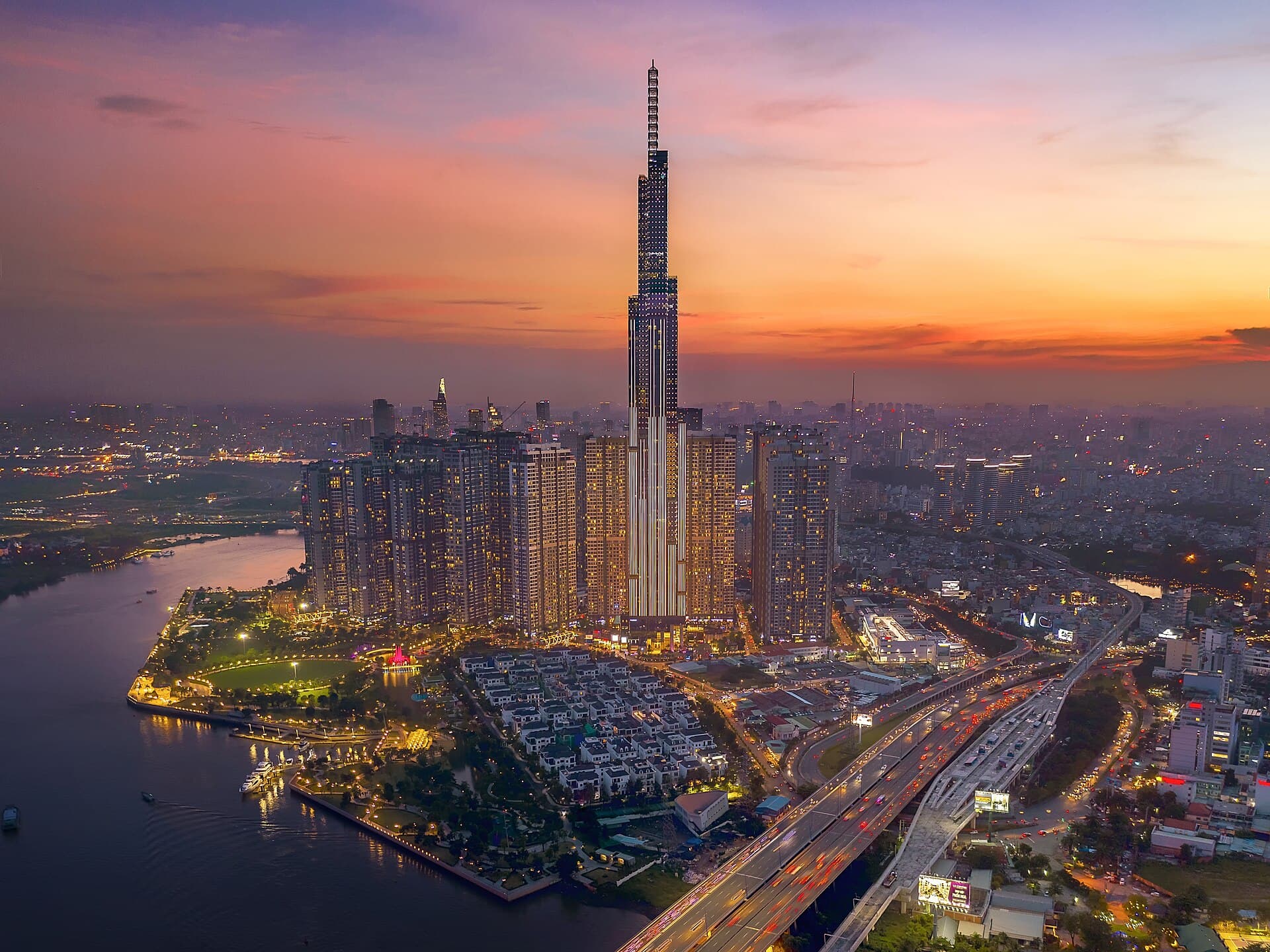
For a deeper historical exploration, venture to the Cu Chi Tunnels, an extensive underground network utilized by the Viet Cong. Explore the lively Ben Thanh Market for everything from local produce to souvenirs and street food. The Saigon Opera House (Municipal Theatre) is an impressive 1898 building, best experienced by attending a performance such as the A O Show. For sweeping city views, ascend the Bitexco Financial Tower or the Landmark 81 Tower, Vietnam's tallest building. Discover the spiritual side at the Jade Emperor Pagoda, one of the city's most important shrines. Take a walk down Nguyen Hue Walking Street, especially in the evening, to experience the city's lively atmosphere.
The best time to visit Ho Chi Minh City is during the dry season, which extends from December to April. These months offer cooler temperatures, lower humidity, and minimal rainfall, making it comfortable for exploring the city's outdoor attractions and walking tours. January is often considered the most pleasant month, with agreeable weather and the chance to experience the festive Lunar New Year (Tet) celebrations. While March and April are also dry, temperatures can be warmer. The wet season, from May to November, brings frequent afternoon showers, but these are usually brief, and the city maintains its lively pace.
Ho Chi Minh City is a busy metropolis, and navigating it requires a few practical considerations. For getting around, ride-hailing apps like Grab are highly recommended for convenience and to avoid potential taxi issues. Mai Linh (green) or Vinasun (white) are reliable taxi companies if you prefer to hail one. While the city is becoming increasingly cashless, it is wise to carry smaller Vietnamese Dong (VND) bills for street vendors and minor purchases. ATMs are widely available, and you can exchange money at gold or jewelry stores for potentially better rates.
Be prepared for the city's constant sounds and dense motorbike traffic; crossing the street often involves a steady, slow walk through the flow of vehicles. While generally safe, be mindful of pickpockets and bag snatchers. Staying in District 1 or District 3 is often suggested for first-time visitors due to their central location and accessibility to major sights. Free Wi-Fi is widely available in cafes and businesses, making it easy to stay connected.