Elysian Fields
The true birthplace of America's favored pastime isn't where you might think.
Full story unlocks in the tour
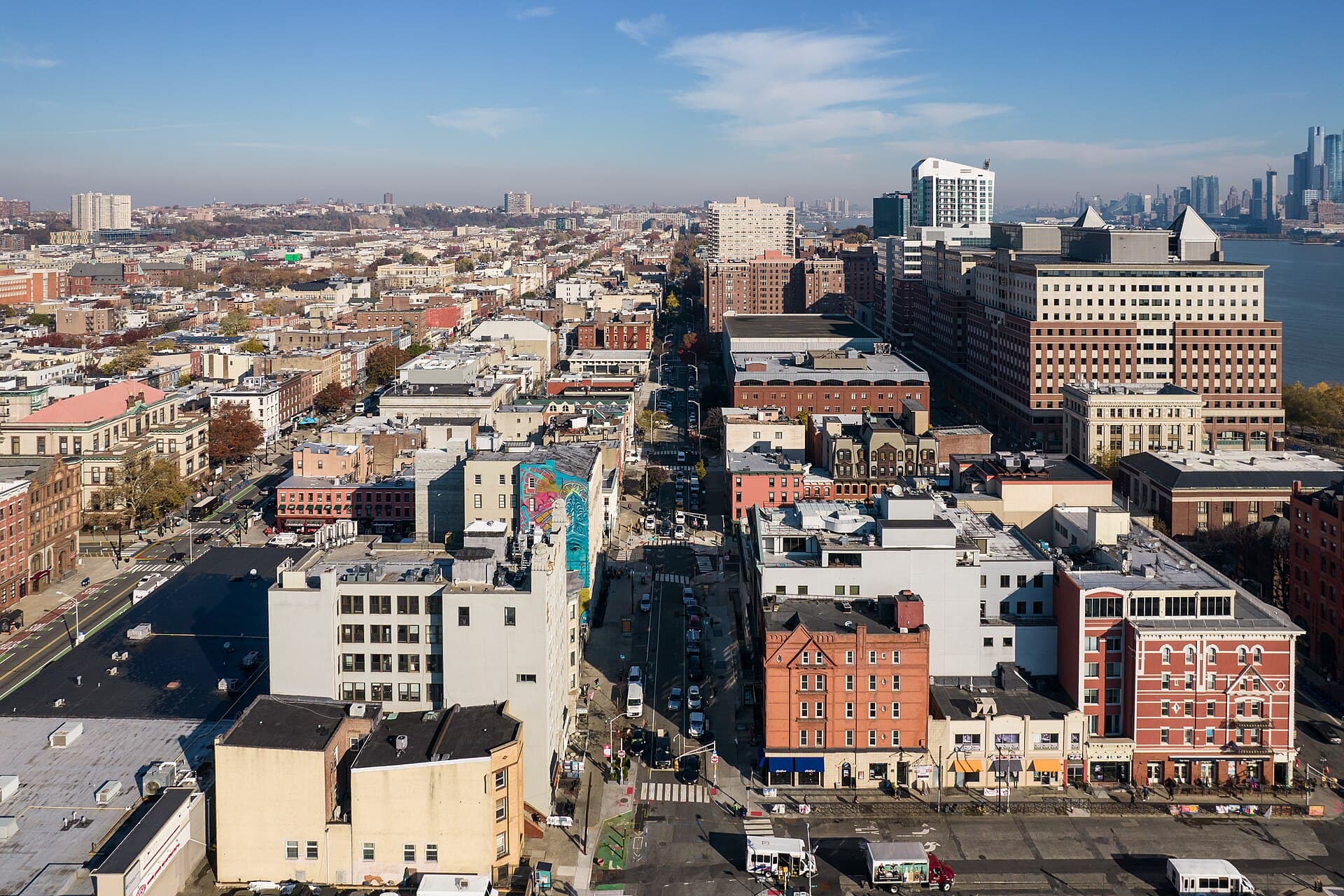 King of Hearts / CC BY-SA 4.0, via Wikimedia Commons
Self-guided audio walking tour of Hoboken — GPS route, offline playback, story-driven narration in 32 languages.
“Beyond Manhattan's shadow, a square mile of unexpected history and vital life.”
Not the postcards. The stories even locals don't know — whispered in your ear, right where they happened.
The true birthplace of America's favored pastime isn't where you might think.
A charming 19th-century folly holds a chilling, unsolved mystery.
Beneath the active main thoroughfare lies an unseen, historic network.
Discover every secret of Hoboken
Every address, every reveal in full — in your ear, right where it happened.
You pick your stops. You walk. The voice reveals what the others miss.


Your self-guided audio tour of Hoboken is ready — pick your landmarks, choose your language, and start the moment you arrive.
BuyLume has a built-in augmented-reality guide. Hold your phone up and its camera shows the street ahead of you, with a glowing arrow laid over the real view that always points to your next stop — no map to puzzle over, no wrong turns. Like everything in Lume, it works fully offline.
Hoboken, often referred to as the "Mile Square City," offers a distinct blend of enduring character and contemporary energy along the Hudson River waterfront. This New Jersey city provides expansive views of the Manhattan skyline, a mere ferry or PATH train ride away, yet cultivates its own singular identity. It's a place where venerable brownstones stand alongside modern developments, and verdant spaces punctuate a densely settled urban landscape.
Beyond its picturesque waterfront, Hoboken is a city with a lively cultural scene, a varied culinary landscape, and a strong sense of community. From its animated main street, Washington Street, to its numerous parks and artistic venues, Hoboken provides a dynamic experience for both residents and visitors seeking a different perspective of the New York metropolitan area.
Before European settlement, the area now known as Hoboken served as a seasonal camp for the Lenni Lenape Native Americans, who called it "Hopoghan Hackingh," meaning "Land of the Tobacco Pipe," due to the serpentine rock they used for carving pipes. Henry Hudson, navigating for the Dutch East India Company, anchored near Weehawken Cove in 1609, establishing European claim to the land. In 1658, Dutch Governor Peter Stuyvesant acquired the land from the Lenape.
In 1784, Colonel John Stevens purchased the land, and the Stevens family became instrumental in Hoboken's growth. In the early 19th century, Stevens envisioned and developed the waterfront as a resort for Manhattanites, creating the world's first commercial steam ferry service between Hoboken and Manhattan in 1811. He also constructed an experimental steam locomotive on his estate in 1825.
Hoboken was incorporated as a city in 1855. Its strategic waterfront location made it a significant port for trans-Atlantic shipping lines and a nexus for rail and water transportation. The city expanded rapidly, drawing waves of immigrants, first Germans, earning it the designation "Little Bremen," followed by Irish, Italians, Yugoslavs, and Latinos. This industrial expansion and diverse populace contributed to Hoboken's spirited character.
During World War I, Hoboken's port became the primary point of embarkation for American troops journeying to Europe, leading to the rallying cry, "Heaven, Hell, or Hoboken... by Christmas." The city's compact dimensions, often referred to as the "Mile Square City," are a defining characteristic, though it actually spans closer to 1.25 square miles.
Hoboken has continued its legacy of innovation, being the site of the world's first modern shipping container port. Today, it maintains a flourishing tech and startup scene. The city is also famously the birthplace of music legend Frank Sinatra, born in 1915, whose legacy is honored with parks and a commemorative statue. Stevens Institute of Technology, one of the oldest technological universities in the United States, was established here in 1870, further cementing Hoboken's connection to education and advancement.
Begin your exploration along the Hudson River Waterfront Walkway, which offers expansive views of the Manhattan skyline and various parks. Visit Sinatra Park and the Frank Sinatra Statue to honor Hoboken's most famous native son. Nearby, Pier C Park provides additional waterfront recreation and vistas.
Delve into local history at the Hoboken Historical Museum, which chronicles the city's past and cultural heritage. For a unique perspective on emergency services, the Hoboken Fire Department Museum allows visitors to observe a 1932 Ahrens Fox fire engine.
Explore Washington Street, the city's main thoroughfare, lined with shops, eateries, and an active atmosphere. For a taste of Hoboken's culinary landscape, consider a stop at Carlo's Bakery, known for its confections. For outdoor activities, kayak on the Hudson River from the Hoboken Cove Community Boathouse or enjoy the green space of Elysian Park, an enduring site for baseball.
For a different kind of evening, seek out one of Hoboken's speakeasies, offering craft cocktails and a Prohibition-era ambiance.
The best time to experience Hoboken's warm-weather activities is from early August to late September, when temperatures are pleasant and skies are often clear. May to June and mid-August to October also offer comfortable weather, with mild temperatures and low humidity. July is very warm and breezy, with temperatures typically ranging from 68-85°F (20-29°C). Spring brings mild temperatures and blooming parks, while summer offers lively street festivals and outdoor activities along the Hudson River.
Hoboken is easily accessible, particularly from Manhattan, via the PATH train to Hoboken Terminal or by ferry. The city is highly walkable, with many attractions within close proximity.
Parking in Hoboken can be challenging. Most streets without meters have designated permit-only parking on one side and resident permit-only parking on the other. Resident permits allow parking on either side, except during street cleaning or temporary restrictions. Business permits allow parking on the "permit" side during working hours. The Hoboken Parking Utility (HPU) uses License Plate Readers, so physical decals are no longer issued for new permits.
For groceries, Hoboken offers various options, including Kings, Trader Joe's, ShopRite, ACME, and Organic Basic Food, with a Whole Foods nearby in Weehawken and Jersey City. The city also has numerous banks, including PNC, Capital One, Wells Fargo, and Chase.
Hoboken in Korean, in Chinese or in Hebrew — and 29 more languages, every stop narrated by a native voice. The widest language range of any self-guided audio tour.
Available in: