De Japanse Overdekte Brug
Kijk goed naar de Japanse Overdekte Brug, een bepalende structuur van Hoi An, en je zult aan beide uiteinden iets ongewoons opmerken.
Volledig verhaal ontgrendeld in de tour
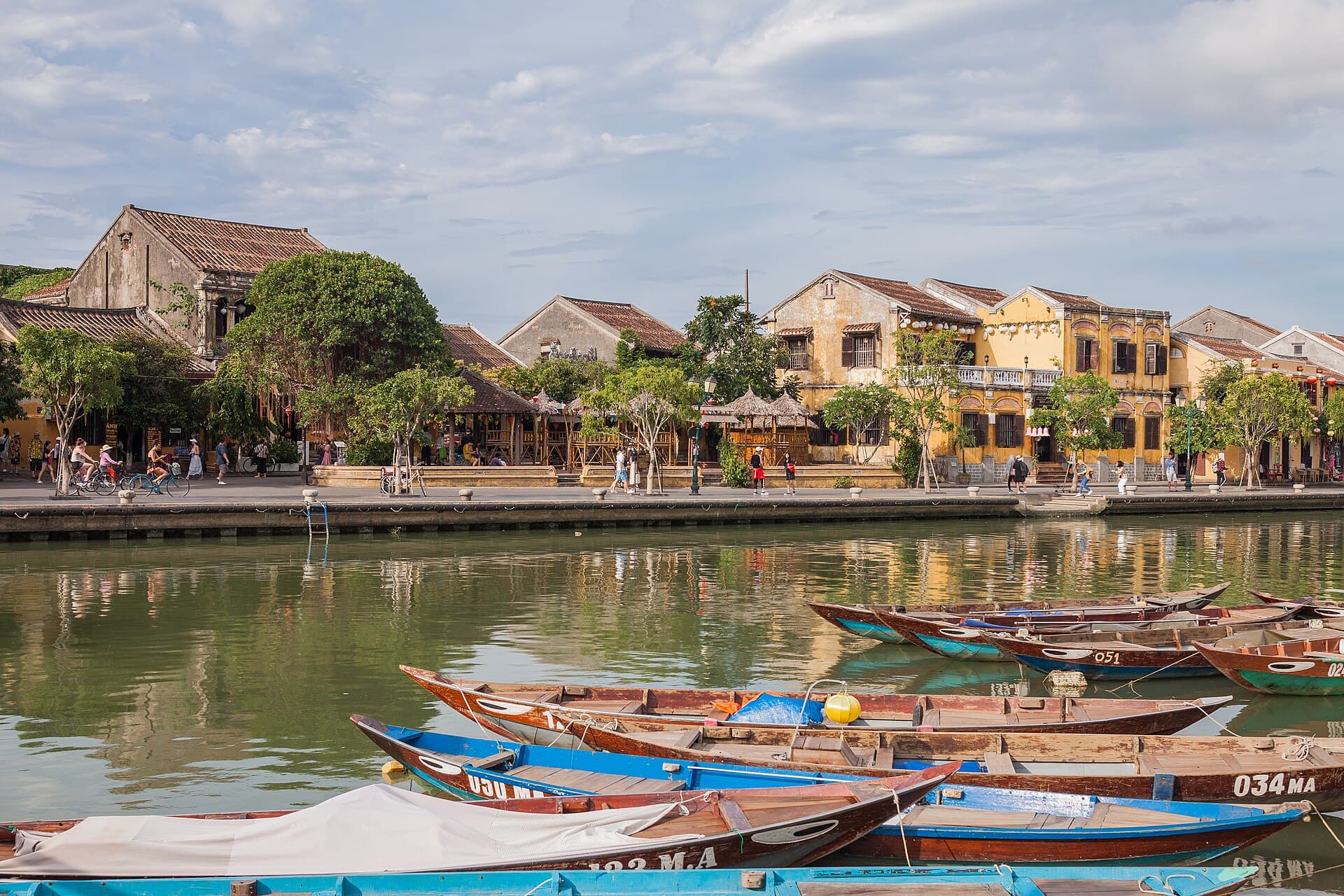 This Photo was taken by Supanut Arunoprayote. Feel free to use any of my images, but please mention me as the author and may send me a message. (สามารถใช้ภาพได้อิสระ แต่กรุณาใส่เครดิตผู้ถ่ายและอาจส่งข้อความบอกกล่าวด้วย) Please do not upload an updated image here without consultation with the Author. The author would like to make corrections only at his own source. This ensures that the changes are preserved.Please if you think that any changes should be required, please inform the author.Otherwise you can upload a new image with a new name. Please use one of the templates derivative or extract. / CC BY 4.0, via Wikimedia Commons
Zelfgeleide audiowandeling door Hội An — GPS-route, offline afspelen, meeslepende vertelling in 32 talen.
“Waar oude tradities de zachte stroom van de Thu Bồn-rivier ontmoeten, verlicht door duizend lantaarns.”
Niet de ansichtkaarten. De verhalen die zelfs locals niet kennen — gefluisterd in je oor, precies waar ze gebeurden.
Kijk goed naar de Japanse Overdekte Brug, een bepalende structuur van Hoi An, en je zult aan beide uiteinden iets ongewoons opmerken.
De kenmerkende textuur en smaak van Cao Lau, Hoi An's kenmerkende noedelgerecht, zouden nergens anders ter wereld te repliceren zijn.
Met honderden kleermakers die om je aandacht strijden, is het verleidelijk om de eerste winkel te kiezen die een geweldige deal aanbiedt, maar er is een stil geheim om de beste waarde te garanderen.
Ontdek elk geheim van Hội An
Elk adres, elke onthulling volledig — in je oor, precies waar het gebeurde.
Jij kiest je stops. Jij wandelt. De stem onthult wat de anderen missen.


Je zelfgeleide audiotour van Hội An is klaar — kies je bezienswaardigheden, kies je taal en start zodra je aankomt.
KopenLume heeft een ingebouwde augmented-reality-gids. Houd je telefoon omhoog: de camera toont de straat voor je, met een oplichtende pijl over het echte beeld die altijd naar je volgende stop wijst — geen kaart om uit te puzzelen, geen verkeerde afslagen. Zoals alles in Lume werkt het volledig offline.
Hội An, een UNESCO Werelderfgoedlocatie in centraal Vietnam, is een plek waar de tijd lijkt te vertragen. De oude stad, een goed bewaard gebleven voorbeeld van een Zuidoost-Aziatische handelshaven uit de 15e tot 19e eeuw, trekt bezoekers met zijn unieke mix van inheemse en buitenlandse invloeden. Dwaal door smalle, autovrije straten, langs okerkleurige gebouwen versierd met kleurrijke lantaarns, en je voelt de echo's van een bruisend handelsverleden. De Thu Bồn rivier, ooit een levensader voor de handel, biedt nu rustige boottochten, vooral betoverend wanneer deze na zonsondergang verlicht wordt door drijvende lantaarns.
Naast zijn pittoreske charme biedt Hội An een scala aan culturele ervaringen. Van het proeven van unieke regionale gerechten tot het laten maken van kleding op maat, de stad nodigt uit tot een diepere betrokkenheid bij zijn tradities. Het is een bestemming die ontspannen verkenning aanmoedigt, of je nu fietst door weelderige rijstvelden, ontspant op nabijgelegen stranden, of gewoon geniet van een Vietnamese ijsthee terwijl je het dagelijks leven observeert. Hội An is meer dan alleen een mooie façade; het is een levend museum dat blijft boeien met zijn duurzame geest van uitwisseling en harmonie.
Hội An's oorsprong gaat meer dan 1.800 jaar terug, beginnend als een handelshaven van het Cham Koninkrijk, bekend als Lam Ap Pho in de 2e eeuw CE. De Cham-mensen, bekwame zeevaarders, faciliteerden de handel in Indiase textiel, Chinese keramiek, juwelen en zeldzame houtsoorten, en vestigden Hội An als een centrum van internationale uitwisseling. Tegen de 15e tot 17e eeuw, onder de Nguyễn Lords, beleefde Hội An, toen bekend als Faifo bij westerse handelaren, zijn "Gouden Eeuw". Het werd een vitale internationale handelshaven, die handelaren uit Japan, China, Portugal en Nederland aantrok, waardoor het een van de rijkste havens in Zuidoost-Azië werd.
Deze periode zag een significante fusie van culturen, duidelijk zichtbaar in de architectuur en gebruiken van de stad. Buitenlandse wijken, met name Japanse en Chinese districten, ontstonden en droegen bij aan de kenmerkende multiculturele identiteit van Hội An. De naam "Hội An" zelf, wat "vreedzame ontmoetingsplaats" betekent in Sino-Vietnamees, weerspiegelt deze harmonieuze mix. De prominentie van de stad begon echter af te nemen in de 18e en 19e eeuw naarmate de Thu Bồn rivier verzandde, waardoor navigatie moeilijk werd, en Da Nang opkwam als een nieuw commercieel toegangspunt. Deze economische neergang droeg ironisch genoeg bij aan de opmerkelijke conservering van Hội An, omdat het gespaard bleef van uitgebreide modernisering.
In 1999 werd Hội An Ancient Town officieel erkend als een UNESCO Werelderfgoedlocatie. Deze erkenning erkende de uitzonderlijke waarde als een goed bewaard gebleven voorbeeld van een traditionele Aziatische handelshaven, die een tastbare manifestatie van culturele fusie door de eeuwen heen toont. Tegenwoordig behoudt Hội An zijn oorspronkelijke stratenplan, met 844 van de 1107 gebouwen op de UNESCO-lijst, wat een tastbare link biedt naar zijn roemrijke verleden. Inspanningen voor uitgebreide conservering, waaronder het behoud van traditionele ambachtsdorpen en een digitaliseringsproject, blijven zijn tastbare en immateriële erfgoed beschermen.
Het verkennen van Hội An's Oude Stad kan het beste te voet of per fiets, aangezien veel straten alleen voor voetgangers zijn of motorfietsen beperken. Begin met de bepalende Japanse Overdekte Brug, een 17e-eeuws wonder dat een boeddhistische tempel herbergt. Dwaal door de smalle steegjes van de Oude Stad en bewonder de kenmerkende gele gebouwen en kleurrijke lantaarns. Bezoek de Vergaderzaal van Fujian Chinese (Hoi Quan Phuoc Kien), een prachtig sierlijke tempel uit de 17e eeuw, het best te ervaren in de rustigere ochtenduren.
Naast de oude kern kunt u een sampan boottocht maken op de Thu Bồn rivier, vooral betoverend bij zonsondergang wanneer drijvende lantaarns het water verlichten. Voor een unieke culturele ervaring, maak een kokosmand boottocht door het Cam Thanh Kokosbos. Ontsnap aan de drukte van de stad door te fietsen door de omliggende rijstvelden, die een kijkje geven in het lokale leven. En voor wie ontspanning zoekt, biedt An Bang Beach, op korte fietsafstand, wit zand en zachte golven.
De ideale tijd om Hội An te bezoeken is tijdens het droge seizoen, van februari tot mei, wanneer het weer mild, aangenaam en minder vochtig is, met weinig regenval. Februari biedt koelere temperaturen, terwijl maart en april consistent mooi weer brengen, wat ze ideaal maakt voor verkenning. De gemiddelde temperatuur gedurende deze periode varieert van 23-29°C (73-84°F). Hoewel mei tot juli ook droog zijn, kunnen de temperaturen intens heet zijn, waardoor middagexploratie oncomfortabel wordt. Het regenseizoen, van september tot januari, brengt zware regenval en mogelijke overstromingen, hoewel december en januari nog steeds enkele milde, droge dagen kunnen bieden.
Hội An is gemakkelijk bereikbaar, met de dichtstbijzijnde luchthaven Da Nang International Airport (DAD), op 45 minuten rijden. Taxi's of ritdeelapps zoals Grab zijn handig voor transfers. Binnen Hội An is de Oude Stad zeer goed beloopbaar, en veel hotels bieden gratis fietsen om verder weg te verkennen, inclusief nabijgelegen stranden en rijstvelden. De lokale valuta is de Vietnamese Dong (VND), en hoewel veel kleine kraampjes contant geld verkiezen, kunnen grote etablissementen kaarten accepteren. De meeste toeristen hebben een visum nodig voor Vietnam, dus vraag dit van tevoren aan. Het is raadzaam om leidingwater te vermijden. Voor kleding op maat, reken op minstens drie dagen voor pasafspraken en aanpassingen. Vroege ochtenden zijn het beste voor het verkennen van de Oude Stad om drukte en de middagse hitte te vermijden.
Hội An — Koreaans, Chinees, Hebreeuws en nog 29 talen, elke stop verteld door een moedertaalspreker. Het grootste taalaanbod van alle zelfgeleide audiotours.
Beschikbaar in: