De Huacachina Lagune
Het serene water van de Huacachina-lagune bevat een geheim dat dateert uit de Inca-tijd, een verhaal van schoonheid en hartzeer.
Volledig verhaal ontgrendeld in de tour
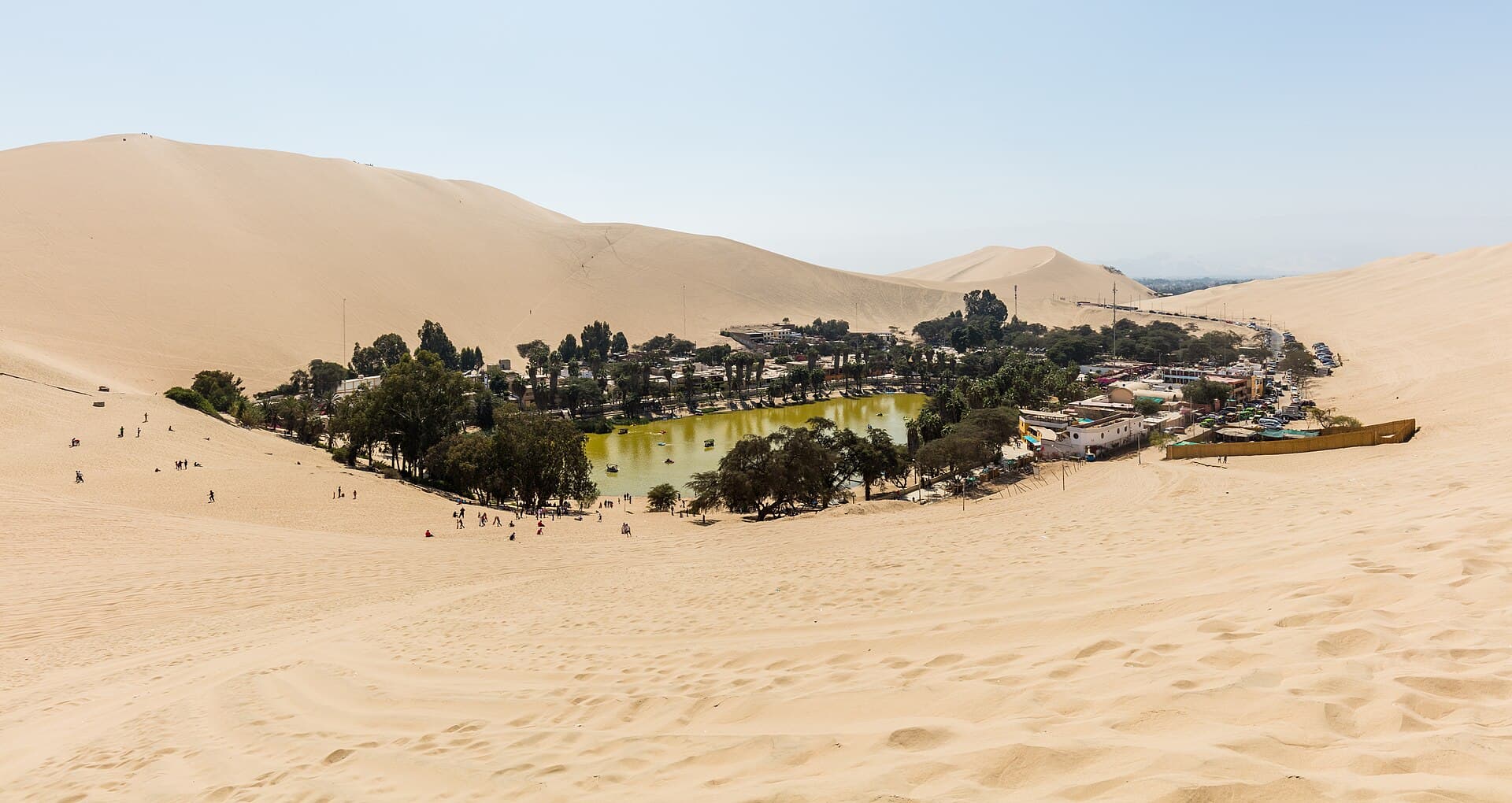 Diego Delso / CC BY-SA 4.0, via Wikimedia Commons
Zelfgeleide audiowandeling door Huacachina — GPS-route, offline afspelen, meeslepende vertelling in 32 talen.
“Waar smaragdgroen water torenhoge duinen ontmoet, ontwaakt een woestijndroom.”
Niet de ansichtkaarten. De verhalen die zelfs locals niet kennen — gefluisterd in je oor, precies waar ze gebeurden.
Het serene water van de Huacachina-lagune bevat een geheim dat dateert uit de Inca-tijd, een verhaal van schoonheid en hartzeer.
Voordat het een centrum werd voor avontuurzoekers, was Huacachina een ander soort ontsnapping, die een specifieke menigte aantrok die op zoek was naar meer dan alleen woestijnspanning.
De kolossale zandduinen die Huacachina omringen, zijn niet alleen voor sandboarden; ze zijn ook een canvas voor een oude, vluchtige kunstvorm.
Ontdek elk geheim van Huacachina
Elk adres, elke onthulling volledig — in je oor, precies waar het gebeurde.
Jij kiest je stops. Jij wandelt. De stem onthult wat de anderen missen.


Je zelfgeleide audiotour van Huacachina is klaar — kies je bezienswaardigheden, kies je taal en start zodra je aankomt.
KopenLume heeft een ingebouwde augmented-reality-gids. Houd je telefoon omhoog: de camera toont de straat voor je, met een oplichtende pijl over het echte beeld die altijd naar je volgende stop wijst — geen kaart om uit te puzzelen, geen verkeerde afslagen. Zoals alles in Lume werkt het volledig offline.
Huacachina is een unieke woestijnoase in het zuidwesten van Peru, een klein dorp gebouwd rond een natuurlijke, door een bron gevoede lagune. Omringd door immense zandduinen, biedt het een schril contrast met de meer bekende Andeslandschappen van Peru. Gelegen op slechts 5 kilometer van de stad Ica en ongeveer vijf uur rijden ten zuiden van Lima, is Huacachina een favoriete bestemming geworden voor zowel binnenlandse als internationale reizigers die op zoek zijn naar avontuur en rust.
Vaak de "Oasis van Amerika" genoemd, de smaragdgroene lagune van Huacachina is omzoomd met palmbomen, eucalyptus en johannesbroodbomen, wat een groene toevluchtsoord creëert in de droge Ica-woestijn. Hoewel er slechts ongeveer 100 permanente inwoners zijn, is de stad sterk gericht op toerisme, met hotels, restaurants en reisbureaus langs de lagune. Het is een plek waar de opwinding van woestijnsporten met hoge octaan de rust van een woestijnszonsondergang ontmoet, en een onvergetelijke ervaring biedt die nergens anders in Peru te vinden is.
De Huacachina-oase is een natuurlijk fenomeen, gevormd door ondergrondse waterstromen die opdoken in een depressie in de Ica-woestijn, wat leidde tot de groei van diverse planten en bomen zoals palm, eucalyptus en johannesbrood. De naam "Huacachina" zelf is geworteld in Quechua en betekent "huilende vrouw" of "verborgen lagune", een naam die resoneert met de talloze lokale legendes rond de creatie ervan.
Een van de meest blijvende legendes vertelt over een mooie Inca-prinses. In één versie baadde ze in de Ica-rivier en, opgeschrikt door een jager, vluchtte ze, waarbij ze haar spiegel liet vallen die brak en de lagune werd. Ze transformeerde vervolgens in een zeemeermin, die nog steeds in het water zou leven. Een ander populair verhaal spreekt van de prinses die weende om haar overleden krijger-geliefde, haar eindeloze tranen vormden de smaragdgroene lagune.
Decennialang is Huacachina een favoriete bestemming geweest. In de jaren zestig kreeg het bekendheid als zomerresort voor welgestelde Peruanen die de therapeutische eigenschappen zochten die vermoedelijk aanwezig waren in het water en de modder van de lagune. Sporen van dit verleden zijn nog steeds zichtbaar in de architectuur in koloniale revival-stijl van enkele van de oudere hotels en restaurants rond de lagune. De oase verscheen zelfs op de achterkant van de 50 nuevo sol-biljet in 1991, wat de culturele betekenis ervan onderstreept.
In de vroege jaren 2000 begon toenemende grondwaterwinning in het omliggende gebied de natuurlijke watertoevoer van de lagune te bedreigen. Om dit tegen te gaan, begonnen lokale bedrijven in 2015 water in het meer te pompen om het als toeristische bestemming te behouden. In 2016 kondigde een Peruaanse wetenschapper plannen aan om de lagune te herstellen met behulp van een nanobel-systeem, hoewel verdere updates over dit project schaars zijn sinds 2020. Tegenwoordig blijft Huacachina een trekpleister voor reizigers, met name voor twintigers en dertigers die op zoek zijn naar avontuurlijke sporten en een levendige sfeer.
De aantrekkingskracht van Huacachina ligt in zijn unieke woestijnlandschap en de activiteiten die het biedt. De belangrijkste trekpleister is de mogelijkheid voor buggy-ritten en sandboarden op de immense zandduinen die hoogtes tot 500 meter bereiken. Deze opwindende tours combineren vaak een spannende rit over de duinen met stops voor sandboarden, geschikt voor alle niveaus.
Voor een meer serene ervaring is het beklimmen van een duin voor zonsondergang sterk aanbevolen. De uitzichten op de oase terwijl de lucht van kleur verandert, zijn bijzonder memorabel en het is een populaire plek voor fotografen. Je kunt ook langs de promenade rond de lagune wandelen, genieten van de cafés en restaurants, of een waterfiets huren om het water te verkennen. Veel hotels en hostels bieden ook zwembaden om te ontspannen, vooral welkom tijdens de warme woestijndagen.
Naast de oase zelf kunnen dagtochten naar nabijgelegen attracties worden geregeld. Pisco- en wijntours zijn populair, aangezien de Ica-regio bekend staat om zijn druivenproductie. De raadselachtige Nazca-lijnen liggen op minder dan twee uur afstand en bieden de mogelijkheid om oude geogliefen van bovenaf te zien. Bovendien liggen de kustplaats Paracas en zijn Ballestas-eilanden, vaak de "Galapagos voor de armen" genoemd, op een uur afstand en bieden ze mogelijkheden om zeeleeuwen, pinguïns en diverse vogelsoorten te zien.
Huacachina geniet het hele jaar door een constant warm en zonnig woestijnklimaat met minimale regenval, waardoor het een haalbare bestemming is op elk moment. De beste tijd om te bezoeken voor de meeste reizigers is echter tijdens het droge seizoen, van mei tot september. Gedurende deze maanden is het weer zonnig en droog, met koelere dagen en nachten, wat ideale omstandigheden biedt voor buitenactiviteiten zoals buggy-ritten en sandboarden. Deze periode is ook populair, dus verwacht grotere drukte en potentieel hogere prijzen.
De schouderseizoenen, april tot mei en oktober tot november, bieden mild weer en minder toeristen, hoewel er een kleine kans is op af en toe regen. Als je de voorkeur geeft aan een levendigere sfeer, brengt december tot maart warmere avonden en meer een zomerse feeststemming.
Huacachina is een klein, beloopbaar stadje, dus taxi's zijn over het algemeen niet nodig om de oase zelf te doorkruisen. Om Huacachina echter vanuit de grotere stad Ica (ongeveer 10 minuten verderop) te bereiken, is een taxi vereist, aangezien intercitybussen meestal in Ica eindigen. Het is verstandig om vooraf een prijs af te spreken om overbelasting te voorkomen.
Er zijn geen geldautomaten in Huacachina, dus neem voldoende Peruaanse soles mee voor je verblijf. Hoewel sommige etablissementen kaarten accepteren, kunnen ze een vergoeding in rekening brengen. Zonnebrandcrème, een zonnebril (ter bescherming tegen zand), een hoed en voldoende water zijn essentieel voor woestijnexcursies. Schoenen met gesloten tenen worden aanbevolen voor buggy-tours en sandboarden. Avonden kunnen koud worden, dus pak laagjes kleding.
Voor buggy- en sandboard-tours, geef prioriteit aan gerenommeerde operators die veiligheid benadrukken, ervoor zorgen dat voertuigen veiligheidsgordels en rolkooien hebben. Het is ook raadzaam om uw bezittingen te beschermen tegen zand tijdens deze activiteiten.
Hoewel het over het algemeen wordt beschouwd als een veilige toeristische bestemming, worden basisvoorzorgen altijd aanbevolen, zoals het opletten op waardevolle spullen en het blijven in goed verlichte gebieden 's nachts.
Huacachina — Koreaans, Chinees, Hebreeuws en nog 29 talen, elke stop verteld door een moedertaalspreker. Het grootste taalaanbod van alle zelfgeleide audiotours.
Beschikbaar in: