Plaza de Armas
A fonte central na Plaza de Armas de Huánuco tem um ingrediente secreto em sua construção que vai além do granito.
História completa desbloqueada no tour
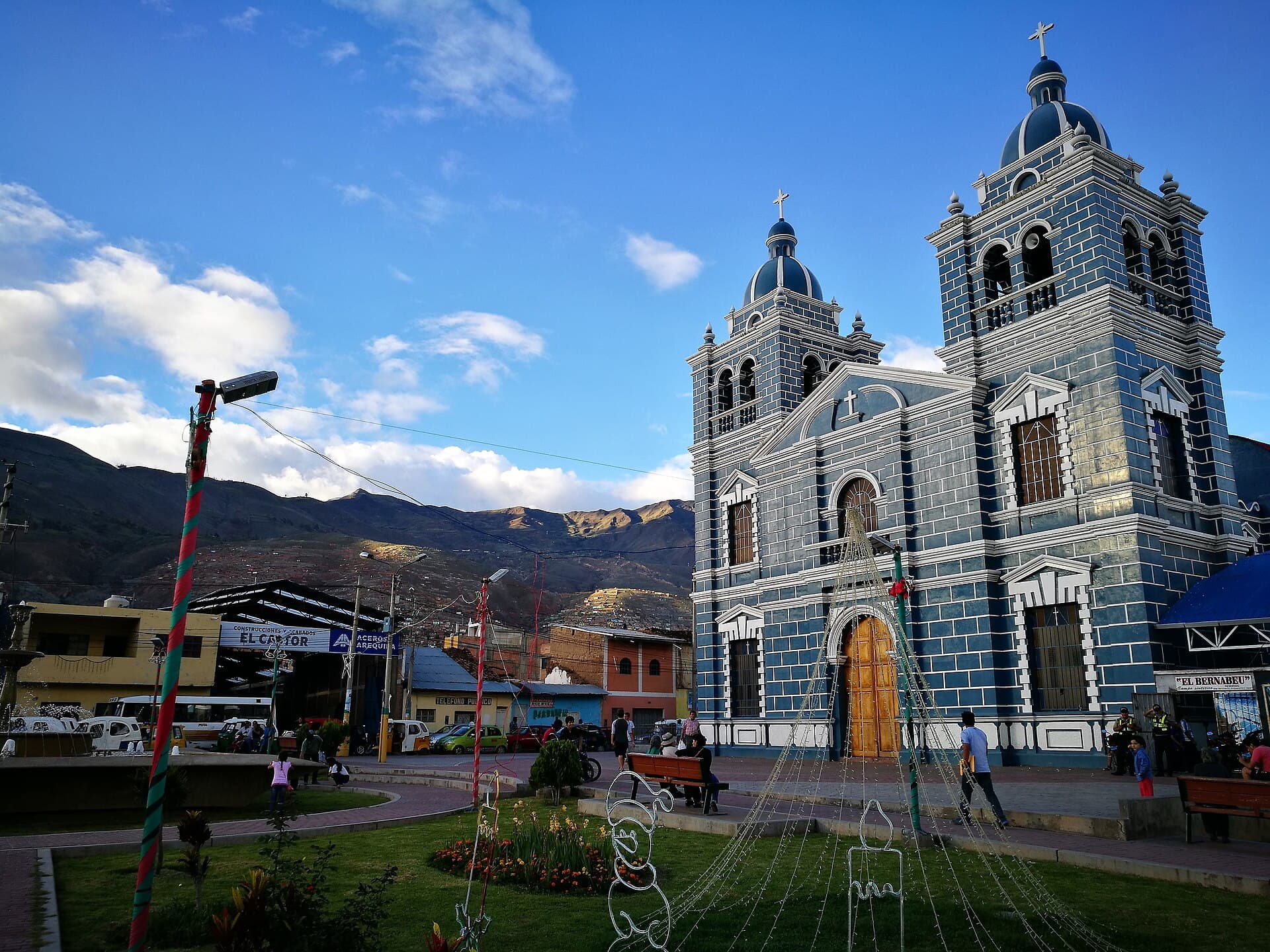 Pitxiquin / CC BY-SA 4.0, via Wikimedia Commons
Tour de áudio autoguiado por Huánuco — rota GPS a pé, reprodução offline, narração envolvente em 32 idiomas.
“Onde a história antiga encontra um clima de 'primavera eterna'.”
Não os postais. As histórias que nem os locais conhecem — sussurradas ao seu ouvido, exatamente onde aconteceram.
A fonte central na Plaza de Armas de Huánuco tem um ingrediente secreto em sua construção que vai além do granito.
Esta ponte do século XIX que cruza o rio Huallaga não foi construída com cimento moderno, mas sim com um surpreendente aglutinante orgânico.
No Templo das Mãos Cruzadas, um símbolo único levou os arqueólogos a especular sobre rituais antigos.
Descubra cada segredo de Huánuco
Cada endereço, cada revelação na íntegra — no seu ouvido, exatamente onde aconteceu.
Você escolhe as suas paragens. Você caminha. A voz revela o que os outros perdem.

O seu tour áudio autoguiado de Huánuco está pronto — escolha os seus pontos de interesse, selecione o seu idioma e comece no momento em que chegar.
ComprarA Lume inclui um guia de realidade aumentada. Levante o telemóvel: a câmara mostra a rua à sua frente, com uma seta luminosa sobreposta à imagem real que aponta sempre para a sua próxima paragem — sem mapa para decifrar, sem voltas erradas. Como tudo na Lume, funciona totalmente offline.
Huánuco, uma cidade no centro do Peru, fica a uma altitude de 1.894 metros (6.214 pés) em um vale esculpido pelo rio Huallaga. Frequentemente chamada de 'a cidade com o melhor clima do mundo', Huánuco oferece temperaturas amenas e semi-quentes durante todo o ano, geralmente entre 18°C e 22°C (64°F e 72°F). Este clima agradável, juntamente com céus azuis e claros, a torna um destino convidativo para quem busca uma experiência andina confortável sem o mal de altitude intenso encontrado em cidades mais altas.
Servindo como uma passagem natural entre as terras altas peruanas e a selva amazônica, Huánuco revela uma paisagem variada de montanhas, vales quentes e floresta tropical exuberante. A cidade em si, lar de uma população de cerca de 196.627 habitantes, é uma capital regional e um centro de agricultura, produzindo uma variedade de frutas, vegetais, café e cacau. Além de seu clima agradável e atividade econômica, Huánuco é um portal para a história antiga e a abundante beleza natural, desde sítios arqueológicos pré-incas até parques nacionais.
A região de Huánuco possui uma história longa e complexa, com evidências de habitação humana que remontam aos primeiros habitantes das Américas. As Cavernas de Lauricocha, por exemplo, são consideradas o 'berço do homem mais antigo das Américas'. Antes do Império Inca, a área era habitada por várias chefaturas locais, incluindo os Yarowilca, Wanucos, Chupachos, Huacrachucos e Panatahuas.
Durante a expansão do Império Inca, a região foi incorporada sob o Inca Pachacútec e, posteriormente, sob Túpac Yupanqui e Huayna Cápac, a antiga capital Yarowilca foi transformada em Huánuco Viejo (também conhecida como Huánuco Pampa). Este significativo centro administrativo abrigava mais de 10.000 famílias e apresentava uma praça central onde importantes atividades imperiais, como cerimônias, redistribuição de bens e rituais de iniciação da elite, aconteciam.
O período colonial começou com a chegada dos espanhóis. Em 1539, o conquistador espanhol Gómez de Alvarado y Contreras fundou a cidade como 'León de Huánuco de los Caballeros' no local da cidade inca de Wanako. No entanto, devido ao frio intenso e aos ataques persistentes de tribos locais, o assentamento foi transferido em 1541 para sua localização atual e mais quente no Vale Pillco, ao lado do rio Huallaga. O Rei Carlos V concedeu à cidade o título de 'Muito Nobre e Muito Leal' e aprovou seu brasão em 1541.
Ao longo da era colonial, Huánuco cresceu e se tornou um importante centro de atividade missionária, desenvolvendo-se como um centro aristocrático e agrário. Seus cidadãos foram os primeiros defensores da independência da Espanha, com uma rebelião eclodindo em 1812. Huánuco desempenhou um papel na Guerra de Independência do Peru e na Guerra do Pacífico, organizando batalhões de guerrilha. Em 1869, Huánuco recebeu o status de capital de seu departamento. A Universidade Nacional Hermilio Valdizán foi fundada em 1964, estabelecendo a cidade como um centro educacional vital. Nos últimos anos, Huánuco também experimentou um crescimento econômico significativo, especialmente no setor de mineração.
Comece sua exploração na Plaza de Armas, uma praça colonial histórica que remonta a 1845, apresentando uma fonte de granito esculpida pelo artista italiano Pedro Caretti. Ao redor da praça, você encontrará edifícios importantes como a Catedral, que protege a imagem venerada do Senhor de Burgos, o santo padroeiro da cidade. Outras igrejas notáveis incluem a Iglesia San Cristóbal, construída em 1542 como a primeira igreja local pelos colonos espanhóis, e a Iglesia La Merced, construída por volta de 1566.
A uma curta distância da cidade, o sítio arqueológico de Kotosh, também conhecido como Templo das Mãos Cruzadas, é um lugar profundo para se visitar. Este sítio pré-cerâmico, datando de mais de 4.000 anos, é um dos templos mais antigos das Américas. Para um vislumbre do Império Inca, considere uma viagem a Huánuco Pampa (Huánuco Viejo), um importante centro administrativo inca com templos, áreas de armazenamento e uma plataforma central ushnu.
Entusiastas da natureza podem viajar para o Parque Nacional de Tingo María, conhecido por sua flora e fauna variadas, cachoeiras impressionantes e a formação montanhosa única 'Bela Adormecida'. Dentro do parque está a Cueva de las Lechuzas (Caverna das Corujas), uma grande caverna de calcário que abriga uma colônia de aves noturnas e morcegos. Para uma experiência relaxante, explore as fontes termais próximas de Tauripampa, Conoc ou Calientes, conhecidas por suas propriedades medicinais.
Huánuco é celebrada por seu clima ameno e semi-quente durante todo o ano, frequentemente chamada de 'cidade da primavera eterna', com temperaturas médias consistentemente em torno de 21°C (70°F). A estação seca, que se estende de maio a setembro, é geralmente considerada a melhor época para visitar, oferecendo clima agradável e chuvas mínimas, ideal para atividades ao ar livre e exploração. Embora a estação chuvosa ocorra de outubro a abril, com fevereiro sendo o mês mais chuvoso, a precipitação é frequentemente leve e as pausas nas chuvas são comuns. Mesmo durante os meses mais frios de junho a agosto, as temperaturas diurnas permanecem agradáveis, embora as noites possam ser mais frias.
Huánuco é acessível por ar e terra. O Aeroporto Alférez FAP David Figueroa Fernandini (HUU) fica a cerca de 5 quilômetros do centro da cidade, com voos domésticos diários de Lima levando aproximadamente 40 minutos. Alternativamente, ônibus de Lima para Huánuco levam cerca de 8-10 horas, cobrindo 410 km pela Rodovia Central. As estradas podem ser desafiadoras, especialmente durante a estação chuvosa, com possíveis atrasos devido a deslizamentos de terra. É aconselhável reservar o transporte com antecedência, especialmente durante as altas temporadas de viagem.
Dentro da cidade, táxis e mototáxis estão facilmente disponíveis para se locomover. Para segurança, especialmente para viajantes solo do sexo feminino, recomenda-se usar táxis registrados e evitar andar sozinha em áreas mal iluminadas à noite. A polícia local também serve como um posto de informações turísticas. Em Huánuco, certifique-se de experimentar pães locais como pan de yema e mistiras, e pratos tradicionais como Pachamanca e Tacacho con Cecina.
Huánuco — coreano, chinês, hebraico e mais 29 idiomas, cada parada narrada por uma voz nativa. A maior variedade de idiomas entre os passeios de áudio autoguiados.
Disponível em: