José Olaya Straße
Der Großteil von Huaraz wurde nach einem verheerenden Erdbeben wieder aufgebaut, aber eine Straße bleibt als lebendiges Echo der Vergangenheit erhalten.
Die ganze Geschichte wird in der Tour freigeschaltet
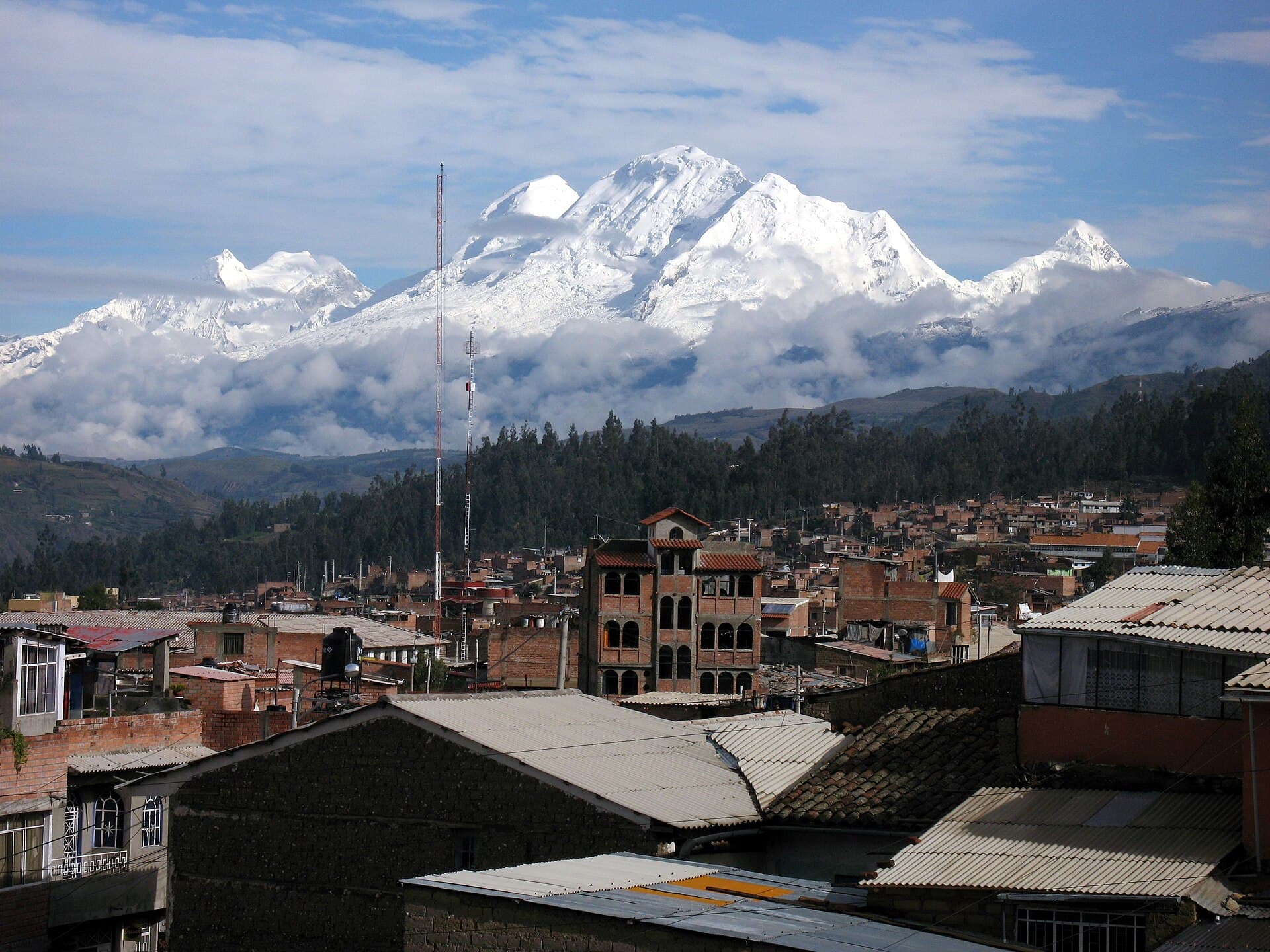 Uwebart / CC BY-SA 3.0, via Wikimedia Commons
Selbstgeführte Audio-Walking-Tour durch Huaraz — GPS-Route, Offline-Wiedergabe, erzählerische Narration in 32 Sprachen.
“Huaraz: Wo die Anden zum Himmel reichen und alte Flüsterer verweilen.”
Nicht die Postkarten. Die Geschichten, die selbst Einheimische nicht kennen – dir ins Ohr geflüstert, genau dort, wo sie geschahen.
Der Großteil von Huaraz wurde nach einem verheerenden Erdbeben wieder aufgebaut, aber eine Straße bleibt als lebendiges Echo der Vergangenheit erhalten.
Neben antiker Keramik und Textilien beherbergt dieses Museum eine Sammlung, die Sie vielleicht über frühe medizinische Praktiken nachdenken lässt.
Der zentrale Platz von Huaraz hat eine überraschende Verbindung zu einem südamerikanischen Befreier.
Entdecke jedes Geheimnis von Huaraz
Jede Adresse, jede Enthüllung vollständig – in deinem Ohr, genau dort, wo es geschah.
Du wählst deine Stationen. Du gehst. Die Stimme enthüllt, was andere übersehen.


Deine selbstgeführte Audio-Tour durch Huaraz ist bereit – wähle deine Sehenswürdigkeiten, deine Sprache und starte, sobald du ankommst.
KaufenLume enthält einen integrierten Augmented-Reality-Guide. Halten Sie Ihr Handy hoch: Die Kamera zeigt die Straße vor Ihnen, mit einem leuchtenden Pfeil über dem echten Bild, der immer auf Ihren nächsten Stopp zeigt — keine Karte zum Rätseln, keine falschen Abzweigungen. Wie alles bei Lume funktioniert es komplett offline.
Huaraz, die Hauptstadt der Region Ancash, liegt über 3.050 Meter über dem Meeresspiegel im Herzen der peruanischen Zentralanden. Bekannt als die 'Hauptstadt des Wanderns in Peru', ist sie das wichtigste Tor zur Cordillera Blanca, einer der beeindruckendsten Gebirgsketten der Welt. Diese Stadt mit rund 120.000 Einwohnern liegt eingebettet zwischen den schneebedeckten Gipfeln der Cordillera Blanca im Osten und der Cordillera Negra im Westen.
Während die Stadt selbst eine Mischung aus moderner und lokaler Kultur mit Märkten, Restaurants und einer lebendigen Atmosphäre bietet, liegt der wahre Anziehungspunkt von Huaraz in der unvergleichlichen natürlichen Schönheit, die sie umgibt. Sie ist ein Zentrum für Abenteuersportarten wie Klettern, Wandern, Mountainbiken und Snowboarden und zieht jährlich etwa 200.000 Besucher an. Von anspruchsvollen mehrtägigen Trekkingtouren bis hin zu stillen Gletscherseen bietet Huaraz einen Ausgangspunkt für die Erkundung des Huascarán-Nationalparks, einem UNESCO-Weltkulturerbe und Biosphärenreservat.
Die Geschichte von Huaraz reicht bis in die Zeit vor den Inka zurück, als die Chavín-Kultur die Region bereits 200 v. Chr. bewohnte. Später hinterließen Kulturen wie die Recuay und die mächtigen Wari ihre Spuren und bauten bedeutende Stätten wie Wilcahuain und Waullac. Vor der Ankunft des Inkareichs war Huaraz eine wichtige Stadt im Königreich Huaylas und wurde unter der Herrschaft der Inka zur Hauptstadt der Region Unteres Huaylas.
Der spanische Konquistador Francisco Pizarro erteilte Sebastián de Torres 1538 das Recht, in der Gegend von Huaraz Steuern einzutreiben. Am 20. Januar 1574 gründete Alonso de Santoyo offiziell eine spanisch-indigene Siedlung namens Pampa Huarás de San Sebastián. Während der Kolonialzeit beuteten die Spanier die Silber-, Blei- und Zinnvorkommen der Region aus und zwangen Hunderte von einheimischen Quechua-Sprechern zur Arbeit in diesen Minen. Traditionelle Anbausysteme wurden verändert oder zerstört, und viele indigene Völker wurden vertrieben.
Huaraz spielte eine entscheidende Rolle im Kampf Perus um die Unabhängigkeit und unterstützte die Befreiungsarmee aktiv mit Proviant und Waffen. Dieses Engagement brachte der Stadt den angesehenen Titel 'Edle und Großzügige Stadt' von Simón Bolívar ein. Das 20. Jahrhundert brachte jedoch ein katastrophales Ereignis, das Huaraz völlig umgestaltete. Am 31. Mai 1970 verwüstete ein starkes Erdbeben die Region Ancash, zerstörte 95 % von Huaraz und forderte schätzungsweise 25.000 Menschenleben. Nur der Hauptplatz und die José Olaya Straße überstanden diese Naturkatastrophe weitgehend.
Nach dem Erdbeben erhielt Huaraz umfangreiche internationale Hilfe für den Wiederaufbau, was zu seiner Ernennung zur 'Hauptstadt der internationalen Freundschaft' führte. Die Stadt wurde mit einem moderneren Grundriss wieder aufgebaut, mit breiteren Straßen und Alleen. Heute floriert Huaraz als Zentrum für Landwirtschaft, Handel und Tourismus und dient als Haupteingangspunkt für die Erkundung des Ancash-Hochlands und antiker Stätten wie Chavín de Huántar.
Huaraz bietet eine Reihe von Attraktionen, sowohl innerhalb der Stadt als auch als Ausgangspunkt für die Erkundung der umliegenden Naturwunder. Der Plaza de Armas ist das pulsierende Herz von Huaraz, ein rechteckiger öffentlicher Platz mit Fußwegen, Gärten und einem Bronzefontäne aus dem Jahr 1870. Der Platz ist von bedeutenden Gebäuden umgeben, darunter die Kathedrale und die Provinzverwaltung.
Für einen Einblick in die Vergangenheit der Region besuchen Sie das Museo Arqueológico de Áncash 'Augusto Soriano Infante'. Gegenüber dem Plaza de Armas gelegen, beherbergt es eine bedeutende Sammlung von prähispanischen Steinskulpturen, Keramiken und Textilien aus Kulturen wie Recuay, Wari und Chavín. Nur einen kurzen Spaziergang vom Stadtzentrum entfernt bietet die José Olaya Straße ein einzigartiges Fenster in Huaraz vor dem Erdbeben von 1970 und bewahrt die traditionelle Architektur.
Um die Stadt und ihre Bergkulisse zu überblicken, fahren Sie zum Mirador de Rataquenua. Dieser natürliche Aussichtspunkt, etwa 4 Kilometer südöstlich von Huaraz gelegen, bietet einen Panoramablick auf die Stadt und mehrere schneebedeckte Gipfel der Cordillera Blanca, darunter den Huascarán. Es ist eine mittelschwere Wanderung, die für die Rundtour etwa 3 Stunden dauert.
Huaraz ist in erster Linie ein Sprungbrett für Abenteuer in der Cordillera Blanca. Beliebte Tagesausflüge und Wanderungen sind die ikonische Laguna 69 mit ihrem leuchtend blauen Wasser und die Laguna Churup, ein weiterer hochgelegener See. Sie können auch den Pastoruri-Gletscher besuchen, einen der wenigen verbliebenen tropischen Gletscher Südamerikas, wo Sie auch die seltene Puya Raimondii-Pflanze sehen können. Für diejenigen, die sich für antike Zivilisationen interessieren, ist die archäologische Stätte Chavín de Huántar, ein UNESCO-Weltkulturerbe, ein bedeutendes prähispanisches Zentrum, das etwa vier Autostunden von Huaraz entfernt liegt.
Die beste Zeit für einen Besuch in Huaraz ist während der Trockenzeit von Mai bis September. In diesen Monaten können Sie klaren Himmel, angenehme Tagestemperaturen zwischen 15°C und 20°C und geringe Niederschläge erwarten, was ideal zum Wandern und Bergsteigen ist. Juli und August sind die trockensten und belebtesten Monate. Während die Nächte kalt sein können, oft unter dem Gefrierpunkt in höheren Lagen, bieten die klaren Tage eine ausgezeichnete Sicht auf die Bergketten. Die Regenzeit von Oktober bis April bringt häufigere Schauer mit sich, insbesondere zwischen Januar und März, die Wege schlammig machen und das Risiko von Erdrutschen erhöhen können.
Huaraz liegt auf einer Höhe von etwa 3.050 Metern (10.000 Fuß) über dem Meeresspiegel. Daher ist die Akklimatisierung an die Höhe entscheidend, um Höhenkrankheit (Soroche) zu vermeiden. Es wird dringend empfohlen, mindestens ein bis zwei volle Tage in Huaraz zu ruhen und leichte Tagesausflüge zu unternehmen, damit sich Ihr Körper anpassen kann, bevor Sie anstrengende Wanderungen unternehmen. Symptome der Höhenkrankheit können Kopfschmerzen, Kurzatmigkeit, Übelkeit und Müdigkeit sein. Ausreichend Flüssigkeit zu sich zu nehmen und Alkohol zu meiden, ist ebenfalls wichtig.
Der häufigste Weg nach Huaraz ist mit dem Bus von Lima, eine Fahrt, die etwa 8 Stunden dauert. Renommierte Busunternehmen wie Cruz del Sur und Movil Tours bieten komfortable Dienstleistungen, einschließlich Nachtfahrten. Obwohl Flüge zum Flughafen Anta (in der Nähe von Huaraz) verfügbar waren, kann der Service inkonsistent sein, insbesondere während der Regenzeit. Innerhalb von Huaraz ist die Stadt gut zu Fuß erkundbar. Die lokale Währung ist der peruanische Sol (PEN), und obwohl viele Orte Visa akzeptieren, ist es ratsam, Bargeld für Märkte und kleinere Geschäfte mitzunehmen.
Huaraz — Koreanisch, Chinesisch, Hebräisch und 29 weitere Sprachen, jede Station von einer muttersprachlichen Stimme erzählt. Die größte Sprachauswahl aller selbstgeführten Audiotouren.
Verfügbar auf: