Húsavík Walvissenmuseum
Tussen de indrukwekkende skeletten van zeereuzen wordt een bijzondere blauwe vinvis op een ongebruikelijke manier gepresenteerd.
Volledig verhaal ontgrendeld in de tour
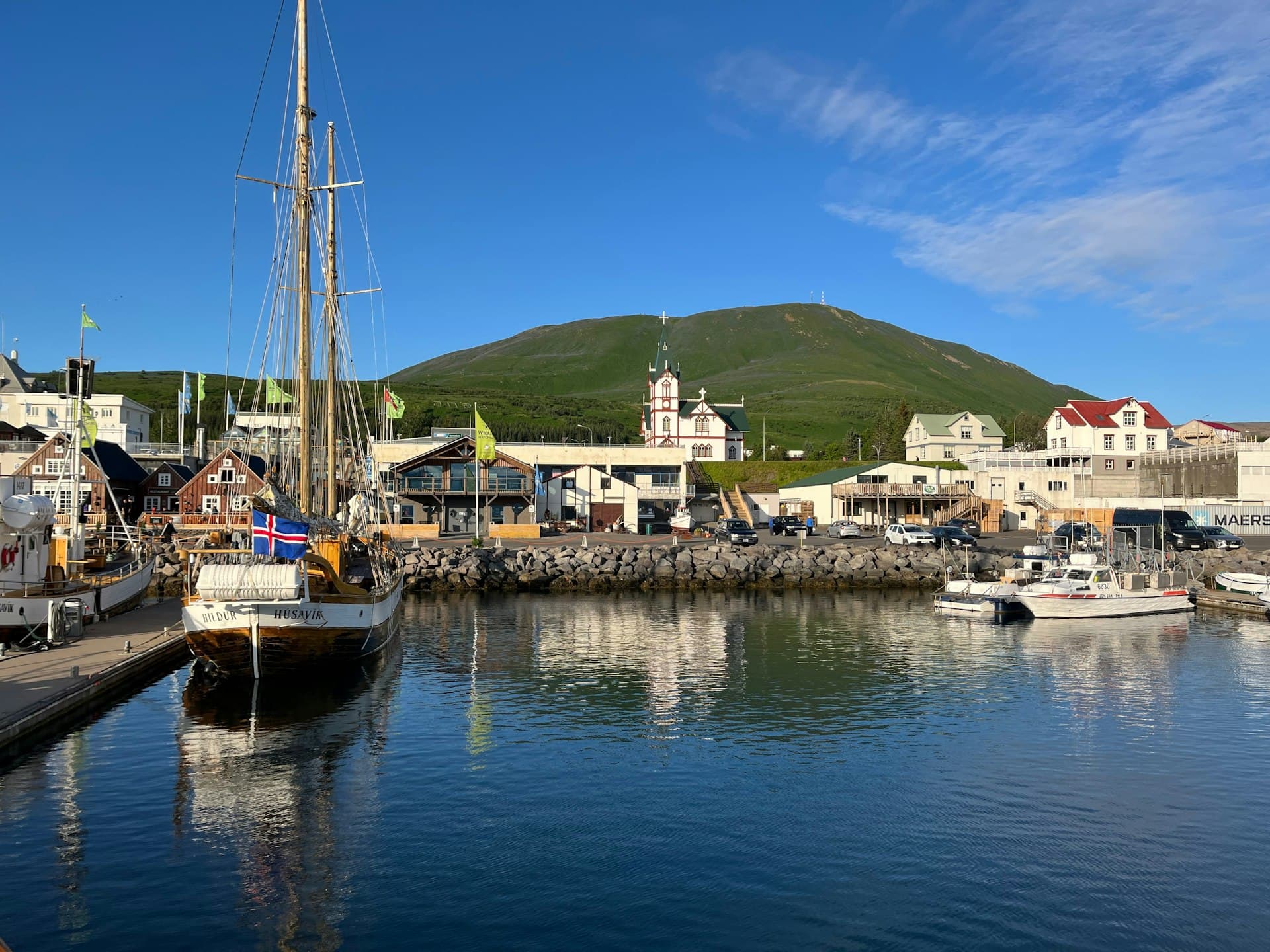 Photo: Henry Becker / Unsplash
Zelfgeleide audiowandeling door Húsavík — GPS-route, offline afspelen, meeslepende vertelling in 32 talen.
“Voorbij de walvissen, een baai vol verhalen.”
Niet de ansichtkaarten. De verhalen die zelfs locals niet kennen — gefluisterd in je oor, precies waar ze gebeurden.
Tussen de indrukwekkende skeletten van zeereuzen wordt een bijzondere blauwe vinvis op een ongebruikelijke manier gepresenteerd.
Dit lokale museum, dat de geschiedenis van de regio belicht, bevat een collectie die verrassend kan zijn voor wie alleen historische artefacten verwacht.
De kenmerkende houten kerk in Húsavík, gebouwd in de Zwitserse Chalet-stijl, heeft een onverwacht detail in zijn elegante interieur.
Ontdek elk geheim van Húsavík
Elk adres, elke onthulling volledig — in je oor, precies waar het gebeurde.
Jij kiest je stops. Jij wandelt. De stem onthult wat de anderen missen.


Je zelfgeleide audiotour van Húsavík is klaar — kies je bezienswaardigheden, kies je taal en start zodra je aankomt.
KopenLume heeft een ingebouwde augmented-reality-gids. Houd je telefoon omhoog: de camera toont de straat voor je, met een oplichtende pijl over het echte beeld die altijd naar je volgende stop wijst — geen kaart om uit te puzzelen, geen verkeerde afslagen. Zoals alles in Lume werkt het volledig offline.
Húsavík, een boeiende stad aan de noordkust van IJsland, kijkt uit over de uitgestrekte Skjálfandi-baai. Vaak de 'Walvissenhoofdstad van IJsland' genoemd, heeft het een wereldwijde reputatie verdiend als een van de beste locaties om walvissen te observeren. Hoewel de stad zelf de thuisbasis is van ongeveer 2.500 mensen, zwelt de bevolking aanzienlijk aan tijdens de zomermaanden met bezoekers die graag het prachtige zeeleven in de baai willen aanschouwen.
Naast de gevierde walvissenontmoetingen biedt Húsavík een onderscheidende mix van historische diepgang, boeiende landschappen en culturele ervaringen. Het is een belangrijke stop op de Diamond Circle-route en biedt een toegangspoort tot de wilde schoonheid van Noord-IJsland, inclusief watervallen, vulkanische kraters en geothermische baden.
Húsavík mag zich een van de oudste nederzettingen van IJsland noemen, met wortels die teruggaan tot de Nederzettingsperiode. Rond 870 na Christus arriveerde de Zweedse Viking Garðar Svavarsson aan de noordkust en bracht er een winter door. Toen hij vertrok, liet hij een man genaamd Náttfari achter, die wordt beschouwd als de eerste inwoner van Húsavík. De naam van de stad, afgeleid van het Oudnoors, betekent 'baai van huizen', waarschijnlijk verwijzend naar de oorspronkelijke boerderij van Svavarsson.
Eeuwenlang ontwikkelde Húsavík zich als een zelfvoorzienende gemeenschap, gevoed door visserij, landbouw en de gunstige havenomstandigheden. Hoewel de bevolking klein bleef, groeide de nederzetting geleidelijk met de groei van de visserij-industrie en verbeterde transportverbindingen. In de 18e en 19e eeuw werd Húsavík een stabielere nederzetting naarmate de handel toenam en de zeevaart vorderde, wat leidde tot een gestage bevolkingsgroei.
Begin 20e eeuw zag verdere uitbreiding met de ontwikkeling van diensten, industrie en openbare instellingen. Húsavík ontving officieel zijn gemeentelijke rechten op 1 januari 1950, wat zijn rol als een belangrijk centrum in Noordoost-IJsland met scholen, gezondheidszorg en een luchthaven verstevigde. Echter, veranderingen in de visserij-industrie in de jaren '60 en '70 leidden tot een tijdelijke stagnatie in de bevolkingsgroei, aangezien mensen naar grotere stedelijke gebieden verhuisden.
Een belangrijk keerpunt vond plaats rond 1995 met de opkomst van walvissen spotten. Deze opkomende toeristische industrie verlevendigde de lokale economie, creëerde nieuwe banen en trok bewoners aan. Húsavík werd al snel bekend als 'de walvissenhoofdstad van IJsland', waarbij toerisme een grote rol speelde naast de traditionele visserij. Meer recentelijk nam de wereldwijde belangstelling toe in 2019, toen een groot deel van de Hollywood-film Eurovision Song Contest: The Story of Fire Saga in de stad werd gefilmd. De film en het voor een Oscar genomineerde nummer 'Húsavík (My Hometown)' trokken internationale aandacht, wat leidde tot een opmerkelijke toename van het aantal toeristische bezoeken. Vandaag de dag is Húsavík een bloeiende gemeenschap die zijn oude geschiedenis en visserij-erfgoed in evenwicht brengt met een moderne identiteit gebouwd op cultuur, natuur en een diverse economie.
Húsavík biedt een verscheidenheid aan attracties, waarvan vele op korte loopafstand van elkaar liggen. De belangrijkste trekpleister is walvissen spotten in de Skjálfandi-baai, waar vaak bultruggen en dwergvinvissen worden gespot, samen met witsnuitdolfijnen. Blauwe vinvissen en orka's worden ook af en toe gezien. Verschillende bedrijven bieden tours aan, vaak met warme overall's.
Voor een diepgaand begrip van het zeeleven, bezoek het Húsavík Walvissenmuseum, een non-profit organisatie met 11 walskeletten, waaronder een 25 meter lange blauwe vinvis. Het Exploratiemuseum is gewijd aan menselijke ontdekkingen, met tentoonstellingen over Vikingontdekkingsreizigers en de training van Apollo-astronauten in IJsland vanwege de maanachtige landschappen.
De iconische Húsavíkurkirkja, een houten kerk gebouwd in 1907 in de Zwitserse Chalet-stijl, is een prominent herkenningsteken en is in de zomer voor bezoekers geopend. Voor ontspanning bieden de GeoSea Geothermische Zeebaden warm, mineraalrijk zeewater met een panoramisch uitzicht op de baai en de bergen. Bezoekers kunnen ook de haven van de stad verkennen, genieten van lokale gerechten in restaurants zoals Gamli Baukur, of The Húsavík Museum bezoeken voor lokale geschiedenis en cultuur.
De beste tijd om Húsavík te bezoeken is tijdens de zomermaanden, van juni tot en met augustus. Deze periode biedt het mildste weer en de stad is op zijn levendigst, met langere openingstijden voor restaurants, winkels en musea. Walvissen spotten tours zijn ook op hun hoogtepunt, met hoge waarnemingspercentages. Hoewel er nog steeds bewolkte luchten en wat regen kan zijn, is het raadzaam om een jas en trui mee te nemen.
Buiten het hoogseizoen, van lente tot winter, neemt het aantal bezoekers af en kunnen sommige bedrijven kortere openingstijden hebben of gesloten zijn. Dit biedt echter een rustigere sfeer en een kans om Húsavík zonder de drukte te ervaren. De winter kan ook ideaal zijn voor het bekijken van het Noorderlicht.
Húsavík ligt aan de noordkust van IJsland, ongeveer 75 km ten noordoosten van Akureyri. De rit vanuit Reykjavík langs de Ringweg (Route 1) duurt ongeveer zes uur, hoewel veel bezoekers de reis onderbreken. Als alternatief kunt u vanuit Reykjavík naar Akureyri vliegen (een vlucht van 45 minuten) en vervolgens een bus of huurauto nemen voor het laatste uur naar Húsavík.
Binnen Húsavík is het stadscentrum beloopbaar, met de meeste attracties binnen 15 minuten lopen. Voor het verkennen van het bredere Diamond Circle-gebied wordt een huurauto aanbevolen. Accommodatiemogelijkheden variëren van hotels tot cabines en hostels. Het is altijd raadzaam om de openingstijden van bedrijven en attracties te controleren, vooral buiten het zomerseizoen. Het lokale toeristeninformatiecentrum kan verdere hulp en informatie bieden.
Húsavík — Koreaans, Chinees, Hebreeuws en nog 29 talen, elke stop verteld door een moedertaalspreker. Het grootste taalaanbod van alle zelfgeleide audiotours.
Beschikbaar in: