Kulturpalast
Der prächtige Kulturpalast birgt ein Geheimnis unter seinem verzierten Uhrturm, ein Detail, das die meisten Besucher übersehen.
Die ganze Geschichte wird in der Tour freigeschaltet
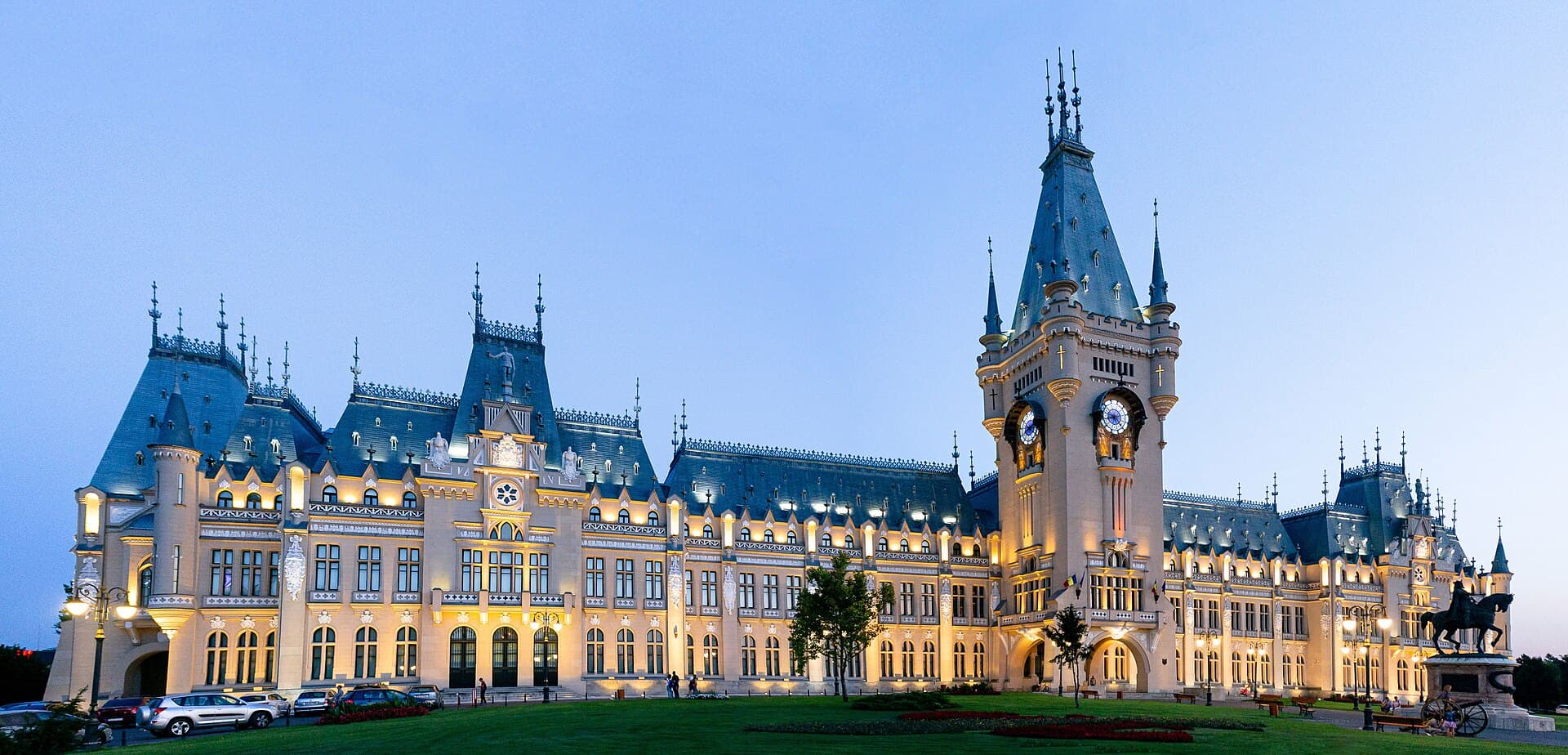 Andrei Lucian Vaida / CC BY-SA 4.0, via Wikimedia Commons
Selbstgeführte Audio-Walking-Tour durch Iași — GPS-Route, Offline-Wiedergabe, erzählerische Narration in 32 Sprachen.
“Iași: Wo Imperien zusammenliefen und Kultur erblühte.”
Nicht die Postkarten. Die Geschichten, die selbst Einheimische nicht kennen – dir ins Ohr geflüstert, genau dort, wo sie geschahen.
Der prächtige Kulturpalast birgt ein Geheimnis unter seinem verzierten Uhrturm, ein Detail, das die meisten Besucher übersehen.
Zwischen den ruhigen Wegen des Botanischen Gartens von Iași trägt eine bestimmte Pflanze einen überraschenden, fast skandalösen lokalen Spitznamen.
Die filigrane Steinschnitzerei des Klosters der Drei Hierarchen verbirgt einen subtilen, aber bedeutenden historischen 'Fehler' in seinem Design.
Entdecke jedes Geheimnis von Iași
Jede Adresse, jede Enthüllung vollständig – in deinem Ohr, genau dort, wo es geschah.
Du wählst deine Stationen. Du gehst. Die Stimme enthüllt, was andere übersehen.


Deine selbstgeführte Audio-Tour durch Iași ist bereit – wähle deine Sehenswürdigkeiten, deine Sprache und starte, sobald du ankommst.
KaufenLume enthält einen integrierten Augmented-Reality-Guide. Halten Sie Ihr Handy hoch: Die Kamera zeigt die Straße vor Ihnen, mit einem leuchtenden Pfeil über dem echten Bild, der immer auf Ihren nächsten Stopp zeigt — keine Karte zum Rätseln, keine falschen Abzweigungen. Wie alles bei Lume funktioniert es komplett offline.
Iași, oft als Kulturhauptstadt Rumäniens bezeichnet, ist eine Stadt, in der jeder Stein von Geschichten aus vergangenen Jahrhunderten zu summen scheint. In der historischen Region Moldau gelegen, diente sie über 300 Jahre lang als Hauptstadt des Fürstentums und hinterließ unauslöschliche Spuren in ihrer Architektur und ihrem intellektuellen Leben. Heute ist Iași eine Universitätsstadt, die ihr Erbe mit jugendlicher Energie verbindet, die ihre Cafés, Theater und Grünflächen durchdringt.
Vom Glanz des Kulturpalastes im byzantinischen Stil bis zu den ruhigen Wegen des Botanischen Gartens bietet Iași eine Reise durch die Zeit. Es ist ein Ort, an dem Sie auf den Spuren von Fürsten und Dichtern wandeln, sorgfältig erhaltene Klöster erkunden und den Geburtsort des rumänischen Nationaltheaters entdecken können. Der einzigartige Reiz der Stadt liegt in diesem harmonischen Nebeneinander von Alt und Neu, das die Besucher einlädt, tiefer in ihre fesselnde Erzählung einzutauchen.
Die Ursprünge von Iași reichen mindestens bis ins 14. Jahrhundert zurück, wo es erstmals in Dokumenten als Zollpunkt erschien. Seine strategische Lage an Handelsrouten erhöhte schnell seine Bedeutung, und im 16. Jahrhundert war es die Hauptstadt des Fürstentums Moldau geworden. Diese Zeit markierte ein goldenes Zeitalter für Iași, da aufeinanderfolgende Herrscher oder Domnitori in prächtige architektonische Projekte investierten und ein blühendes intellektuelles Umfeld förderten.
Im 17. Jahrhundert wurden einige der ikonischsten Wahrzeichen von Iași errichtet, darunter das Kloster der Drei Hierarchen, das für seine kunstvollen Steinschnitzereien bekannt ist, und das Kloster Golia. Diese religiösen Stiftungen waren nicht nur Zentren der Anbetung, sondern auch bedeutende kulturelle und Bildungseinrichtungen. Die Stadt wurde zu einem Schmelztiegel der Zivilisationen, beeinflusst von byzantinischen, osmanischen und westeuropäischen Kulturen, was sich in ihren vielfältigen architektonischen Stilen und Traditionen widerspiegelt.
Während der Phanarioten-Ära, als vom Osmanischen Reich ernannte griechische Familien die Moldau regierten, blieb Iași ein bedeutendes politisches und kulturelles Zentrum. Die Stadt spielte im 19. Jahrhundert eine entscheidende Rolle bei der Entwicklung der rumänischen Nationalidentität und wurde zu einem Brennpunkt der Einigungsbewegung. Hier wurde Alexandru Ioan Cuza, eine Schlüsselfigur der Einigung, 1859 zum Fürsten der Moldau gewählt, ein entscheidender Schritt zur Schaffung des modernen Rumäniens.
Im späten 19. und frühen 20. Jahrhundert festigte Iași seine Position als wichtiges kulturelles und akademisches Zentrum. Die literarische Gesellschaft 'Junimea', eine mächtige Kraft in der rumänischen Kultur, wurde hier gegründet, und die Stadt wurde zur Heimat der ersten rumänischen Universität, der Alexandru Ioan Cuza Universität. Der Kulturpalast, ein architektonisches Meisterwerk, das 1925 fertiggestellt wurde, zeugt von dieser Ära des intellektuellen und künstlerischen Aufschwungs und beherbergt mehrere Museen und eine Bibliothek.
Trotz der Herausforderungen zweier Weltkriege und der kommunistischen Ära hat Iași viel von seinem historischen Charme bewahrt und ist weiterhin ein Zentrum für Kunst, Bildung und Innovation in Rumänien. Seine Widerstandsfähigkeit und sein Engagement für sein Erbe zeigen sich in seinen wunderschön restaurierten Gebäuden und seiner lebendigen Kulturszene.
Beginnen Sie Ihre Erkundung im Kulturpalast, einem architektonischen Wunderwerk, das vier Museen beherbergt: das Kunstmuseum, das Museum für moldauische Geschichte, das Ethnografische Museum der Moldau und das Museum für Wissenschaft und Technik 'Ștefan cel Mare'. Gehen Sie als Nächstes zum Kloster der Drei Hierarchen, einem UNESCO-Weltkulturerbe, das für seine kunstvollen Außenverzierungen, die an filigrane Spitze erinnern, gefeiert wird. Nur einen kurzen Spaziergang entfernt befindet sich die Metropolitankathedrale, die größte orthodoxe Kirche Rumäniens mit ihren beeindruckenden Innenfresken.
Für frische Luft besuchen Sie den Botanischen Garten von Iași, den ältesten und größten Rumäniens, der vielfältige Pflanzensammlungen und ruhige Wege bietet. Geschichtsinteressierte sollten das Unionsmuseum (Cuza-Palast) erkunden, das die Vereinigung der rumänischen Fürstentümer dokumentiert. Beenden Sie Ihre kulturelle Reise am Nationaltheater Vasile Alecsandri, dem ersten Nationaltheater Rumäniens, das für sein exquisiten Rokoko- und Barockinterieur bekannt ist.
Die besten Reisezeiten für Iași sind Frühling (April bis Juni) und Frühherbst (September bis Oktober). In diesen Monaten ist das Wetter mild und angenehm, ideal für die Erkundung der vielen Attraktionen im Freien und historischen Stätten der Stadt. Der Botanische Garten ist besonders schön im Frühling, wenn die Blumen blühen. Die Sommer können warm sein, während die Winter kalt mit gelegentlichem Schnee sind.
Iași ist gut angebunden, mit dem Internationalen Flughafen Iași (IAS), der Flüge zu wichtigen europäischen Städten und innerhalb Rumäniens anbietet. Die Stadt verfügt auch über gute Bahn- und Busverbindungen. Innerhalb von Iași ist das Stadtzentrum zu Fuß erreichbar, und öffentliche Verkehrsmittel, einschließlich Straßenbahnen und Bussen, sind für längere Strecken effizient. Taxis und Fahrdienste sind ebenfalls leicht verfügbar. Die lokale Währung ist der rumänische Leu (RON). Viele Geschäfte akzeptieren Kreditkarten, aber es ist ratsam, etwas Bargeld für kleinere Einkäufe mitzunehmen.
Iași — Koreanisch, Chinesisch, Hebräisch und 29 weitere Sprachen, jede Station von einer muttersprachlichen Stimme erzählt. Die größte Sprachauswahl aller selbstgeführten Audiotouren.
Verfügbar auf: