Die 'Wasserfälle' von Idaho Falls
Die Stadt trägt den Namen Idaho Falls, doch für eine Zeit zierten keine tatsächlichen Wasserfälle ihren Fluss.
Die ganze Geschichte wird in der Tour freigeschaltet
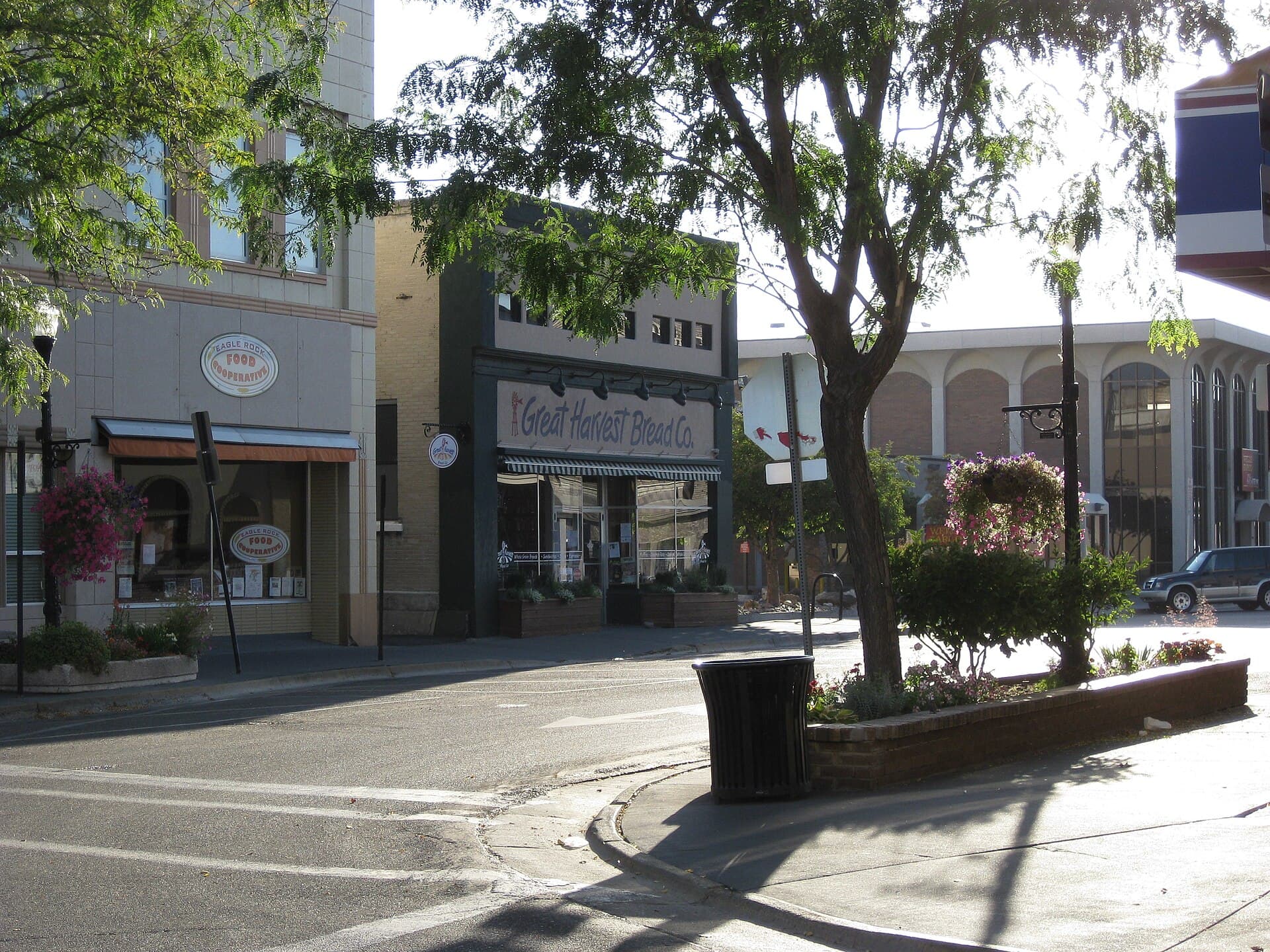 Eric Fredericks from Rancho Cordova, California, United States / CC BY-SA 2.0, via Wikimedia Commons
Selbstgeführte Audio-Walking-Tour durch Idaho Falls — GPS-Route, Offline-Wiedergabe, erzählerische Narration in 32 Sprachen.
“Wo der Snake River einen Pfad durch Geschichte und Innovation schneidet.”
Nicht die Postkarten. Die Geschichten, die selbst Einheimische nicht kennen – dir ins Ohr geflüstert, genau dort, wo sie geschahen.
Die Stadt trägt den Namen Idaho Falls, doch für eine Zeit zierten keine tatsächlichen Wasserfälle ihren Fluss.
Idaho Falls spielte eine zentrale Rolle bei einer bahnbrechenden wissenschaftlichen Errungenschaft, war aber auch Zeuge einer einzigartigen Tragödie.
Ein ehrwürdiges Theater in der Innenstadt von Idaho Falls soll einen geisterhaften Bewohner beherbergen.
Entdecke jedes Geheimnis von Idaho Falls
Jede Adresse, jede Enthüllung vollständig – in deinem Ohr, genau dort, wo es geschah.
Du wählst deine Stationen. Du gehst. Die Stimme enthüllt, was andere übersehen.


Deine selbstgeführte Audio-Tour durch Idaho Falls ist bereit – wähle deine Sehenswürdigkeiten, deine Sprache und starte, sobald du ankommst.
KaufenLume enthält einen integrierten Augmented-Reality-Guide. Halten Sie Ihr Handy hoch: Die Kamera zeigt die Straße vor Ihnen, mit einem leuchtenden Pfeil über dem echten Bild, der immer auf Ihren nächsten Stopp zeigt — keine Karte zum Rätseln, keine falschen Abzweigungen. Wie alles bei Lume funktioniert es komplett offline.
Idaho Falls, die viertbevölkerungsreichste Stadt Idahos, ist ein zentraler Knotenpunkt für Handel, Kultur und Gesundheitswesen in Ost-Idaho und erstreckt sich bis in Teile von Wyoming und Montana. An den Snake River gelegen, bietet die Stadt eine Mischung aus natürlicher Pracht und städtischem Komfort. Der River Walk, ein malerischer Weg entlang des Snake River, bietet Lauf- und Radwege, Kunstinstallationen und Sehenswürdigkeiten und ist ein Mittelpunkt des Gemeinschaftslebens.
Die besondere Lage der Stadt macht sie zu einem Tor zu einigen der ikonischsten Naturwunder der Region, darunter der Yellowstone-Nationalpark und der Grand-Teton-Nationalpark. Ob Sie lokale Attraktionen erkunden oder sich in die umliegende Wildnis wagen, Idaho Falls bietet eine bequeme Basis für eine Vielzahl von Erlebnissen.
Das Gebiet, das heute als Idaho Falls bekannt ist, wurde ursprünglich von amerikanischen Ureinwohnern bewohnt, darunter die Shoshone-Bannock und Northern Paiute, die den Snake River zur Nahrungsbeschaffung und zum Reisen nutzten. Die modernen Ursprünge der Stadt reichen bis ins Jahr 1864 zurück, als Matt Taylor eine Holzbrücke über den Snake River baute und damit einen wichtigen Übergangspunkt für Reisende auf dem Montana Trail schuf. Diese frühe Siedlung war als Taylor's Crossing bekannt.
Bis 1866 wurde die wachsende Gemeinde in Eagle Rock umbenannt, inspiriert von einer kleinen Insel im Snake River, die von Adlern frequentiert wurde. Die Ankunft der Utah and Northern Railway (U&NR) im Jahr 1879 beflügelte die Expansion der Stadt weiter, wobei die Eisenbahn eine 800 Fuß lange eiserne Brücke über den Fluss baute. Diese Eisenbahnverbindung erleichterte den Zustrom von Siedlern in das obere Snake River Valley und führte zur Entwicklung von Farmen und Bewässerungskanälen, die die trockene Landschaft in produktives Ackerland verwandelten.
1887 verlagerten sich wesentliche Teile der Bahnanlagen nach Pocatello, was zu einem vorübergehenden Rückgang der Bevölkerung von Eagle Rock führte. Im Jahr 1891 ließen sich jedoch Stadtführer von Vermarktern überzeugen, den Namen der Stadt in Idaho Falls zu ändern, eine strategische Maßnahme, um Wasserreichtum zu suggerieren und weitere Entwicklungen anzuziehen. Trotz des Namens entstanden die ikonischen Wasserfälle, die die Stadt heute prägen, erst 1911, als eine Stützmauer für ein Wasserkraftwerk die Stromschnellen des Flusses umgestaltete.
Der Bau des Great Feeder, damals der größte Bewässerungskanal der Welt, im Jahr 1895 leitete Wasser aus dem Snake River um und war maßgeblich daran beteiligt, riesige Wüstenflächen in fruchtbares Ackerland umzuwandeln. Diese landwirtschaftliche Expansion führte zum Anbau von Kulturen wie Zuckerrüben, Kartoffeln, Erbsen, Getreide und Luzerne und etablierte die Region als eines der produktivsten Agrargebiete der Vereinigten Staaten.
Die Geschichte von Idaho Falls nahm während des Zweiten Weltkriegs eine bedeutende Wendung, als es zu einem Zentrum für nukleare Forschung und Entwicklung wurde. Die Gründung der National Reactor Testing Station (jetzt Idaho National Laboratory) im Jahr 1949 westlich der Stadt markierte eine neue Ära wissenschaftlicher Innovation. Diese Anlage erreichte am 20. Dezember 1951 einen historischen Meilenstein, indem sie die erste nutzbare Elektrizität aus einem Kernreaktor erzeugte.
Heute floriert Idaho Falls weiterhin als moderne Stadt mit über 64.000 Einwohnern (Zensus 2020). Sie behält ihre Rolle als Handels- und Kulturzentrum bei und schätzt ihre einzigartige Geschichte und Nähe zu Naturwundern.
Beginnen Sie Ihre Erkundung von Idaho Falls mit einem Spaziergang entlang des River Walk, einem Mehrzweckwegsystem, das dem Snake River durch die Stadt folgt. Dieser malerische Weg ist ideal zum Spazierengehen, Laufen oder Radfahren und bietet Ausblicke auf die namensgebenden Wasserfälle und verschiedene Kunstinstallationen. Für einen tieferen Einblick in die lokale Geschichte und Kultur besuchen Sie das Museum of Idaho, das Ausstellungen zur Geschichte des Staates zeigt und oft spezielle Wanderausstellungen beherbergt. Familien werden den Idaho Falls Zoo im Tautphaus Park genießen, der als 'The Best Little Zoo in the West' bekannt ist und über 300 Tiere aus 130 Arten beherbergt.
Erwägen Sie einen Besuch im Japanese Friendship Garden, der auf einer Insel im Snake River liegt und eine ruhige Atmosphäre mit traditioneller japanischer Architektur und Wasserspielen bietet. Für ein einzigartiges Outdoor-Erlebnis, besonders während der wärmeren Monate, bieten die Heise Hot Springs, etwa 20 Meilen östlich von Idaho Falls, Mineralbecken, eine Wasserrutsche und sogar eine Pizzeria. Kunstliebhaber können das Art Museum of Eastern Idaho oder das ARTitorium am Broadway erkunden. Die Innenstadt bietet auch eine Vielzahl von Geschäften, Restaurants und Kunstgalerien, die es zu entdecken gilt.
Die beste Zeit für einen Besuch in Idaho Falls für angenehmes Wetter und Outdoor-Aktivitäten erstreckt sich von Mitte Mai bis Juni und wieder von Mitte August bis September. Während dieser Zeit liegen die täglichen Höchsttemperaturen typischerweise zwischen 18 °C und 30 °C, mit milder Luftfeuchtigkeit. Das späte Frühjahr bis zum frühen Herbst bietet angenehmes Wetter für Outdoor-Aktivitäten, wobei Juni und September als Monate mit höchstem Komfort hervorstechen. Für Aktivitäten bei warmem Wetter wird auch die Zeit von Ende Juni bis Mitte August sehr empfohlen. Der Herbst, von Mitte September bis November, bietet kühles Wetter und lebendige Herbstfarben, insbesondere in Ost-Idaho.
Idaho Falls wird vom Idaho Falls Regional Airport (IDA) angeflogen, der eine bequeme Fluganbindung an die Stadt bietet. Für Reisende von weiter her ist der Bozeman Yellowstone International Airport (BZN) eine weitere Option, erfordert jedoch eine längere Anfahrt. Innerhalb der Stadt wird für die meisten Aktivitäten legere und bequeme Kleidung empfohlen. Ein Pullover oder eine leichte Jacke ist für das frühe Frühjahr, den Herbst und sogar einige Sommerabende ratsam, da die Nachttemperaturen aufgrund der Lage in der Wüstenebene kühl sein können. In den Wintermonaten ist es wichtig, die Wetterbedingungen zu prüfen und sich für kalte Temperaturen und Schnee warm anzuziehen.
Die Stadt bietet eine Reihe von Unterkunftsmöglichkeiten, darunter Hotels am Snake River und solche mit Flughafentransfer. Eine Vielzahl lokaler und internationaler Küche finden Sie in den zahlreichen Restaurants im gesamten Großraum Idaho Falls. Das Eastern Idaho Visitor Information Center ist eine wertvolle Ressource für zusätzliche Informationen und Unterstützung während Ihres Besuchs.
Idaho Falls — Koreanisch, Chinesisch, Hebräisch und 29 weitere Sprachen, jede Station von einer muttersprachlichen Stimme erzählt. Die größte Sprachauswahl aller selbstgeführten Audiotouren.
Verfügbar auf: