Église de Molo et Cathédrale de Jaro
Les deux églises coloniales les plus importantes d'Iloilo City présentent un dialogue architectural unique, presque ludique.
L'histoire complète se débloque dans le tour
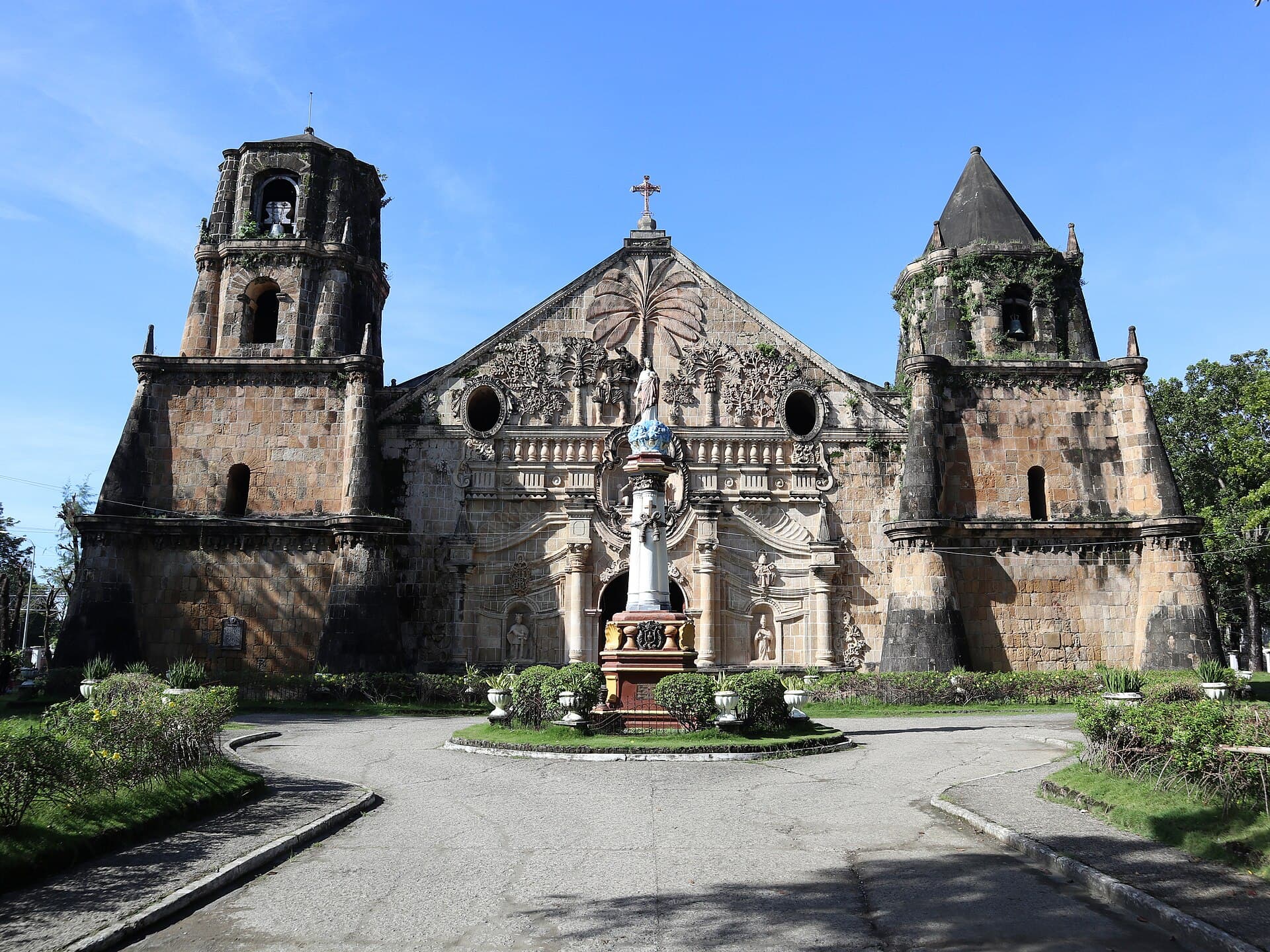 Patrickroque01 / CC BY-SA 4.0, via Wikimedia Commons
Visite audio autoguidée de Iloilo — parcours GPS à pied, lecture hors ligne, narration en 32 langues.
“Mon cœur bat à Iloilo City.”
Pas les cartes postales. Les histoires que même les habitants ignorent — soufflées à l'oreille, là où elles se sont passées.
Les deux églises coloniales les plus importantes d'Iloilo City présentent un dialogue architectural unique, presque ludique.
Pendant un confinement de la ville, un artiste local a dévoilé une série de monuments mondialement connus le long de la rivière Iloilo.
Avant que les jeepneys modernes ne dominent les rues, une forme de transport plus élégante régnait sur la Calle Real animée d'Iloilo.
Découvrez tous les secrets de Iloilo
Chaque adresse, chaque révélation en entier — dans ton oreille, là où elle s'est passée.
Tu choisis tes lieux. Tu marches. La voix te révèle ce que les autres ignorent.

Votre visite audioguidée de Iloilo vous attend — choisissez vos lieux, votre langue, et lancez-vous dès votre arrivée.
AcheterLume intègre un guide en réalité augmentée. Levez votre téléphone : sa caméra montre la rue devant vous, avec une flèche lumineuse posée sur l'image réelle qui pointe toujours vers votre prochain arrêt — aucune carte à déchiffrer, aucun mauvais virage. Comme tout dans Lume, ça fonctionne entièrement hors-ligne.
Iloilo City, souvent surnommée la « Ville de l'Amour », est une métropole dynamique située sur la côte sud-est de l'île de Panay, dans la région des Visayas occidentales des Philippines. Elle fonctionne comme le centre régional des Visayas occidentales, servant de carrefour pour le commerce, l'industrie, l'éducation, la santé, le tourisme, la culture et les arts culinaires. La devise officielle de la ville, « Mon cœur bat à Iloilo City », introduite en 2023, reflète la profonde fierté que les Ilonggos portent à leur nourriture, leurs lieux et leur patrimoine.
Iloilo City est reconnue comme la première Ville Créative de Gastronomie de l'UNESCO aux Philippines, célébrée pour sa cuisine distincte et ses plats emblématiques comme le La Paz Batchoy et le Pancit Molo. Au-delà de ses délices culinaires, la ville offre un mélange d'attrait historique et de progrès contemporain, avec des architectures coloniales espagnoles et américaines bien préservées qui coexistent avec des développements modernes. Sa situation stratégique sur l'île de Panay, en forme de cœur et positionnée au centre de l'archipel philippin, a également valu à Iloilo le surnom de « Cœur des Philippines ».
De ses marchés animés et de son esplanade paisible au bord de la rivière à ses grandes églises centenaires et ses maisons ancestrales, Iloilo City invite les visiteurs à explorer une destination riche en histoire, en culture et en chaleur.
L'histoire d'Iloilo City remonte au XIIIe siècle, avec des documents de la dynastie Yuan mentionnant Oton, une ville à l'ouest d'Iloilo City, comme un comptoir commercial très actif. Des communautés indigènes, principalement le peuple Ati et plus tard des colons malais, habitaient la région. Le nom « Iloilo » proviendrait de « Irong-Irong », faisant référence à un promontoire en forme de nez au confluent des rivières Batiano et Iloilo. Avant même l'arrivée des Espagnols, la région était engagée dans un commerce actif avec des marchands chinois et malais.
La colonisation espagnole a commencé en 1566 lorsque Miguel López de Legazpi a établi une colonie à Panay, en faisant le deuxième centre colonial espagnol aux Philippines après Cebu. Iloilo est rapidement devenue une colonie importante, prospérant en tant que grand port commercial, notamment pour les industries du sucre et du textile. En 1855, Iloilo s'est ouverte au commerce mondial, devenant le plus grand port des Philippines et une province de premier plan grâce à ses activités économiques. Cette ascension économique a conduit la reine régente Maria Christina d'Autriche à accorder à Iloilo le statut de ville et le titre honorifique de « La Muy Leal y Noble Ciudad » (La Ville la Plus Loyale et Noble) en 1889, reconnaissant sa loyauté envers la couronne espagnole pendant la Révolution philippine. À la fin du XIXe siècle, Iloilo était considérée comme la deuxième ville la plus importante des Philippines, après Manille, ce qui lui a valu le surnom de « Ville Reine du Sud ».
Iloilo a brièvement servi de dernière capitale de l'Empire espagnol en Asie et dans le Pacifique avant que les Philippines ne soient cédées aux États-Unis en 1898. Sous la domination américaine, son statut de ville a été temporairement rétrogradé en canton en 1900, mais a été restauré en 1937, incorporant les villes environnantes comme Molo, Jaro, Mandurriao, La Paz et Arevalo. La ville a continué de prospérer en tant que centre de commerce, d'éducation et de culture, bien qu'elle ait connu un ralentissement économique après la Seconde Guerre mondiale. Au cours des dernières décennies, Iloilo City a connu une croissance renouvelée, en particulier dans les industries des technologies de l'information et de l'externalisation des processus métier (BPO), et a été officiellement classée comme ville hautement urbanisée en 1979.
Iloilo City offre une riche collection de sites, mêlant monuments historiques et espaces urbains modernes. Commencez votre exploration le long de la Calle Real (rue J.M. Basa), une rue historique où de magnifiques bâtiments néoclassiques restaurés des périodes coloniales espagnole et américaine bordent l'artère, offrant un aperçu du passé prospère de la ville. À proximité, la Plaza Libertad est un site historique important où le drapeau philippin a été hissé pour la première fois à Iloilo.
Pour les passionnés de religion et d'architecture, la Cathédrale métropolitaine de Jaro se distingue par son clocher détaché unique situé en face, sur la place de Jaro. Non loin se trouve l'Église de Molo, une structure gothique-Renaissance souvent appelée l'« église féministe » en raison de son intérieur exclusivement orné de statues de saintes. Explorez les maisons ancestrales comme la Casa Mariquit, un manoir de 200 ans bien conservé qui appartenait à la famille d'un ancien vice-président philippin, offrant un aperçu de la vie de l'élite d'Iloilo. Une autre maison patrimoniale notable est la Camiña Balay nga Bato, qui présente une architecture coloniale espagnole préservée et propose le tsokolate de batirol traditionnel.
L'Esplanade de la rivière Iloilo offre une promenade pittoresque au bord de la rivière, parfaite pour des flâneries, offrant des brises fluviales rafraîchissantes et des vues, surtout au lever ou au coucher du soleil. Pour une immersion plus profonde dans le passé de la ville, visitez le Museo Iloilo, qui expose des artefacts locaux, ou le Musée d'histoire économique des Philippines, qui offre un aperçu du passé commercial d'Iloilo.
La meilleure période pour visiter Iloilo City est pendant la saison sèche, de décembre à mai, lorsque le temps est généralement ensoleillé et idéal pour l'exploration. Janvier est un mois particulièrement animé, car il accueille le Festival Dinagyang, acclamé au niveau national, une cavalcade d'une semaine de danses de rue colorées en l'honneur du Santo Niño. Février apporte également le Festival Paraw Regatta, le plus ancien événement artisanal traditionnel d'Asie, mettant en vedette des voiliers colorés. Bien que de juin à novembre marque la saison des pluies, caractérisée par des pluies tropicales, cela peut offrir des tarifs abordables et une expérience urbaine plus calme et intime.
Se rendre à Iloilo City est pratique, car c'est un grand centre urbain avec son propre aéroport international, l'aéroport international d'Iloilo (ILO). Une fois en ville, les options de transport incluent les taxis, les services de covoiturage comme Grab et les jeepneys, qui sont un moyen populaire et abordable de naviguer dans les sept districts de la ville. Pour ceux qui souhaitent explorer la campagne ou les îles voisines, la location d'une moto est une option.
L'hébergement va des hôtels de luxe aux maisons d'hôtes économiques. Il est conseillé de réserver les vols et les hôtels à l'avance, surtout si vous voyagez pendant la haute saison ou les grands festivals comme le Dinagyang. La langue locale est l'Hiligaynon (Ilonggo), connue pour sa tonalité mélodieuse, mais le philippin et l'anglais sont largement parlés, en particulier dans les zones commerciales et touristiques. La monnaie locale est le peso philippin (PHP), avec des distributeurs automatiques de billets facilement accessibles et les cartes de crédit acceptées dans les grands établissements. Iloilo City est considérée comme l'une des villes les plus sûres des Philippines, connue pour ses habitants amicaux et son faible taux de criminalité.
Iloilo en coréen, en chinois ou en hébreu — et dans 29 autres langues, chaque étape narrée par une voix native. La plus large gamme de langues de tous les audioguides autoguidés.
Disponible en :