Along the path to Toubkal's summit, a white-painted rock and a small shrine offer a moment of unexpected reverence.
Lionfish0 / CC BY-SA 3.0, via Wikimedia CommonsImlil
“Where the High Atlas breathes ancient trails and quiet stories.”
Imlil, as no one tells it.
Not the postcards. The stories even locals don't know — whispered in your ear, right where they happened.
Just a few decades ago, Imlil was a quiet farming community, largely separated from the outside world.
The narrow paths winding through Imlil and its surrounding villages serve more than just hikers.
Discover every secret of Imlil
Every address, every reveal in full — in your ear, right where it happened.
You pick your stops. You walk. The voice reveals what the others miss.
How long do you have in Imlil?
No tours available yet. Check back soon — we're preparing them.
The story of Imlil
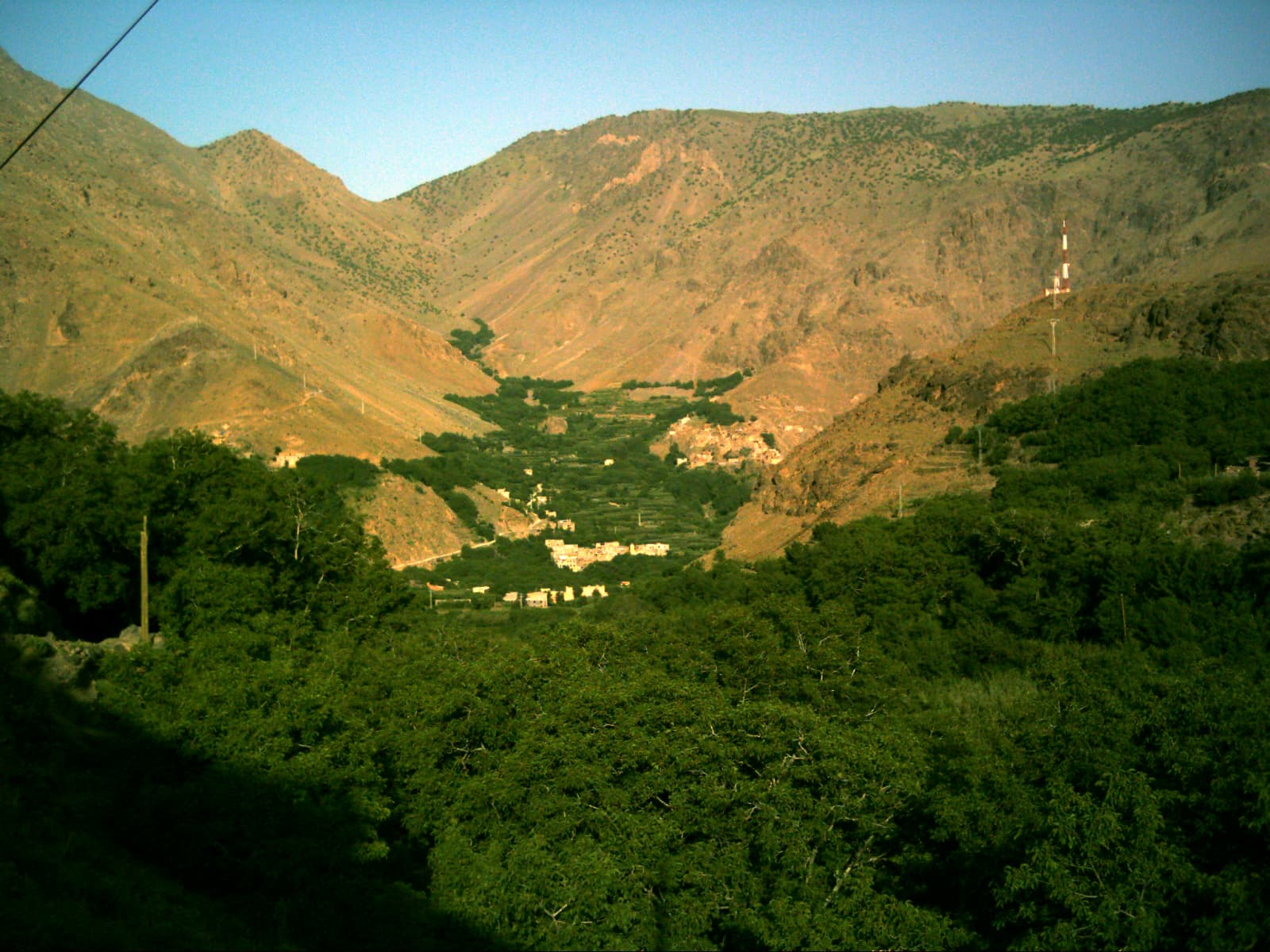
Imlil is a mountain village in Morocco's High Atlas range, approximately 60 kilometers south of Marrakech. Situated at an elevation of 1,800 meters (5,900 feet), it serves as a primary gateway to Jbel Toubkal, North Africa's tallest peak at 4,167 meters (13,671 feet). The village acts as a central point for mountaineering expeditions, with a significant percentage of Toubkal climbers beginning their journey here.
Beyond its role as a trekking base, Imlil offers a peaceful escape from the bustling cities, characterized by crisp mountain air and authentic Berber life. The village and its surrounding valleys, part of Toubkal National Park, are dotted with traditional Berber settlements, terraced fields, and orchards of walnut and apple trees. Visitors can experience the open hospitality of the local Amazigh (Berber) people, who have adapted to tourism while maintaining their enduring cultural heritage.
From Ancient Routes to Mountain Tourism
Imlil's story is deeply rooted in the ancient trans-Saharan trade routes, although its modern significance largely stems from its role in mountaineering. The name "Imlil" itself is thought to be derived from the Berber word "amlil," meaning "white," likely a reference to the snow-dusted peaks that often surround the village.
For centuries, Imlil was a relatively isolated agricultural community, with its economy centered on farming practices adapted to the mountainous terrain. Locals cultivated crops such as walnuts, apples, cherries, barley, and corn on meticulously maintained terraced fields. Life in these High Atlas villages revolved around communal work, seasonal farming, and the movement of flocks between summer pastures and winter settlements.
The village began its transformation into a tourism hub in the late 20th century. While the first road connecting Imlil to the wider region was built in 1956, electricity arrived only in 1997, and the road to Imlil was paved in 2006. This improved accessibility, coupled with the growing interest in climbing Mount Toubkal, led to a significant increase in visitors. Today, approximately 80% of Imlil's population derives some income from tourism, with many locals working as certified mountain guides, guesthouse operators, or mule handlers. This shift has allowed the community to embrace new economic opportunities while striving to preserve its authentic Berber soul and traditions.
Toubkal National Park, established in 1942, further solidified the region's importance, aiming to preserve its tall peaks, unique forests of Holm Oak and Thuriferous Juniper, and remarkable fauna such as Barbary sheep and golden eagles. In 2018, a tragic incident involving the murder of two trekkers led to the implementation of new safety regulations, including the mandatory hiring of a local guide for the trail between Imlil and Toubkal.
Imlil offers a range of experiences beyond just being a base for Mount Toubkal ascents. A popular and accessible activity is a walk to the Imlil waterfall, a pleasant 30-minute stroll from the village, where you can enjoy fresh orange juice. Exploring the surrounding Berber villages, such as Aroumd, provides a window into traditional Amazigh mountain life. These villages are connected by ancient irrigation paths, winding past terraced orchards and traditional stone houses.
For those seeking more challenging hikes without summiting Toubkal, a full-day guided ascent to Tasghimout Summit (2,700m) offers expansive views of the High Atlas. You can also visit the Kasbah du Toubkal area for commanding views across the valley. Engaging with the local culture is a highlight; many visitors enjoy sitting in a Berber family home for mint tea and fresh bread, an authentic experience often cited as a trip highlight. The weekly Saturday market in nearby Asni is a lively local event worth experiencing.
The most pleasant times to visit Imlil are spring (March to May) and autumn (September to November). During these seasons, temperatures are mild, ranging from 10°C to 24°C (50°F to 75°F), with clear skies and lush landscapes. Spring brings blossoming cherry and apple trees and wildflowers, while autumn offers golden light and quieter trails.
Summer (June to August) is also pleasant, with daytime temperatures around 20°C to 28°C (68°F to 82°F), offering a cooler alternative to Marrakech. Winter (December to February) brings snow to the peaks and colder temperatures, sometimes dropping to 0°C (32°F) at night, requiring proper gear for hiking.
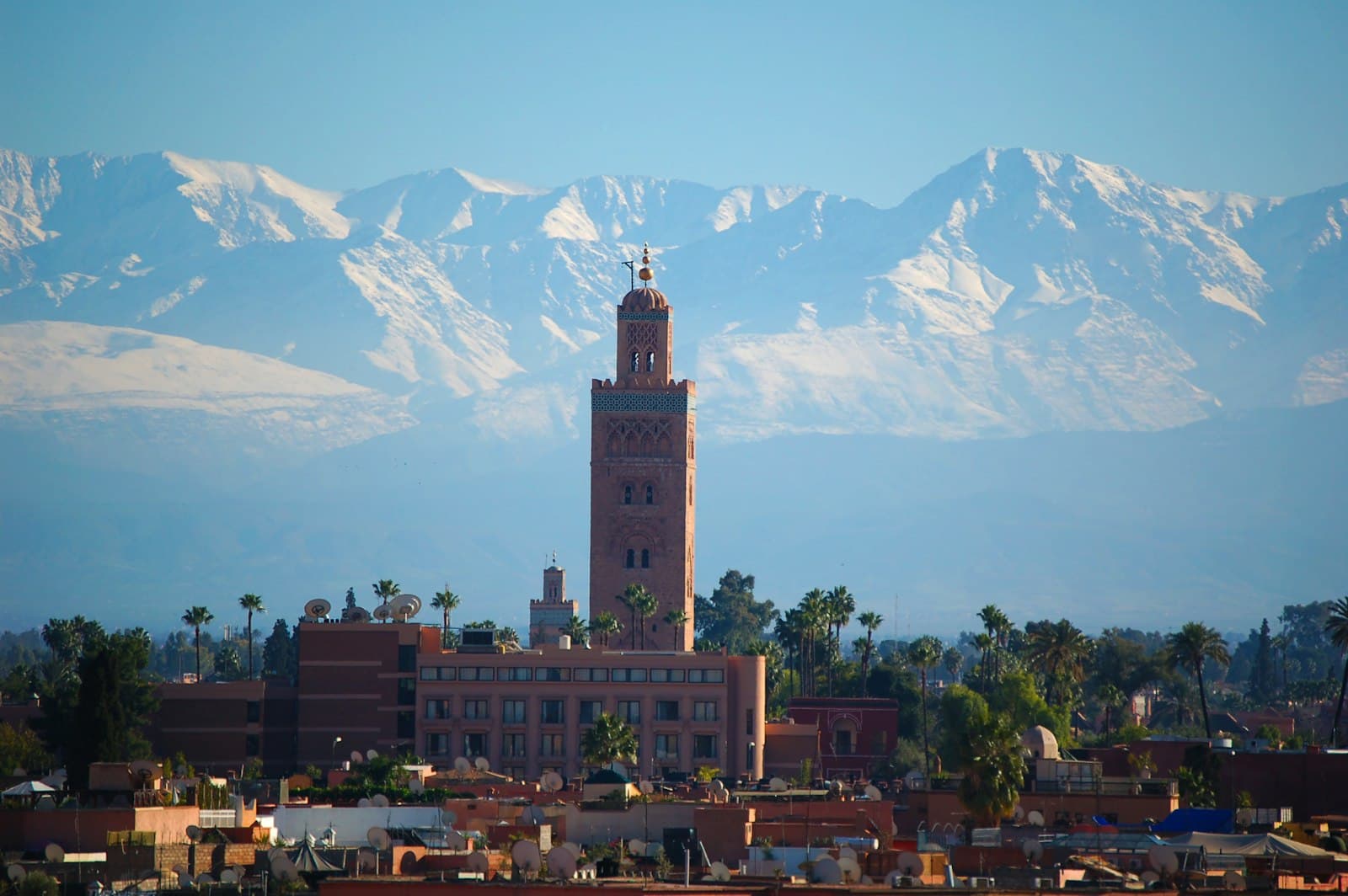
Imlil is approximately 60-65 kilometers from Marrakech, a drive that typically takes 90 minutes to two hours due to winding mountain roads. Options for getting there include shared grand taxis from Marrakech's Bab er-Rob or Sidi Mimoun areas (around 50-100 MAD per person or 300-500 MAD for a private taxi), private transfers, or day tours. If you're on a budget, you can take a local minibus to Asni and then a shared taxi to Imlil.
There are no reliable ATMs in Imlil, so bring enough Moroccan Dirhams for your stay. Wear sturdy shoes with good grip for walking on uneven paths, and bring layers of clothing as mountain weather can change quickly, with Imlil often being 10-15 degrees cooler than Marrakech. For any treks beyond the village, especially to Mount Toubkal, hiring a local guide is mandatory.
- How far is Imlil from Marrakech?
- Imlil is approximately 60-65 kilometers (about 40 miles) south of Marrakech, with a driving time of 90 minutes to two hours.
- Do I need a guide for hiking in Imlil?
- While you don't need a guide for exploring Imlil village itself, a local guide is mandatory for treks to Mount Toubkal and is strongly recommended for other trails due to changing conditions and for cultural insights.
- Are there ATMs in Imlil?
- No, there are no reliable ATMs in Imlil, so it is advisable to carry sufficient Moroccan Dirhams for your expenses.
- What is the best time of year to visit Imlil?
- The best times to visit are spring (March to May) and autumn (September to November) for mild temperatures and good hiking conditions.
- Is Imlil suitable for a day trip from Marrakech?
- Yes, Imlil is a popular and accessible destination for a day trip from Marrakech, offering a contrast to the city's energy with its mountain scenery and Berber culture.
- What kind of food can I expect in Imlil?
- You can expect traditional Moroccan cuisine, with many guesthouses and local restaurants offering tagines, fresh salads, and mint tea, often with locally sourced ingredients.