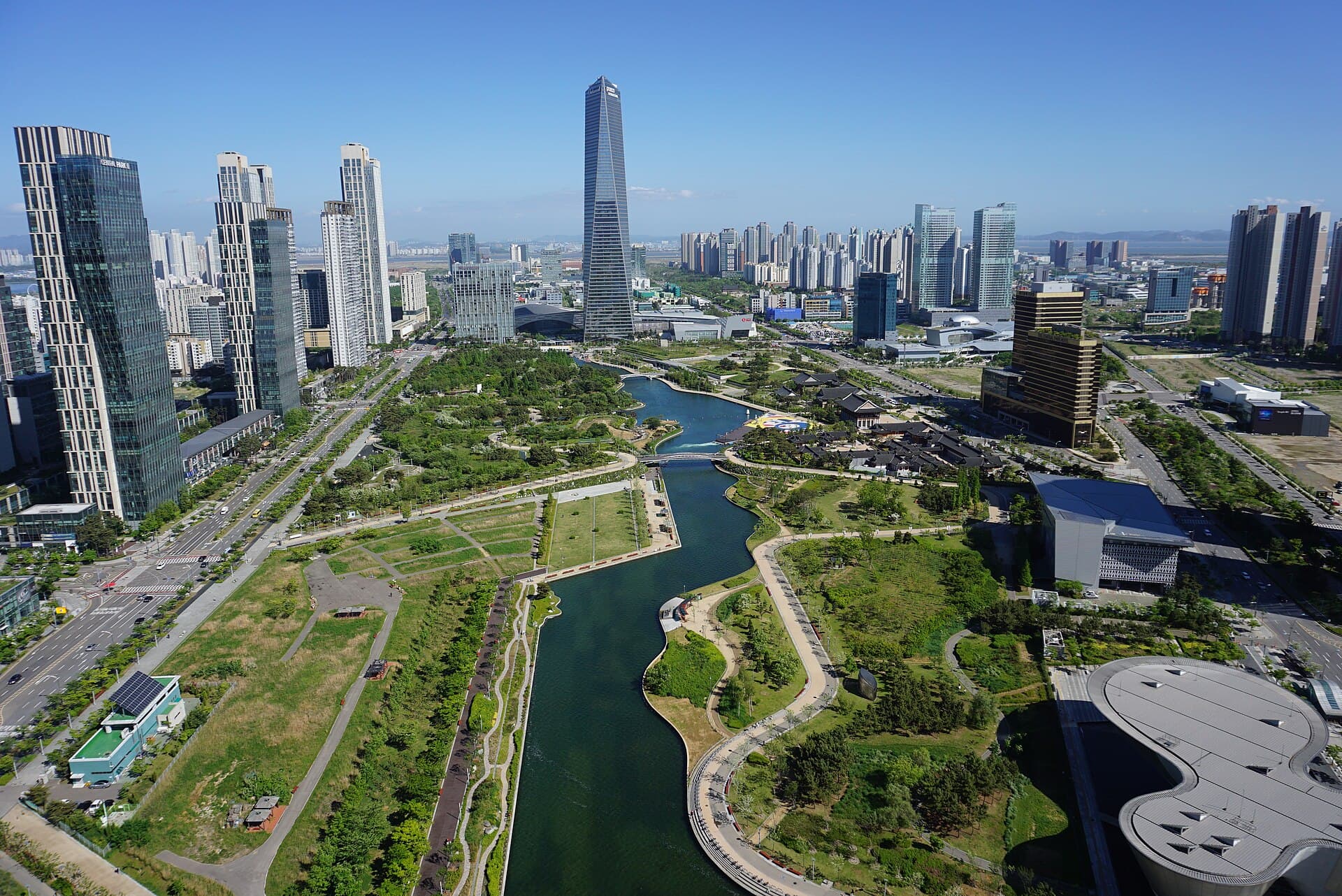
Incheon, South KoreaJaehyuk Lee / CC BY-SA 2.0, via Wikimedia Commons
KR

Incheon

Where Korea’s past meets its future, all ways Incheon.

The secrets of Incheon

Incheon, as no one tells it.

Not the postcards. The stories even locals don't know — whispered in your ear, right where they happened.

3 secrets below. Many more wait inside the tour.
Incheon International Airport

Beyond its global aviation renown, Incheon International Airport offers a surprising diversion for those awaiting their flights.

Full story unlocks in the tour
Wolmi Sea Train

This coastal monorail presents more than just sweeping views; it holds a notable distinction.

Full story unlocks in the tour
Incheon's Coastline

The waters embracing Incheon are not merely scenic; they display a natural phenomenon of remarkable scale.

Full story unlocks in the tour
The full tour

Discover every secret of Incheon

Every address, every reveal in full — in your ear, right where it happened.

Get the key to Incheon

You pick your stops. You walk. The voice reveals what the others miss.

Choose your time

How long do you have in Incheon?

No tours available yet. Check back soon — we're preparing them.

About Incheon

The story of Incheon

Incheon, a dynamic metropolitan expanse on South Korea's northwestern coast, functions as both a crucial international passage and a destination deep with history and forward-thinking innovation. Positioned approximately 40 kilometers (25 miles) west-southwest of Seoul, it forms an essential segment of the Seoul Metropolitan Area, contributing to one of the planet's most populous urban centers. For many, Incheon is synonymous with its acclaimed international airport, yet the city itself unfolds a varied array of experiences, from historic port districts and lively markets to futuristic urban scenes and tranquil island escapes.

Beyond its role as a transportation nexus, Incheon has carved its own identity as a city that consistently looks ahead while honoring its origins. It was the first city in Korea to open its port to the wider world in 1883, initiating a period of swift modernization and global exchange. Today, Incheon stands as South Korea's third-most populous city, a testament to its continuous expansion and evolution. Whether exploring its distinctive cultural zones, enjoying its coastal vistas, or marveling at its contemporary architectural achievements, Incheon presents a compelling fusion of heritage and advancement.

History

From Michuhol to Modern Metropolis

The story of Incheon reaches back to 475 AD, first recorded as Michuhol during the reign of King Jangsu of Goguryeo. Over centuries, the area underwent several name changes, including Maesohol, Soseong, Gyeongwon, and Inju, reflecting the shifting dynasties and kingdoms that held sway over the Korean Peninsula. The name 'Incheon' itself first appeared in 1413 during the Joseon Dynasty, when Inju was renamed Incheon-gun as part of a local administrative reform.

Incheon's trajectory dramatically altered in 1883 with the opening of Jemulpo Port (present-day Jung-gu District) to international commerce. This event marked a pivotal moment, transforming a quiet fishing village into a key military and commercial heart. The port's opening ushered in an era of modernization, with Korea's first post office, bank, and hotel established in Incheon. By 1907, Incheon Port accounted for 50% of Korea's total transactions, solidifying its importance as an international seaport.

During the Japanese occupation (1910-1945), the city was renamed Jinsen, and its industries and port facilities were further developed, including the construction of tidal basins to manage the significant tidal differences of the Yellow Sea. The Korean War (1950-1953) brought immense destruction, with most of Incheon's port facilities and developed areas severely damaged during the Battle of Inchon. This decisive UN victory, led by General Douglas MacArthur, reversed the tide of the war, and a statue commemorating the landing now stands in Jayu Park. Following the war, Incheon rebuilt and continued to industrialize, with new factories and port infrastructure.

In 1981, Incheon was granted Metropolitan City status, separating it from Gyeonggi Province and giving it administrative status equal to that of a province. The city continued to expand, annexing neighboring islands and townships in 1989 and 1995. In 2003, Incheon was designated as South Korea's first free economic zone, attracting significant investment and fostering the development of modern areas like Songdo International City. Today, Incheon stands as a testament to resilience and progress, a major transportation hub and a dynamic urban center that continues to shape South Korea's future.

What to see

Incheon presents a varied collection of attractions, melding historical weight with contemporary marvels. Begin in the Open Port Area, where 19th-century architecture mirrors the city's international past. Wander through Incheon Chinatown, the sole official Chinatown in South Korea, recognized for its animated atmosphere and as the birthplace of jjajangmyeon (black bean noodles). Adjacent to Chinatown lies Jayu Park (Freedom Park), Korea's inaugural Western-style park, providing expansive views of Incheon Port and the Yellow Sea, and home to a statue of General Douglas MacArthur.

For a glimpse into tomorrow, explore the Songdo International Business District. Here, Songdo Central Park is a notable feature, an engineered oasis with a seawater canal, water taxis, and striking contemporary architecture like the Tri-bowl building. The G-Tower Observation Deck in Songdo offers sweeping views of the city and the Incheon Bridge. Those who appreciate nature can explore Incheon Grand Park, a substantial urban park showcasing botanical gardens, a children's zoo, and walking paths. For coastal appeal, Wolmido Island provides an amusement park, cultural street, and scenic views, accessible by the Wolmi Sea Train. Alternatively, Eurwangni Beach is a favored location for swimming and observing sunsets.

When to visit

The most agreeable times to visit Incheon fall during the shoulder seasons: April through May and September through October. These months offer pleasant temperatures, low humidity, and clear skies, creating comfortable conditions for exploring the city's attractions. Spring brings cherry blossoms, particularly in April at Jayu Park, while autumn displays vivid foliage. While summer (late May to September) is warm and humid with frequent monsoon rains, especially in July and August, it is also when beaches like Eurwangni see many visitors. Winters (December to February) are cold and dry, with temperatures often dipping below freezing.

Practical

Navigating Incheon is straightforward, thanks to its well-developed public transportation network. The Incheon Subway connects key areas within the city and integrates smoothly with Seoul's metro system, allowing for simple journeys between the two cities. Buses are also widely available and cover extensive routes. For direction, it is advisable to use Korean transit applications like KakaoMap or Naver Map, as Google Maps may not function at full capacity. Acquiring a T-money card upon arrival at Incheon International Airport is highly recommended, as it works across subways, buses, and taxis throughout Incheon and Greater Seoul, and provides fare reductions.

Most Western travelers, including those from the United States, United Kingdom, EU member states, Australia, and Canada, can enter South Korea without a visa for tourism or short-term business for stays of 90 days or less. However, travelers should verify the current status of the K-ETA (Korea Electronic Travel Authorization) system, as policies can change. As of December 2026, the K-ETA requirement is suspended for many countries, but it is expected to be mandatory again starting January 1, 2027. Incheon is generally a very secure city with low crime rates, even at night. Nevertheless, standard precautions are always suggested, especially in crowded areas.

Good to know
What is Incheon's official city slogan?
Incheon's official city slogan is "all_ways_Incheon," which signifies that Incheon is building the way for Korea, leading the way to the world, and creating a way for everyone.
Is Incheon International Airport considered one of the best in the world?
Yes, Incheon International Airport is consistently ranked among the best airports globally.
What is Incheon most famous for?
Incheon is widely known for its international airport, being the birthplace of *jjajangmyeon* (black bean noodles), its distinctive Chinatown, and the historic Incheon Landing during the Korean War.
Can I use public transportation to get around Incheon and to Seoul?
Yes, Incheon has a well-developed public transportation system, including the Incheon Subway and buses, which connect key areas within the city and integrate with Seoul's metro system for seamless travel.
Is Incheon safe for tourists, including solo female travelers?
Incheon is generally considered a very secure destination with low crime rates, even at night, for all travelers, including solo female travelers.
Do I need a visa to visit Incheon, South Korea?
Many Western travelers can enter South Korea visa-free for tourism or short-term business for up to 90 days. However, it's essential to check the current K-ETA (Korea Electronic Travel Authorization) requirements, as policies can change.
Incheon
From€9.00
No booking · activate anytime · 12h to walk it
Get the key to Incheon