Parc Höhematte
Une vaste prairie verdoyante façonne le centre d'Interlaken, offrant une vue imprenable sur la Jungfrau. Cette étendue n'est cependant pas un simple caprice de la nature.
L'histoire complète se débloque dans le tour
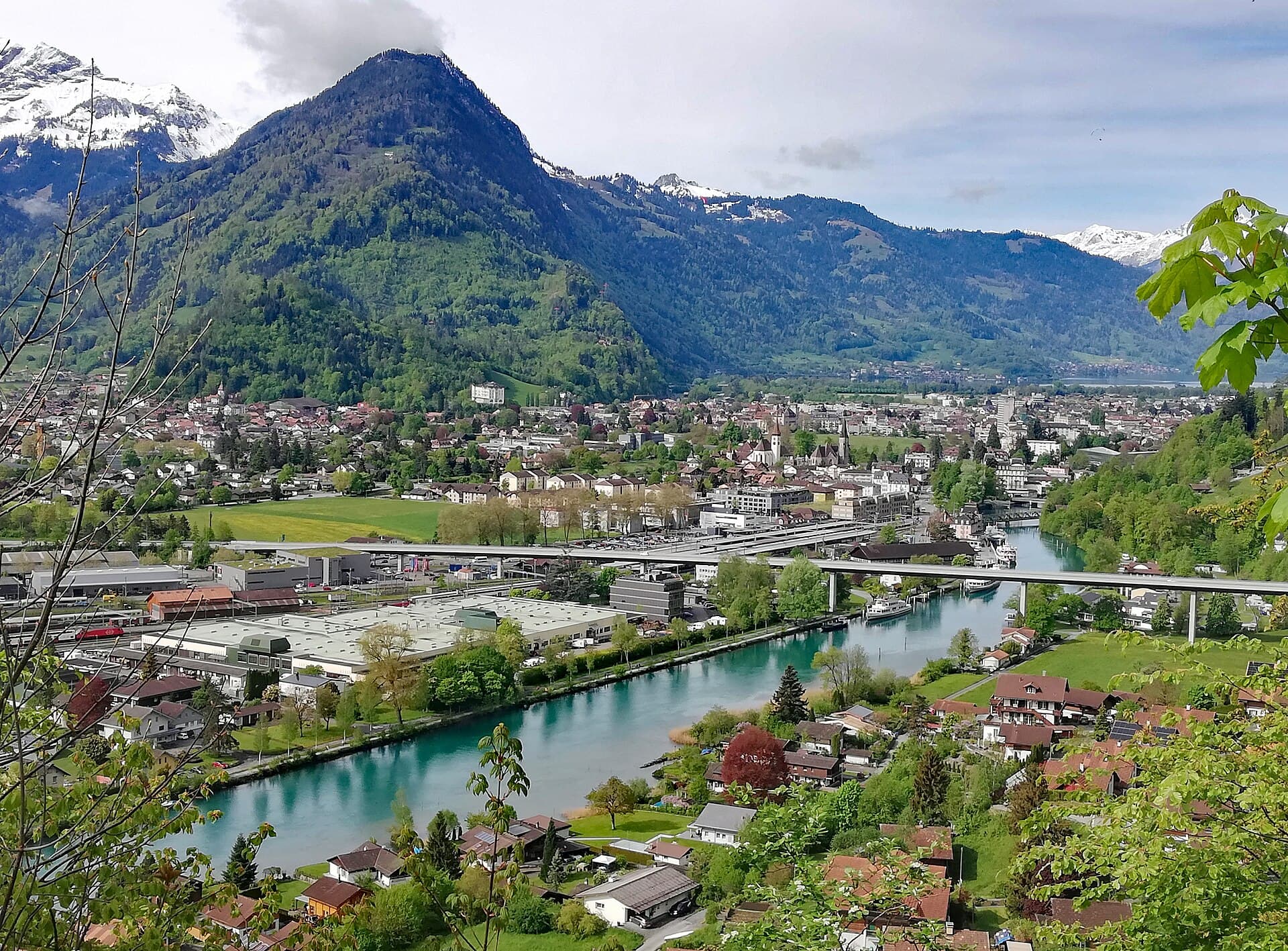 Rectilinium / CC0, via Wikimedia Commons
Visite audio autoguidée de Interlaken — parcours GPS à pied, lecture hors ligne, narration en 32 langues.
“Entre deux lacs turquoise, là où les géants alpins rencontrent l'aventure.”
Pas les cartes postales. Les histoires que même les habitants ignorent — soufflées à l'oreille, là où elles se sont passées.
Une vaste prairie verdoyante façonne le centre d'Interlaken, offrant une vue imprenable sur la Jungfrau. Cette étendue n'est cependant pas un simple caprice de la nature.
Le grand Kursaal d'Interlaken, construit en 1859, était destiné au jeu, mais ses ambitions de casino furent contrecarrées presque immédiatement.
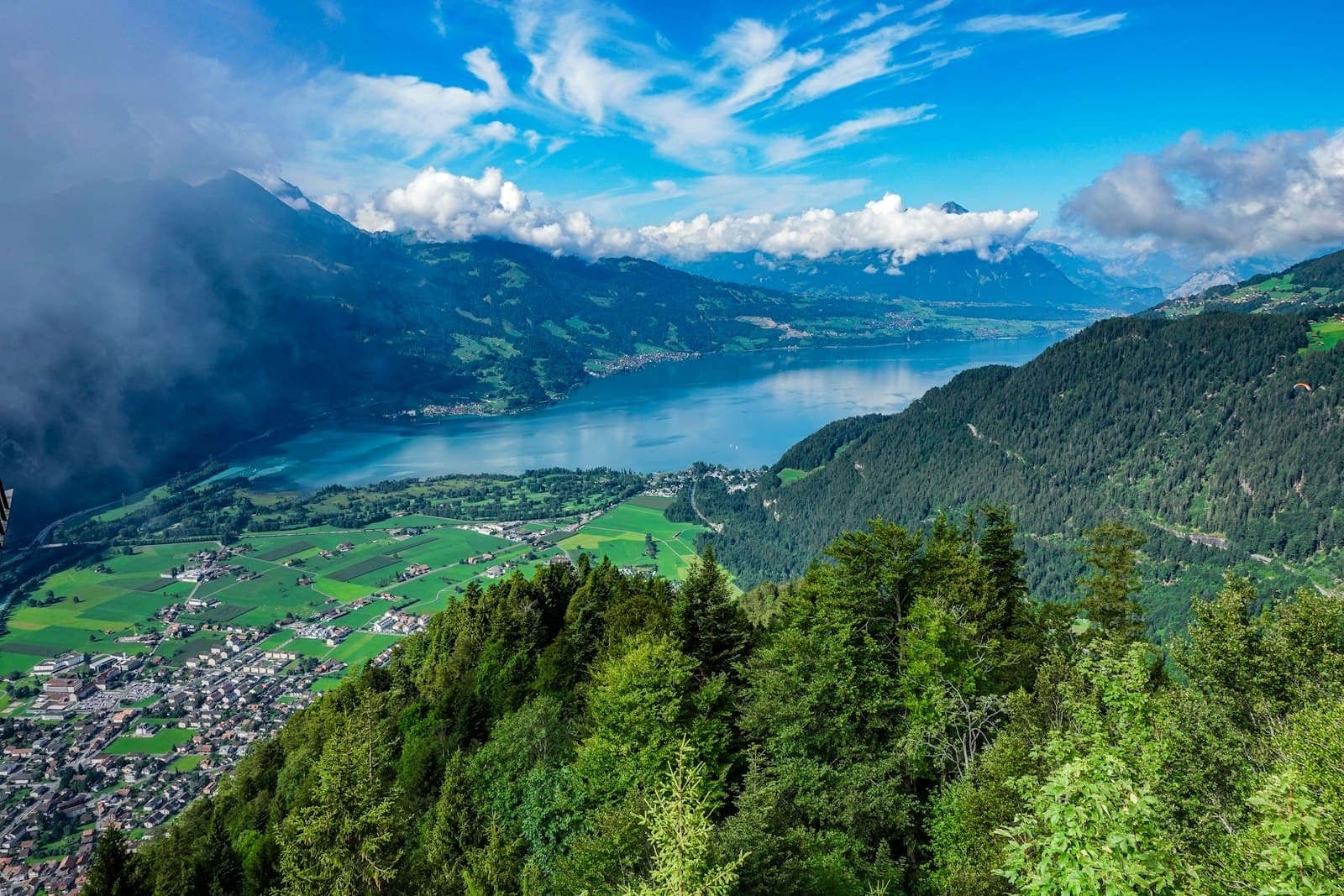
Le trajet vers le « Sommet d'Interlaken » sur le funiculaire du Harder Kulm suit un chemin distinctif à flanc de montagne.
Découvrez tous les secrets de Interlaken
Chaque adresse, chaque révélation en entier — dans ton oreille, là où elle s'est passée.
Tu choisis tes lieux. Tu marches. La voix te révèle ce que les autres ignorent.

Votre visite audioguidée de Interlaken vous attend — choisissez vos lieux, votre langue, et lancez-vous dès votre arrivée.
AcheterLume intègre un guide en réalité augmentée. Levez votre téléphone : sa caméra montre la rue devant vous, avec une flèche lumineuse posée sur l'image réelle qui pointe toujours vers votre prochain arrêt — aucune carte à déchiffrer, aucun mauvais virage. Comme tout dans Lume, ça fonctionne entièrement hors-ligne.
Interlaken, un nom signifiant « entre les lacs » en latin, est une ville de la région de l'Oberland bernois, dans les Alpes suisses, située sur une plaine alluviale connue sous le nom de Bödeli. Elle se trouve entre les eaux turquoise du lac de Brienz à l'est et du lac de Thoune à l'ouest, avec la rivière Aar qui traverse la ville, reliant les deux lacs. À 566 mètres d'altitude, Interlaken est une porte d'accès principale aux montagnes et aux lacs environnants.
Interlaken est un centre de sports d'aventure, offrant un large éventail d'activités de plein air, du parapente et du parachutisme à la randonnée et au kayak. Au-delà de l'adrénaline, la ville offre également des opportunités de moments plus calmes, avec des croisières panoramiques sur ses lacs et d'agréables promenades dans ses rues. Sa situation centrale en fait une base idéale pour explorer la région emblématique de la Jungfrau, qui abrite les célèbres sommets de l'Eiger, du Mönch et de la Jungfrau.
Les origines d'Interlaken remontent à une petite colonie qui s'est formée autour d'un monastère augustin. Le monastère, mentionné pour la première fois en 1133 lorsque l'empereur romain germanique Lothaire III le plaça sous sa protection, fut construit sur des terres impériales sur la rive gauche de l'Aar. Pendant des siècles, la région entourant le monastère fut connue sous le nom d'Aarmühle, signifiant « Moulin sur l'Aar », en raison d'un moulin qui y était exploité. Le monastère joua un rôle important dans la région, contrôlant un pont sur l'Aar et générant des revenus grâce aux péages. Au XIIIe siècle, son influence s'était étendue, détenant l'autorité sur de nombreuses églises, villages et fermes, ce qui en faisait le plus grand propriétaire foncier religieux de l'Oberland bernois.
La transformation de la ville en station internationale commença vers 1800, alimentée par les paysages romantiques dépeints par des artistes suisses comme Franz Niklaus König. Les premiers festivals de culture suisse, tels que l'Unspunnenfest en 1805 et 1808, attirèrent davantage de touristes dans la région. Les visiteurs recherchaient initialement les bienfaits de l'air de la montagne et des traitements thermaux, ce qui conduisit à l'ouverture du grand spa Kursaal en 1859. L'amélioration des liaisons de transport, notamment les routes de bateaux à vapeur sur le lac de Thoune (1835) et le lac de Brienz (1839), et le chemin de fer Bödelibahn en 1872, rendirent Interlaken plus accessible. Le nom « Interlaken » lui-même, dérivé du latin « inter lacus » (entre les lacs), fut largement utilisé sur les cartes au XIXe siècle et fut officiellement adopté par la ville en 1891, remplaçant Aarmühle.
La fin du XIXe et le début du XXe siècle virent une augmentation de la construction d'hôtels de luxe et le développement de chemins de fer de montagne, consolidant la réputation d'Interlaken. Le chemin de fer de la Jungfrau, un exploit d'ingénierie pionnier, commença sa construction en 1896 et atteignit le Jungfraujoch, la plus haute gare d'Europe, en 1912. De même, le funiculaire du Harder Kulm ouvrit en 1908, offrant un accès facile à la montagne locale d'Interlaken. Interlaken continua d'évoluer, devenant un centre de sports d'hiver et d'alpinisme, et servit même de refuge pendant la Seconde Guerre mondiale, fournissant une aide humanitaire. Aujourd'hui, elle reste une destination de premier plan, conciliant son passé riche avec son rôle de capitale moderne de l'aventure.
Commencez votre exploration au Parc Höhematte, une grande prairie ouverte au centre-ville qui offre des vues inégalées sur le massif de la Jungfrau. De là, prenez le funiculaire du Harder Kulm jusqu'au « Sommet d'Interlaken » pour des panoramas imprenables sur les lacs de Thoune et de Brienz, ainsi que sur les sommets de l'Eiger, du Mönch et de la Jungfrau. Le restaurant distinctif de style pagode au sommet est un excellent endroit pour un repas avec vue.
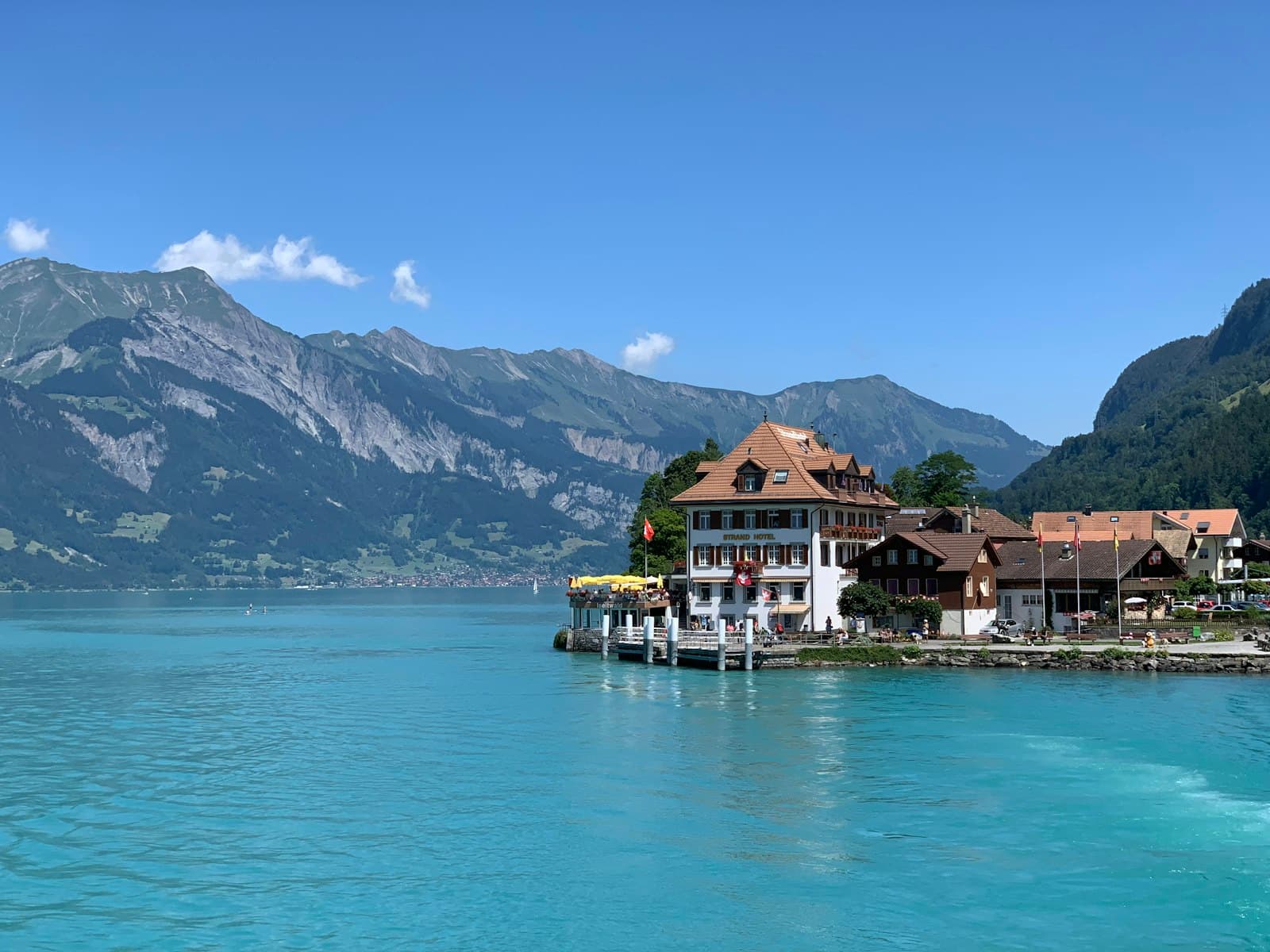
Plongez dans les merveilles naturelles de la région avec une visite des Grottes de St. Béat, un monde souterrain mystique de stalactites et de stalagmites sur les rives du lac de Thoune. Pour une expérience aquatique pittoresque, envisagez une croisière sur le lac de Brienz ou le lac de Thoune, tous deux connus pour leurs eaux turquoise claires, alimentées par des particules glaciaires. Le charmant village d'Iseltwald, avec ses maisons à colombages, est une étape pittoresque sur le lac de Brienz. Pour ceux qui recherchent une aventure alpine, prenez un train jusqu'à Kleine Scheidegg pour des vues plus rapprochées de l'Eiger, du Mönch et de la Jungfrau, ou continuez jusqu'au Jungfraujoch, le « Toit de l'Europe », pour des paysages glaciaires et la plus haute gare d'Europe.
Interlaken est une destination ouverte toute l'année, mais la meilleure période pour la visiter dépend de vos activités préférées. Pour un temps chaud et un éventail complet d'aventures en plein air comme la randonnée, le parapente et les sports nautiques, la haute saison de juin à août est idéale, avec des températures diurnes moyennes entre 20 et 25°C. Cependant, cette période voit également les plus grandes foules et des prix d'hébergement plus élevés.
Pour moins de monde et un temps agréable, envisagez les saisons intermédiaires. De mi-avril à mi-juin et de septembre à mi-octobre offrent un paysage magnifique avec des fleurs épanouies au printemps et de magnifiques feuillages d'automne, ce qui les rend excellentes pour la randonnée et le tourisme. L'hiver, de décembre à février, transforme Interlaken en un village sous la neige, parfait pour le ski, le snowboard et une atmosphère festive, surtout autour de Noël et du Nouvel An.
Interlaken est facilement navigable à pied ou à vélo. La ville dispose également d'un service de bus public, avec des tarifs d'environ 2,30 CHF, bien que la plupart des zones soient facilement accessibles à pied. Si vous passez la nuit, vous recevrez un Interlaken Pass, qui couvre le transport en bus local et offre diverses réductions. Les deux principales gares, Interlaken Ouest et Interlaken Est, sont reliées par la principale rue commerçante, Höheweg, à 20 minutes à pied l'une de l'autre. Les trains et les bus circulent fréquemment entre ces gares.
L'eau du robinet suisse est potable et provient de sources alpines, il est donc recommandé d'apporter une bouteille d'eau réutilisable. Manger au restaurant peut être cher, alors envisagez de préparer certains de vos repas pour économiser de l'argent. Lorsque vous explorez les montagnes, habillez-vous en couches, car les températures chutent considérablement avec l'altitude. N'oubliez pas que presque tous les magasins sont fermés le dimanche, bien que les restaurants et les attractions touristiques restent ouverts.
Interlaken en coréen, en chinois ou en hébreu — et dans 29 autres langues, chaque étape narrée par une voix native. La plus large gamme de langues de tous les audioguides autoguidés.
Disponible en :