Transsibirische Eisenbahn
Eine Reise mit der Transsibirischen Eisenbahn kann zu unerwarteten Begegnungen führen, selbst beim Frühstück.
Die ganze Geschichte wird in der Tour freigeschaltet
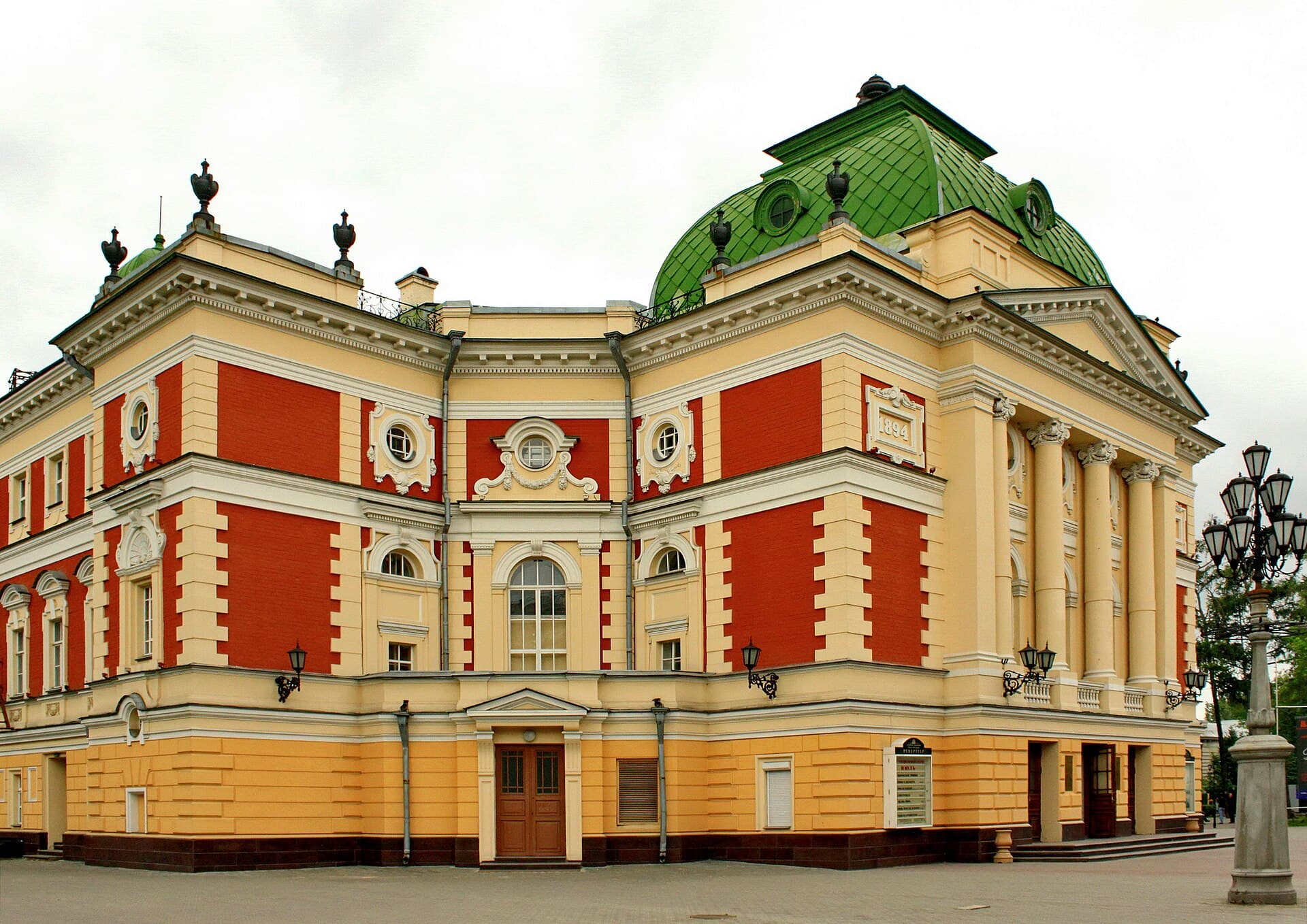 Marcin Konsek / CC BY-SA 4.0, via Wikimedia Commons
Selbstgeführte Audio-Walking-Tour durch Irkutsk — GPS-Route, Offline-Wiedergabe, erzählerische Narration in 32 Sprachen.
“Wo sibirische Entschlossenheit auf vergoldete Eleganz trifft und die Transsibirische Eisenbahn Wege des Exils nachzeichnet.”
Nicht die Postkarten. Die Geschichten, die selbst Einheimische nicht kennen – dir ins Ohr geflüstert, genau dort, wo sie geschahen.
Eine Reise mit der Transsibirischen Eisenbahn kann zu unerwarteten Begegnungen führen, selbst beim Frühstück.
Unter den charmanten Holzhäusern der Stadt gibt es Gerüchte über unentdeckte Vermögen.
Die Transsibirische Eisenbahn ist nicht nur eine Route durch Russland; für manche ist sie ein Weg in eine unerwartete Zukunft.
Entdecke jedes Geheimnis von Irkutsk
Jede Adresse, jede Enthüllung vollständig – in deinem Ohr, genau dort, wo es geschah.
Du wählst deine Stationen. Du gehst. Die Stimme enthüllt, was andere übersehen.


Deine selbstgeführte Audio-Tour durch Irkutsk ist bereit – wähle deine Sehenswürdigkeiten, deine Sprache und starte, sobald du ankommst.
KaufenLume enthält einen integrierten Augmented-Reality-Guide. Halten Sie Ihr Handy hoch: Die Kamera zeigt die Straße vor Ihnen, mit einem leuchtenden Pfeil über dem echten Bild, der immer auf Ihren nächsten Stopp zeigt — keine Karte zum Rätseln, keine falschen Abzweigungen. Wie alles bei Lume funktioniert es komplett offline.
Irkutsk, eine historische Stadt im Herzen Sibiriens, ist ein wichtiger Halt an der Transsibirischen Eisenbahn und das primäre Tor zum Baikalsee, dem tiefsten und ältesten Süßwasserreservoir der Welt. Im frühen 20. Jahrhundert wurde es oft als "Paris Sibiriens" bezeichnet, und Irkutsk verbindet seine geschichtsträchtige Vergangenheit weiterhin mit einer lebendigen Gegenwart.
An der Mündung der Flüsse Angara und Irkut gelegen, zeigt die Architektur der Stadt eine faszinierende Mischung aus verzierten Holzhäusern aus dem 19. Jahrhundert neben moderneren Bauten. Sein unverwechselbarer Charakter entspringt einer Geschichte, die mit Erkundung, Handel und der Verbannung russischer Intellektueller verwoben ist, die sein kulturelles Erbe maßgeblich prägten. Heute ist Irkutsk ein bedeutendes Industrie- und Kulturzentrum, das Reisende anzieht, die seine historischen Stätten und die Naturwunder der umliegenden Oblast Irkutsk erkunden möchten.
Die Ursprünge Irkutsk's reichen bis ins Jahr 1652 zurück, als der russische Pionier Jakow Pochabow ein Winterlager, einen Zimowje, für den Gold- und Pelzhandel errichtete. Ein Holzdolch, ein Ostrog, wurde 1661 am rechten Ufer der Angara, nahe der Mündung des Irkut, errichtet, von dem die Stadt ihren Namen hat. Diese erste Siedlung wuchs schnell, und 1686 erhielt Irkutsk offiziell den Stadtstatus.
Im frühen 18. Jahrhundert entstanden die ersten Steingebäude Irkutsk's, darunter ein Regierungsbüro und die Erlöserkirche im Jahr 1710. Trotz eines Großbrandes im Jahr 1716, der viele Holzstrukturen, einschließlich des ursprünglichen Holz-Kremls, zerstörte, wurde die Stadt schnell wieder aufgebaut. Irkutsk's strategische Lage machte es zu einem wichtigen Knotenpunkt für russische Handelsrouten nach China und in die Mongolei, was zu erheblichem Wirtschaftswachstum und dem Aufstieg einer wohlhabenden Kaufmannsklasse führte.
Eine entscheidende Periode in der Geschichte Irkutsk's begann im frühen 19. Jahrhundert, als Sibirien und insbesondere Irkutsk zu einem Verbannungsort für russische Offiziere und Adlige wurde, die an der Dekabristen-Revolte von 1825 beteiligt waren. Diese Exilanten, von denen viele hochgebildet waren, beeinflussten das intellektuelle und soziale Leben der Stadt tiefgreifend und trugen erheblich zu ihrem kulturellen Erbe bei. Ihre Holzhäuser, verziert mit kunstvollen, handgeschnitzten Verzierungen, stehen noch heute als Zeugnis ihres bleibenden Einflusses.
Bis zum Ende des 19. Jahrhunderts machten die Exilanten etwa 30 % der Bevölkerung Irkutsk's aus, was seinen Ruf als Kultur- und Bildungszentrum weiter festigte. Die Ankunft der Transsibirischen Eisenbahn im Jahr 1898 steigerte die Bedeutung Irkutsk's weiter, verband es enger mit dem europäischen Russland und erleichterte Handel und Reisen. In dieser Zeit erhielt Irkutsk auch den Spitznamen "Paris Sibiriens" wegen seiner breiten Straßen und seiner prunkvollen Architektur.
Im 20. Jahrhundert erlebte Irkutsk weitere industrielle Entwicklungen, insbesondere nach dem Zweiten Weltkrieg, mit Fabriken, die aus dem Westen der UdSSR verlagert wurden, und der Eröffnung des Irkutsker Wasserkraftwerks im Jahr 1958. Heute ist Irkutsk ein Industriezentrum geblieben, hat sich aber auch zu einem bedeutenden Touristenziel entwickelt, hauptsächlich aufgrund seiner Nähe zum Baikalsee.
Beginnen Sie Ihre Erkundung an der Unteren Angara-Ufermauer, einem 900 Meter langen Abschnitt mit Blick auf das Moskauer Tor, die Epiphaniskathedrale und ein Denkmal des Stadtgründers. Schlendern Sie durch das 130 Kwartal, ein Fußgängergebiet mit restaurierten historischen Holzhäusern, Geschäften und Restaurants. Suchen Sie nach den charakteristischen Holzhäusern, die über das Stadtzentrum verstreut sind, wie dem Anwesen des Kaufmanns Apolos Schastin in der Engelsstraße, bekannt für seine kunstvoll geschnitzten Fensterrahmen.
Tauchen Sie ein in die intellektuelle Vergangenheit der Stadt im Historischen und Gedenkmuseum der Dekabristen, das in den ehemaligen Anwesen der verbannten Dekabristenführer Fürst Sergei Trubetzkoy und Fürst Sergei Wolkonski untergebracht ist. Für einen Einblick in die sibirische Sakralarchitektur besuchen Sie die beeindruckende Kasaner Kirche, erbaut 1892, oder die historische Spasskaja-Kirche, eine Erinnerung an den ursprünglichen Irkutsker Kreml. Das Eisbrecher-Angara-Museum, das sich auf einem der ältesten erhaltenen Eisbrecher der Welt befindet, bietet ein einzigartiges historisches Erlebnis. Erkunden Sie das Regionalmuseum für Kunst Irkutsk und das Regionalmuseum für Ethnographie Irkutsk, um ein tieferes Verständnis der Kunst und Geschichte der Region zu gewinnen. Für einen Tagesausflug ist der Baikalsee ein Muss, mit dem Dorf Listwjanka am Seeufer, nur 1,5 Stunden mit dem Bus entfernt, das Einblicke in den See im Baikal-Museum bietet oder als Ausgangspunkt für den Großen Baikaler Pfad dient.
Die beste Zeit für einen Besuch in Irkutsk für Aktivitäten bei warmem Wetter ist von Ende Juni bis Mitte August, wenn die durchschnittlichen Tageshöchsttemperaturen über 16 °C liegen. Juli ist der wärmste Monat mit durchschnittlichen Höchstwerten um 24 °C und Tiefstwerten um 12 °C. In dieser Zeit gibt es auch die höchsten Niederschläge, wobei der Juli durchschnittlich 74 mm Regen verzeichnet. Für diejenigen, die an Winteraktivitäten interessiert sind und den Baikalsee zugefroren sehen möchten, sollten Sie auf kalte Temperaturen vorbereitet sein; Januar ist der kälteste Monat mit einer durchschnittlichen Tiefsttemperatur von -24 °C und einer Höchsttemperatur von -14 °C.
Irkutsk ist ein wichtiger Verkehrsknotenpunkt, die meisten Reisenden kommen über die Transsibirische Eisenbahn an. Der Internationale Flughafen Irkutsk (IKT) liegt günstig 5 km östlich des Stadtzentrums, Taxis bieten eine schnelle 15-20-minütige Fahrt für ca. 300 RUB. Innerhalb der Stadt gibt es öffentliche Verkehrsmittel wie Busse, Kleinbusse (Marschrutkas), Oberleitungsbusse und Straßenbahnen, die von 6 bis 22 Uhr verkehren. Die Fahrpreise betragen in der Regel 20-25 RUB für Busse/Kleinbusse und 15 RUB für Oberleitungsbusse/Straßenbahnen. Zu Fuß lässt sich das kompakte historische Zentrum hervorragend erkunden.
Obwohl Irkutsk als relativ sicher gilt, sind Standardvorkehrungen gegen Kleinkriminalität wie Taschendiebstahl ratsam, insbesondere in überfüllten Gebieten. Es ist ratsam, nur das Nötigste an Bargeld mitzuführen und Wertsachen sicher aufzubewahren. Die offizielle Währung ist der Russische Rubel. Grundlegende Russischkenntnisse können hilfreich sein, da Englisch nicht weit verbreitet ist.
Irkutsk — Koreanisch, Chinesisch, Hebräisch und 29 weitere Sprachen, jede Station von einer muttersprachlichen Stimme erzählt. Die größte Sprachauswahl aller selbstgeführten Audiotouren.
Verfügbar auf: