The Old Bakery (Gamla Bakaríið)
Most bakeries offer a local specialty, but Ísafjörður's has a unique twist on a classic.
Full story unlocks in the tour
 Sturlast~iswiki / CC BY-SA 4.0, via Wikimedia Commons
“Where dramatic fjords meet a resilient spirit.”
Not the postcards. The stories even locals don't know — whispered in your ear, right where they happened.
Most bakeries offer a local specialty, but Ísafjörður's has a unique twist on a classic.
The altar of Ísafjörður's church holds a surprising secret, reflecting the community's deep connection to its surroundings.
A natural formation just outside of town offers more than just a view; it comes with a local legend.
Discover every secret of Ísafjörður
Every address, every reveal in full — in your ear, right where it happened.
You pick your stops. You walk. The voice reveals what the others miss.
No tours available yet. Check back soon — we're preparing them.
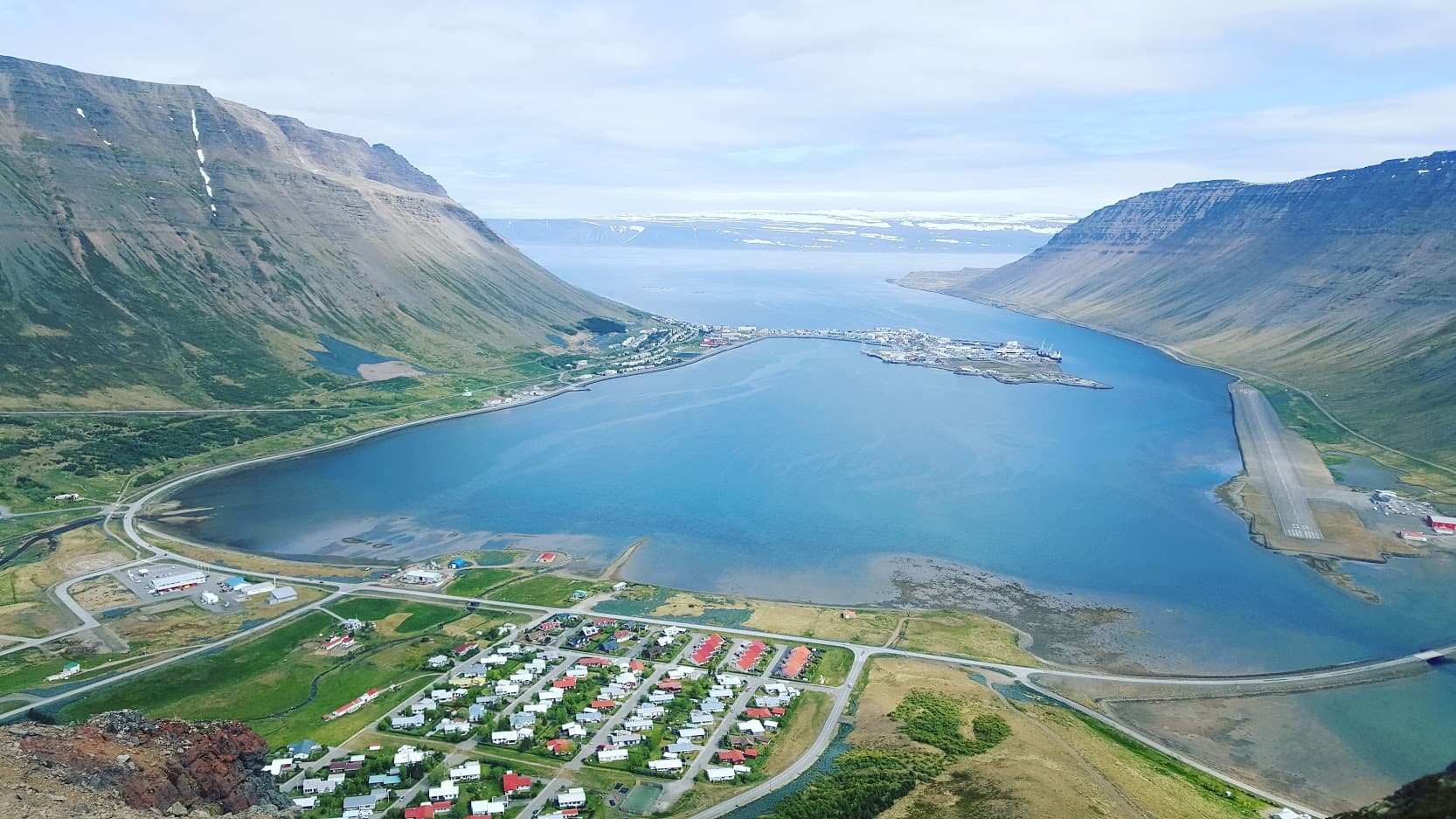
Ísafjörður, the unofficial capital of Iceland's Westfjords, is a town carved by glaciers and sustained by the sea. Situated on a sand spit in the Skutulsfjörður fjord, it is cradled by steep, flat-topped mountains that plunge into serene blue waters. With a population of around 2,700 residents, Ísafjörður balances its remote, rugged setting with a lively cultural scene, making it a unique hub in this isolated region.
The town's distinctive topography, with its center on a curving spit of land, has historically made it a strategic and safe harbor, crucial for trade and fishing. Today, Ísafjörður serves as a gateway to the dramatic wilderness of the Westfjords, including the untouched Hornstrandir Nature Reserve. It's a place where fishing boats still shape daily life, mountain trails begin at the town's edge, and cafés buzz with locals sharing stories over strong coffee.
The history of human settlement in the Skutulsfjörður fjord dates back to the 9th century, with Helgi Magri Hrólfsson recorded as the first settler in Iceland's Landnámabók (Book of Settlement). For centuries, the area remained a small settlement of farmers and fishermen. However, Ísafjörður's natural harbor proved to be a valuable asset, and by the 16th century, it had transformed into a significant trading post for foreign merchants, particularly under Danish rule.
During the 16th and 17th centuries, Danish merchants established warehouses and exerted control over the cod fisheries of the Westfjords. The town was officially granted municipal status in 1786, becoming one of Iceland's six authorized trading ports following the abolition of a strict Danish trade monopoly. This period saw Ísafjörður flourish, with fishing and trade forming a solid economic foundation. The preserved timber buildings in the Neðstakaupstaður district, some dating back to the 18th century, stand as a testament to this era and are among Iceland's oldest surviving houses.
By the late 19th and early 20th centuries, Ísafjörður had grown into the Westfjords' commercial and cultural center. Fishing, especially herring, drove its expansion, leading to the development of schools, hospitals, and shipyards. The town became a major hub for cod processing and export, with early freezing facilities established in 1912. However, the collapse of the herring stocks in the 20th century presented a significant challenge. Ísafjörður adapted by diversifying its economy, shifting focus towards education, arts, and tourism. Today, it maintains its maritime roots while embracing its role as a cultural heart, hosting festivals like Aldrei fór ég suður, a music festival founded in 2004.
Wander through the historic center of Ísafjörður, particularly the Neðstakaupstaður district, where you'll find some of Iceland's oldest timber-framed houses, now home to museums and cafés. The Westfjords Heritage Museum, housed in one of these 18th-century buildings, offers insights into the region's maritime history and fishing industry. Nearby, the Culture House, a former hospital, hosts a library, archives, and art exhibitions.
For outdoor enthusiasts, a short climb to Naustahvilft, also known as 'The Troll Seat,' provides panoramic views of the town and fjord. Day trips are easily arranged to impressive natural attractions such as Dynjandi waterfall, a tiered cascade often compared to a bridal veil. Boat tours to Hornstrandir Nature Reserve offer a chance to explore a remote, uninhabited wilderness area, spot Arctic foxes, and observe seabird colonies. Sea kayaking in the fjords is another popular way to experience the dramatic coastal scenery and potentially spot puffins and seals.
The best time to experience Ísafjörður and the Westfjords is during the summer months, from June to August. During this period, roads are generally open, boat trips to Hornstrandir operate regularly, and the landscapes are most accessible for hiking and other outdoor activities. Expect long daylight hours, with nearly 24-hour daylight in midsummer, and cool temperatures averaging around 10°C (50°F). While spring and autumn offer a quieter, wilder experience with opportunities to see the Northern Lights, winter is best suited for those who embrace snow, shorter days, and cozy indoor activities, though travel plans should remain flexible due to weather conditions.
Ísafjörður is accessible by car, bus (during summer), or year-round flights from Reykjavík, which take approximately 40 minutes. The town itself is compact and easily explored on foot. While parking is free and readily available in the city center, consider renting a car for exploring beyond town, especially to reach remote fjords and attractions like Dynjandi Waterfall. Buses connect nearby villages, but schedules can be limited. Accommodation options include guesthouses and hotels, with some centrally located near shops, restaurants, and the harbor. For dining, fresh seafood is a staple, with establishments like Tjöruhúsið known for their daily catch. Local bakeries offer traditional Icelandic treats like kringla.