Musée de l'Industrie et de l'Art
Ce musée, logé dans un palazzo italien, abrite une collection qui a jadis captivé la royauté.
L'histoire complète se débloque dans le tour
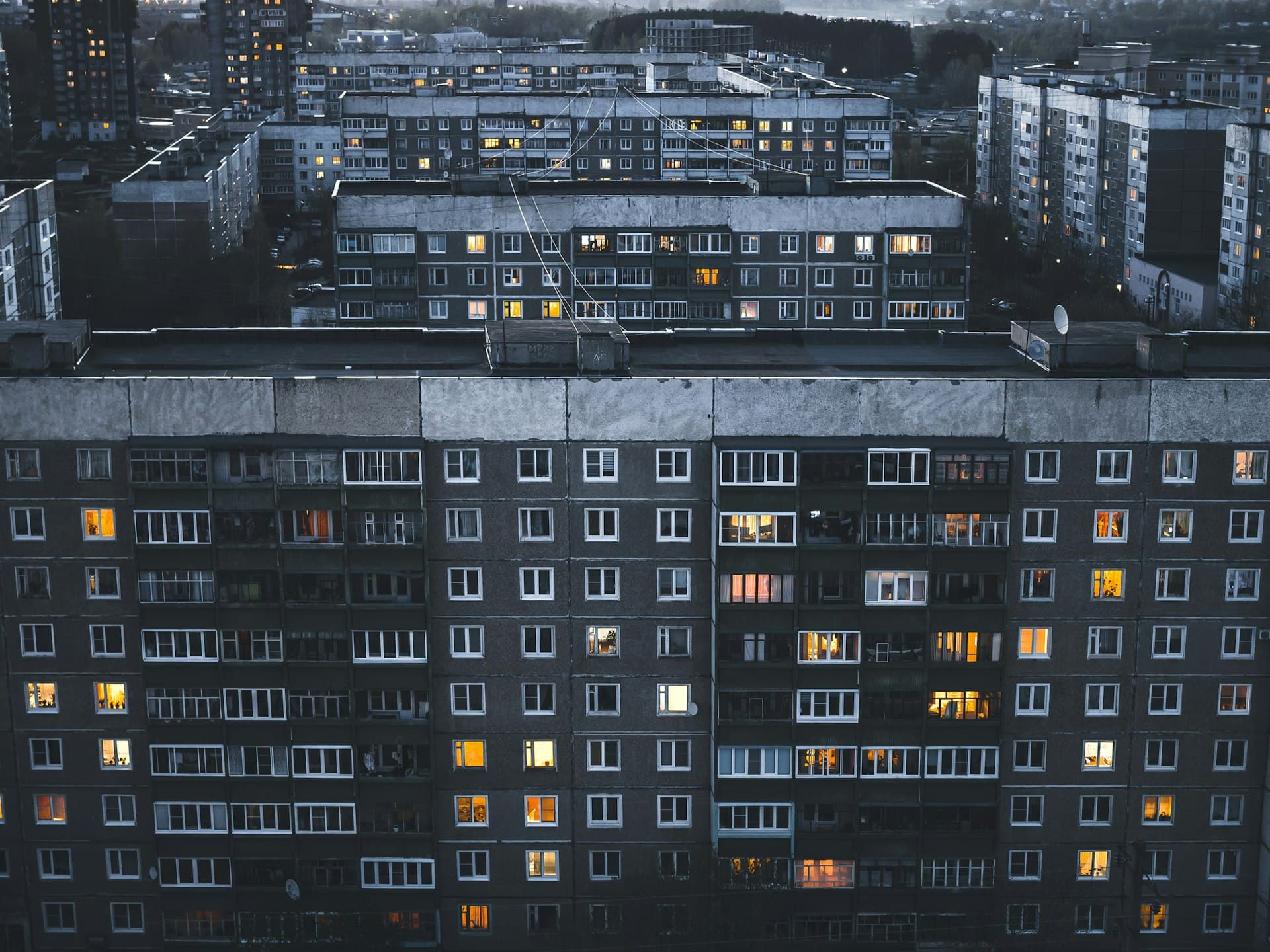 Photo: Natalya Letunova / Unsplash
Visite audio autoguidée de Ivanovo — parcours GPS à pied, lecture hors ligne, narration en 32 langues.
“Ivanovo : Là où l'esprit de la révolution rencontre le design avant-gardiste et l'héritage durable du textile.”
Pas les cartes postales. Les histoires que même les habitants ignorent — soufflées à l'oreille, là où elles se sont passées.
Ce musée, logé dans un palazzo italien, abrite une collection qui a jadis captivé la royauté.
L'un des bâtiments constructivistes les plus frappants d'Ivanovo porte un surnom qui révèle son inspiration surprenante.
Ivanovo est connue comme la 'Ville des Mariées', un surnom romantique enraciné dans un changement économique inattendu.
Découvrez tous les secrets de Ivanovo
Chaque adresse, chaque révélation en entier — dans ton oreille, là où elle s'est passée.
Tu choisis tes lieux. Tu marches. La voix te révèle ce que les autres ignorent.


Votre visite audioguidée de Ivanovo vous attend — choisissez vos lieux, votre langue, et lancez-vous dès votre arrivée.
AcheterLume intègre un guide en réalité augmentée. Levez votre téléphone : sa caméra montre la rue devant vous, avec une flèche lumineuse posée sur l'image réelle qui pointe toujours vers votre prochain arrêt — aucune carte à déchiffrer, aucun mauvais virage. Comme tout dans Lume, ça fonctionne entièrement hors-ligne.
Ivanovo, souvent reconnue comme la "capitale textile de la Russie" et le "Manchester russe", est une ville au caractère distinctif, façonnée par ses débuts industriels et un esprit révolutionnaire. Située au nord-est de Moscou sur la rivière Ouvod, Ivanovo offre un aperçu singulier de l'histoire russe, en particulier de l'ère soviétique et du mouvement architectural d'avant-garde.
Bien que n'étant pas toujours sur la route touristique typique de l'Anneau d'Or, Ivanovo offre une expérience captivante pour ceux qui sont attirés par le patrimoine industriel, l'architecture moderniste et l'histoire sociale de la Russie. Le paysage de la ville présente un mélange de demeures de marchands du XIXe siècle, d'usines en briques rouges et de designs audacieux et expérimentaux du constructivisme soviétique, en faisant une exposition en plein air de styles architecturaux.
Au-delà de ses merveilles architecturales, Ivanovo maintient une scène culturelle animée avec des théâtres, des musées et des espaces verts. C'est un lieu où les échos des métiers à tisser et de la ferveur révolutionnaire résonnent encore, offrant une perspective distincte sur le récit vaste et complexe de la Russie.
## Du village au "Manchester russe" Les origines d'Ivanovo remontent à un village mentionné pour la première fois en 1561, bien que des mentions documentées datent de 1608. À l'origine, la terre aurait été donnée par le tsar Ivan le Terrible aux princes Cherkassky. En raison de conditions agricoles difficiles, les habitants se sont tournés vers l'artisanat textile et le commerce, un développement favorisé par la rivière Ouvod pour le lavage des tissus et sa proximité avec les routes commerciales.
Au XVIIe siècle, Ivanovo était devenu un centre artisanal important, produisant principalement de la toile de lin. Le XVIIIe siècle a vu l'établissement des premières manufactures textiles par des paysans entreprenants. La destruction de la production textile de Moscou lors de l'incendie de 1812 a encore propulsé la croissance d'Ivanovo, consolidant sa réputation de centre majeur de production de calicot. À la fin du XIXe siècle, la ville a gagné le titre officieux de "Manchester russe" en raison de ses dizaines d'usines et de manufactures.
## Un creuset de la Révolution La fusion du village d'Ivanovo avec Voznesensky Posad en 1871 a officiellement formé la ville d'Ivanovo-Voznesensk. Ce centre industriel est devenu un point focal pour les mouvements révolutionnaires. En mai 1905, une grève ouvrière de 72 jours a conduit à la création du premier Soviet (Conseil) de députés ouvriers à l'échelle de la ville en Russie. La ville a continué d'être un centre d'activité révolutionnaire, et en 1918, elle est devenue le centre administratif du gouvernement d'Ivanovo-Voznesensk nouvellement formé.
## L'ère constructiviste Les années 1920 et le début des années 1930 ont marqué une période architecturale unique pour Ivanovo. Choisie comme site d'expériences d'urbanisme, la ville a été imaginée comme une ville socialiste modèle, ce qui a conduit à une remarquable collection de bâtiments constructivistes. Des architectes comme Victor Vesnin ont contribué à des structures emblématiques telles que le bâtiment Ivselbank, l'école des oiseaux et la plus grande gare constructiviste de Russie. Des exemples résidentiels notables incluent la "Maison-Bateau" et la "Maison-Fer à Cheval", conçues en tenant compte de la fonctionnalité et de nouvelles formes de vie sociale. À partir du milieu des années 1930, le constructivisme austère a cédé la place au néoclassicisme stalinien, caractérisé par la symétrie et des éléments monumentaux.
En 1932, Ivanovo-Voznesensk a été rebaptisée simplement Ivanovo. Aujourd'hui, la ville reste un centre textile important, produisant du coton, de la laine peignée et de la soie, aux côtés d'industries soutenant la production textile et d'autres manufactures comme les machines et les produits alimentaires.
L'attrait particulier d'Ivanovo réside dans son mélange d'histoire industrielle et d'architecture d'avant-garde. Un excellent point de départ est le Musée de l'Industrie et de l'Art (Musée d'État d'Histoire et de Traditions Locales de D.G. Burylin d'Ivanovo). Abrité dans un bâtiment de style palazzo italien, il expose les vastes collections de l'industriel Dmitry Burylin, comprenant des antiquités, de la porcelaine, des peintures, des armes et des livres rares. De l'autre côté de la rue, dans l'ancienne maison de Burylin, vous trouverez le Musée d'Ivanovo Chintz, dédié au patrimoine textile de la ville avec des équipements d'impression historiques et des échantillons de tissus.
Pour une exploration approfondie de l'architecture constructiviste, examinez les bâtiments résidentiels et publics de la ville des années 1920 et 30. Assurez-vous de voir la Maison-Bateau (Dom-Korabl) sur Prospekt Lenina, un complexe résidentiel conçu pour évoquer un bateau à vapeur, et la Maison-Fer à Cheval, nommée pour sa forme distinctive en U. Le Dom Kollektiv (Maison Collective), également connu sous le nom de bâtiment de 400 appartements, est un autre exemple de design utopique socialiste. La Gare d'Ivanovo est considérée comme la plus grande gare constructiviste de Russie.
Le Musée Régional d'Art d'Ivanovo, situé dans un bâtiment de style éclectique de la fin du XIXe siècle, présente une collection de peintures russes des XVIIIe au XXe siècles, ainsi que de l'art ancien et oriental. Pour une expérience plus tranquille, visitez le Monastère Svyato-Vvedensky, qui comprend cinq églises, ou l'Église du Cimetière de l'Assomption en bois du XVIIe siècle.
La période la plus agréable pour visiter Ivanovo pour les activités de plein air et l'exploration de la ville est pendant les mois les plus chauds, de mai à août. Durant cette période, les températures diurnes sont confortables, allant de 19°C à 25°C. Juillet est généralement le mois le plus chaud, avec une moyenne maximale de 25°C. Bien qu'il puisse y avoir des précipitations pendant ces mois, les conditions modérées offrent un bon équilibre entre jours ensoleillés et pluvieux pour les visites. Les hivers à Ivanovo sont longs, glacials et neigeux, janvier étant le mois le plus froid avec une moyenne de -5°C.
La monnaie locale à Ivanovo est le rouble russe (RUB). Bien que les grands hôtels, supermarchés et restaurants puissent accepter les cartes de crédit, il est conseillé d'avoir de l'argent liquide (dollars américains ou euros en parfait état) pour l'échange dans les banques locales, car les cartes internationales émises à l'étranger peuvent ne pas fonctionner en raison de restrictions bancaires. Les distributeurs automatiques de billets sont facilement accessibles, mais l'argent liquide est souvent préféré pour les petits achats, les transports en commun et les marchés. Un pourboire d'environ 10 % est d'usage dans les restaurants si le service n'est pas inclus.
Ivanovo dispose d'un vaste réseau de transports en commun, comprenant des bus et des trolleybus. Les trolleybus offrent un moyen fiable de naviguer dans le centre-ville, qui est également très praticable à pied. Pour des déplacements plus directs, les applications de covoiturage comme Yandex Go sont largement utilisées. Ivanovo est accessible par avion via l'aéroport d'Ivanovo (IWA) avec des vols intérieurs réguliers, ou par train avec des trains à grande vitesse "Lastochka" depuis Moscou et des services réguliers depuis Saint-Pétersbourg. Des bus relient également Ivanovo à Moscou et à d'autres villes de l'Anneau d'Or.
Ivanovo en coréen, en chinois ou en hébreu — et dans 29 autres langues, chaque étape narrée par une voix native. La plus large gamme de langues de tous les audioguides autoguidés.
Disponible en :