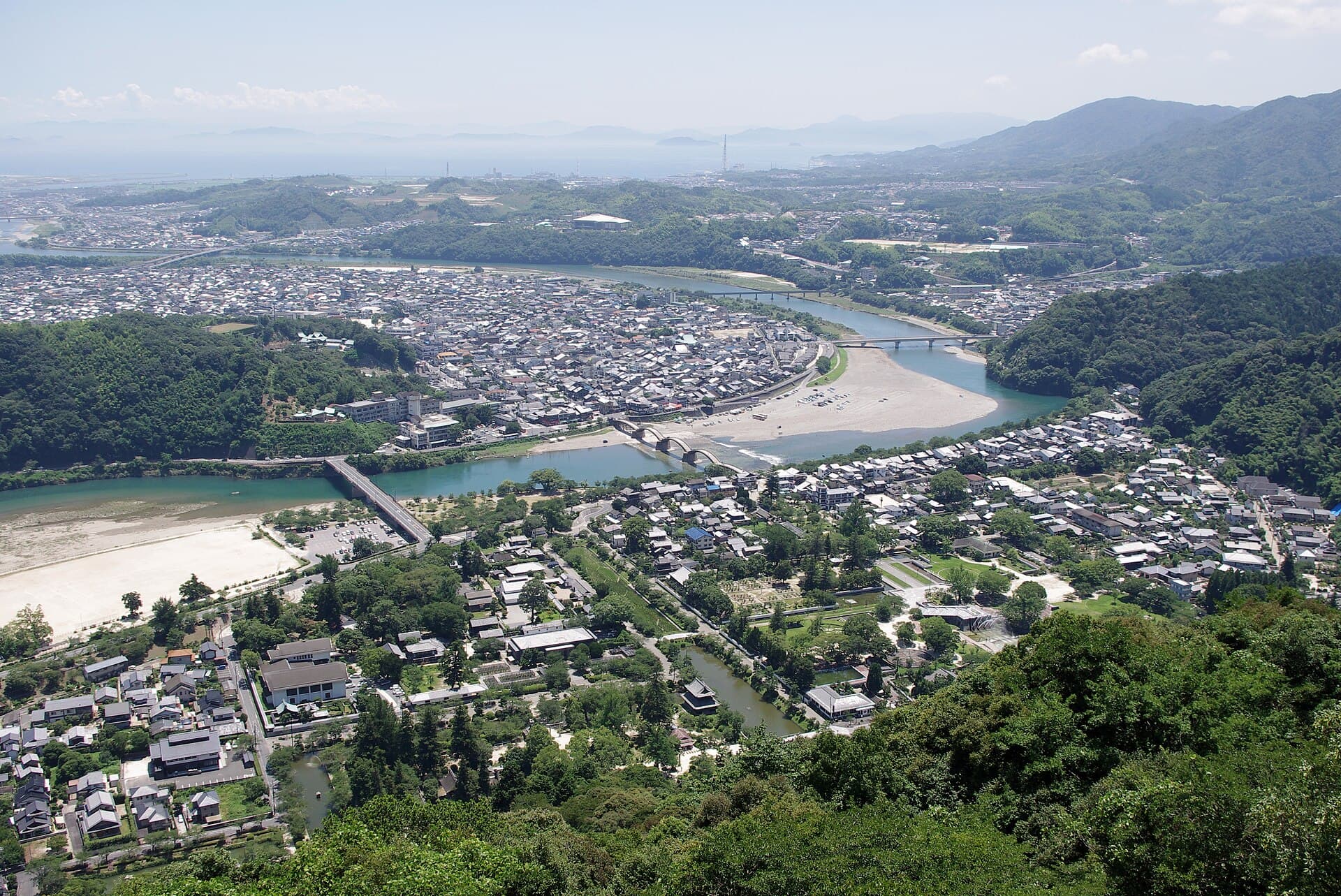
Iwakuni, JapanJakub Hałun / CC BY-SA 4.0, via Wikimedia Commons
JP

Iwakuni

Where an ancient bridge meets mythical snakes.

The secrets of Iwakuni

Iwakuni, as no one tells it.

Not the postcards. The stories even locals don't know — whispered in your ear, right where they happened.

3 secrets below. Many more wait inside the tour.
Kintaikyo Bridge

The Kintaikyo Bridge, an Edo-period engineering marvel, was crafted to withstand the Nishiki River's powerful floods. Yet, its initial construction held a surprising vulnerability.

Full story unlocks in the tour
Iwakuni Castle

Iwakuni Castle, reconstructed in 1962, stands as a symbol of the city's samurai past. However, the original castle faced an unexpectedly swift demise, not by siege, but by decree.

Full story unlocks in the tour
Iwakuni White Snake Museum

Iwakuni is home to a rare and revered species of white snake, believed to bring good fortune. Their presence in the city has a unique connection to a common pest.

Full story unlocks in the tour
The full tour

Discover every secret of Iwakuni

Every address, every reveal in full — in your ear, right where it happened.

Get the key to Iwakuni

You pick your stops. You walk. The voice reveals what the others miss.

Choose your time

How long do you have in Iwakuni?

No tours available yet. Check back soon — we're preparing them.

About Iwakuni

The story of Iwakuni

Iwakuni, a city in Japan's Yamaguchi Prefecture, offers a journey through history and natural splendor, marked by its iconic Kintaikyo Bridge. This architectural wonder, with its five wooden arches, gracefully spans the Nishiki River, reflecting a legacy of ingenious design. Beyond the bridge, the city unfolds into Kikko Park, once the grounds of the feudal lord's residence, and the reconstructed Iwakuni Castle, which surveys the landscape from atop Mount Shiroyama.

Iwakuni also holds a unique natural treasure: the revered white snakes, designated as a National Natural Monument. These creatures, believed to bring good fortune, can be observed at a dedicated museum, offering a glimpse into local folklore and conservation efforts. With its blend of historical landmarks, serene parks, and distinctive cultural elements, Iwakuni provides a compelling experience that feels both grand and intimately connected to its past.

History

From Feudal Domain to Modern City

The history of Iwakuni is deeply rooted in Japan's Edo period, beginning in 1600 when Kikkawa Hiroie, a feudal lord, chose this location for his domain after the Battle of Sekigahara. He envisioned a formidable castle town, strategically placing Iwakuni Castle atop Mount Shiroyama, utilizing the Nishiki River's natural curve as a defensive moat. Construction of the castle commenced in 1603 and was completed in 1608.

However, the castle's reign was short-lived. In 1615, under the Tokugawa shogunate's 'One Castle Per Province' decree, Iwakuni Castle was ordered to be dismantled, only seven years after its completion. The Kikkawa clan continued to govern the region from residences at the base of the mountain, an area now known as Kikko Park. The challenge of crossing the Nishiki River, particularly during floods, persisted. In 1673, Lord Hiroyoshi Kikkawa commissioned the construction of the Kintaikyo Bridge, a five-arched wooden structure designed to withstand the river's currents. Though the first bridge was swept away by a flood in 1674, it was swiftly rebuilt with stronger stone piers, a design that endured for 276 years.

The Kintaikyo Bridge was officially recognized as a Place of Scenic Beauty and a National Treasure of Japan in 1922. In 1940, Iwakuni officially became a city. A powerful typhoon in 1950 tragically destroyed the historic bridge, but due to strong public sentiment, it was meticulously reconstructed to its original form and reopened in 1953. The main tower of Iwakuni Castle was also reconstructed in 1962 using reinforced concrete, faithful to its original design but positioned for better visibility from the town below. Today, Iwakuni stands as a testament to its resilient past, with these landmarks drawing visitors to explore its samurai heritage and architectural ingenuity.

What to see

The undeniable centerpiece of Iwakuni is the Kintaikyo Bridge, a visually striking wooden arch bridge spanning the Nishiki River. Its five graceful arches, constructed with traditional wood-joining techniques, are a marvel of engineering. Take time to walk across its planks, observing the intricate latticework from below, and admire its reflection in the river, particularly beautiful during cherry blossom season or when illuminated at night.

Adjacent to the bridge lies Kikko Park, the former residential area of the Kikkawa feudal lords. This tranquil space features meticulously maintained gardens, a large fountain, and seasonal flowers, making it a pleasant area for a stroll. Within the park, you can find the Mekata Residence, an 18th-century home of a mid-ranking samurai family, offering a glimpse into historical daily life.

From Kikko Park, a ropeway ascends Mount Shiroyama to Iwakuni Castle. The reconstructed castle keep, a four-story structure, houses a museum with samurai armor, weapons, and artifacts. The observation deck on the top floor provides panoramic views of the city, the Nishiki River, the Kintaikyo Bridge, and the Seto Inland Sea.

A short walk from the Kintaikyo Bridge is the Iwakuni White Snake Museum. Here, you can learn about the rare albino Japanese rat snakes native to Iwakuni, which are designated as a National Natural Monument and are believed to bring good fortune. The museum features live exhibits, interactive displays, and information on their ecology and cultural significance.

When to visit

The most pleasant times to visit Iwakuni are during spring (March to May) and autumn (September to November). Spring offers mild temperatures, ranging from 9°C to 23°C, and is ideal for witnessing the cherry blossoms around Kintaikyo Bridge, typically in early April. Autumn brings comfortable weather, with temperatures between 9°C and 23°C, and lively autumn foliage. Summers (June to August) are warm and humid, with average temperatures from 21°C to 27°C, and are the wettest months, particularly June and July. Winters (December to February) are cool, with average temperatures around 4°C to 10°C and relatively low rainfall.

Practical

Iwakuni has two main railway stations: Iwakuni Station for local trains and Shin-Iwakuni Station for Shinkansen bullet trains. From Hiroshima, Iwakuni Station is about a 50-minute local train ride. Buses connect both stations to the Kintaikyo Bridge area, with a ride taking approximately 15 minutes. Iwakuni Kintaikyo Airport (IWK) offers domestic flights, including direct connections from Tokyo's Haneda Airport, a journey of about 90 minutes. Buses run from the airport to Iwakuni Station.

For getting around the main sights, the Kintaikyo Bridge, Kikko Park, and the ropeway to Iwakuni Castle are all within walking distance of each other. A combination ticket for the Kintaikyo Bridge, a round trip on the ropeway, and castle entry is available. The Iwakuni Station Tourist Information Center can provide local information and assistance. While many establishments may have English signage due to the nearby Marine Corps Air Station Iwakuni, having a translation app can be helpful.

Good to know
What are some local dishes to try in Iwakuni?
Iwakuni is known for its unique culinary specialties. "Iwakuni Sushi" is a pressed, layered sushi featuring rice, fish, and Iwakuni lotus root. "Ohira" is a hearty stew served in a large, flat lacquerware bowl, typically containing chicken, taro, lotus root, and various mushrooms. Ayu sweetfish, often caught via traditional cormorant fishing on the Nishiki River during summer, is also a local delicacy, usually grilled with salt. Iwakuni also has five sake breweries, including Asahi Shuzō, producers of the renowned Dassai sake.
Are the white snakes in Iwakuni dangerous?
No, the white snakes in Iwakuni are not dangerous. They are an albino variety of the Japanese rat snake and are harmless. They are revered as messengers of the gods and symbols of good fortune. You can observe them safely at the Iwakuni White Snake Museum.
Can I walk across the Kintaikyo Bridge?
Yes, you can walk across the Kintaikyo Bridge. It is a pedestrian bridge, and walking across its five wooden arches is a key part of the Iwakuni experience. The bridge is approximately 193 meters long and 5 meters wide.
Is Iwakuni Castle the original structure?
The Iwakuni Castle that stands today is a reconstruction. The original castle, completed in 1608, was dismantled in 1615 by shogunate decree. The current ferro-concrete keep was rebuilt in 1962, faithful to the original design but repositioned slightly for better visibility from the town. The stone walls of the original castle tower site are still visible near the reconstructed keep.
How far is Iwakuni from Hiroshima?
Iwakuni is relatively close to Hiroshima. You can reach Iwakuni Station from Hiroshima Station by local train on the JR Sanyo Main Line in about 50 minutes. Alternatively, the Sanyo Shinkansen stops at Shin-Iwakuni Station, which is about 15 minutes from Hiroshima Station.
Are there any tours available in Iwakuni?
Yes, various tours and travel assistance are available. The Information, Tours, & Travel (IT&T) office at Marine Corps Air Station Iwakuni offers bus trips and tours with guides, as well as assistance with travel arrangements within Japan. Additionally, local tourist information centers, such as the one at Iwakuni Station, can provide details on local attractions and transportation.
Iwakuni
From€9.00
No booking · activate anytime · 12h to walk it
Get the key to Iwakuni