Convento de San Antonio de Padua
O grandioso átrio do convento franciscano de Izamal detém uma distinção surpreendente, algo que conecta esta cidade de Yucatán a um centro global do catolicismo.
História completa desbloqueada no tour
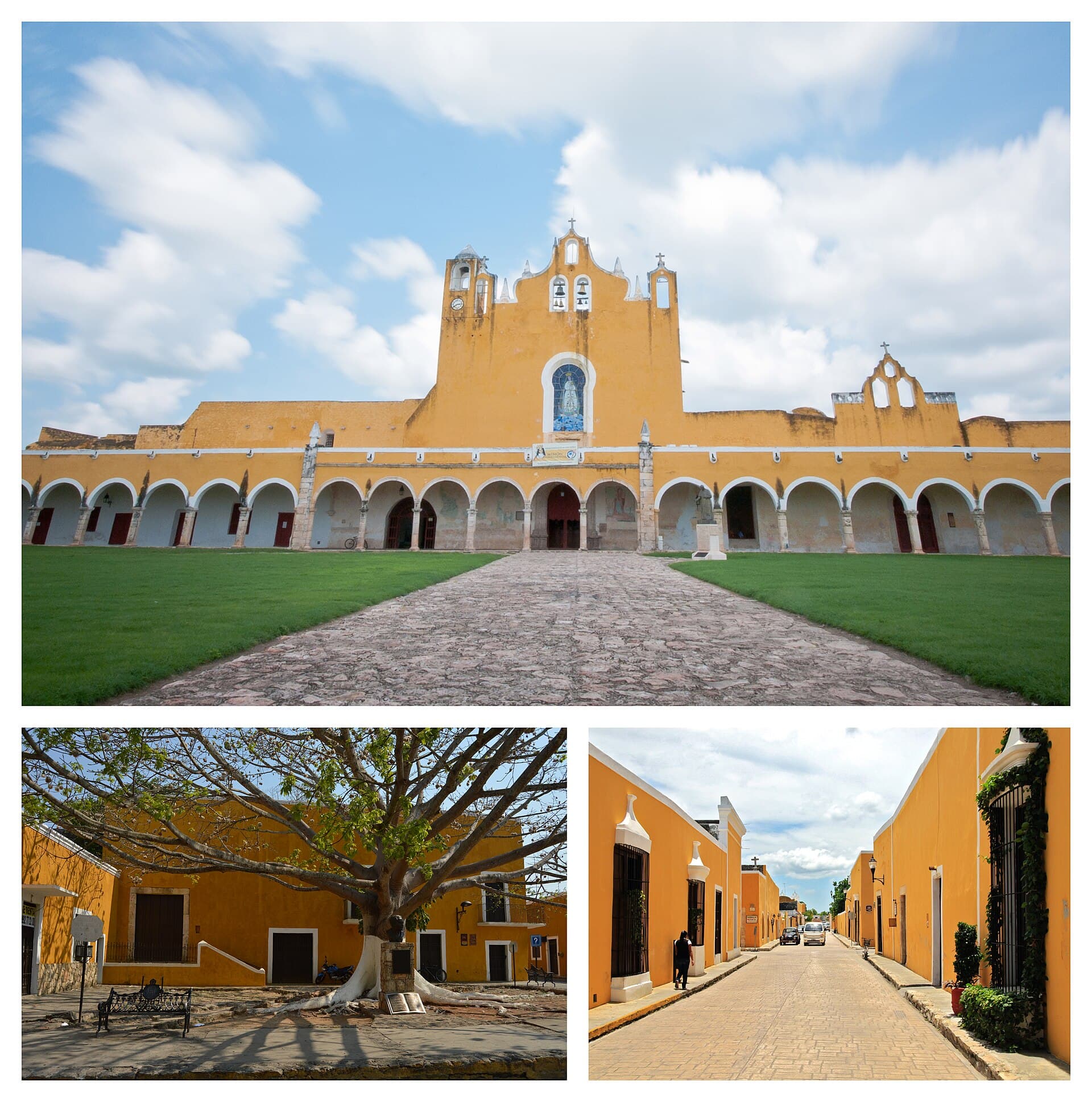 Addicted04 / CC BY-SA 4.0, via Wikimedia Commons
Tour de áudio autoguiado por Izamal — rota GPS a pé, reprodução offline, narração envolvente em 32 idiomas.
“Onde ecos maias antigos encontram o ouro colonial.”
Não os postais. As histórias que nem os locais conhecem — sussurradas ao seu ouvido, exatamente onde aconteceram.
O grandioso átrio do convento franciscano de Izamal detém uma distinção surpreendente, algo que conecta esta cidade de Yucatán a um centro global do catolicismo.
Embora Izamal seja conhecida por seu charme colonial, uma de suas impressionantes estruturas oferece uma ligação direta com seu passado pré-hispânico, e você pode experimentá-la de uma maneira única.
O tom dourado distinto da cidade é sua característica mais marcante, mas a razão por trás dessa cor uniforme é objeto de debate local e teorias históricas.
Descubra cada segredo de Izamal
Cada endereço, cada revelação na íntegra — no seu ouvido, exatamente onde aconteceu.
Você escolhe as suas paragens. Você caminha. A voz revela o que os outros perdem.


O seu tour áudio autoguiado de Izamal está pronto — escolha os seus pontos de interesse, selecione o seu idioma e comece no momento em que chegar.
ComprarA Lume inclui um guia de realidade aumentada. Levante o telemóvel: a câmara mostra a rua à sua frente, com uma seta luminosa sobreposta à imagem real que aponta sempre para a sua próxima paragem — sem mapa para decifrar, sem voltas erradas. Como tudo na Lume, funciona totalmente offline.
Izamal, frequentemente chamada de "A Cidade Amarela", é um destino cativante no estado de Yucatán, no México, a cerca de uma hora a leste de Mérida. Seus edifícios uniformes em amarelo-ouro, com acabamento em branco, criam uma atmosfera alegre e quase surreal sob o brilhante céu de Yucatán. Essa estética única, combinada com sua longa história, rendeu a Izamal a designação de Pueblo Mágico, ou "Vila Mágica", pelo governo mexicano.
Conhecida também como a "Cidade das Três Culturas", Izamal mistura perfeitamente sua herança maia antiga, influência colonial espanhola e vida mexicana contemporânea. Pirâmides pré-colombianas ficam ao lado da arquitetura colonial, construídas com pedras reaproveitadas de estruturas maias mais antigas. Essa sobreposição de história é palpável enquanto você percorre seus caminhos, oferecendo um profundo senso de continuidade e transformação.
Izamal não é apenas um espetáculo visual; é um testemunho vivo de um passado diverso. Com uma população de cerca de 20.000 habitantes, muitos dos quais de herança maia e falam maia iucateco, a cidade oferece um vislumbre autêntico da cultura local. Seu ritmo relaxado e avenidas menos movimentadas, em comparação com centros turísticos mais agitados, a tornam um lugar ideal para uma exploração tranquila ou uma estadia noturna serena.
Izamal tem uma história que abrange mais de 2.500 anos, tornando-a uma das cidades continuamente habitadas mais antigas das Américas. Fundada durante o Período Formativo Tardio (750–200 a.C.), foi um importante centro urbano e local de peregrinação para os Maias, até mesmo precedendo Chichén Itzá e Uxmal em sua importância. Entre 600 e 800 d.C., os antigos Maias construíram pelo menos seis pirâmides na área e em seus arredores. A cidade era dedicada à divindade criadora Itzamná, também associada à sabedoria, ciência, artes, cura e medicina, e ao deus Sol Kinich Ahau. Acredita-se que seu nome, Izamal, se refira a "orvalho dos céus" ou esteja relacionado ao deus Itzamná.
A chegada dos espanhóis em 1550 remodelou dramaticamente Izamal. Seguindo um padrão visto em todo o México, o exército espanhol desmantelou a pirâmide maia mais alta, Pop-hol-Chac, e usou suas pedras para construir o Convento de San Antonio de Padua. Concluído em 1561 por monges franciscanos, o impressionante átrio aberto do convento é o segundo maior do mundo, depois da Praça de São Pedro no Vaticano. Izamal serviu brevemente como a primeira sede dos Bispos de Yucatán antes que a sede fosse transferida para Mérida.
Durante grande parte dos séculos XIX e XX, a indústria do henequém foi central para a economia de Izamal. Quando essa indústria entrou em declínio na década de 1960, começaram os esforços para transformar Izamal em um destino turístico. O esquema de cores distintivo amarelo e branco, pelo qual Izamal é agora famosa, foi implementado entre 1959 e 1961 pelo prefeito Jorge Carlos González Rodríguez, que ordenou a remoção de placas comerciais e a pintura dos edifícios. Esse esquema de cores uniforme foi reforçado em 1993 para receber o Papa João Paulo II, com o amarelo e o branco refletindo as cores da bandeira do Vaticano. Essa mistura de elementos pré-hispânicos, coloniais e modernos solidificou a identidade de Izamal como a "Cidade das Três Culturas".
Comece sua exploração na praça central de Izamal, onde os edifícios dourados criam um visual marcante. O Convento de San Antonio de Padua é um marco proeminente, construído sobre uma antiga pirâmide maia. Seu vasto átrio aberto, o segundo maior depois da Praça de São Pedro, convida à contemplação silenciosa. Dentro da igreja, você pode ver uma imagem da Virgem da Imaculada Conceição, um local de peregrinação reverenciado.
A uma curta caminhada do convento, você encontrará a Pirâmide de Kinich Kakmó, uma das maiores pirâmides maias do México. Você pode subir seus degraus gratuitamente para chegar ao topo, oferecendo vistas panorâmicas da cidade amarela e da paisagem circundante de Yucatán. Outros sítios arqueológicos maias menores, como Itzamatul, Tu'ul, Hubuk e Chaltún Há, também estão espalhados pela cidade.
Além dos principais sítios históricos, simplesmente passear pelas ruas amarelas é uma experiência em si. A paleta de cores consistente rende excelentes fotografas, com buganvílias adicionando toques de roxo contra as paredes douradas. Considere fazer um passeio de carruagem (calesa) para um charmoso tour pelo centro da cidade. Não deixe de visitar o Mercado Municipal de Izamal para provar a vida local, a comida tradicional de Yucatán e comprar lembrancinhas. Você também pode visitar o Centro Cultural e Artesanal Izamal, instalado em uma casa do século XVI, para ver exposições de artesanato tradicional de Yucatán.
A melhor época para visitar Izamal para um clima agradável é durante a estação seca, de novembro a março. Durante esses meses, as temperaturas são mais amenas, geralmente em torno de 24°C, e há menos chuva. Embora este também seja o período mais movimentado, Izamal permanece menos lotada do que outros destinos populares de Yucatán. De abril a setembro pode ser muito quente, com máximas diárias potencialmente chegando a 32°C, e de junho a agosto pode haver cerca de uma hora de chuva por dia. Se visitar durante os meses mais quentes, planeje suas atividades ao ar livre para o início da manhã ou o final da tarde para evitar o calor do meio-dia.
Izamal é uma cidade pequena e caminhável, tornando fácil explorar a maioria das atrações a pé. Para distâncias maiores ou uma experiência única, carruagens puxadas por cavalos (calesa) estão disponíveis na praça principal. Embora menos inglês seja falado aqui em comparação com cidades turísticas maiores, você encontrará alguns falantes de inglês, particularmente em lojas voltadas para o turismo. É sempre útil ter algumas frases básicas em espanhol. A moeda local é o Peso Mexicano, e embora haja pelo menos um caixa eletrônico na cidade, é aconselhável carregar algum dinheiro para pequenas compras em mercados ou vendedores de rua.
Izamal é bem conectada e pode ser alcançada de carro alugado, que oferece a maior flexibilidade para explorar a região. Minivans regulares (colectivos) e ônibus ADO conectam Izamal a Mérida e Valladolid. O novo Trem Maya também tem uma estação em Izamal, oferecendo outra opção de transporte. Izamal fica a cerca de uma hora de carro de Mérida e Chichén Itzá, e a cerca de duas horas de Valladolid, tornando-a uma excelente viagem de um dia ou uma parada noturna em um roteiro de Yucatán.
Izamal — coreano, chinês, hebraico e mais 29 idiomas, cada parada narrada por uma voz nativa. A maior variedade de idiomas entre os passeios de áudio autoguiados.
Disponível em: