Jaffna Public Library
The pristine white facade of the Jaffna Public Library belies a devastating past, a deliberate act of destruction that aimed to erase a culture.
Full story unlocks in the tour
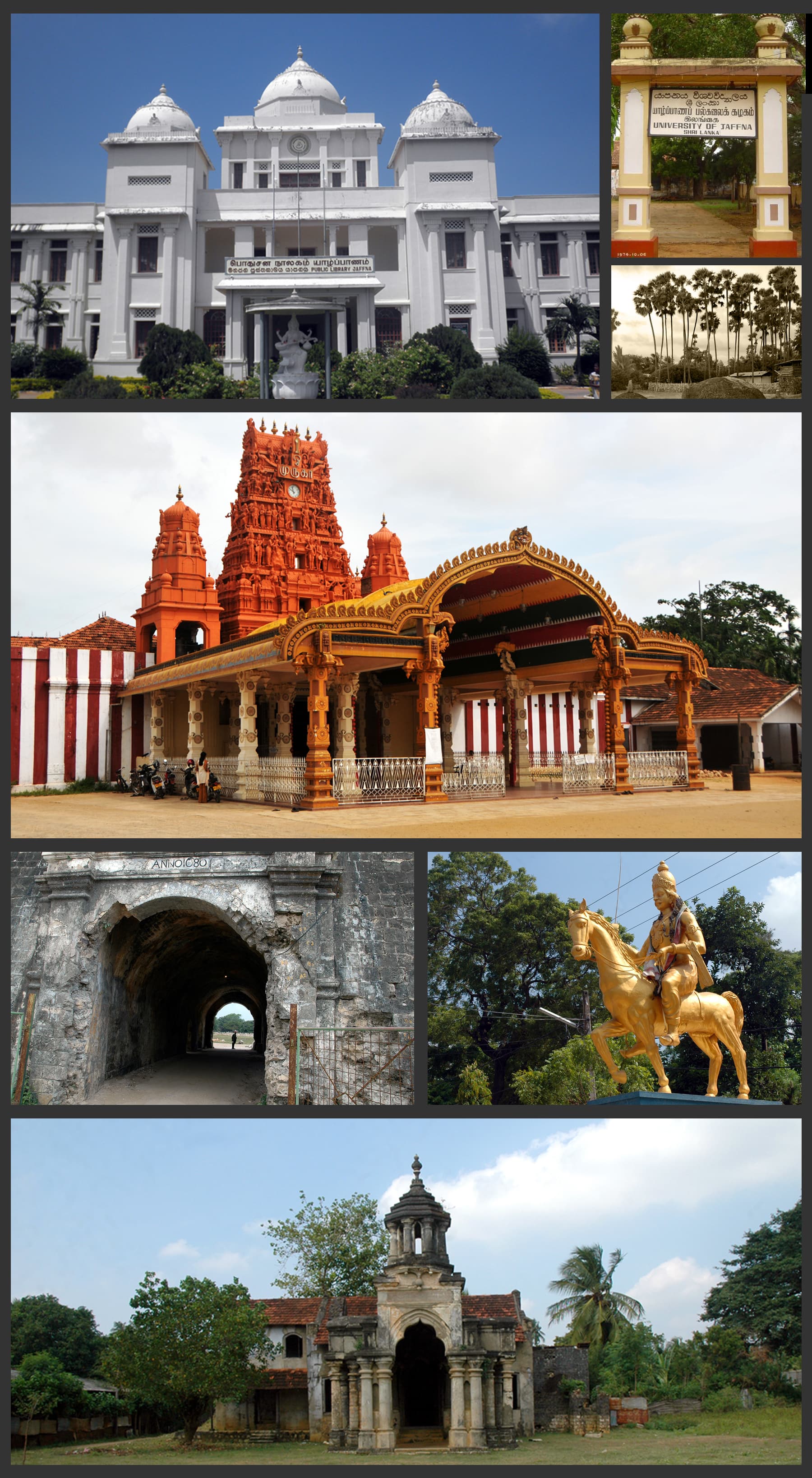 Anton 17 / CC BY-SA 3.0, via Wikimedia Commons
Self-guided audio walking tour of Jaffna — GPS route, offline playback, story-driven narration in 32 languages.
“Jaffna: Where resilience echoes in sun-drenched streets and ancient stones.”
Not the postcards. The stories even locals don't know — whispered in your ear, right where they happened.
The pristine white facade of the Jaffna Public Library belies a devastating past, a deliberate act of destruction that aimed to erase a culture.
The Nallur Kandaswamy Kovil, a Hindu temple, holds a secret in its very foundations, a testament to centuries of shifting powers.
Jaffna Fort, with its imposing ramparts, was once considered the most advanced military fort in the East, yet it surrendered without a single shot fired to a particular colonial power.
Discover every secret of Jaffna
Every address, every reveal in full — in your ear, right where it happened.
You pick your stops. You walk. The voice reveals what the others miss.


Your self-guided audio tour of Jaffna is ready — pick your landmarks, choose your language, and start the moment you arrive.
BuyLume has a built-in augmented-reality guide. Hold your phone up and its camera shows the street ahead of you, with a glowing arrow laid over the real view that always points to your next stop — no map to puzzle over, no wrong turns. Like everything in Lume, it works fully offline.
Jaffna, the cultural heart of Sri Lankan Tamils, offers a distinct experience from the island's southern regions. Situated on a peninsula in Sri Lanka's far north, it is a city shaped by a deep Tamil heritage, enduring traditions, and profound resilience. Its avenues present a blend of faded colonial-era buildings, Hindu temples, and serene churches, reflecting a layered history of Portuguese, Dutch, and British rule. The city, once a restricted zone during the civil war, has been quietly re-emerging since 2009, inviting visitors to explore its unique cultural sites, distinctive cuisine, and warm hospitality.
Beyond the city center, Jaffna's landscape extends to quiet beaches, coastal islands, and lagoons, offering a different side of Sri Lanka for those willing to venture off the typical tourist trail. The local culture, deeply rooted in Hindu India rather than Buddhist Sri Lanka, is evident in its customs, language (Tamil is widely spoken), and culinary traditions. Jaffna provides an authentic glimpse into a region that has preserved its identity amidst historical challenges, making it a rewarding destination for the culturally curious traveler.
Jaffna's history stretches back centuries, with its origins often traced to the 13th century when the Aryacakravarti dynasty established a powerful Tamil kingdom. This kingdom, with its capital at Nallur (a suburb of modern Jaffna), flourished for over four centuries, becoming a testament to Tamil culture and Hindu civilization. For a period in the 14th century, it even held sway over other regional kingdoms on the island.
The arrival of European powers marked a significant shift. The Portuguese conquered the Jaffna Kingdom in 1619, establishing Jaffna city as their colonial administrative center and building the initial Jaffna Fort in 1618. The Dutch then captured the fort in 1658, expanding it significantly into a geometrically perfect pentagonal structure with a star-shaped moat, making it one of the most advanced military forts in the East. The British took control in 1795, and the fort remained a British garrison until Sri Lanka's independence in 1948.
Post-independence, Jaffna became a focal point of growing Tamil nationalism. The city and its population were heavily impacted by the Sri Lankan Civil War, which began in 1983. Jaffna was occupied by the Liberation Tigers of Tamil Eelam (LTTE) for several periods and was the scene of fierce battles, with the fort itself becoming a crucial strategic stronghold. The conflict led to significant damage to the city's infrastructure and a decline in its population, with many residents emigrating. Since the war's end in 2009, visible reconstruction has taken place, and the city is gradually re-emerging, welcoming visitors to its unique cultural landscape.
Begin your exploration at the imposing Jaffna Fort, a testament to Portuguese, Dutch, and British colonial eras. You can walk along its ramparts, offering wide views of the city and the Jaffna Lagoon. Nearby, the Jaffna Public Library stands as a symbol of cultural resilience, a modern structure with a poignant history.
Immerse yourself in Hindu traditions at the Nallur Kandaswamy Kovil, one of Sri Lanka's most significant Hindu temples dedicated to Lord Murugan. Witness daily rituals and admire its ornate Dravidian architecture, including a massive golden-ochre Rajakopuram. For a taste of local life, visit the bustling Maruthanarmadam Public Market or the Kaakkai Thevu Fish Market.
Consider a day trip to Nainativu Island (Nagadeepa), home to both the sacred Nagadeepa Buddhist Temple and the Nagapooshani Hindu Temple, significant sites for both faiths. Another unique excursion is to Delft Island (Neduntheevu), known for its wild ponies and houses constructed from coral. For a refreshing break, head to Casuarina Beach on Karainagar Island, known for its soft sand and clear, calm waters.
The best time to visit Jaffna is from January to September, which are generally the warmer months with less rainfall. Specifically, late December to early March is ideal for hot-weather activities like visiting beaches. While May is the hottest month, with average highs around 90°F (32°C), January is cooler, averaging 77°F (25°C). The region experiences its most significant rainfall from October to January due to the northeast monsoon, which can lead to localized flooding.
If you plan to experience the Nallur Festival, it typically occurs over 25 days in August or September, depending on the Tamil calendar. This is a spectacular but crowded time to visit.
Jaffna is approximately 396 kilometers (246 miles) from Colombo and can be reached by train or bus. The train journey from Colombo Fort to Jaffna takes around 7-8 hours and is often recommended for its scenic route. Overnight buses are also available. Commercial flights connect Jaffna International Airport with Chennai, India, and Colombo.
Within Jaffna, tuk-tuks and local buses are common modes of transport. While English is widely spoken, learning a few basic Tamil phrases like "vanakkam" (hello) can enhance your interactions with locals. Jaffna's cuisine is distinctively spicy and flavorful, with influences from South India. Be sure to try local specialties like Jaffna crab curry, Jaffna kool (a seafood soup), and pittu. For a sweet treat, Rio Ice Cream is a local institution.
Jaffna in Korean, in Chinese or in Hebrew — and 29 more languages, every stop narrated by a native voice. The widest language range of any self-guided audio tour.
Available in: