Santuario Samseonghyeol
El mito fundacional de Jeju no comienza con dioses descendiendo de los cielos, sino emergiendo de la tierra misma.
La historia completa se desbloquea en el tour
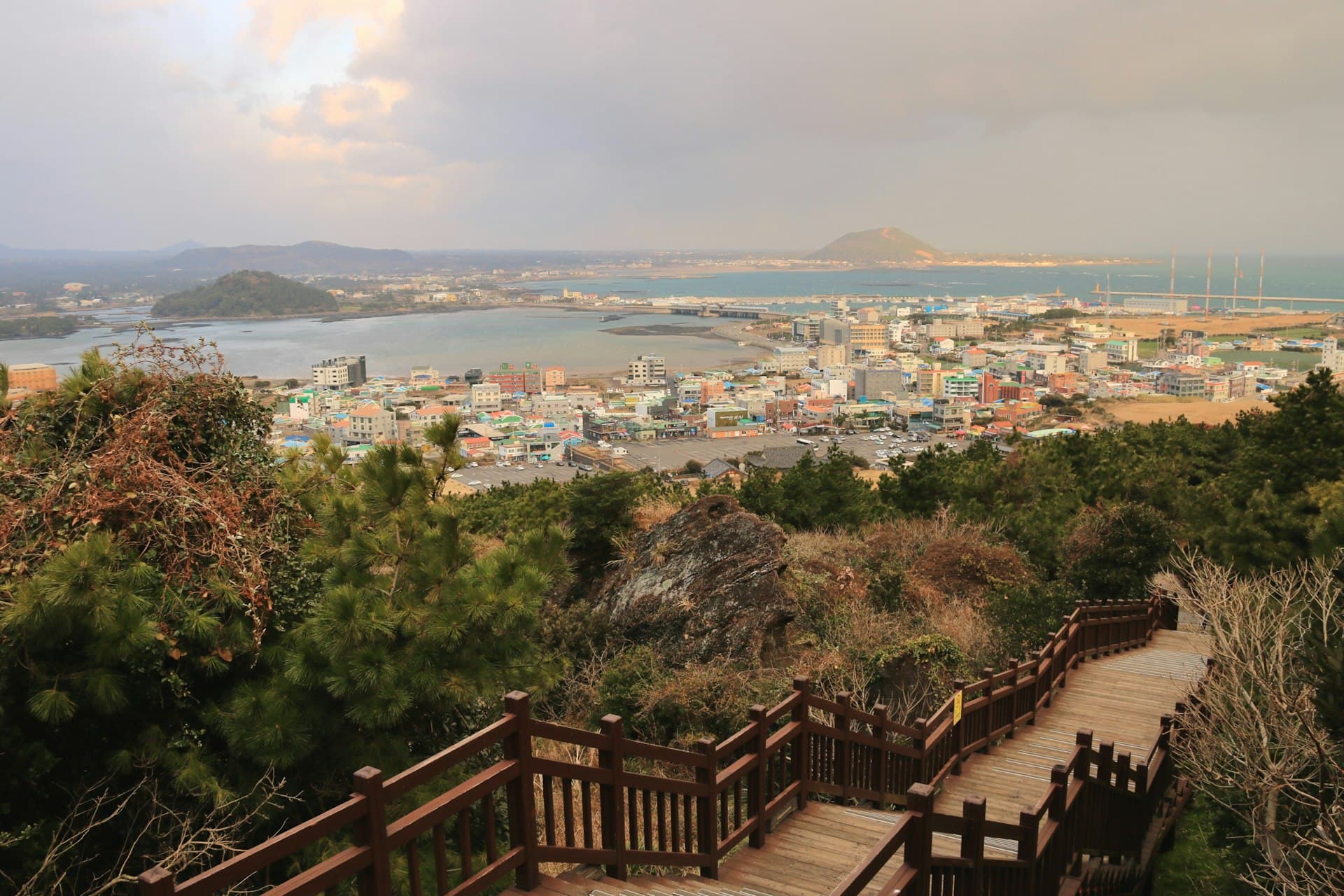 Photo: Hongbin / Unsplash
Tour de audio autoguiado de Jeju — ruta GPS a pie, reproducción offline, narración en 32 idiomas.
“Donde el drama volcánico se encuentra con la calma isleña.”
No las postales. Las historias que ni los locales conocen — al oído, justo donde ocurrieron.
El mito fundacional de Jeju no comienza con dioses descendiendo de los cielos, sino emergiendo de la tierra misma.
El pico más alto de Corea del Sur, la montaña Hallasan, guarda un secreto en su cumbre que pocos esperan de un volcán dormido.
Mientras conduces por la pintoresca costa de Jeju, podrías encontrarte con estatuas que son más que decorativas.
Descubre todos los secretos de Jeju
Cada dirección, cada revelación al completo — a tu oído, justo donde ocurrió.
Eliges tus paradas. Caminas. La voz te revela lo que los demás ignoran.


Tu tour de audioguía por Jeju te espera — elige tus lugares, tu idioma y empieza al llegar.
ComprarLume incluye una guía de realidad aumentada. Levanta el móvil y su cámara muestra la calle que tienes delante, con una flecha luminosa sobre la imagen real que siempre apunta a tu próxima parada — sin mapas que descifrar, sin giros equivocados. Como todo en Lume, funciona completamente sin conexión.
La Isla de Jeju, a menudo llamada el "Hawái de Corea", es una isla volcánica frente a la costa sur de Corea del Sur, celebrada por su distintiva belleza natural y su patrimonio cultural único. Formada por erupciones volcánicas hace aproximadamente dos millones de años, la isla está dominada por Hallasan, un volcán dormido y la montaña más alta de Corea del Sur, elevándose 1.947 metros (6.388 pies) sobre el nivel del mar. El paisaje de Jeju se caracteriza por formaciones de basalto y lava, incluyendo alrededor de 360 volcanes extintos más pequeños o conos parásitos llamados oreum. El clima subtropical de la isla asegura inviernos más suaves que en la Corea continental y soporta una diversa variedad de plantas subtropicales.
Reconocida por la UNESCO como Patrimonio Natural de la Humanidad, Geoparque Global y Reserva de la Biosfera, Jeju ofrece una mezcla de dramáticas formaciones volcánicas, exuberante vegetación y playas cristalinas. Más allá de su atractivo escénico, Jeju presenta una cultura distinta, un dialecto único y un ritmo isleño pausado que la diferencia del ritmo más rápido de Corea del Sur continental. Desde explorar antiguos tubos de lava hasta presenciar las tradiciones de sus famosas haenyeo (buzas libres), Jeju ofrece una rica variedad de experiencias para aquellos que buscan aventura y tranquilidad.
## Del Reino de Tamna al Jeju Moderno Los orígenes de la Isla de Jeju están profundamente arraigados en la actividad volcánica, con su formación comenzando hace aproximadamente dos millones de años a través de erupciones submarinas. La habitación humana en la isla se remonta al Neolítico temprano, con evidencia arqueológica encontrada en sitios como Gosalli. La civilización más antigua conocida en la isla fue el reino independiente de Tamna, que significa "país insular", y que existió durante siglos. Según la leyenda, el Reino de Tamna fue fundado por tres semidioses (Go, Yang y Bu) que emergieron de la tierra en Samseonghyeol.
Tamna finalmente se convirtió en un estado vasallo de Corea bajo la dinastía Goryeo en el año 938 d.C., aunque mantuvo un grado de autonomía durante algún tiempo. Durante los siglos XIII y XIV, Jeju experimentó un período bajo influencia mongola tras las invasiones de Corea, sirviendo la isla como zona de pastoreo para caballos de caballería y lugar de exilio. En 1404, la dinastía Joseon puso a Jeju bajo un firme control central, poniendo fin al reino de Tamna. Durante casi 200 años en el período Joseon, se impuso una prohibición de viajar, y los isleños a menudo fueron tratados como extranjeros o exiliados políticos. Esta era vio varias sublevaciones de los residentes de Jeju contra el gobierno opresivo.
El siglo XX trajo más dificultades, incluida la anexión japonesa en 1910, que provocó privaciones y obligó a muchos isleños a buscar trabajo en otros lugares. Los residentes de Jeju participaron activamente en el movimiento de independencia coreano, destacando el Movimiento Antijaponés de las Buzas de 1930, en el que participaron más de 10.000 haenyeo. Tras la rendición de Japón en la Segunda Guerra Mundial, Jeju pasó a formar parte de la provincia de Jeolla del Sur. Sin embargo, la isla fue el escenario de la trágica sublevación de Jeju de 1948 a 1949, una importante rebelión de guerrilleros de izquierda contra la división planificada de la península coreana. Este conflicto resultó en un estimado de 25.000 a 30.000 muertes y una destrucción generalizada. Jeju obtuvo el estatus de provincia en 1946 y más tarde se convirtió en una provincia autónoma especial, distinguiéndola de otras provincias de Corea del Sur. Hoy en día, la economía de la isla prospera con el turismo, la agricultura y la pesca.
## Patrimonio Cultural La cultura única de Jeju está profundamente entrelazada con su entorno natural e historia. La isla es conocida por su dialecto distintivo, que es bastante diferente del coreano continental. El chamanismo sigue siendo una parte significativa del tejido cultural de Jeju, con tradiciones que incluyen 18.000 dioses y diosas adorados en santuarios y a través de rituales. Los mitos de creación de la isla, como la leyenda de Seolmundae Halmang, una diosa gigante que se dice que dio forma a las montañas y oreum de Jeju, reflejan el respeto de los pueblos indígenas por la naturaleza.
Una característica prominente de la identidad cultural de Jeju es la haenyeo, o "mujeres del mar", buzas libres que recolectan mariscos sin equipo de respiración moderno. Esta tradición centenaria, reconocida por la UNESCO como Patrimonio Cultural Inmaterial, destaca una estructura familiar matriarcal que se desarrolló debido a las contribuciones económicas de las haenyeo. Las icónicas estatuas de piedra dol hareubang de la isla, talladas en roca volcánica, sirven como guardianes y símbolos de protección y fertilidad. Pueblos tradicionales como Seongeup Folk Village ofrecen vislumbres de la vida rural y preservan las auténticas experiencias culturales de la isla.
Jeju ofrece una diversa gama de atracciones, mezclando maravillas naturales con sitios culturales únicos. En el corazón de la isla se encuentra el Parque Nacional Hallasan, hogar de la montaña más alta de Corea del Sur, Hallasan, un volcán dormido con un lago de cráter en su cima. El parque ofrece varias rutas de senderismo, con amplias vistas de la isla. En la costa este, el Pico Seongsan Ilchulbong, Patrimonio de la Humanidad por la UNESCO, es un cono de toba volcánica conocido por sus dramáticos amaneceres y una corona de rocas afiladas. Los visitantes pueden subir al cráter para disfrutar de amplias vistas costeras.
Explora el mundo subterráneo en la Cueva Manjanggul, uno de los tubos de lava más finos y largos del mundo, también Patrimonio de la Humanidad por la UNESCO. Solo una parte de sus 13 kilómetros de longitud está abierta al público, revelando impresionantes formaciones de lava. A lo largo de la costa, los Acantilados de Jusangjeolli muestran espectaculares pilares de roca de forma hexagonal formados por lava enfriada. Para una experiencia cultural única, visita el Museo Haenyeo para aprender sobre las icónicas buzas de Jeju, o asiste a un Espectáculo de Mujeres Buzas Haenyeo. El Parque de Piedra de Jeju también ofrece una visión de la geología volcánica de la isla y el folclore local a través de sus esculturas e instalaciones artísticas. Para relajarse, las playas de Jeju, como la Playa Hyeopjae y la Playa Hamdeok, ofrecen aguas cristalinas y un entorno pintoresco. Considera una visita a la Isla Udo, accesible en ferry, por sus distintivos paisajes rocosos y sus tranquilas carreteras.
Las mejores épocas para visitar la Isla de Jeju son la primavera (marzo a mayo) y el otoño (septiembre a noviembre). Durante la primavera, las temperaturas son suaves y la isla se adorna con cerezos en flor y brillantes flores de canola amarillas, lo que la hace ideal para hacer turismo y senderismo. El otoño ofrece un clima fresco, seco y despejado con un follaje vibrante, perfecto para actividades al aire libre y senderismo en Hallasan. Los veranos (junio a agosto) son calurosos y húmedos, coincidiendo con la temporada alta de turismo y el período monzónico, aunque las playas están animadas. Los inviernos (diciembre a febrero) son más suaves que en la Corea continental, con nevadas ocasionales en las laderas superiores de Hallasan, ofreciendo una experiencia más tranquila con precios más bajos.
Llegar a Jeju es más conveniente por aire, siendo el Aeropuerto Internacional de Jeju (CJU) el principal centro de llegada, ubicado en la ciudad de Jeju. Los vuelos desde los aeropuertos de Corea continental suelen durar alrededor de una hora. Si bien los ferries son una opción, pueden ser largos y propensos al mareo. Una vez en la isla, se recomienda encarecidamente alquilar un coche para explorar a tu propio ritmo, especialmente para llegar a cafeterías, playas y diversas atracciones repartidas por toda la isla. Los autobuses públicos ofrecen una alternativa más económica, con una extensa red que cubre toda la isla e información en inglés disponible en las paradas y a través de anuncios. Los taxis también están fácilmente disponibles.
Para la navegación, es aconsejable descargar aplicaciones de mapas coreanas como KakaoMap o NAVER Map, ya que Google Maps puede no ser completamente funcional en Corea del Sur. Hay puntos de acceso Wi-Fi gratuitos ampliamente disponibles en toda la isla. Al interactuar con los lugareños, aprender algunas frases básicas en coreano como "Annyeonghaseyo" (Hola) y "Gamsahamnida" (Gracias) puede mejorar tu experiencia. Jeju ha introducido reglas oficiales de comportamiento multilingües para turistas para promover un viaje responsable, enfatizando la eliminación adecuada de residuos, la conducta respetuosa en espacios públicos y el cumplimiento de las costumbres locales.
Jeju en coreano, en chino o en hebreo — y 29 idiomas más, cada parada narrada por una voz nativa. La mayor variedad de idiomas de cualquier audioguía autoguiada.
Disponible en: