Santuário Gyeonggijeon
Além dos pátios tranquilos e do retrato real, um detalhe menos conhecido conecta este santuário a um momento crucial na história coreana.
História completa desbloqueada no tour
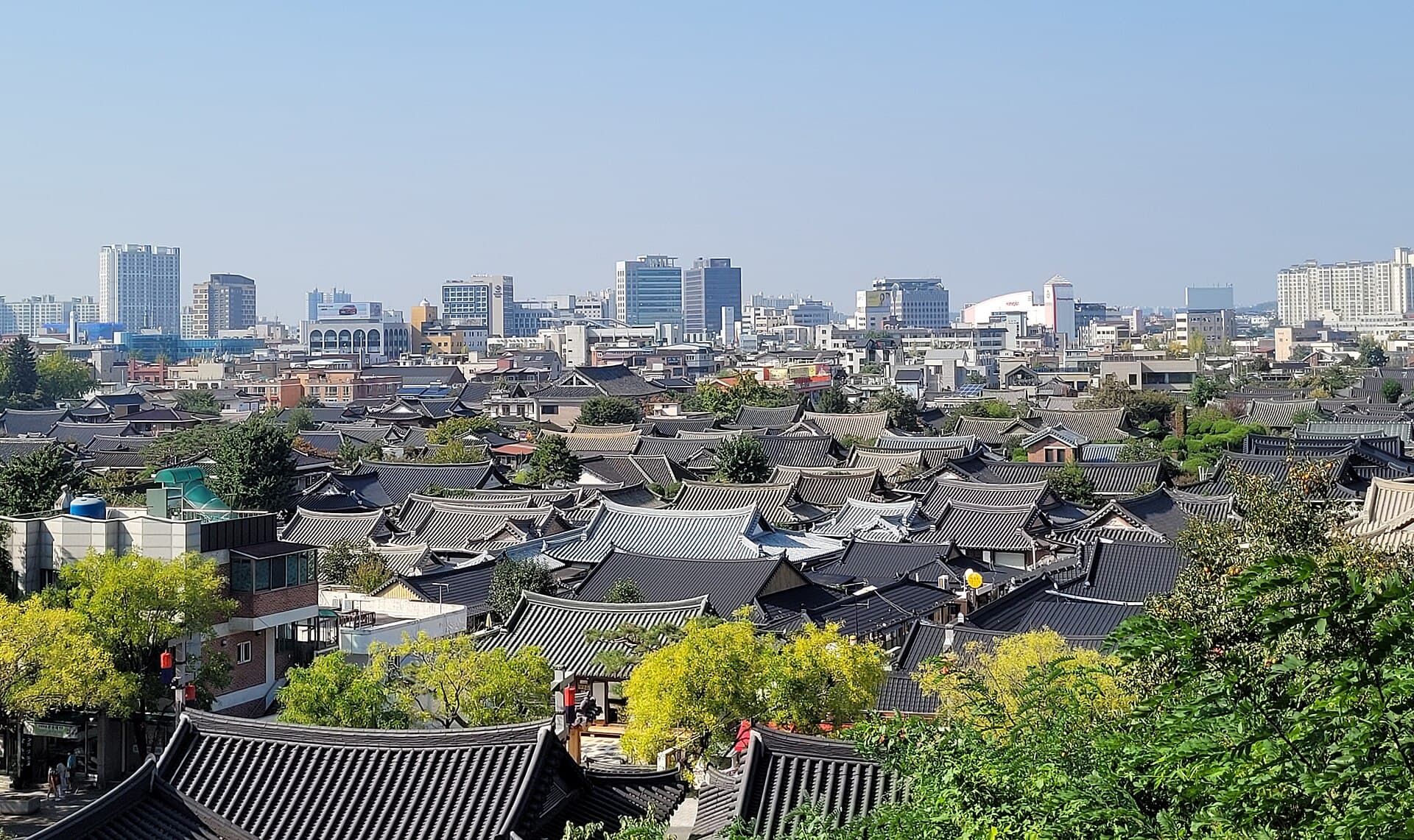 Bernard Gagnon / CC0, via Wikimedia Commons
Tour de áudio autoguiado por Jeonju — rota GPS a pé, reprodução offline, narração envolvente em 32 idiomas.
“Onde antigas tradições e arte culinária convergem, uma cidade para o viajante pensativo.”
Não os postais. As histórias que nem os locais conhecem — sussurradas ao seu ouvido, exatamente onde aconteceram.
Além dos pátios tranquilos e do retrato real, um detalhe menos conhecido conecta este santuário a um momento crucial na história coreana.
Este mercado animado, um centro da lendária culinária de Jeonju, tem uma história de renascimento que vai além de sua deliciosa comida de rua.
Embora conhecida por sua arte de rua colorida, as origens desta comunidade na encosta estão enraizadas em um passado mais humilde, pós-guerra.
Descubra cada segredo de Jeonju
Cada endereço, cada revelação na íntegra — no seu ouvido, exatamente onde aconteceu.
Você escolhe as suas paragens. Você caminha. A voz revela o que os outros perdem.


O seu tour áudio autoguiado de Jeonju está pronto — escolha os seus pontos de interesse, selecione o seu idioma e comece no momento em que chegar.
ComprarA Lume inclui um guia de realidade aumentada. Levante o telemóvel: a câmara mostra a rua à sua frente, com uma seta luminosa sobreposta à imagem real que aponta sempre para a sua próxima paragem — sem mapa para decifrar, sem voltas erradas. Como tudo na Lume, funciona totalmente offline.
Jeonju, a capital da província de Jeolla do Norte, no sudoeste da Coreia do Sul, oferece uma jornada pela alma da tradição e gastronomia coreanas. Esta cidade, frequentemente chamada de capital culinária da Coreia, é uma Cidade da Gastronomia da UNESCO, um testemunho de sua cultura alimentar duradoura e esforços culinários inovadores. Sua característica mais celebrada é a Aldeia Hanok de Jeonju, um distrito expansivo com mais de 800 casas tradicionais coreanas, ou hanok, que proporcionam um elo tangível com séculos passados.
Além da pitoresca Aldeia Hanok, Jeonju é uma cidade onde a história respira através de santuários antigos, mercados animados e vielas coloridas repletas de murais. É um lugar onde o ritmo incentiva a permanência, seja saboreando uma tigela de seu famoso bibimbap ou explorando artesanato tradicional. Jeonju se destaca como uma mistura única de história viva e paraíso para os amantes da culinária, tornando-a um destino ideal para aqueles que buscam uma experiência coreana autêntica.
As origens de Jeonju remontam a dezenas de milhares de anos, evoluindo de uma pequena cidade durante o reino de Silla para um importante centro regional. Por volta dos séculos VII a IX, a cidade já estava estabelecida e crescendo. Um momento crucial chegou em 892 d.C., quando o líder militar Gyeon Hwon designou Jeonju como a capital de seu estado fundado, Later Baekje (Hubaekje), cimentando seu papel como um importante centro político na Península Coreana até 936 d.C.
A conexão histórica mais profunda da cidade reside com a Dinastia Joseon (1392–1897). Jeonju é considerada o lar ancestral do Rei Taejo (Yi Seong-gye), o fundador da dinastia, concedendo à cidade um status especial e privilegiado por mais de cinco séculos. A construção começou no início do século XV, e muitos dos edifícios vistos hoje, particularmente na Aldeia Hanok, datam dos séculos XIX e início do século XX, refletindo um esforço consciente dos residentes coreanos para preservar sua identidade arquitetônica durante o domínio colonial japonês.
Jeonju também desempenhou um papel crucial no final do século XIX como o epicentro da Revolta Camponesa Donghak em 1894. Ao longo de sua história, Jeonju tem sido um centro de erudição e manteve uma indústria editorial desenvolvida. Hoje, a cidade continua a honrar seu passado, com locais como o Santuário Gyeonggijeon, construído em 1410 para abrigar o retrato do Rei Taejo, servindo como símbolos duradouros de sua rica herança.
A Aldeia Hanok de Jeonju é a principal atração da cidade, apresentando mais de 800 edifícios hanok tradicionais. Passeie por suas vielas, alugue um hanbok (traje tradicional coreano) para fotos e mergulhe na atmosfera de antigamente. Dentro da aldeia, visite o Santuário Gyeonggijeon, um complexo que remonta a 1410 e abriga um retrato real do Rei Taejo. O santuário também contém um museu e edifícios administrativos.
Para vistas panorâmicas dos telhados de telhas, suba até o Pavilhão Omokdae, onde o Rei Taejo celebrou uma vitória no final do século XIV. Perto dali, a Vila Mural Jaman, acessível pela Ponte Omokgyo, oferece uma exibição colorida de arte de rua e cafés em uma encosta íngreme. Não deixe de visitar a Igreja Católica Jeondong, uma estrutura em estilo gótico do início do século XX que combina elementos arquitetônicos ocidentais e orientais. Explore o Mercado Nambu para experimentar a vida local, artesanato e comida de rua. O Youth Mall no segundo andar do mercado oferece lojas e restaurantes exclusivos. Para artesanato tradicional, visite o Centro Tradicional Hanji de Jeonju para aprender e até mesmo tentar fazer hanji, papel coreano tradicional.
Jeonju é agradável durante todo o ano, mas a primavera (março-maio) e o outono (setembro-novembro) oferecem o clima mais agradável para passeios turísticos. Na primavera, as cerejeiras florescem na cidade, e o Festival Internacional de Cinema de Jeonju acontece no final de abril/início de maio. O outono traz ar fresco, folhagem colorida de outono e o popular Festival de Bibimbap de Jeonju em outubro. Os verões (junho-agosto) são quentes e úmidos, com chuvas significativas, especialmente em julho e agosto. Os invernos (dezembro-fevereiro) são frios, mas a Aldeia Hanok pode ser linda com neve ocasional, e os preços das acomodações podem ser mais baixos.
Jeonju é facilmente acessível a partir de Seul. O trem de alta velocidade KTX da Estação Yongsan leva cerca de 1,5 hora, enquanto os ônibus expressos da Rodoviária Expressa de Seul levam cerca de duas horas. Uma vez em Jeonju, o centro da cidade, especialmente a Aldeia Hanok e suas atrações circundantes, é muito fácil de percorrer a pé. Ônibus locais também estão disponíveis e são fáceis de navegar. Uma viagem de um a dois dias é ideal para explorar os principais pontos turísticos de Jeonju. Considere ficar em uma pensão hanok tradicional para uma experiência cultural imersiva, embora esteja ciente de que muitos apresentam ondol (pisos aquecidos) e arranjos de dormir minimalistas. Recomenda-se reservar estadias em hanok com antecedência, especialmente durante as altas temporadas como primavera e outono.
Jeonju — coreano, chinês, hebraico e mais 29 idiomas, cada parada narrada por uma voz nativa. A maior variedade de idiomas entre os passeios de áudio autoguiados.
Disponível em: