Teatro Sul
Além de seu tamanho impressionante, este antigo teatro guarda um segredo de suas apresentações duradouras.
História completa desbloqueada no tour
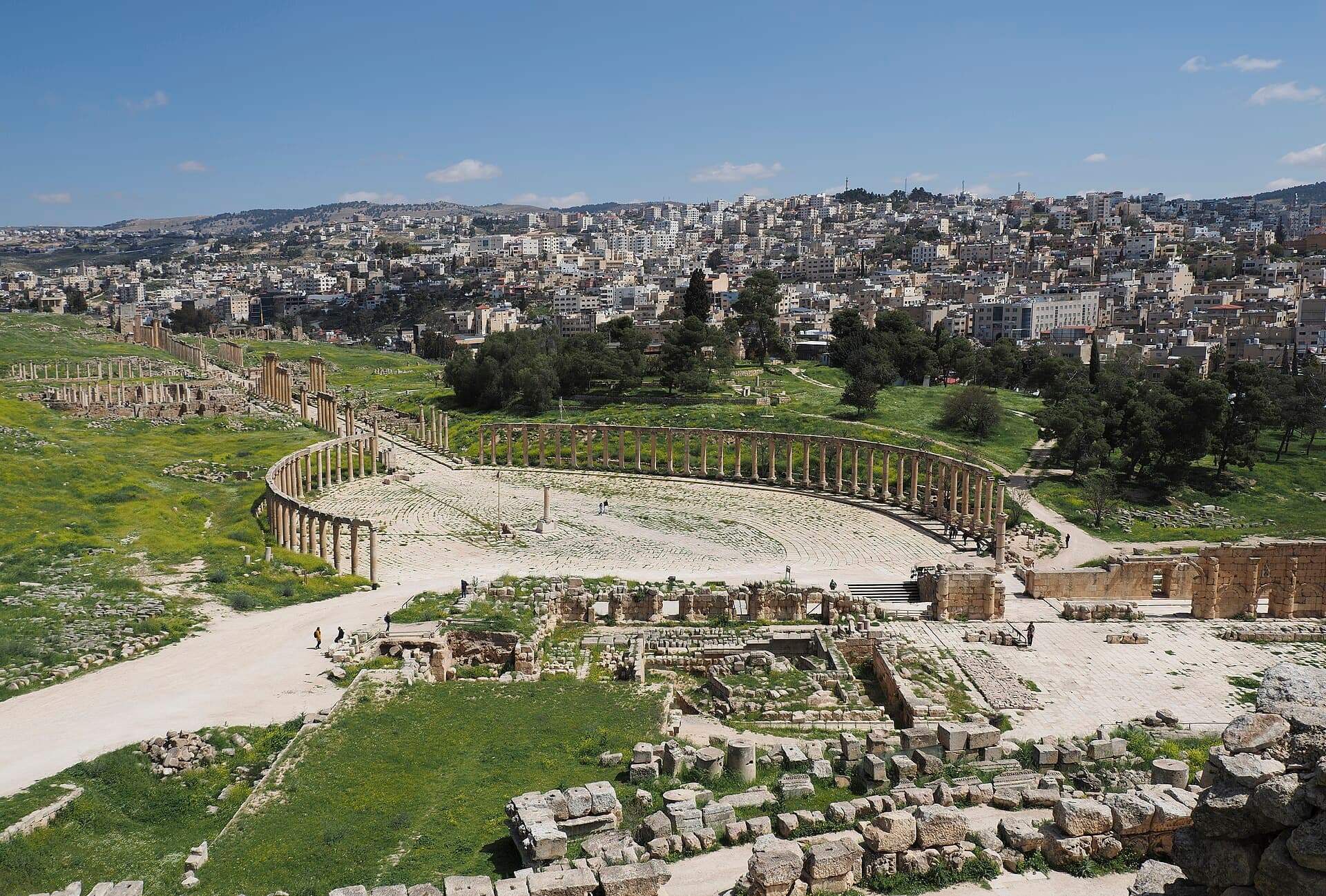 Petar Milošević / CC BY-SA 4.0, via Wikimedia Commons
Tour de áudio autoguiado por Jerash — rota GPS a pé, reprodução offline, narração envolvente em 32 idiomas.
“Caminhe pelas antigas ruas de Gerasa, uma cidade romana preservada nas areias da Jordânia.”
Não os postais. As histórias que nem os locais conhecem — sussurradas ao seu ouvido, exatamente onde aconteceram.
Além de seu tamanho impressionante, este antigo teatro guarda um segredo de suas apresentações duradouras.
Observe as pedras de pavimentação da principal via de Jerash e você encontrará uma pista sutil do passado movimentado da cidade.
Este grandioso espaço público apresenta um design único que o distingue dos fóruns romanos típicos.
Descubra cada segredo de Jerash
Cada endereço, cada revelação na íntegra — no seu ouvido, exatamente onde aconteceu.
Você escolhe as suas paragens. Você caminha. A voz revela o que os outros perdem.


O seu tour áudio autoguiado de Jerash está pronto — escolha os seus pontos de interesse, selecione o seu idioma e comece no momento em que chegar.
ComprarA Lume inclui um guia de realidade aumentada. Levante o telemóvel: a câmara mostra a rua à sua frente, com uma seta luminosa sobreposta à imagem real que aponta sempre para a sua próxima paragem — sem mapa para decifrar, sem voltas erradas. Como tudo na Lume, funciona totalmente offline.
Jerash, conhecida na antiguidade como Gerasa, é uma das cidades greco-romanas mais notavelmente preservadas do Oriente Médio. Frequentemente referida como a 'Pompéia do Oriente', suas extensas ruínas oferecem um vislumbre vívido da vida urbana de quase dois milênios atrás. Situada a aproximadamente 48 quilômetros ao norte de Amã, a capital da Jordânia, Jerash é uma viagem de um dia acessível, revelando uma história profunda que se estende muito além de sua era de ouro romana.
A cidade moderna de Jerash prospera ao lado de sua contraparte antiga, com as ruínas cuidadosamente preservadas no lado oeste de um rio que outrora dividia o antigo assentamento. Os visitantes podem passear por grandiosos portões cerimoniais, avenidas colonadas, templos imponentes e teatros impressionantes, todos testemunhando uma época em que este era um importante centro imperial. A clareza do local e seu traçado urbano bem definido o tornam particularmente envolvente para aqueles novos na exploração arqueológica, permitindo uma experiência imersiva de uma verdadeira cidade romana.
As primeiras evidências de ocupação humana em Jerash datam do período Neolítico, com achados em Tal Abu Sowan indicando assentamento por volta de 7500 a.C. A área continuou a ser habitada durante as Idades do Bronze e do Ferro, com evidências arqueológicas sugerindo um assentamento por volta de 1600 a.C. perto do portão sul. A fundação formal da cidade como um assentamento helenístico, então conhecida como Gerasa, provavelmente ocorreu no século II a.C., possivelmente sob Antíoco IV Epifânio. A localização de Jerash no nexo das rotas comerciais, conectando Damasco a Petra e aos portos do Mediterrâneo, contribuiu para sua prosperidade inicial.
O general romano Pompeu conquistou Jerash em 63 a.C., trazendo-a para o domínio romano. Isso marcou o início de sua 'Era de Ouro', pois se tornou uma das dez cidades da Liga Decápole, um grupo de cidades greco-romanas semiautônomas na fronteira oriental do império. A cidade floresceu, tornando-se mais rica ao longo de dois séculos, com construções e reconstruções significativas ocorrendo nos séculos I e II d.C. A visita do Imperador Adriano em 129 d.C. foi comemorada com a construção do Arco de Adriano. Em seu auge no século III d.C., Jerash era um próspero centro comercial com uma população estimada entre 10.000 e 25.000 habitantes.
O declínio da cidade começou em meados do século III, exacerbado por eventos como a destruição de Palmira em 273 d.C. e o saque de seus templos para a construção de igrejas cristãs no século VI. A conquista muçulmana no século VII contribuiu ainda mais para seu declínio, e um terremoto devastador em 749 d.C. destruiu grande parte de Jerash, tornando-a em grande parte inabitável. A cidade antiga jazia sob a areia por séculos, apenas para ser redescoberta por um explorador alemão em 1806 e gradualmente escavada e restaurada a partir de 1925.
Ao entrar no sítio arqueológico, o imponente Arco de Adriano, um portão triplo construído em 129 d.C., serve como uma grandiosa introdução. Além dele fica o Hipódromo, uma vasta arena que outrora recebia corridas de bigas para até 15.000 espectadores, onde encenações são por vezes apresentadas hoje. A distinta Praça Oval, cercada por 56 colunas jônicas, é um espaço de reunião pública único. Dali, uma escadaria leva aos elegantes restos do Templo de Zeus, oferecendo vistas amplas das ruínas.
O Teatro Sul, construído no século I, podia acomodar 5.000 espectadores e ainda é usado para apresentações culturais, exibindo sua notável acústica. O Cardo Maximus, a principal rua colonada da cidade, estende-se por 800 metros e ainda é pavimentada com pedras originais, revelando sulcos de bigas. Ao longo desta rua, você encontrará o Ninfeu, a principal fonte ornamental da cidade, e o grandioso Templo de Ártemis, dedicado à deusa padroeira da cidade. Mais ao norte fica o menor Teatro Norte, que serviu como espaço para apresentações e reuniões do conselho da cidade. O Museu Arqueológico de Jerash abriga artefatos desenterrados do local, fornecendo mais contexto à sua história.
A época ideal para visitar Jerash é durante a primavera (março a maio) e o outono (setembro a novembro). Durante esses meses, as temperaturas são amenas e agradáveis, variando de 18-28°C (64-82°F), tornando-o perfeito para explorar as extensas ruínas ao ar livre. A primavera oferece a beleza adicional de paisagens verdejantes e flores silvestres. O outono geralmente tem menos visitantes do que a primavera. Chegar cedo pela manhã ajuda a evitar multidões e o calor do meio-dia, especialmente durante os períodos mais quentes.
Jerash é facilmente acessível como uma viagem de um dia a partir de Amã, localizada a cerca de 48-50 quilômetros ao norte da capital. A viagem leva pouco menos de uma hora. Você pode chegar a Jerash de carro particular, táxi ou micro-ônibus públicos da estação de ônibus de Tabarbour em Amã, embora o transporte público seja menos eficiente. Táxis compartilhados também são uma opção.
O sítio arqueológico é vasto, exigindo pelo menos três a quatro horas para ser explorado completamente. Use sapatos confortáveis para caminhar, um chapéu e protetor solar, especialmente durante os meses mais quentes, pois a sombra é mínima. A taxa de entrada é de 12 dinares jordanianos, que inclui acesso ao museu arqueológico. O Jordan Pass também cobre a entrada para Jerash. Guias estão disponíveis na bilheteria se você desejar uma explicação mais aprofundada. Um pequeno souk na entrada oferece comida, bebidas e banheiros.
Jerash — coreano, chinês, hebraico e mais 29 idiomas, cada parada narrada por uma voz nativa. A maior variedade de idiomas entre os passeios de áudio autoguiados.
Disponível em: