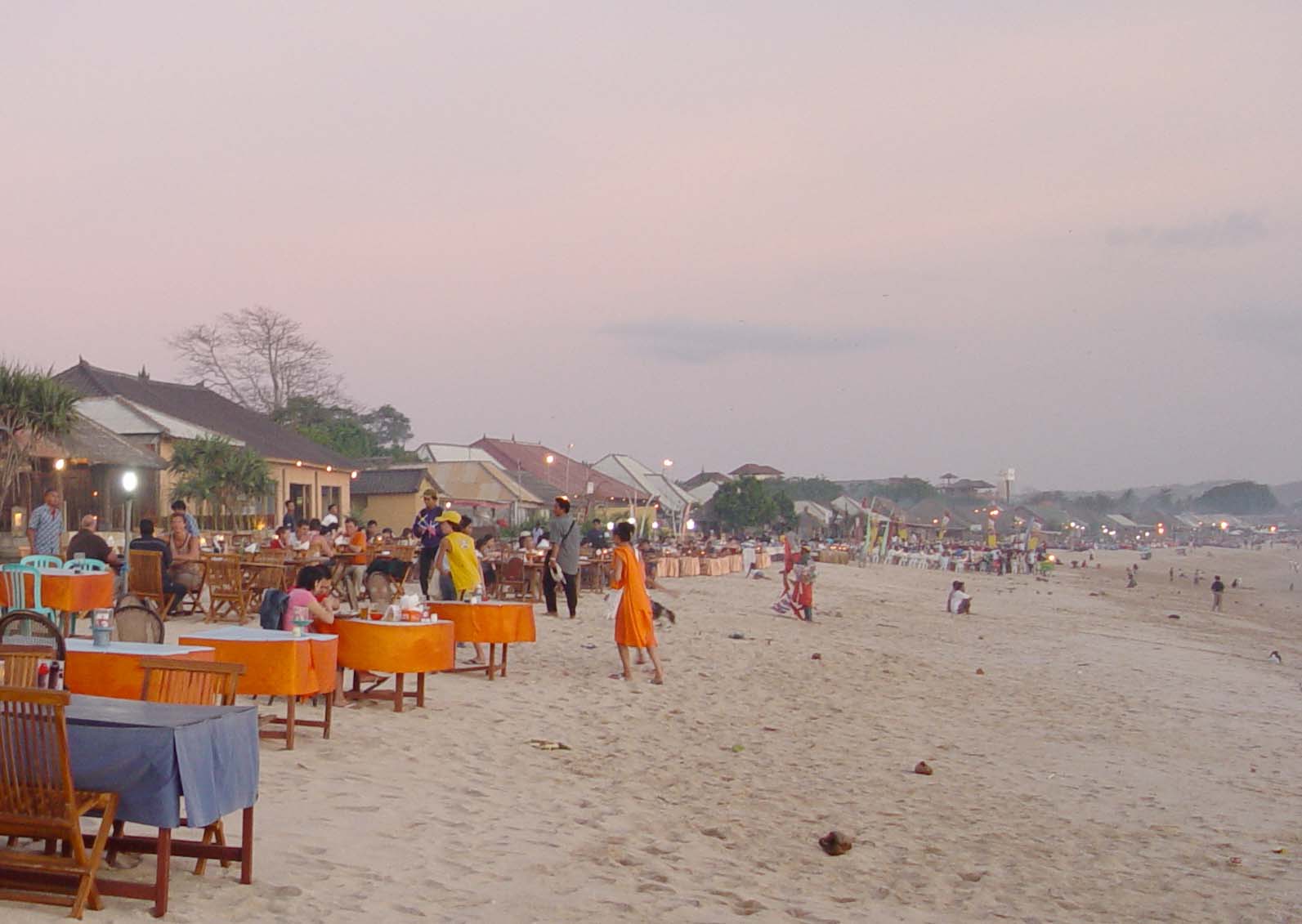
Jimbaran, IndonesiaUnknown author / CC BY-SA 3.0, via Wikimedia Commons
ID

Jimbaran

Where the sun dips into the ocean, painting the sky in fiery hues as the day's catch arrives.

The secrets of Jimbaran

Jimbaran, as no one tells it.

Not the postcards. The stories even locals don't know — whispered in your ear, right where they happened.

3 secrets below. Many more wait inside the tour.
Kedonganan Fish Market

The Kedonganan Fish Market, a cornerstone of Jimbaran's daily rhythm, operates on a dual schedule, revealing distinct facets of local commerce.

Full story unlocks in the tour
Jimbaran Beach

Celebrated for its evening seafood dinners directly on the sand, the beach itself possesses a subtle characteristic that makes it particularly welcoming for certain visitors.

Full story unlocks in the tour
Garuda Wisnu Kencana Cultural Park

The colossal Garuda Wisnu Kencana statue, a prominent landmark, encountered considerable challenges during its creation, extending its construction over several decades.

Full story unlocks in the tour
The full tour

Discover every secret of Jimbaran

Every address, every reveal in full — in your ear, right where it happened.

Get the key to Jimbaran

You pick your stops. You walk. The voice reveals what the others miss.

Choose your time

How long do you have in Jimbaran?

No tours available yet. Check back soon — we're preparing them.

About Jimbaran

The story of Jimbaran

Jimbaran, situated on Bali's southwestern coast, just south of Ngurah Rai International Airport, offers a more tranquil atmosphere than its bustling neighbors like Kuta and Seminyak. This coastal town is cherished for its golden sand beach, calm waters, and especially its fresh seafood dinners served directly on the sand as the sun descends. It serves as a gateway to the Bukit Peninsula, providing a blend of luxurious accommodations and authentic local life.

While Jimbaran has grown into a popular destination for travelers, it retains much of its original fishing village character. Visitors can observe fishermen bringing in their daily catches at sunrise, explore local markets, and experience a slower pace of Balinese life. Jimbaran Bay's protected waters make it a suitable spot for swimming and unhurried beach strolls, appealing to families and those seeking serenity.

History

From Fishing Village to Coastal Destination

Jimbaran's origins stretch back centuries as a quiet fishing village, where local communities relied on the abundant marine resources of the Indian Ocean. The village's advantageous coastal location fostered thriving fishing activities, forming the core of its economy and culture. The traditional lifestyle of fishermen, visible in their daily routines and local seafood markets, remains a significant element of Jimbaran's identity.

During the 19th century, Jimbaran grew in importance as a center for trade and commerce, particularly under Dutch colonial rule. This period saw infrastructure development, including ports, which facilitated the export of Bali's goods and established Jimbaran as an economic hub, encouraging cultural exchange.

A pivotal transformation occurred with the construction of Ngurah Rai International Airport in the 1960s. Its proximity made Jimbaran more accessible to travelers, who were drawn to its pristine beaches and peaceful atmosphere. The development of elegant resorts in the 1980s and 1990s further solidified Jimbaran's reputation as a prime destination in Bali. Despite this expansion, Jimbaran has managed to balance development with the preservation of its natural beauty and cultural heritage, maintaining a more relaxed feeling compared to other parts of Bali.

What to see

Jimbaran presents a fusion of relaxation and cultural experiences. The primary draw is Jimbaran Beach, a long expanse of golden sand with calm, swimmable waters, ideal for unhurried walks, swimming, and watching the sun set. As evening approaches, the beach transforms into an open-air dining area, with numerous seafood restaurants arranging tables directly on the sand.

For a glimpse into local life, visit the Kedonganan Fish Market (also known as Jimbaran Fish Market) in the early morning. Here, fishermen unload their fresh catches, and you can observe the lively bargaining for a variety of seafood, from snapper and tuna to lobster and prawns. Many nearby warungs offer to grill your freshly purchased seafood for a small fee.

Beyond the beach, the Garuda Wisnu Kencana (GWK) Cultural Park is a substantial attraction, home to one of the world's tallest statues, depicting the Hindu god Vishnu riding the mythical Garuda bird. The park covers 60 hectares and offers expansive views, cultural performances, and insight into Balinese Hindu mythology. Other points of interest include Pura Ulun Siwi, a centuries-old temple dedicated to the goddess of the sea, and the Jenggala Gallery, displaying contemporary Balinese ceramics.

When to visit

Jimbaran welcomes visitors year-round, but the dry season, from May through September (or April to October), offers the most agreeable weather with drier, less humid conditions and clearer skies. This period is perfect for beach activities and outdoor dining, with particularly memorable sunsets. While November through March marks the rainy season, rainfall is generally not excessive, allowing for most activities. For the iconic sunset seafood dinners, plan to arrive between 5 PM and 7 PM. To experience the lively fish market, an early morning visit between 6 AM and 8 AM is recommended for the freshest catch and most activity.

Practical

Jimbaran is conveniently located just 10-15 minutes by car from Ngurah Rai International Airport. Taxis and ride-hailing apps like Grab are readily available for transport, with many hotels offering shuttle services. Renting a scooter is an option for exploring, typically costing around IDR 70,000 per day. When dining at beachfront seafood restaurants, it's wise to reserve tables in advance during peak season, especially for sunset views. Always confirm seafood prices, as they are often by weight and can be negotiable; inquire if prices are per 100 grams or per kilogram before ordering. Bringing cash is advisable for seafood dinners and local warungs, as many do not accept cards. For a visit to the fish market, wear closed shoes as the floors can be wet, and be prepared to haggle politely for prices.

Good to know
What is Jimbaran most recognized for?
Jimbaran is most recognized for its long, golden sand beach, calm waters ideal for swimming, and its celebrated beachfront seafood dinners enjoyed as the sun sets.
Are Jimbaran's waters suitable for swimming?
Yes, Jimbaran Bay is known for its calm, gentle waters, making it an excellent location for swimming, especially for families and those who prefer to avoid strong currents or large waves.
What is the distance from Jimbaran to Ngurah Rai International Airport?
Jimbaran is conveniently situated just 10-15 minutes by car from Ngurah Rai International Airport.
What do locals call the Jimbaran Fish Market?
The Jimbaran Fish Market is frequently referred to by locals as Kedonganan Fish Market or Pasar Ikan Kedonganan, named after the surrounding fishing village.
Is it possible to negotiate prices at the Jimbaran Fish Market?
Yes, bargaining is an expected part of the experience at the Jimbaran Fish Market. Vendors are generally open to negotiation, so a friendly approach can help you secure a better price.
What is the Garuda Wisnu Kencana (GWK) Cultural Park?
GWK Cultural Park is a significant cultural landmark in Ungasan, near Jimbaran, featuring a monumental statue of the Hindu god Vishnu riding the mythical Garuda, alongside cultural performances, art displays, and expansive views.
Jimbaran
From€9.00
No booking · activate anytime · 12h to walk it
Get the key to Jimbaran