Fünf-Blumen-See
Die leuchtenden, wechselnden Farben des Sees sind berühmt, doch was sich unter seiner Oberfläche verbirgt, vertieft seine Anziehungskraft.
Die ganze Geschichte wird in der Tour freigeschaltet
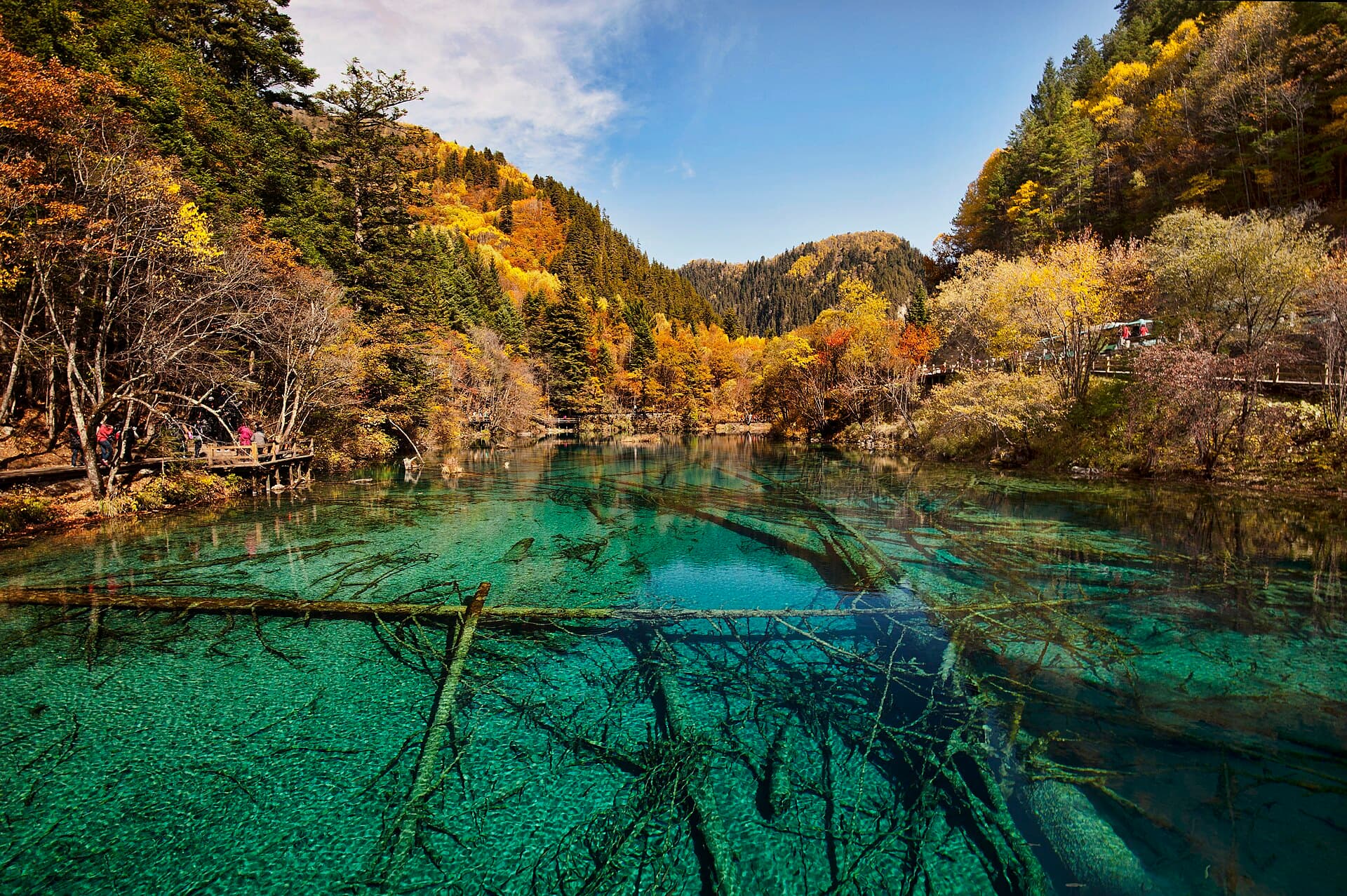 Chensiyuan / CC BY-SA 4.0, via Wikimedia Commons
Selbstgeführte Audio-Walking-Tour durch Jiuzhaigou — GPS-Route, Offline-Wiedergabe, erzählerische Narration in 32 Sprachen.
“Wo smaragdgrüne Seen auf schneebedeckte Gipfel treffen, eine sich wandelnde Leinwand aus Wasser und Wald.”
Nicht die Postkarten. Die Geschichten, die selbst Einheimische nicht kennen – dir ins Ohr geflüstert, genau dort, wo sie geschahen.
Die leuchtenden, wechselnden Farben des Sees sind berühmt, doch was sich unter seiner Oberfläche verbirgt, vertieft seine Anziehungskraft.
Bevor die Tagesbesucher eintreffen, birgt der Spiegelsee ein Geheimnis, das die wahre Erhabenheit der Schönheit von Jiuzhaigou enthüllt.
Dieser mächtige Wasserfall ist ein beeindruckender Anblick, aber seine Widerstandsfähigkeit wurde auf eine Weise auf die Probe gestellt, wie es nur wenige Naturwunder je erleben.
Entdecke jedes Geheimnis von Jiuzhaigou
Jede Adresse, jede Enthüllung vollständig – in deinem Ohr, genau dort, wo es geschah.
Du wählst deine Stationen. Du gehst. Die Stimme enthüllt, was andere übersehen.
Deine selbstgeführte Audio-Tour durch Jiuzhaigou ist bereit – wähle deine Sehenswürdigkeiten, deine Sprache und starte, sobald du ankommst.
KaufenLume enthält einen integrierten Augmented-Reality-Guide. Halten Sie Ihr Handy hoch: Die Kamera zeigt die Straße vor Ihnen, mit einem leuchtenden Pfeil über dem echten Bild, der immer auf Ihren nächsten Stopp zeigt — keine Karte zum Rätseln, keine falschen Abzweigungen. Wie alles bei Lume funktioniert es komplett offline.
Jiuzhaigou, dessen Name „Tal der neun Siedlungen“ bedeutet, ist ein Naturschutzgebiet und Nationalpark in der chinesischen Provinz Sichuan, am Rande des tibetischen Plateaus. Dieses UNESCO-Weltkulturerbe erstreckt sich über mehr als 72.000 Hektar und bietet eine Landschaft aus mehrstufigen Wasserfällen, Dutzenden von blauen, grünen und türkisfarbenen Seen – lokal als „Haizi“ bekannt, was „Sohn des Meeres“ bedeutet – und schneebedeckten Gipfeln. Die Höhenlage des Tals reicht von 2.000 bis 4.500 Metern und fördert vielfältige Waldökosysteme.
Der Park bildet eine „Y“-Form und umfasst drei Haupttäler: Rize, Zechawa und Shuzheng. Diese Täler sind durch 55 Kilometer Straßen für Shuttlebusse verbunden, ergänzt durch Holzstege, die Besucher einladen, die Landschaft zu Fuß zu erkunden. Jiuzhaigou ist nicht nur ein visuelles Spektakel; es bietet auch Zuflucht für gefährdete Arten wie Riesenpandas und Sichuan-Takine und schützt gut erhaltene quartäre Gletscherrelikte.
Jahrhundertelang war Jiuzhaigou eine abgelegene Region, die von verschiedenen tibetischen und Qiang-Gemeinschaften bewohnt wurde und deren Existenz weitgehend unbekannt blieb. Der Name „Jiuzhaigou“ selbst stammt von den neun tibetischen Siedlungen entlang seines Verlaufs, von denen sechs heute noch bewohnt sind. Diese Dorfbewohner, deren Vorfahren vor etwa 500 Jahren aus Ngari, Tibet, migrierten, pflegten eine autarke Lebensweise, die bis in die 1960er Jahre weitgehend von äußeren Einflüssen isoliert war.
Die Naturwunder des Tals wurden erstmals 1975 vom Forstwissenschaftler Wu Zhonglun gründlich dokumentiert, der von seiner Schönheit tief bewegt war. Diese Entdeckung markierte einen Wendepunkt. 1978 wurde ein nationales Naturschutzgebiet eingerichtet, gefolgt von der offiziellen Eröffnung für den Tourismus im Jahr 1984. Die chinesische Regierung stoppte die umfangreichen Holzeinschläge der 1960er und 70er Jahre und priorisierte den Umweltschutz.
Die internationale Anerkennung von Jiuzhaigou wuchs schnell. 1992 wurde es zum UNESCO-Weltkulturerbe und 1997 zum Biosphärenreservat erklärt. Das Gebiet wird von der China National Tourism Administration auch als 5A-Landschaftsgebiet eingestuft, die höchstmögliche Bewertung. Heute leben die verbliebenen tibetischen Dorfbewohner hauptsächlich vom Tourismus und gewähren Einblicke in ihre traditionellen Bräuche, einschließlich besonderer Heirats- und Bestattungsarrangements, Kleidung und Tanz.
Die Landschaft von Jiuzhaigou entfaltet sich als eine Reihe von visuellen Wundern, wobei das Y-förmige Tal unterschiedliche Erlebnisse bietet. Das Rize-Tal gilt oft als das malerischste und beherbergt ikonische Orte wie den Fünf-Blumen-See, der für sein bemerkenswert klares Wasser und seine vielfältigen Farben berühmt ist, und den Panda-See, benannt nach den schwarz-weißen Formationen auf seinem Grund. Der Perlen-Shoal-Wasserfall, ein breiter Kaskadenfall, über den das Wasser über eine verkalkte Untiefe fließt, ist ein weiterer unvergesslicher Anblick im Rize-Tal.
Im Zechawa-Tal entdeckt man den Langen See, das größte und tiefste Gewässer im Park, das weite Ausblicke auf die umliegenden Berge bietet. In der Nähe besticht der Fünf-Farben-See (auch bekannt als Fünf-Farben-Teich) durch seine lebendigen Farbtöne. Das Shuzheng-Tal bietet eine abwechslungsreichere Landschaft mit mehreren Seen und Wasserfällen, darunter der beeindruckende Nuorilang-Wasserfall, einer der breitesten Chinas. Die Shuzheng-Seen sind eine Reihe von Bandseen, und der Schilfsee besticht durch den Kontrast seines klaren Wassers vor dem Hintergrund von Schilf.
Neben den natürlichen Formationen lohnt sich ein Besuch der lokalen tibetischen Dörfer, wie z. B. des Shuzheng-Dorfes, um die indigene Kultur kennenzulernen und Gebetsfahnen im Wind flattern zu sehen. Für einen Moment stiller Besinnung suchen Sie am frühen Morgen den Spiegelsee für seine makellosen Spiegelungen auf.
Jiuzhaigou hat zu jeder Jahreszeit einen besonderen Reiz. Die Herbstmonate, insbesondere von Mitte Oktober bis Anfang November, gelten jedoch weithin als die günstigste Reisezeit. In dieser Zeit schaffen das milde Klima, der klare Himmel und die leuchtenden Herbstfarben – mit Wäldern, die in Gelb-, Orange- und Rottönen glühen – einen eindrucksvollen Kontrast zu den türkisfarbenen Seen. Der Wasserstand ist von Juli bis November ebenfalls am höchsten, was die Wasserfälle noch eindrucksvoller macht.
Der Frühling (März bis Mai) bietet weniger Andrang und blühende Blumen, allerdings ist der Wasserstand niedriger. Der Sommer (Juni bis August) ist üppig grün mit vollen Wasserfällen, aber auch regenreicher und überfüllter. Der Winter (November bis Februar) verwandelt den Park in eine ruhige, schneebedeckte Landschaft mit gefrorenen Wasserfällen und blauem Eis, was ein friedliches Erlebnis mit weniger Besuchern bietet.
Der Jiuzhaigou-Nationalpark hat tägliche Besucherlimits: 41.000 in der Hochsaison (1. April bis 15. November) und 23.000 in der Nebensaison (16. November bis 31. März). Tickets müssen im Voraus online mit Echtzeitregistrierung gekauft werden; es gibt keinen Vor-Ort-Verkauf. Der Park ist weitläufig, daher wird die Nutzung der offiziellen Shuttlebusse für eine effiziente Fortbewegung dringend empfohlen. Bustickets werden in der Regel zusammen mit dem Eintrittsticket gekauft. Während die Busse die wichtigsten Orte anfahren, sind bequeme Wanderschuhe für die Erkundung der vielen Holzstege zwischen den Aussichtspunkten unerlässlich.
Jiuzhaigou liegt in großer Höhe (2.000–3.000 Meter). Machen Sie es am ersten Tag ruhig, trinken Sie viel und vermeiden Sie anstrengende Aktivitäten, um sich zu akklimatisieren. Das Wetter kann sich schnell ändern, mit erheblichen Temperaturunterschieden zwischen Tag und Nacht, daher ist das Zwiebelprinzip ratsam. Die Verpflegungsmöglichkeiten im Park sind begrenzt, daher ist es ratsam, eigene Snacks und Wasser mitzubringen. Übernachtungen im Park sind nicht gestattet.
Jiuzhaigou — Koreanisch, Chinesisch, Hebräisch und 29 weitere Sprachen, jede Station von einer muttersprachlichen Stimme erzählt. Die größte Sprachauswahl aller selbstgeführten Audiotouren.
Verfügbar auf: