Fort de Mehrangarh
Le colossal Fort de Mehrangarh, symbole de Jodhpur, recèle un secret dans ses fondations mêmes, témoignant des efforts qu'un royaume était prêt à déployer pour sa prospérité.
L'histoire complète se débloque dans le tour
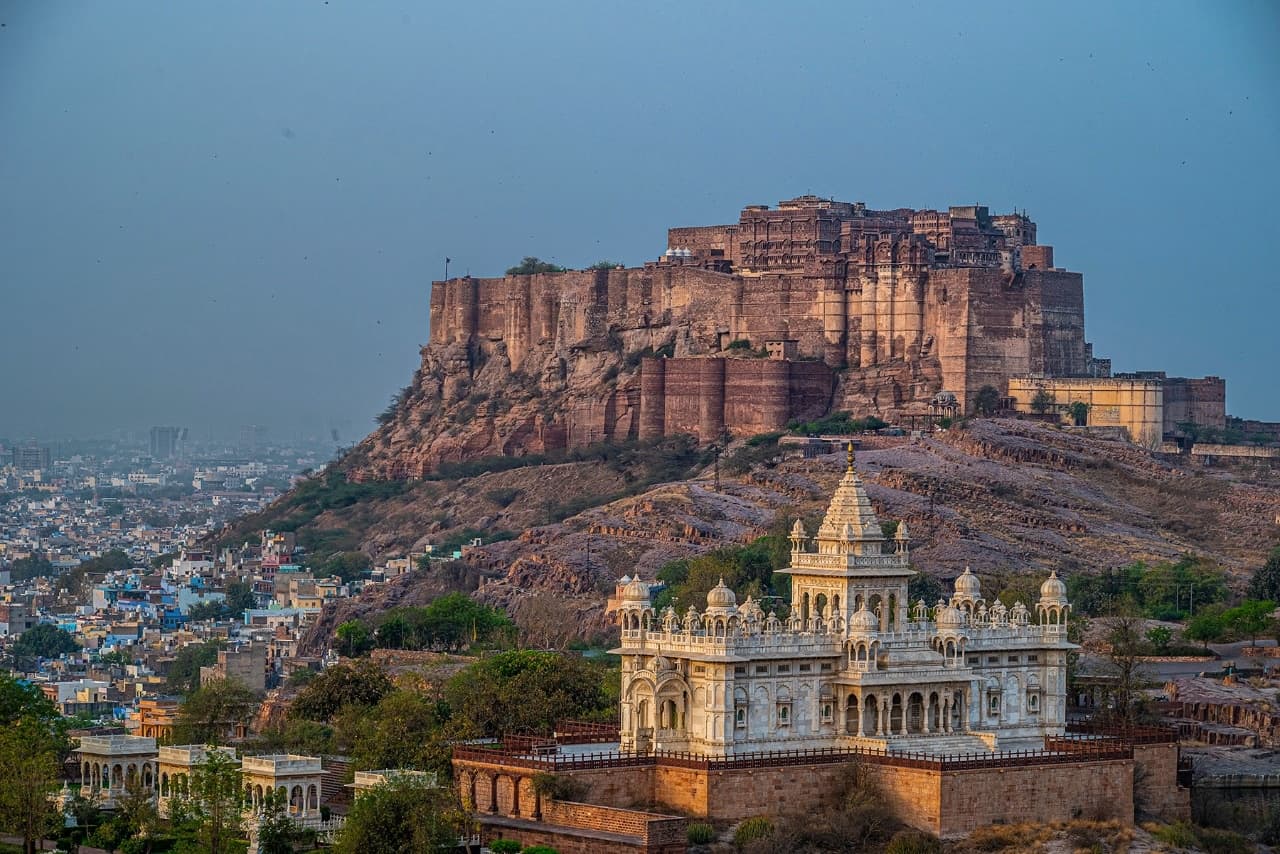 Sanhitasinha / CC BY-SA 4.0, via Wikimedia Commons
Visite audio autoguidée de Jodhpur — parcours GPS à pied, lecture hors ligne, narration en 32 langues.
“Là où le désert rencontre un ciel azur, et les forts anciens racontent la bravoure.”
Pas les cartes postales. Les histoires que même les habitants ignorent — soufflées à l'oreille, là où elles se sont passées.
Le colossal Fort de Mehrangarh, symbole de Jodhpur, recèle un secret dans ses fondations mêmes, témoignant des efforts qu'un royaume était prêt à déployer pour sa prospérité.
Près du village de Ransi, un puits à degrés se dresse avec une histoire inachevée, qui serait l'œuvre d'un architecte surnaturel.
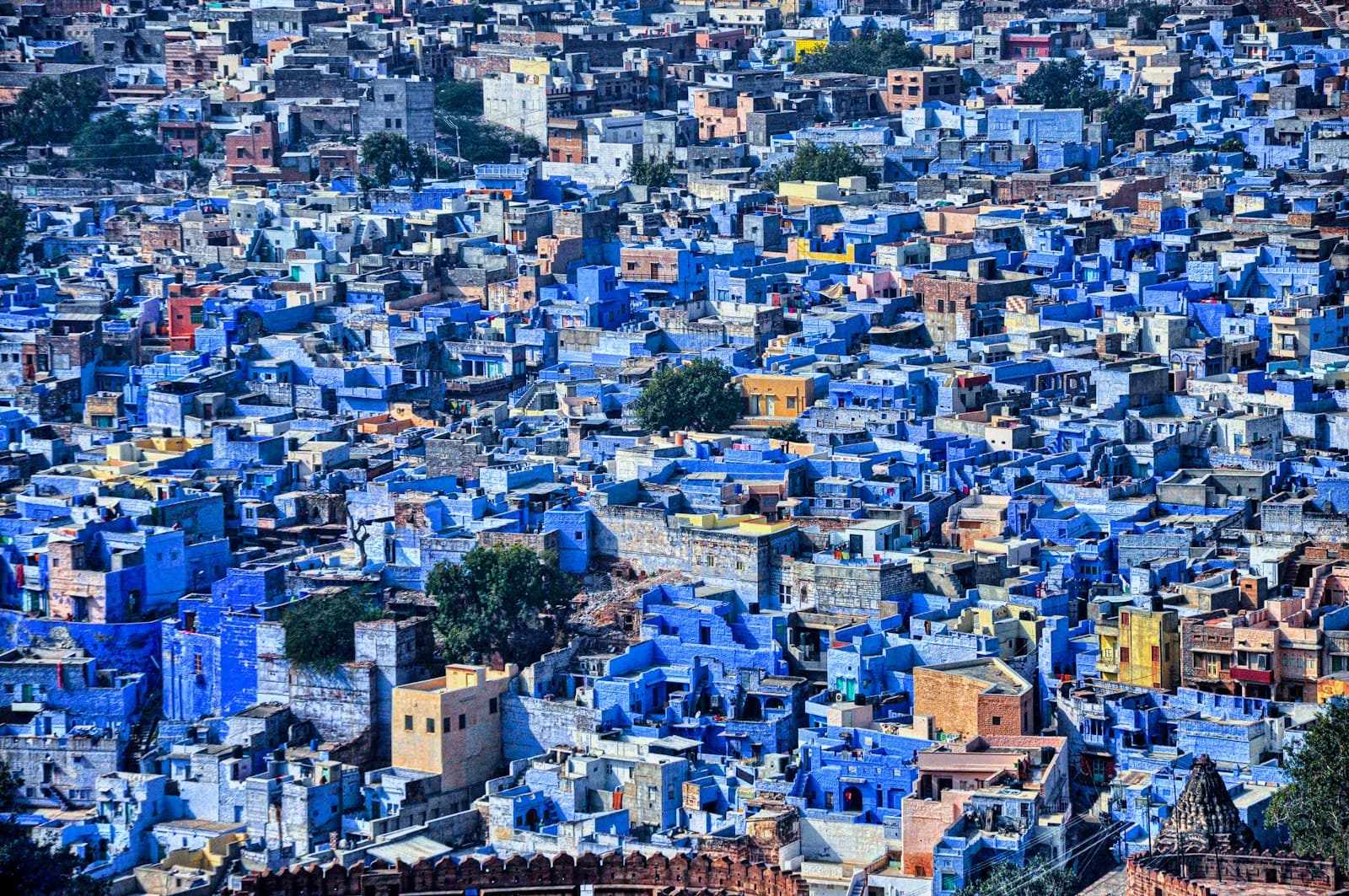
Les maisons bleues distinctives de Jodhpur n'étaient pas seulement un choix de couleur fantaisiste ; elles servaient à l'origine un double objectif, dont l'un était un marqueur de statut social.
Découvrez tous les secrets de Jodhpur
Chaque adresse, chaque révélation en entier — dans ton oreille, là où elle s'est passée.
Tu choisis tes lieux. Tu marches. La voix te révèle ce que les autres ignorent.


Votre visite audioguidée de Jodhpur vous attend — choisissez vos lieux, votre langue, et lancez-vous dès votre arrivée.
AcheterLume intègre un guide en réalité augmentée. Levez votre téléphone : sa caméra montre la rue devant vous, avec une flèche lumineuse posée sur l'image réelle qui pointe toujours vers votre prochain arrêt — aucune carte à déchiffrer, aucun mauvais virage. Comme tout dans Lume, ça fonctionne entièrement hors-ligne.
Jodhpur, souvent surnommée la « Ville Bleue » et la « Ville du Soleil », est le deuxième plus grand centre urbain du Rajasthan, une étendue captivante à la lisière du désert du Thar. Sa caractéristique la plus distinctive est l'utilisation généralisée d'une teinte bleue vive sur de nombreux bâtiments de la vieille ville, une tradition qui non seulement crée un paysage visuellement frappant, mais sert également un but pratique dans le climat désertique. Dominée par le colossal Fort de Mehrangarh, qui s'élève à 125 mètres au-dessus de la ville, Jodhpur offre une plongée profonde dans des siècles de patrimoine et de culture Rajput.
L'emplacement stratégique de la ville sur les anciennes routes commerciales, reliant Delhi au Gujarat, lui a permis de prospérer grâce au commerce de marchandises comme l'opium, le cuivre et la soie. Aujourd'hui, Jodhpur reste un centre dynamique, connu pour son artisanat complexe, ses marchés animés et un mélange unique de styles architecturaux Rajput et Moghol. De l'imposant fort aux ruelles bleues labyrinthiques, Jodhpur présente un riche éventail d'expériences pour ceux qui cherchent à explorer le passé royal et le présent animé de l'Inde.
L'histoire de Jodhpur est intrinsèquement liée au clan Rathore des Rajputs. La région, historiquement connue sous le nom de Marwar, était initialement gouvernée depuis Mandore, une ancienne capitale dépourvue de défenses naturelles. Cela changea en 1459 lorsque Rao Jodha, le chef du clan Rathore, décida d'établir une nouvelle capitale. Il choisit une colline rocheuse stratégique et élevée, à environ six miles au sud de Mandore, pour construire une forteresse plus sûre.
Ce nouveau bastion devint le magnifique Fort de Mehrangarh, et la ville qui se développa autour fut nommée Jodhpur, d'après son fondateur. Les premières années de Jodhpur furent façonnées par les défis d'un climat désertique rigoureux et le besoin de défense. Cependant, son emplacement sur une route commerciale vitale entre Delhi et le Gujarat transforma rapidement Jodhpur en un centre commercial important, facilitant le commerce de produits précieux tels que l'opium, le cuivre, la soie et le bois de santal.
Les dirigeants de Jodhpur forgèrent des alliances avec le puissant Empire moghol par la diplomatie et les liens matrimoniaux, ce qui leur permit de maintenir l'autorité locale tout en bénéficiant de la stabilité régionale et du commerce. Cette période vit l'intégration d'éléments architecturaux moghols dans les palais et jardins de Jodhpur, mélangeant la force Rajput avec des détails artistiques raffinés.
L'État princier de Jodhpur atteignit son apogée entre 1532 et 1569. Cependant, après avoir prêté allégeance aux Moghols en 1561, la région fut confrontée à une invasion de l'empereur moghol Aurangzeb en 1679, qui cherchait à convertir ses habitants à l'islam. En réponse, Jodhpur, ainsi que Jaipur et Udaipur, formèrent une alliance pour résister au contrôle moghol. En 1818, Jodhpur passa sous domination britannique, devenant le plus grand État princier de l'Agence du Rajputana. Il resta un État princier jusqu'en 1947, quatre jours avant l'indépendance de l'Inde, lorsque le Maharaja Hanwant Singh, le dernier souverain, signa l'Instrument d'Adhésion, fusionnant son État dans l'Union indienne. Le 30 mars 1949, Jodhpur devint officiellement partie du nouvel État du Rajasthan.
Le paysage de Jodhpur est dominé par l'imposant Fort de Mehrangarh, une forteresse du XVe siècle qui abrite des palais, des cours et un musée aux sculptures complexes, exposant des artefacts royaux. De ses remparts, vous pouvez admirer des vues panoramiques sur toute la « Ville Bleue ».
Sous le fort, la vieille ville invite à l'exploration à travers ses ruelles étroites et sinueuses, où de nombreuses maisons sont peintes d'un bleu distinctif. À une courte distance du fort se trouve Jaswant Thada, un serein cénotaphe en marbre blanc construit à la mémoire du Maharaja Jaswant Singh II, souvent appelé le « Taj Mahal de Marwar ».
Le Palais d'Umaid Bhawan, une grande structure construite entre 1928 et 1943, sert de résidence à la famille royale de Jodhpur, d'hôtel de luxe et de musée présentant des expositions liées au palais. Ne manquez pas Toorji Ka Jhalra, un puits à degrés du XVIIIe siècle, magnifiquement restauré et témoin des systèmes traditionnels de collecte d'eau. Le Sadar Market animé, centré autour du Ghanta Ghar (Tour de l'Horloge), est un centre vibrant pour les épices, les textiles, les vêtements traditionnels et l'artisanat.
La période la plus agréable pour visiter Jodhpur est pendant les mois d'hiver, d'octobre à mars. Les températures durant cette période varient d'un frais 7°C à un confortable 26°C, offrant un ciel dégagé et des conditions idéales pour les visites touristiques et les activités de plein air. La saison de la mousson, de juillet à septembre, apporte des précipitations modérées et des températures comprises entre 23°C et 37°C, ce qui peut être une bonne option pour les voyageurs à petit budget cherchant à éviter les foules de la haute saison. Les étés, d'avril à août, sont intensément chauds et secs, avec des températures dépassant souvent les 30°C et atteignant même les 45°C, ce qui les rend moins idéaux pour l'exploration.
Jodhpur est bien desservie par voie aérienne, ferroviaire et routière. L'aéroport de Jodhpur (JDH) propose des vols quotidiens vers les grandes villes indiennes comme Delhi, Mumbai et Jaipur. La gare ferroviaire de la ville est également bien reliée aux grandes métropoles et villes de l'Inde. Pour se déplacer en ville, les auto-rickshaws sont facilement disponibles, bien que les applications de covoiturage comme Uber et Ola opèrent également et peuvent offrir des prix fixes, évitant ainsi le marchandage.
Lors de l'exploration de Jodhpur, en particulier des sites religieux, une tenue modeste est recommandée, couvrant les épaules et les genoux. Les distributeurs automatiques de billets sont accessibles, notamment autour de la Tour de l'Horloge, mais il est conseillé d'avoir de l'argent liquide pour les petits vendeurs et les rickshaws. Bien que généralement sûre pour les touristes, il est toujours judicieux de rester conscient de son environnement, surtout lorsque l'on voyage seul ou la nuit.
Jodhpur en coréen, en chinois ou en hébreu — et dans 29 autres langues, chaque étape narrée par une voix native. La plus large gamme de langues de tous les audioguides autoguidés.
Disponible en :