Estação Dubulti
Grande parte do caráter de Jūrmala vem de sua arquitetura de madeira, mas um edifício se destaca com seu design distinto e semelhante a uma onda.
História completa desbloqueada no tour
 Raul Cortez999 / CC BY-SA 4.0, via Wikimedia Commons
Tour de áudio autoguiado por Jūrmala — rota GPS a pé, reprodução offline, narração envolvente em 32 idiomas.
“Onde o Mar Báltico murmura segredos para as vilas Art Nouveau.”
Não os postais. As histórias que nem os locais conhecem — sussurradas ao seu ouvido, exatamente onde aconteceram.
Grande parte do caráter de Jūrmala vem de sua arquitetura de madeira, mas um edifício se destaca com seu design distinto e semelhante a uma onda.
Além da areia pálida, as praias de Jūrmala guardam um prêmio especial, especialmente depois que uma tempestade passa.
Uma vez emblemas da grandiosidade da era soviética e um refúgio favorito para altos funcionários, alguns dos grandes sanatórios de Jūrmala agora narram uma história diferente.
Descubra cada segredo de Jūrmala
Cada endereço, cada revelação na íntegra — no seu ouvido, exatamente onde aconteceu.
Você escolhe as suas paragens. Você caminha. A voz revela o que os outros perdem.
O seu tour áudio autoguiado de Jūrmala está pronto — escolha os seus pontos de interesse, selecione o seu idioma e comece no momento em que chegar.
ComprarA Lume inclui um guia de realidade aumentada. Levante o telemóvel: a câmara mostra a rua à sua frente, com uma seta luminosa sobreposta à imagem real que aponta sempre para a sua próxima paragem — sem mapa para decifrar, sem voltas erradas. Como tudo na Lume, funciona totalmente offline.
Jūrmala, uma cidade estadual na Letônia, estende-se por 32 quilômetros (20 milhas) entre o Golfo de Riga e o Rio Lielupe, a meros 25 quilômetros a oeste de Riga. Esta cidade resort é celebrada por seu trecho de 33 quilômetros (21 milhas) de praia de areia branca, suas fragrantes florestas de pinheiros e sua distinta arquitetura de madeira dos séculos XIX e início do XX.
Uma vez destino de férias favorito para proprietários ricos e oficiais do exército russo após as Guerras Napoleônicas, a posição de Jūrmala como destino de spa começou a florescer no final do século XVIII e início do século XIX. Durante a ocupação soviética, continuou como um refúgio popular, mesmo para altos funcionários do Partido Comunista como Leonid Brezhnev e Nikita Khrushchev. Hoje, Jūrmala mantém seu encanto como um refúgio tranquilo e refinado, oferecendo uma mistura de esplendor natural, caráter histórico e confortos contemporâneos.
As origens de Jūrmala remontam a uma coleção de aldeias de pescadores díspares, com os primeiros registros de assentamentos na área aparecendo no século XIII. No entanto, sua transformação em uma zona de recreação começou muito mais tarde. O desenvolvimento de Dubulti, considerado o berço da área resort, começou em 1812, quando os primeiros banhistas chegaram após as Guerras Napoleônicas. A descoberta de fontes termais terapêuticas de enxofre impulsionou ainda mais o apelo da região, levando ao estabelecimento de um resort estadual oficial em Ķemeri por decreto de Nicolau I em 1838.
A verdadeira ascensão do status de resort de Jūrmala ocorreu com a conclusão da linha férrea Riga-Tukums em 1877. Esta ferrovia tornou a costa facilmente acessível para os residentes de Riga e visitantes de mais longe, substituindo travessias de balsa mais antigas e desencadeando um surto de construção. Os residentes locais começaram a construir dachas (casas de verão) para alugar, e pensões e sanatórios abriram, mudando a economia local da pesca para a hospitalidade.
Entre os séculos XIX e início do XX, Jūrmala cultivou uma identidade arquitetônica distinta, caracterizada por elegantes vilas de madeira. Essas residências de verão, construídas por arquitetos bálticos alemães, letões, russos e finlandeses, exibiam estilos como classicismo, Romantismo Nacional e Art Nouveau, muitas vezes apresentando intrincadas esculturas em madeira, torres e varandas envidraçadas. Em 1920, após a Letônia obter independência, a cidade era conhecida como Rīgas Jūrmala, ou 'Litoral de Riga'.
Durante a ocupação soviética em 1940, muitas vilas e hotéis foram nacionalizados. Embora alguns tenham sido substituídos por grandes sanatórios de concreto, grande parte do caráter da 'Velha Jūrmala' persistiu. Em 1959, as várias aldeias resort, incluindo Sloka e Ķemeri, foram oficialmente fundidas para formar a cidade unificada de Jūrmala. Hoje, Jūrmala é reconhecida por sua mistura particular de arquitetura histórica de madeira e estruturas modernistas da era soviética, juntamente com sua beleza natural costeira.
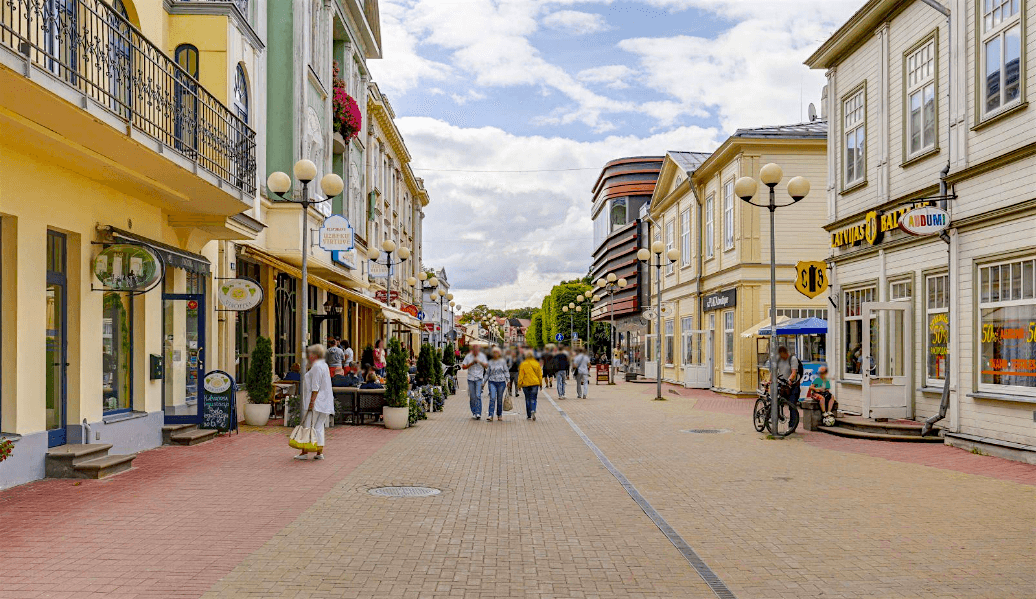
Jūrmala apresenta uma gama diversificada de atrações, começando com sua extensa praia de areia de quartzo branco de 33 quilômetros, ideal para caminhadas tranquilas, banhos de sol ou até mesmo para procurar âmbar. O centro de Jūrmala é a Rua Jomas em Majori, um animado calçadão com cafés, restaurantes, lojas e esculturas de rua.
Para um pouco de natureza, explore o Parque Florestal de Dzintari, com trilhas para caminhada, playgrounds, um skate park e uma torre de observação que oferece vistas verdes. Mais adiante, o Parque Nacional de Ķemeri oferece uma oportunidade de passear por charnecas únicas, florestas e zonas úmidas, com chances de observação de pássaros. Não deixe de visitar o Parque Resort de Ķemeri e sua histórica torre de água.
A distinta arquitetura de madeira de Jūrmala é um destaque, com mais de 4.000 estruturas de madeira, incluindo 414 edifícios históricos protegidos. Reserve um tempo para admirar as fachadas ornamentadas, torres e varandas envidraçadas dessas vilas dos séculos XIX e início do XX. O Museu ao Ar Livre de Jūrmala exibe uma casa de pescador costeiro do século XIX, completa com edifícios tradicionais e uma coleção de barcos e ferramentas de pesca. Para eventos culturais, a Sala de Concertos de Dzintari, um marco desde 1936, abriga uma variedade de apresentações.
A época ideal para desfrutar das atividades de clima quente de Jūrmala é de final de junho a final de agosto. Durante esta alta temporada, as temperaturas médias ficam em torno de 17-18°C, com máximas atingindo 22-24°C em julho e agosto, tornando-a perfeita para férias na praia e passeios ao ar livre. Junho oferece temperaturas ligeiramente mais frias, mas menos multidões e preços potencialmente melhores. Maio e setembro proporcionam clima agradável para caminhar e admirar a arquitetura, embora o mar possa estar muito frio para nadar. Embora a precipitação seja distribuída de forma bastante uniforme ao longo do ano, julho e agosto podem ter um pouco mais de dias chuvosos. O inverno é frio, com a maioria das instalações de praia fechadas.
Jūrmala é facilmente acessível a partir de Riga, situada a cerca de 20-25 km a oeste. A rota mais rápida é um trajeto de 15 minutos do Aeroporto de Riga pela rodovia A10. Do centro da cidade de Riga, você pode chegar a Jūrmala de trem (20-50 minutos, €1,20-€1,50) ou micro-ônibus (cerca de 30 minutos). Durante o verão, uma taxa de entrada diária de €3 é cobrada para carros que entram em Jūrmala, pagável em pontos de pedágio ou através de um aplicativo móvel. Estacionamento público dentro de Jūrmala é gratuito durante todo o ano.
Uma vez em Jūrmala, ônibus e trens locais estão disponíveis para se locomover, embora possam ser mais lentos. Dada a extensão da cidade (31 km), o ciclismo é um método de exploração favorecido, com aluguel de bicicletas amplamente disponível. O Centro de Informações Turísticas de Jūrmala em Majori oferece guias gratuitos, mapas e informações locais em vários idiomas. Jūrmala fez esforços para ser acessível, com algumas praias adaptadas para pessoas com deficiência.
Jūrmala — coreano, chinês, hebraico e mais 29 idiomas, cada parada narrada por uma voz nativa. A maior variedade de idiomas entre os passeios de áudio autoguiados.
Disponível em: