Stadhuis van Säynätsalo
Alvar Aalto's belangrijke architectonische werk op een eiland is meer dan een gemeentelijk gebouw.
Volledig verhaal ontgrendeld in de tour
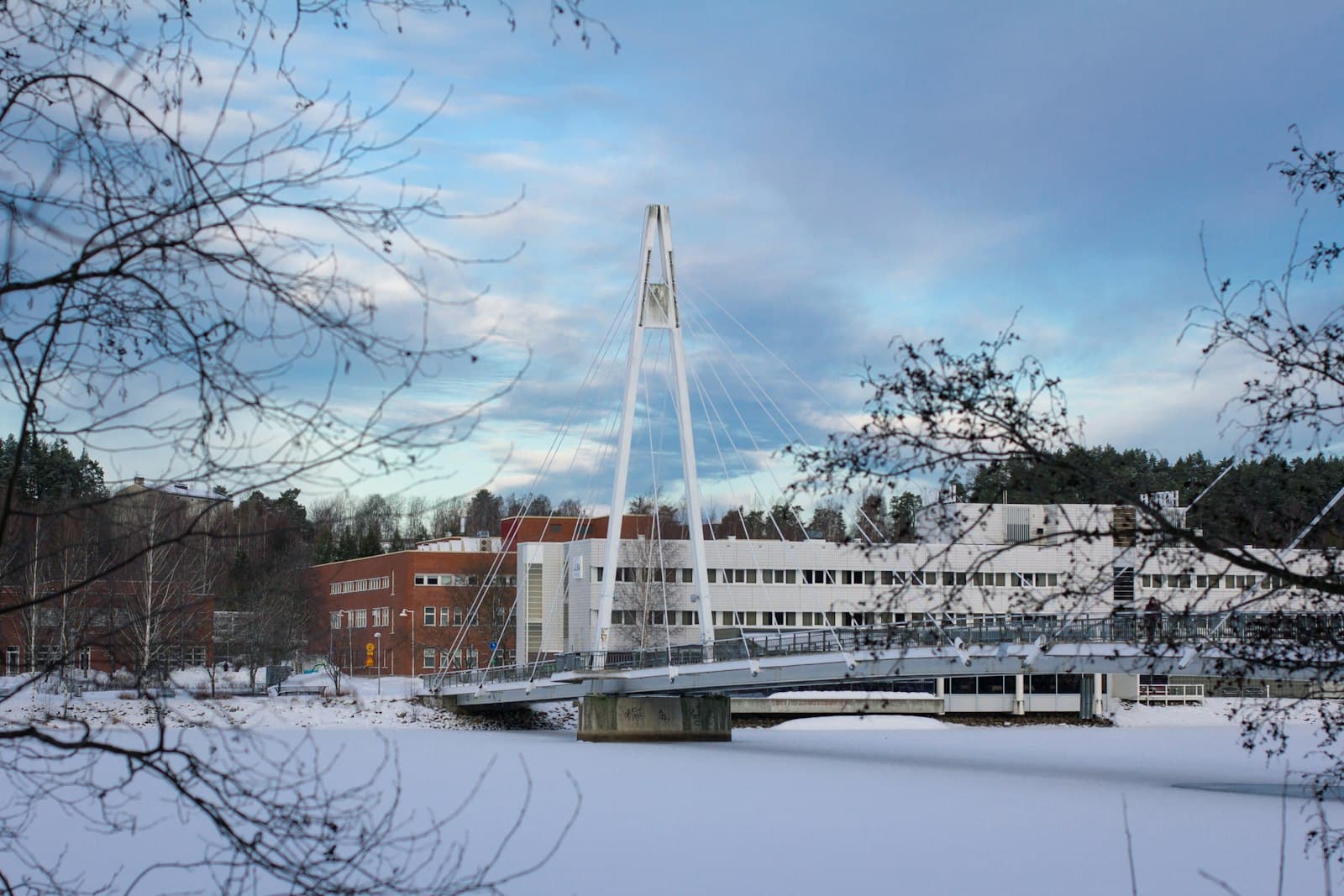
 Tiia Monto / CC BY-SA 3.0, via Wikimedia Commons
Zelfgeleide audiowandeling door Jyväskylä — GPS-route, offline afspelen, meeslepende vertelling in 32 talen.
“Waar de kalme wateren van Lakeland baanbrekend design ontmoeten.”
Niet de ansichtkaarten. De verhalen die zelfs locals niet kennen — gefluisterd in je oor, precies waar ze gebeurden.
Alvar Aalto's belangrijke architectonische werk op een eiland is meer dan een gemeentelijk gebouw.
De centrale verhoging van de stad biedt meer dan een weids uitzicht.
Alvar Aalto's eerste grote stenen gebouw in Jyväskylä was geen groots openbaar gebouw.
Ontdek elk geheim van Jyväskylä
Elk adres, elke onthulling volledig — in je oor, precies waar het gebeurde.
Jij kiest je stops. Jij wandelt. De stem onthult wat de anderen missen.


Je zelfgeleide audiotour van Jyväskylä is klaar — kies je bezienswaardigheden, kies je taal en start zodra je aankomt.
KopenLume heeft een ingebouwde augmented-reality-gids. Houd je telefoon omhoog: de camera toont de straat voor je, met een oplichtende pijl over het echte beeld die altijd naar je volgende stop wijst — geen kaart om uit te puzzelen, geen verkeerde afslagen. Zoals alles in Lume werkt het volledig offline.
Jyväskylä, vaak verwijs naar "Athene van Finland", is een levendige stad waar de rust van het Finse merengebied samenkomt met een bloeiende academische en culturele omgeving. Gelegen in Centraal-Finland, wordt het omringd door een landschap van glooiende heuvels, dichte bossen en meer dan 3.700 meren, waaronder het uitgestrekte Päijänne-meer. Deze actieve universiteitsstad, met bijna een derde van de inwoners als student, bruist van activiteit, van internationale sportevenementen tot boeiende lichtshows.
De stad heeft een unieke positie in de architectonische geschiedenis als "Hoofdstad van de Architectuur van Alvar Aalto", met de meest uitgebreide collectie gebouwen ontworpen door de gevierde Finse architect. Aalto, die hier zijn onderscheiden carrière begon, heeft een blijvende indruk achtergelaten, met zijn creaties die variëren van vroege classicistische vormen tot zijn latere functionalistische en monumentale stijlen. Naast zijn architectonische wonderen biedt Jyväskylä een mix van stedelijke gemakken en gemakkelijke toegang tot de natuur, waardoor het een plek is voor zowel culturele verkenning als buitenavonturen.
Jyväskylä's toewijding aan onderwijs en cultuur leverde de stad de aanduiding "Athene van Finland" op van Elias Lönnrot, de samensteller van het Finse nationale epos, de Kalevala. Deze intellectuele erfenis, gecombineerd met de opvallende natuurlijke omgeving, cultiveert een benaderbare en boeiende sfeer voor bezoekers die op zoek zijn naar een authentieke Finse ervaring.
Het verhaal van de regio Jyväskylä strekt zich uit tot het Stenen Tijdperk, met archeologische ontdekkingen die vroege menselijke aanwezigheid bevestigen. Het gebied begon als een verzameling landgoederen; documenten uit 1539 vermelden er zeven, waarvan er één, Mattila, een uitgestrekt gebied omvatte. Tegen de tijd dat de stad officieel werd opgericht, was het dorp Jyväskylä uitgegroeid tot het grootste in de parochie van Laukaa, met ongeveer 40 boerderijen.
De stad Jyväskylä werd formeel opgericht op 22 maart 1837 door keizer Nicolaas I van Rusland en groothertog van Finland. De oprichting werd gedreven door de noodzaak om het marktleven in de regio te ondersteunen, aangezien de handel in het begin van de 19e eeuw beperkt was tot steden in Finland. Het oorspronkelijke stadsplan, gekenmerkt door brede, rechte straten in Empire-stijl, werd bedacht door de gerespecteerde architect Carl Ludvig Engel.
De belangrijkste ontwikkeling van Jyväskylä kwam met de oprichting van de baanbrekende Finssprekende scholen in het midden van de 19e eeuw. Het eerste Finssprekende lyceum opende in 1858, gevolgd door een lerarenseminarie in 1863 - het eerste in Finland - en een Finssprekende meisjesschool in 1864. Deze instellingen verstevigden de reputatie van Jyväskylä als een vitaal onderwijscentrum, wat de bijnaam "het Athene van Finland" opleverde.
In het begin van de 20e eeuw onderging de stad verschillende uitbreidingen. Een belangrijke groeifase vond plaats na de Vervolgoorlog, toen er dringend huisvesting nodig was voor evacués. Jyväskylä zette zijn snelle expansie voort in de 21e eeuw, waarbij de gemeentegrenzen werden verbreed door consolidaties met nabijgelegen gebieden zoals Säynätsalo in 1993 en Jyväskylän maalaiskunta en Korpilahti in 2009. Tegenwoordig wordt Jyväskylä wereldwijd erkend voor zijn uitzonderlijke collectie architectuur van Alvar Aalto, die zijn carrière begon en in de stad woonde.
Jyväskylä biedt een schat aan bezienswaardigheden, vooral voor wie geïnteresseerd is in architectuur en de natuurlijke wereld. Begin met de architectonische nalatenschap van Alvar Aalto, die bijna 30 gebouwen in de stad en omgeving ontwierp. Het Alvar Aalto Museum, gevestigd in een door hem ontworpen gebouw, biedt een grondige analyse van zijn leven en uitgebreide creaties. Mis het campus van de Universiteit van Jyväskylä niet, met verschillende door Aalto ontworpen gebouwen, waaronder het hoofdgebouw, de bibliotheek en het AaltoAlvari zwembad. Een korte reis naar het eiland Säynätsalo onthult het stadhuis van Säynätsalo, beschouwd als een van Aalto's belangrijkste werken, met zijn kenmerkende binnenplaatsontwerp.
Voor een ontmoeting met de natuur, verken de Harju-rug, een centraal park met wandelpaden en de Vesilinna-uitkijktoren met uitzicht op de stad. De stad dient ook als toegangspoort tot het Finse merengebied, met het Jyväsjärvi-meer en het grotere Päijänne-meer die mogelijkheden bieden voor cruises, kanoën en zwemmen. Het "City of Lights"-project verlicht meer dan 100 permanente locaties en transformeert de stad tot een boeiende vertoning na zonsondergang, vooral aantrekkelijk tijdens de langere Noordse nachten.
Jyväskylä kent duidelijke seizoenen, die elk het hele jaar door verschillende aantrekkingskrachten bieden. Het warme seizoen, van eind mei tot begin september, is ideaal voor buitenactiviteiten, met juli als de warmste maand, met gemiddelde maxima van 21-22°C (70-72°F). Deze periode is perfect om te genieten van de meren, wandelpaden en festivals. Winters, van november tot maart, zijn lang, koud, sneeuwrijk en somber, met gemiddelde temperaturen consistent onder het vriespunt. Januari en februari zijn de koudste maanden, met gemiddelde minima rond -12°C (11°F). Voor wie op zoek is naar wintersporten of de serene schoonheid van een besneeuwd landschap, is dit het moment om te komen. Neerslag valt redelijk gelijkmatig gedurende het hele jaar, dus wees voorbereid op regen of sneeuw, ongeacht het seizoen.
Jyväskylä is goed verbonden en gemakkelijk te navigeren. U kunt de stad per trein of bus bereiken vanuit Helsinki in ongeveer drie tot vier uur, of per korte vlucht naar de luchthaven Tikkakoski, ongeveer 23 km van het stadscentrum. Eenmaal in Jyväskylä is een auto niet essentieel; het stadscentrum is compact en beloopbaar, en fietsen is een populaire keuze. Het lokale openbaar vervoersysteem, Linkki, exploiteert groene bussen door Jyväskylä en de omliggende gemeenten. U kunt enkeltjes betalen met contant geld of contactloos betalen aan boord, of dagkaarten en Waltti-kaarten kopen bij het Linkki-servicepunt of via de mobiele app. Finland gebruikt de Euro (€) als valuta. Fins is de primaire taal, maar Engels wordt breed gesproken, vooral door jongere generaties en in diensten gericht op bezoekers.
Jyväskylä — Koreaans, Chinees, Hebreeuws en nog 29 talen, elke stop verteld door een moedertaalspreker. Het grootste taalaanbod van alle zelfgeleide audiotours.
Beschikbaar in: