Kłodzko Fortress
The Kłodzko Fortress, a commanding presence over the town, holds a secret from its time as a Prussian stronghold.
Full story unlocks in the tour
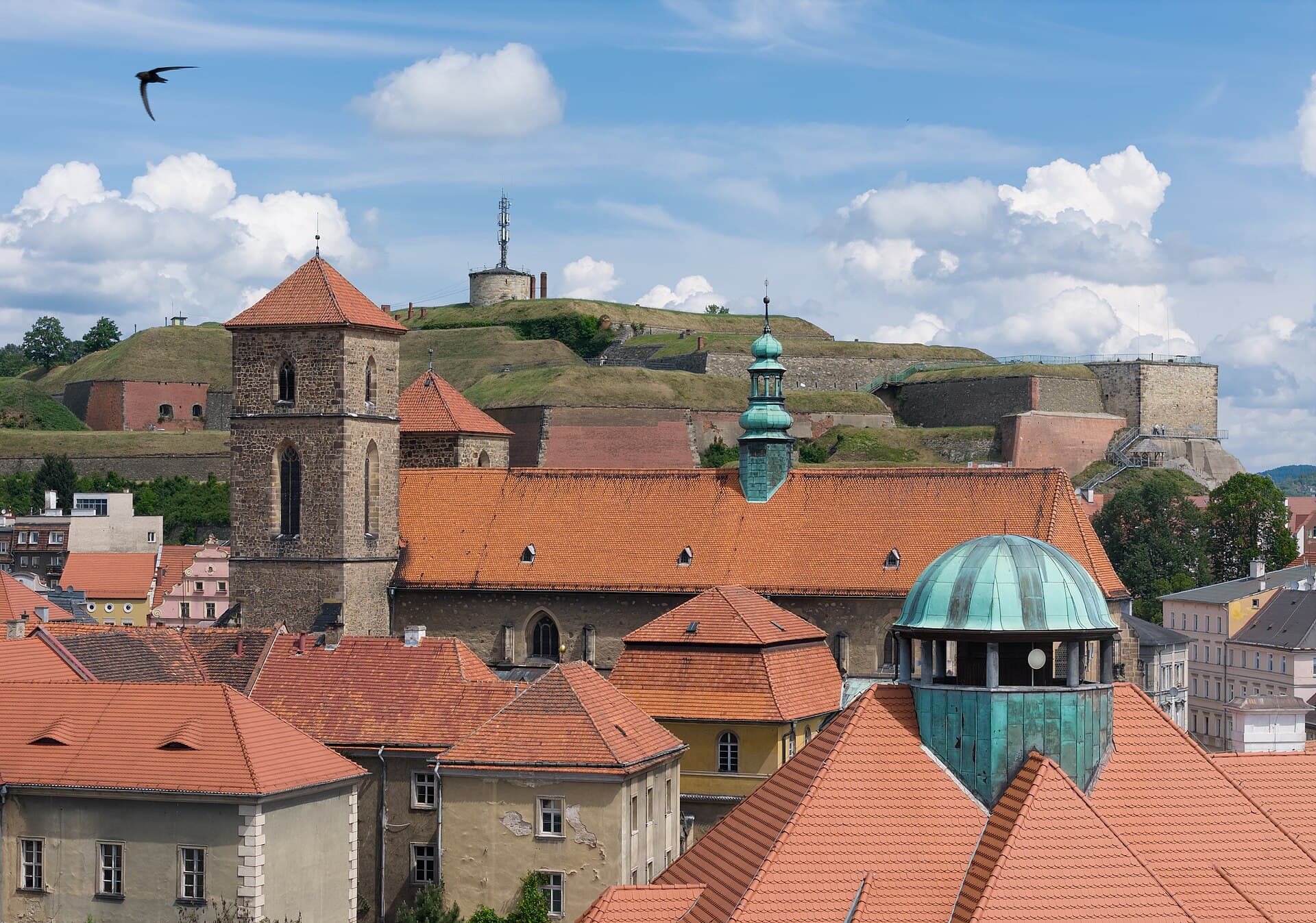 Jacek Halicki / CC BY-SA 4.0, via Wikimedia Commons
“Stone walls and subterranean pathways tell the city's long story.”
Not the postcards. The stories even locals don't know — whispered in your ear, right where they happened.
The Kłodzko Fortress, a commanding presence over the town, holds a secret from its time as a Prussian stronghold.
This medieval bridge, often called 'Little Prague's Charles Bridge,' has an unusual ingredient in its construction that locals were once compelled to contribute.
Beneath the charming streets of Kłodzko lies a vast network of tunnels and cellars, built by residents over centuries. These underground spaces served a crucial, and quite delicious, purpose for the town's economy.
Discover every secret of Kłodzko
Every address, every reveal in full — in your ear, right where it happened.
You pick your stops. You walk. The voice reveals what the others miss.
No tours available yet. Check back soon — we're preparing them.
Kłodzko, a town in southwestern Poland, is a place where history feels tangible, etched into its formidable fortress and winding underground passages. Situated in the picturesque Kłodzko Valley, on the Nysa Kłodzka river, the town's strategic location at the crossroads between Wrocław and Prague has shaped its identity over a millennium. Often referred to as "Little Prague" due to its architectural similarities and historical Gothic bridge, Kłodzko offers a captivating glimpse into a past influenced by Polish, Czech, and German cultures.
The town's landscape is dominated by the imposing Kłodzko Fortress, a testament to centuries of military architecture and a starting point for exploring the region’s heritage. Beyond the fortress, the Old Town reveals a network of narrow streets, historic townhouses, and a lively market square. Kłodzko serves as a gateway to the wider Kłodzko Valley, an area celebrated for its natural beauty, including the Sudetes mountains, spa towns, and unique geological formations.
The origins of Kłodzko stretch back to the 10th century, when a wooden fortified settlement was established on what is now Fortress Hill. This early stronghold, mentioned in the Chronicle of Bohemians around 981, marked the strategic importance of the site. By the 13th century, Kłodzko had developed into a town, gaining city rights in 1233. A spacious castle was built on the hill around 1300, becoming the seat of the Kłodzko County.
Throughout the Middle Ages, Kłodzko flourished due to its position on an ancient trade route connecting Bohemia and Poland. The Gothic stone bridge over the Młynówka River, constructed between 1281 and 1390, stands as a remarkable example of medieval engineering from this period. The Augustinian abbey, established in 1349, became a significant cultural center, even housing one of the earliest Polish texts, the St. Florian's Psalter, in 1399.
The 17th century brought significant changes and conflict. During the Thirty Years' War, the fortress was besieged multiple times, and while it was never captured, the city suffered extensive damage, with over 900 out of 1,300 buildings destroyed and its population halved. Following its capture by the Austrian Army in 1622, the fortress underwent modernization with updated bastions. In 1742, during the War of the Austrian Succession, Kłodzko and its stronghold were conquered by Prussia under Frederick II. The Prussians undertook a radical expansion, transforming it into one of the largest strongholds in Prussian Silesia and a crucial border defense.
The fortress continued to play a role in later conflicts, notably resisting Napoleon's campaign in 1807, and served as a prison known for its harsh conditions until the end of World War II. After the war, Kłodzko returned to Poland, and the fortress was opened to tourists in 1960. Today, the preserved architecture of Kłodzko's Old Town reflects these diverse influences, showcasing Gothic, Renaissance, Baroque, and other styles.
Begin your exploration at the Kłodzko Fortress, a sprawling military complex offering tours of its bastions, underground labyrinth, and historical exhibits. Allow around three hours to properly explore the fortress and its subterranean passages. Descend into the Underground Tourist Route, a 600-meter network of medieval cellars and tunnels that once served as storage and shelters, now brought to life with historical scenes and sounds.
Stroll across the Gothic Bridge on the Młynówka River, often likened to Prague's Charles Bridge, adorned with six Baroque statues of saints. From here, you can observe sections of the old defensive city walls. The bridge connects the Old Town with Sand Island, and walking along the Młynówka canal provides different perspectives of this architectural marvel. Explore the Old Town Market Square, a sloping square featuring the Neorenaissance Town Hall with its medieval tower, a Marian Column, and historic townhouses, some with unique statuettes on their facades. Visit the Parish Church of the Assumption of the Blessed Virgin Mary, a late Gothic stone church housing a collection of art, including works by Michael Klahr and Christopher Tausch.
The most pleasant time to visit Kłodzko for outdoor activities is from late June to late August, with a peak in the first week of August. During these months, average daily high temperatures are above 66°F (19°C), with July being the hottest month, averaging 72°F (22°C). The Kłodzko region experiences pleasantly warm summers, with average temperatures in July and August ranging from 18 to 22°C (64-72°F). Spring (April-May) and autumn (September-October) offer milder temperatures, clear air, and lively natural scenery, making them ideal for walks and photography. Winters are cold and snowy, with temperatures often dropping below freezing, offering opportunities for winter sports in the surrounding mountains.
Kłodzko is accessible by train, with direct connections from Wrocław taking under two hours. There are also direct trains from Lichkov, just across the Czech border. Bus services connect Kłodzko to major cities and nearby towns. The town itself is walkable, with many attractions concentrated in the Old Town. Public transportation within Kłodzko consists of local buses. When dining, look for traditional Polish dishes. Restaurants like Restauracja Savoy and W Ratuszu offer hearty meals, including local favorites like żurek (sour rye soup) and potato pancakes with goulash. For quick and authentic Polish food, consider a "Bar Mleczny" (milk bar). Several restaurants also offer vegan options.