De Grote Moskee van Kairouan
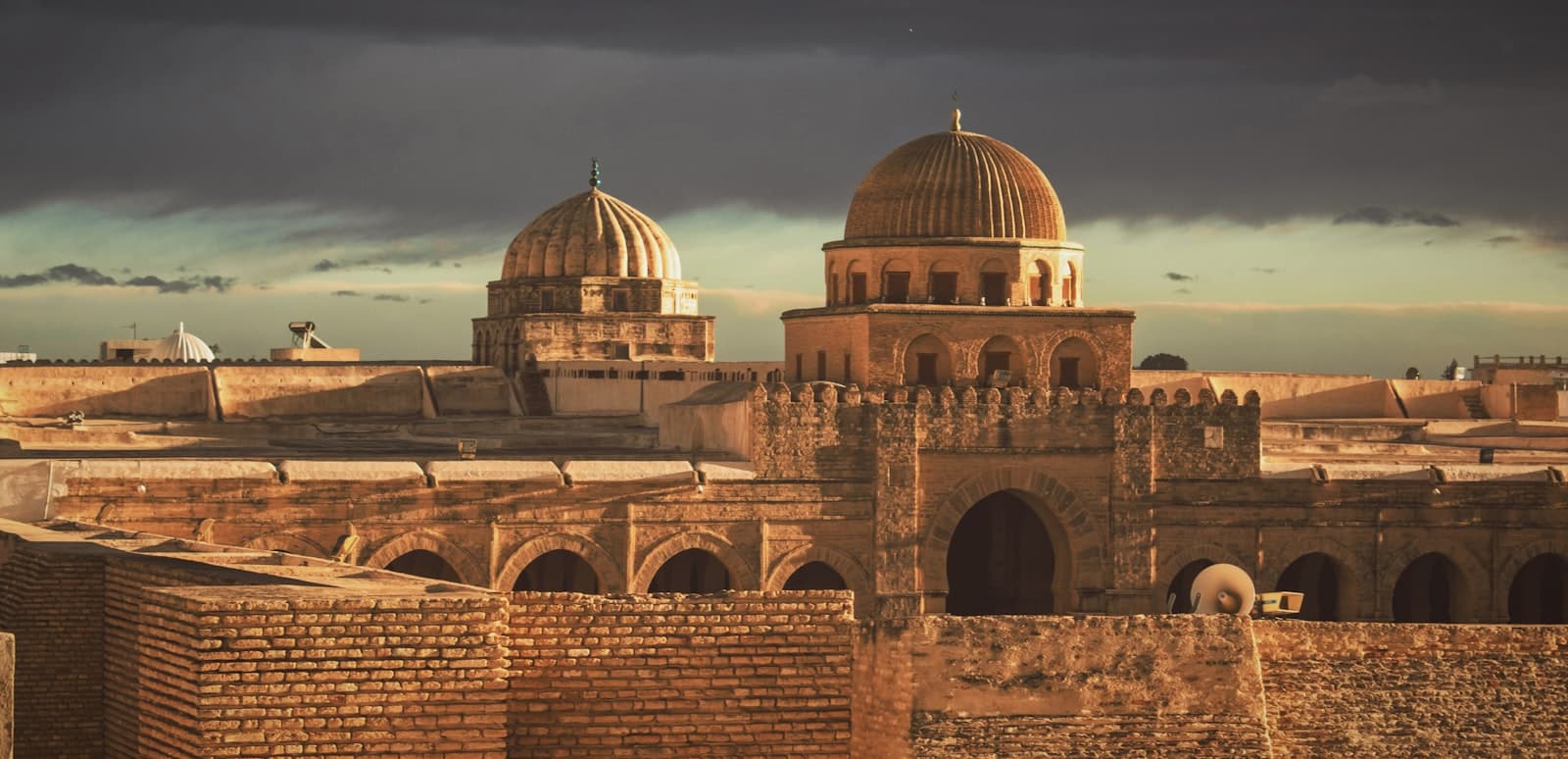
De Grote Moskee van Kairouan is een meesterwerk van vroege islamitische architectuur, maar bekijk de zuilen van dichtbij.
Volledig verhaal ontgrendeld in de tour
 ELEL09, montage et assemblage / CC BY-SA 3.0, via Wikimedia Commons
Zelfgeleide audiowandeling door Kairouan — GPS-route, offline afspelen, meeslepende vertelling in 32 talen.
“Waar oude echo's een blijvend leven ontmoeten, nodigt Kairouan je uit om in een tijdloos verhaal te stappen.”
Niet de ansichtkaarten. De verhalen die zelfs locals niet kennen — gefluisterd in je oor, precies waar ze gebeurden.
De Grote Moskee van Kairouan is een meesterwerk van vroege islamitische architectuur, maar bekijk de zuilen van dichtbij.
Voorbij de hoofdstraten van de medina van Kairouan wacht een cinematografisch geheim in de kronkelende zijstraten.
Een kameel draait hier eindeloos rond een put, en trekt water uit een traditioneel systeem. Maar de betekenis van de put reikt verder dan zijn ingenieuze mechaniek.
Ontdek elk geheim van Kairouan
Elk adres, elke onthulling volledig — in je oor, precies waar het gebeurde.
Jij kiest je stops. Jij wandelt. De stem onthult wat de anderen missen.
Je zelfgeleide audiotour van Kairouan is klaar — kies je bezienswaardigheden, kies je taal en start zodra je aankomt.
KopenLume heeft een ingebouwde augmented-reality-gids. Houd je telefoon omhoog: de camera toont de straat voor je, met een oplichtende pijl over het echte beeld die altijd naar je volgende stop wijst — geen kaart om uit te puzzelen, geen verkeerde afslagen. Zoals alles in Lume werkt het volledig offline.
Kairouan, een UNESCO Werelderfgoedlocatie, rijst op uit het Tunesische binnenland als een stad van diepe spirituele resonantie en historische betekenis. Gesticht in 670 n.Chr. door de Arabische generaal Uqba ibn Nafi, werd het al snel het eerste centrum van de islamitische beschaving in Noord-Afrika en wordt het beschouwd als de vierde heiligste stad in de islam, na Mekka, Medina en Jeruzalem. De blijvende spirituele aantrekkingskracht is zodanig dat een lokale traditie suggereert dat zeven pelgrimages naar Kairouan dezelfde heilige verdienste hebben als één pelgrimage naar Mekka. Deze oude stad biedt een diepgaande reis naar de oorsprong van het islamitische Noord-Afrika, waar elke steeg en elk monument een verhaal vertelt van geloof, wetenschap en architectonische innovatie.
Naast zijn religieuze belang bruist Kairouan van een authentieke Tunesische cultuur. De ommuurde medina, erkend door UNESCO in 1988, is een levendige uitdrukking van het dagelijks leven, waar actieve souks overstromen met handgemaakte schatten, en de geur van traditionele Makroudh-gebakjes de lucht vult. Het diende als een belangrijk intellectueel centrum tussen de 9e en 11e eeuw, met de Grote Moskee als spirituele toevluchtsoord en academische instelling. Vandaag de dag blijft Kairouan een boeiende bestemming voor diegenen die een diep erfgoed willen verkennen dat een regio al meer dan een millennium heeft gevormd.
## Stichting en Vroege Islamitische Invloed Het verhaal van Kairouan begint in 670 n.Chr. toen de Arabische generaal Uqba ibn Nafi het stichtte als een militaire buitenpost voor de verovering van het Westen. De stad werd strategisch landinwaarts gekozen, weg van de kustaanvallen van de Byzantijnse vloot, en groeide al snel uit tot de administratieve hoofdstad van de provincie Ifriqiya, ruwweg gelijk aan het moderne Tunesië. Vanaf de oprichting werd Kairouan een cruciaal centrum voor soennitische islamitische wetenschap en Koranonderwijs, dat moslims van over de hele wereld aantrok. De Grote Moskee van Kairouan, gesticht in 670 n.Chr., werd een architectonisch maatstaf voor heel het islamitische Westen en verstevigde de status van de stad als een van de heiligste plaatsen van de islam.
## Het Gouden Tijdperk van de Aghlabiden Onder de Aghlabidische dynastie, die rond 800 n.Chr. begon, beleefde Kairouan een gouden tijdperk en bloeide in de 9e eeuw op als een van de grootste metropolen aan de Middellandse Zee. Deze periode zag aanzienlijke architectonische vooruitgang, waaronder de bouw van de Grote Moskee in zijn huidige vorm en de ingenieuze Aghlabidische Bassins, een geavanceerd hydraulisch systeem ontworpen om de stad van water te voorzien in zijn semi-aride omgeving. De Grote Moskee evolueerde tot een gerenommeerd centrum voor islamitische wetenschappen, vergelijkbaar met de Universiteit van Parijs in de middeleeuwen, en produceerde invloedrijke figuren in de islamitische jurisprudentie.
## Verval en Blijvende Spirituele Betekenis Na het Aghlabidische tijdperk bleef Kairouan dienen als politiek centrum onder de Fatimidische en Ziridische dynastieën tot in de 11e eeuw. Echter, invallen van Bedoeïenen en de opkomst van Tunis als hoofdstad leidden tot het verval van Kairouan tot een meer geïsoleerde marktstad. Ondanks deze politieke verschuiving behield Kairouan zijn diepe spirituele prestige. Het blijvende architectonische erfgoed van de stad, waaronder de Grote Moskee en de 9e-eeuwse Moskee van de Drie Poorten, droeg bij aan de aanwijzing als UNESCO Werelderfgoed in 1988. Vandaag de dag blijft Kairouan een levendig testament van zijn gelaagde verleden, en trekt bezoekers aan die zich willen verbinden met zijn diepe culturele en religieuze wortels.
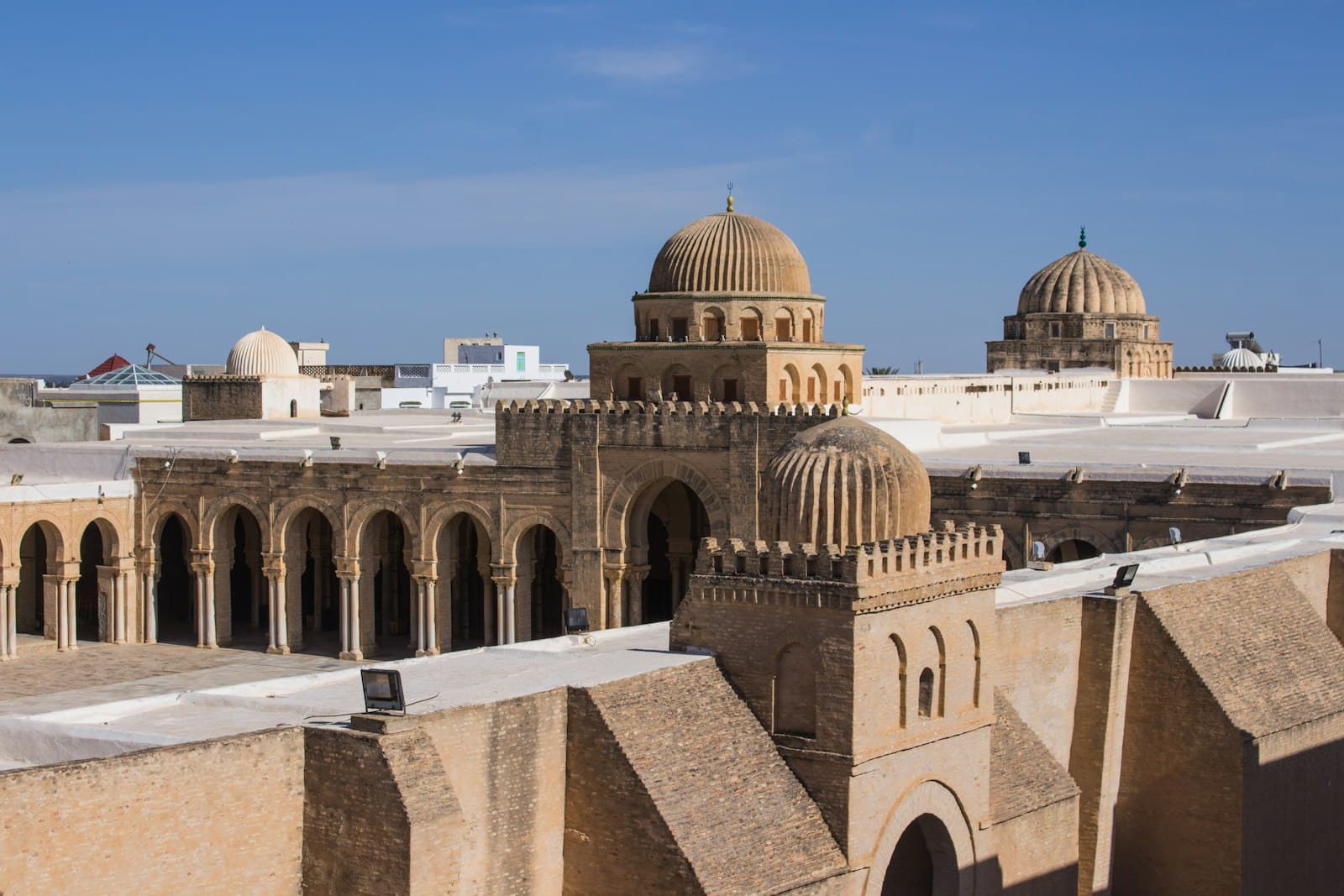
De Grote Moskee van Kairouan, ook bekend als de Moskee van Uqba, is het belangrijkste herkenningspunt van de stad en een van de oudste en grootste islamitische monumenten in Noord-Afrika. Niet-moslims zijn welkom om de uitgestrekte, met marmer betegelde binnenplaats te betreden en de gebedsruimte vanaf de open deuren te bewonderen, waarbij ze het majestueuze woud van oude zuilen en bogen binnenin kunnen zien. De minaret, grotendeels daterend uit het begin van de 9e eeuw, is de oudste nog staande in de islamitische wereld en diende als prototype voor minaretten in de westelijke islamitische wereld.
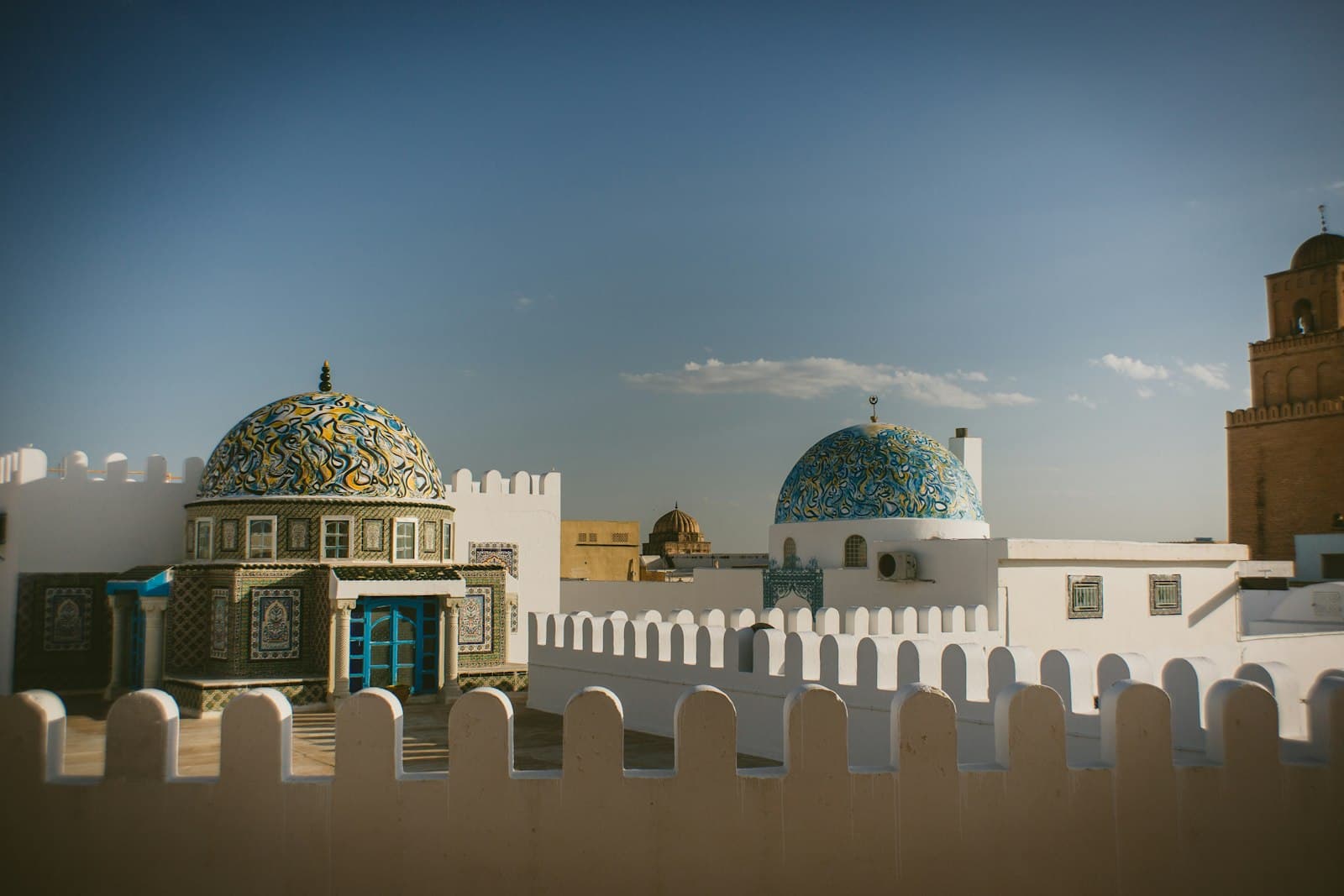
Vlak buiten de medina bevinden zich de Aghlabidische Bassins, een opmerkelijk voorbeeld van 9e-eeuwse islamitische techniek. Deze uitgestrekte ronde reservoirs, ooit onderdeel van een systeem van 15 bassins, voorzagen Kairouan van water via een 36 kilometer lange aquaduct. Op korte afstand ligt de Zaouia van Sidi Sahab, vaak de "Moskee van de Barbier" genoemd, een prachtig mausoleum ter ere van een metgezel van de Profeet Mohammed. De binnenplaatsen en zalen zijn versierd met polychrome tegels en ingewikkeld stucwerk. De Medina van Kairouan zelf is een door UNESCO beschermd juweel, met zijn kronkelende steegjes, witgekalkte gebouwen en levendige souks die een kijkje bieden in het traditionele Tunesische leven en een kans om lokale ambachten te ontdekken, met name de beroemde tapijten. Mis de Bir Barrouta-put niet, waar een kameel nog steeds een oud waterradsysteem aandrijft.
De meest aangename periodes om Kairouan te bezoeken zijn tijdens de schouderseizoenen: maart, april, mei en oktober. Gedurende deze maanden zijn de dagtemperaturen comfortabel, variërend van 20°C tot 28°C, ideaal om de historische bezienswaardigheden van de stad te verkennen zonder de intense zomerhitte. Zomers, met name juli en augustus, zijn verschroeiend heet en droog, met temperaturen die vaak oplopen tot 38°C of hoger, waardoor uitstapjes midden op de dag uitdagend zijn. Winters zijn mild, maar de avonden kunnen koel zijn. De stad kan rustiger zijn tijdens de Ramadan, met enkele etablissementen die op aangepaste tijden geopend zijn.
Kairouan ligt ongeveer 160 kilometer ten zuiden van Tunis en ongeveer 60 kilometer ten westen van Sousse. Hoewel er geen passagierstreindienst naar Kairouan is, is de stad bereikbaar per bus of gedeelde minbus (louage) vanuit grote steden zoals Tunis en Sousse. Binnen de stad zijn gele taxi's gemakkelijk beschikbaar en rijden ze op de meter, wat een betaalbare manier biedt om tussen bezienswaardigheden buiten de autovrije medina te reizen. Veel winkels accepteren vreemde valuta, maar het wordt aanbevolen om Tunesische Dinars (contant geld) bij u te hebben, aangezien creditcardfaciliteiten beperkt kunnen zijn tot grotere etablissementen zoals tapijthandelaars. Bij het bezoeken van religieuze plaatsen wordt bescheiden kleding verwacht; vrouwen dienen hun schouders en knieën te bedekken, en een hoofddoek is aan te raden bij het betreden van moskeeën. De Grote Moskee sluit op vrijdagen tijdens het middaggebed voor bezoekers, dus plan uw bezoek dienovereenkomstig.
Kairouan — Koreaans, Chinees, Hebreeuws en nog 29 talen, elke stop verteld door een moedertaalspreker. Het grootste taalaanbod van alle zelfgeleide audiotours.
Beschikbaar in: