This colonial-era bungalow, now a government guesthouse, holds more than just old furniture.
Bernard Gagnon / CC BY-SA 4.0, via Wikimedia CommonsKalimpong
“Where Himalayan breezes carry echoes of ancient commerce.”
Kalimpong, as no one tells it.
Not the postcards. The stories even locals don't know — whispered in your ear, right where they happened.
Beyond its profusion of blossoms, this nursery harbors an unexpected botanical distinction.
The lively market square was once a critical crossroads, but not solely for local produce.
Discover every secret of Kalimpong
Every address, every reveal in full — in your ear, right where it happened.
You pick your stops. You walk. The voice reveals what the others miss.
How long do you have in Kalimpong?
No tours available yet. Check back soon — we're preparing them.
The story of Kalimpong
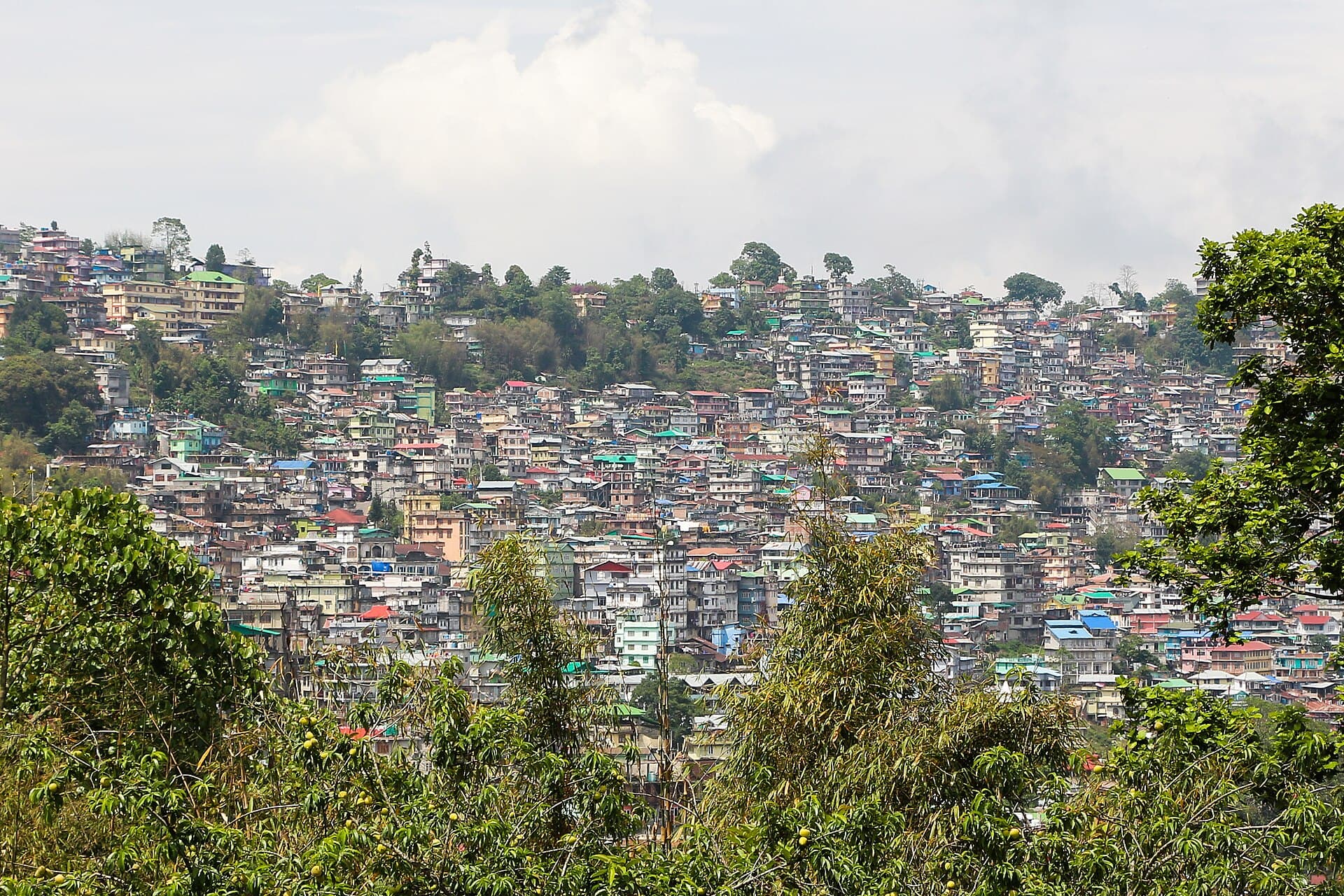
Kalimpong, a tranquil hill station in West Bengal, India, offers a peaceful escape amidst the Eastern Himalayas. Situated at an average elevation of 1,250 meters (4,101 ft), it provides expansive views of the Kanchenjunga range, verdant valleys, and the winding Teesta River. Unlike the energetic pace of its more renowned neighbor, Darjeeling, Kalimpong invites visitors to slow down and immerse themselves in its calm atmosphere. The town presents a captivating fusion of diverse cultures, with influences from colonial British, Bhutanese, and Tibetan traditions evident in its architecture, monasteries, and daily rhythms.
Once a crucial trading post between India and Tibet, Kalimpong has matured into a destination celebrated for its natural splendor, spiritual sanctuaries, and horticultural skill. From the vivid hues of its flower nurseries to the serene chants emanating from its ancient monasteries, Kalimpong offers a singular allure that appeals to nature lovers, cultural explorers, and those seeking quiet repose in the mountains. Its relatively milder climate throughout much of the year makes it an inviting destination for unhurried exploration and outdoor pursuits.
A Meeting Point of Realms and Commerce
The earliest documented history of Kalimpong is somewhat elusive, with clear records emerging primarily after the Anglo-Bhutan War in 1864. Before this, the region formed part of the Sikkimese kingdom, inhabited by the indigenous Lepcha and Limbu communities, alongside migrant Bhutia and Kirati tribes. In 1706, Bhutan gained control of the territory from the Sikkimese monarch, naming it Kalimpong, though historical accounts suggest Bhutanese influence may have commenced two decades prior. At the time of its annexation, Kalimpong was a small hamlet, home to only a few families.
The Treaty of Sinchula, signed in 1865 after the Anglo-Bhutan War, ceded Bhutanese-held territory east of the Teesta River, including Kalimpong, to the British East India Company. In 1866, Kalimpong was added to the district of Darjeeling, and an Anglo-Bhutanese commission demarcated the boundaries, shaping the Kalimpong subdivision. The British recognized Kalimpong's temperate climate, developing it as an alternative hill station to Darjeeling, offering an escape from the plains' summer heat. This decision, along with the arrival of Scottish missionaries who established schools and hospitals, significantly contributed to the town's growth.
Crucially, Kalimpong's proximity to the Nathu La and Jelep La passes established it as an important trading outpost between India and Tibet. Furs, wools, and food grains were exchanged, bringing economic prosperity that attracted settlers from various regions, including Nepalis, Lepchas, Tibetans, and Anglo-Indians, leading to a population increase to 7,880 by 1911. Following India's independence in 1947, Kalimpong became part of West Bengal. The Sino-Indian War in 1962, coupled with China's annexation of Tibet in 1959, disrupted the trade routes, affecting Kalimpong's economy. However, the town adapted, shifting its focus to education, tourism, and horticulture. In 2017, Kalimpong was officially declared a separate district, separating from Darjeeling.
Kalimpong offers a blend of natural beauty, spiritual sites, and colonial-era character. For expansive vistas, journey to Deolo Hill, the highest point in Kalimpong, offering sweeping views of the Kanchenjunga range, the Teesta River, and the surrounding valleys. Paragliding is also available here for the adventurous. On the opposite ridge, Durpin Dara Hill provides another excellent vantage point for Himalayan views, also home to a golf course and a botanical garden.
For spiritual solace, visit the Zang Dhok Palri Phodang Monastery (Durpin Monastery) atop Durpin Hill, consecrated by the Dalai Lama in 1976 and housing rare Tibetan Buddhist scriptures. The Tharpa Choling Monastery and the historic Thongsa Gompa, established in 1692, are other significant Buddhist sites. Horticulture forms a cornerstone of Kalimpong's identity; the Pine View Nursery is recognized for its extensive collection of cacti. Other notable flower nurseries contribute to Kalimpong's reputation for exporting orchids and gladioli.
Colonial history is visible at Morgan House, a heritage building now a government guesthouse, and Dr. Graham's Homes, a century-old educational institution. The Kalimpong Science Centre offers interactive exhibits, including an outdoor science park with dinosaur models. For a taste of local life, explore the Haat Bazaar, especially on Wednesdays and Saturdays, when local farmers and artisans gather. Adventure seekers can also enjoy river rafting on the Teesta River.
Kalimpong enjoys a temperate climate, making it a year-round destination. The ideal times to visit are during spring (March to May) and autumn (October to November). During these months, the weather is pleasant with clear skies, offering excellent visibility of the Himalayan peaks and making it perfect for sightseeing and outdoor activities. Temperatures in spring range from 12-22°C (54-72°F) and in autumn from 7-15°C (45-59°F). The monsoon season, from June to September, brings heavy rainfall and can lead to landslides, making travel challenging. Winters (December to February) are cool, with temperatures between 7-15°C (45-59°F), and offer crisp air and views of snow-covered peaks.
Kalimpong is well-connected by road, rail, and air. The nearest major airport is Bagdogra Airport (IXB), approximately 75-80 km away, with regular flights from major Indian cities. From Bagdogra, you can hire a taxi (around INR 3,500) or take a shared vehicle (around INR 500 per person) for the 2.5-3 hour scenic drive. The closest major railway station is New Jalpaiguri (NJP), about 72-78 km away, also offering taxis and shared jeeps for the 2.5-3 hour journey.
Within Kalimpong, shared taxis (Maruti Vans) are a common and budget-friendly way to get around, covering most routes. Hiring a local cab for a full day of sightseeing typically costs around INR 1,800-2,000. For accommodation, options range from budget homestays to luxury resorts, with many offering views of the Himalayas. Booking in advance, especially during peak seasons, is advisable. Local cuisine includes momos, thukpa, and Kalimpong Churpee (traditional cheese). Remember to carry comfortable walking shoes for exploring and a valid ID, especially if venturing into nearby border areas.
- What is Kalimpong known for?
- Kalimpong is known for its expansive valley views, Buddhist monasteries, colonial architecture, flower nurseries (especially orchids and cacti), and its tranquil environment.
- Is Kalimpong suitable for a family trip?
- Yes, Kalimpong is considered a family-friendly destination, offering a mix of natural beauty, cultural experiences, and activities suitable for all age groups, from nature walks to exploring historical sites.
- What adventure activities are available in Kalimpong?
- Kalimpong offers adventure activities such as paragliding from Deolo Hill, river rafting on the Teesta River, and trekking in the surrounding mountain trails.
- What local food should I try in Kalimpong?
- You should try local delicacies like momos (dumplings), thukpa (noodle soup), and Kalimpong Churpee, a traditional local cheese.
- How many days are enough for Kalimpong?
- While a day trip can cover a few key attractions, a 2-3 day trip is recommended to fully experience Kalimpong's beauty and serene atmosphere.
- Are there any offbeat places to visit near Kalimpong?
- Yes, nearby offbeat villages include Lava, Loleygaon, Pedong, Rikisum, Bidyang, Charkhol, and Nokdara, offering serene natural beauty and a glimpse into local life.