The Great Buddha of Kamakura was not always the weathered bronze icon we observe today.
Fg2 / Public domain, via Wikimedia CommonsKamakura
“Where ancient samurai spirits meet the serene whisper of the coast.”
Kamakura, as no one tells it.
Not the postcards. The stories even locals don't know — whispered in your ear, right where they happened.
There is a shrine in Kamakura where visitors intentionally cleanse their money.
Despite its profound historical importance and widespread appeal, Kamakura maintains a surprising regulation concerning its skyline.
Discover every secret of Kamakura
Every address, every reveal in full — in your ear, right where it happened.
You pick your stops. You walk. The voice reveals what the others miss.
How long do you have in Kamakura?
No tours available yet. Check back soon — we're preparing them.
The story of Kamakura
Kamakura, a coastal city within Kanagawa Prefecture, presents a compelling fusion of history, culture, and natural splendor, situated less than an hour south of Tokyo. Often referred to as the "Kyoto of Eastern Japan," it is home to numerous temples, shrines, and other historical monuments, alongside inviting beaches.
Once the political heart of Japan during the Kamakura Period (1185-1333), the city served as the seat of the first military government, the Kamakura shogunate. This era witnessed the ascent of the samurai class and the establishment of feudalism, leaving an enduring legacy on Japan's political, social, and artistic traditions. Today, Kamakura draws visitors seeking to explore its ancient sites, enjoy its coastline, and experience a more traditional facet of Japan.
## The Rise of the Samurai Capital Kamakura's narrative truly begins in 1180, when Minamoto no Yoritomo established it as the capital of his clan. Following his decisive victory over the rival Taira family in 1185, Yoritomo founded his military government, the Kamakura shogunate, which officially commenced in 1192. This marked the beginning of the Kamakura Period (1185-1333), an era that fundamentally reshaped Japan.
During this time, Kamakura became the de facto capital of Japan, even as the imperial court remained in Kyoto. The city's strategic location, embraced by hills on three sides and the sea to the south, rendered it an easily defensible stronghold. This period was instrumental in the development of bushido, the way of the samurai, and saw the samurai class ascend to prominence. Zen Buddhism also gained significant influence, appealing to the warrior sensibilities with its emphasis on discipline and concentration.
## Decline and Rebirth The Kamakura shogunate contended with internal power struggles and economic strains, eventually leading to its decline in the early 14th century. Emperor Go-Daigo's rebellion in 1333, known as the Kenmu Restoration, ultimately culminated in the Siege of Kamakura and the conclusion of the shogunate's authority. After the fall of the Kamakura government, the city maintained its status as a political center for eastern Japan for a time but eventually yielded its position to other cities.
Despite its political decline, Kamakura's historical and cultural significance persisted. During the Edo (Tokugawa) period (1603–1867), the town experienced a resurgence, becoming a favored destination for travelers. Today, Kamakura continues to attract visitors eager to explore its profound past, with its many temples, shrines, and the iconic Great Buddha standing as enduring testaments to its influential history.
A journey through Kamakura often commences with the Great Buddha (Daibutsu) at Kotoku-in Temple, a monumental outdoor bronze statue soaring over 13 meters tall. For a modest fee, visitors can even step inside the hollow statue.
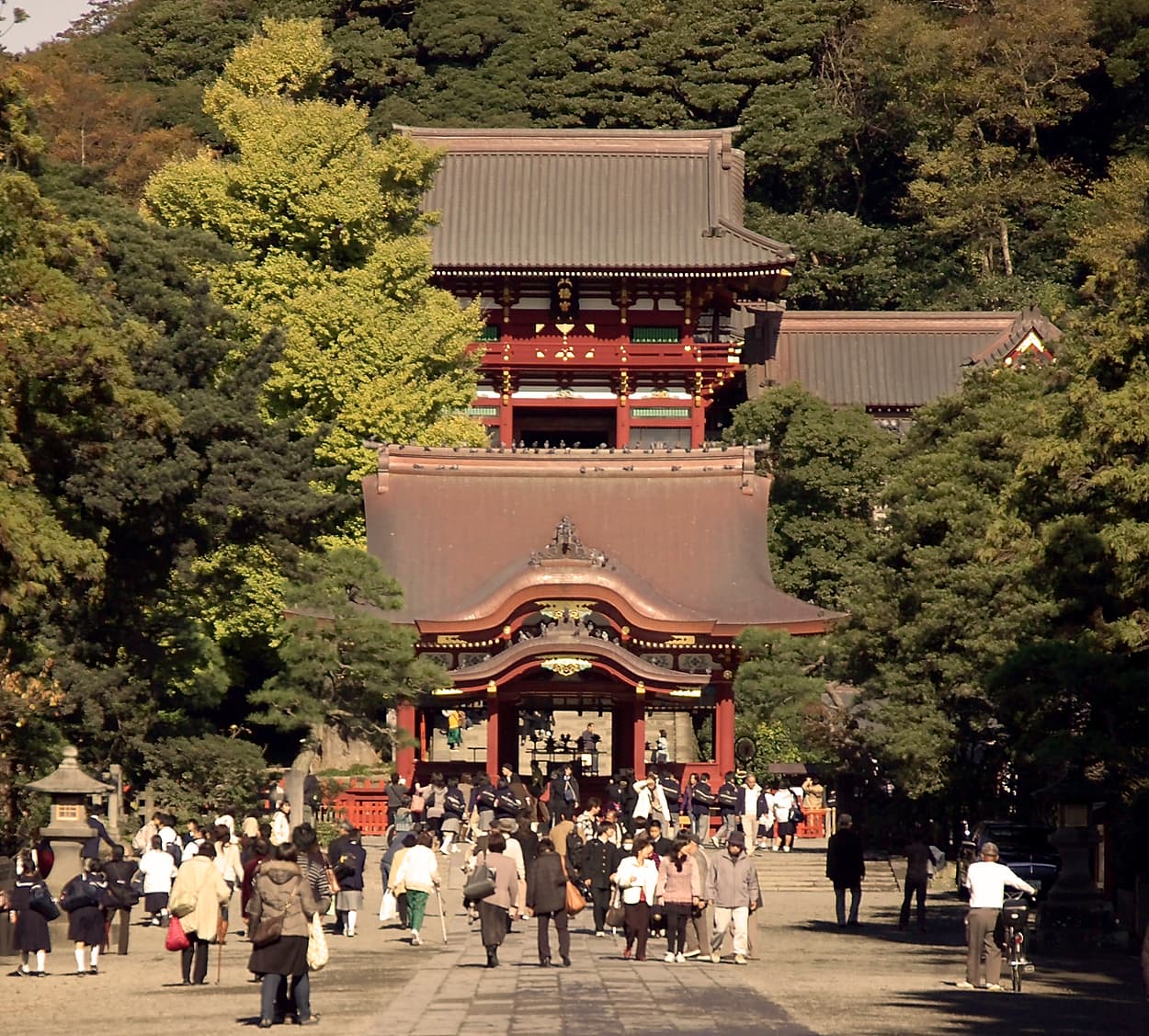
Tsurugaoka Hachimangu Shrine stands as Kamakura's most significant Shinto shrine, established in the 11th century and expanded by the Minamoto shogunate. Its long central promenade offers a particularly impressive sight during cherry blossom season.
Hasedera Temple is recognized for its eleven-headed Kannon statue, its meticulously kept gardens, and sweeping coastal views. Be sure to explore the Benten-kutsu Cave, adorned with carved statues.
For a tranquil respite, Hokokuji Temple, often known as the "Bamboo Temple," features a serene bamboo grove and a traditional teahouse. The lively Komachi-dori Street, near Kamakura Station, offers a variety of shops, cafes, and local snacks.
Consider a ride on the charming Enoden train, a small electric railway that follows the coast, providing scenic ocean views between Kamakura and Enoshima.
Kamakura offers enjoyment throughout the year, with each season presenting distinct experiences. Spring (March-May) brings mild, pleasant weather and cherry blossoms, typically in early April. April also features the Kamakura Matsuri. June marks the rainy season, yet it is also the peak for hydrangeas, which appear particularly beautiful at temples like Meigetsuin. Summer (June-August) is warm and humid, ideal for visiting the sandy beaches, with festivals and fireworks in July and August. Autumn (October-November) offers cool, dry weather and vivid autumn foliage, at its best from late November to early December. Winter provides a quiet excellence, with fewer crowds, clear sea views, and an atmospheric feel at the temples.
Kamakura is readily accessible from Tokyo by train, with direct routes on the JR Yokosuka Line or JR Shonan-Shinjuku Line taking approximately an hour. Once in Kamakura, the city is largely walkable, with many key sights within easy reach of Kamakura Station. The Enoden train and local buses provide convenient options for exploring further. Driving is an option but is not recommended due to traffic and limited, expensive parking.
Cash is still favored at many smaller, family-owned shops and restaurants, so it is wise to carry Japanese Yen. While there is no strict dress code for temples and shrines, modest attire is appreciated. Be mindful of black kites (hawks) near the beaches, as they are known to snatch food. Kamakura enforces strict no-smoking zones in many areas.
- How do I travel to Kamakura from Tokyo?
- You can take the JR Yokosuka Line directly from Tokyo Station to Kamakura Station, or the JR Shonan-Shinjuku Line from Shinjuku Station. Both journeys take approximately one hour.
- Is Kamakura suitable for a day trip from Tokyo?
- Yes, Kamakura is a very popular and convenient day trip from Tokyo, offering a rich blend of history, culture, and natural surroundings.
- What is the Great Buddha of Kamakura?
- The Great Buddha, or Daibutsu, at Kotoku-in Temple is a large outdoor bronze statue of Amida Buddha, standing over 13 meters tall. It is one of Japan's most recognizable landmarks.
- What are some less frequented places to explore in Kamakura?
- Beyond the principal attractions, consider visiting Sasuke Inari Shrine with its many fox statues, Kuzuharaoka Shrine for matchmaking prayers and the smashing of bad luck, or Eishoji Temple, Kamakura's sole Zen nunnery.
- What is the most effective way to navigate Kamakura?
- Kamakura is quite walkable, especially around the main station. The Enoden train line is excellent for coastal views and connecting to sites like the Great Buddha, and local buses also serve areas not covered by the train.
- When is the ideal time to observe cherry blossoms or autumn leaves in Kamakura?
- Cherry blossoms typically bloom in early April. For autumn foliage, the best time is usually from late November to early December.