Der Durian-Kreisverkehr
Kampot präsentiert stolz eine riesige Hommage an seine berühmteste und berüchtigtste Frucht.
Die ganze Geschichte wird in der Tour freigeschaltet
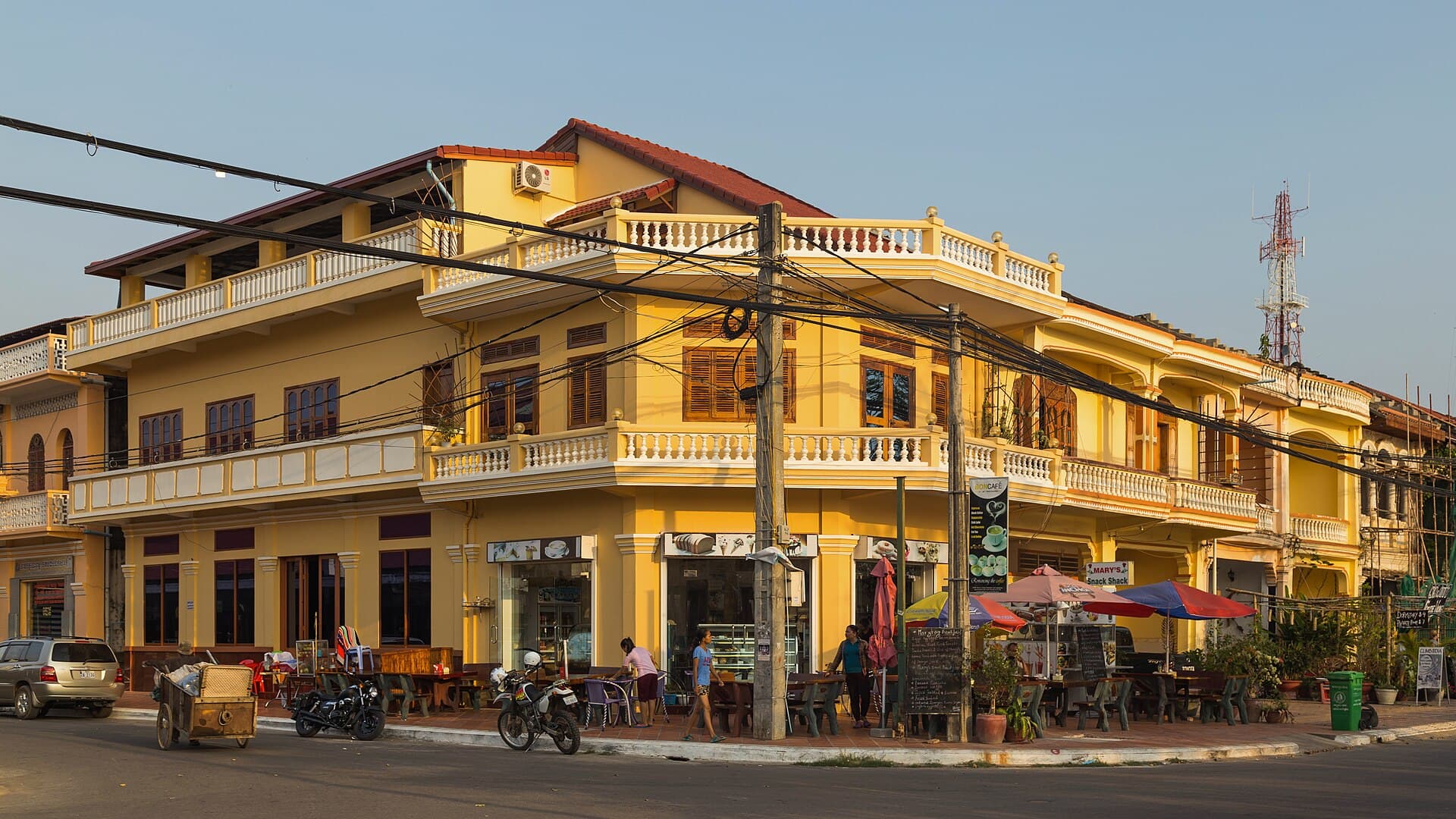 Marcin Konsek / CC BY-SA 4.0, via Wikimedia Commons
Selbstgeführte Audio-Walking-Tour durch Kampot — GPS-Route, Offline-Wiedergabe, erzählerische Narration in 32 Sprachen.
“Wo der Fluss langsamer wird und die Zeit dahintreibt, lädt Kampot zum Verweilen ein.”
Nicht die Postkarten. Die Geschichten, die selbst Einheimische nicht kennen – dir ins Ohr geflüstert, genau dort, wo sie geschahen.
Kampot präsentiert stolz eine riesige Hommage an seine berühmteste und berüchtigtste Frucht.
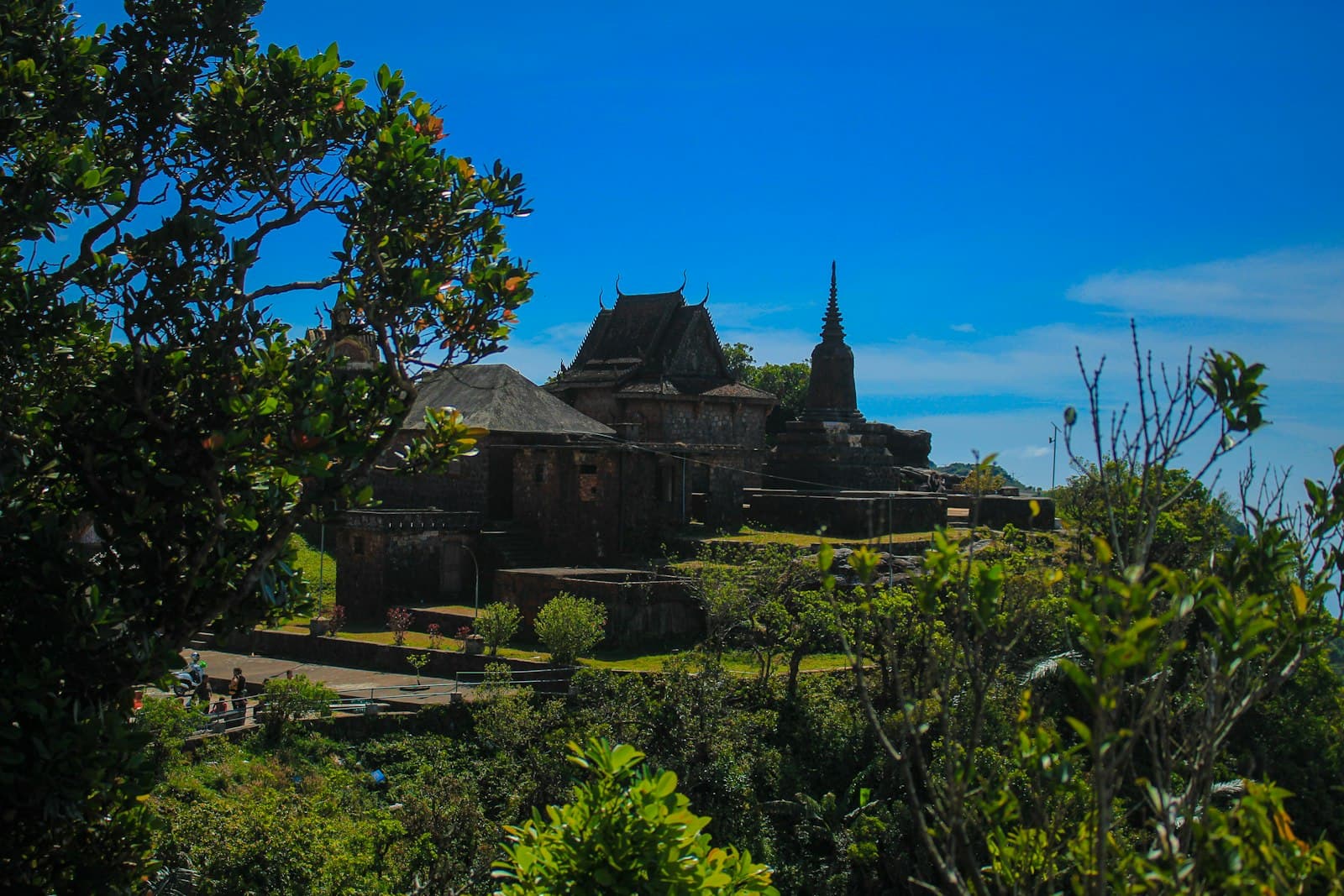
Eines der bekanntesten Bauwerke Kampots trägt die Narben von Konflikten und einen überraschenden lokalen Spitznamen.
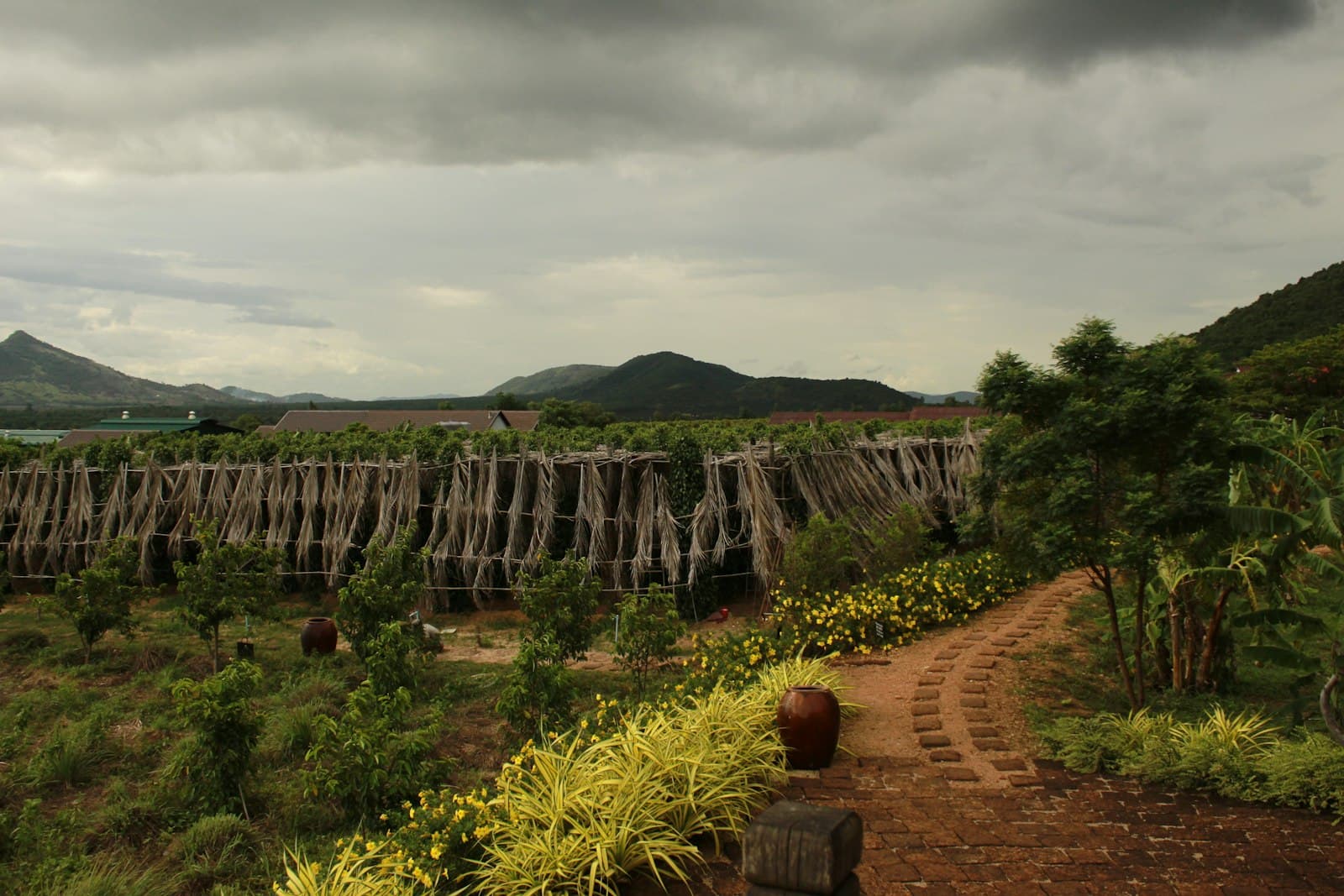
Neben Pfeffer produziert Kampot eine weitere wichtige Ware durch einen alten, sonnenverwöhnten Prozess.
Entdecke jedes Geheimnis von Kampot
Jede Adresse, jede Enthüllung vollständig – in deinem Ohr, genau dort, wo es geschah.
Du wählst deine Stationen. Du gehst. Die Stimme enthüllt, was andere übersehen.

Deine selbstgeführte Audio-Tour durch Kampot ist bereit – wähle deine Sehenswürdigkeiten, deine Sprache und starte, sobald du ankommst.
KaufenLume enthält einen integrierten Augmented-Reality-Guide. Halten Sie Ihr Handy hoch: Die Kamera zeigt die Straße vor Ihnen, mit einem leuchtenden Pfeil über dem echten Bild, der immer auf Ihren nächsten Stopp zeigt — keine Karte zum Rätseln, keine falschen Abzweigungen. Wie alles bei Lume funktioniert es komplett offline.
Kampot, eine Flussstadt im Süden Kambodschas, bietet ein entspanntes Tempo und eine Mischung aus kolonialem Charme und natürlicher Schönheit. Am Praek Tuek Chhu Fluss am Fuße der Elefantenberge gelegen, bietet es einen erfrischenden Kontrast zu den belebteren kambodschanischen Reisezielen. Die Atmosphäre der Stadt wird durch ihre alternde französische Kolonialarchitektur, eine entspannte Flussuferpromenade und eine blühende Café-Kultur geprägt, die einen stetigen Zustrom von Reisenden bedient, die einen langsameren Rhythmus suchen.
Bekannt für sein landwirtschaftliches Erbe, ist Kampot besonders berühmt für seinen Pfeffer, der als einer der besten der Welt gilt, und sein Meersalz. Die umliegende Landschaft mit ihren Pfefferplantagen, Salzfeldern und Höhlen lädt zur Erkundung ein. Obwohl es eine Provinzstadt ist, behält Kampot das Gefühl einer kleinen, begehbaren Stadt bei, was es einfach macht, sein einzigartiges Ambiente zu Fuß oder mit dem Fahrrad aufzunehmen.
Die Geschichte von Kampot reicht bis in die vor-Angkorianische Zeit zurück, mit Siedlungsspuren, die etwa 2.000 Jahre alt sind. Seine Bedeutung begann sich jedoch erst im 19. Jahrhundert wirklich herauszubilden. Unter König Ang Duong (1841–1860) wurde Kampot zum einzigen internationalen Seehafen Kambodschas ausgebaut und diente als wichtiger Handelsknotenpunkt, der die Hauptstadt Oudong mit der Küste verband. In dieser Zeit entwickelte sich Kampot zu einem bedeutenden maritimen Tor, das den internationalen Handel erleichterte.
Mit der Errichtung des französischen Protektorats im Jahr 1863 setzte sich die Entwicklung von Kampot fort, und es erhielt einen ausgeprägten kolonialen Architekturstil. Es diente als wichtiges regionales Verwaltungszentrum, und französische Kolonialzählungen im späten 19. Jahrhundert verzeichneten eine multiethnische Gemeinschaft mit unterschiedlichen „Kambodschanischem Kampot“ und „Chinesischem Kampot“ Gebieten entlang des Flusses. Die Franzosen waren besonders vom Kampot-Pfeffer angetan, dessen globale Popularisierung sie förderten. Das Gitternetz und die breiten Straßen der Stadt sind ein Erbe französischer Stadtplanung.
Kampots Geschichte trägt auch die Spuren von Konflikten. Von Februar bis April 1974 war die Stadt Schauplatz eines langwierigen und intensiven Kampfes zwischen kambodschanischen Regierungstruppen und Khmer-Rouge-Guerillas, wobei die Khmer Rouge die Stadt am 2. April 1974 schließlich einnahmen. Beide Seiten erlitten schwere Verluste, und viele Zivilisten wurden vertrieben. Die Alte Französische Brücke wurde beispielsweise in dieser Zeit beschädigt.
Nach Jahren der Unterbrechung während des Bürgerkriegs begann Kampots Status als Ferienort Mitte der 1990er Jahre wieder aufzuleben. In den letzten Jahrzehnten hat Kampot einen stetigen Anstieg des Tourismus und eine damit einhergehende Modernisierung der Infrastruktur erlebt. Die kambodschanische Regierung hat in Zusammenarbeit mit der Belt and Road Initiative der chinesischen Regierung Kampot zu einer Sonderwirtschaftszone erklärt, um weitere Investitionen und Entwicklungen anzuziehen.
Kampot bietet eine Reihe von Attraktionen, von seinem charmanten Stadtzentrum bis zur malerischen Umgebung. Schlendern Sie durch die Stadt, um die verblasste französische Kolonialarchitektur zu bewundern und lokale Geschäfte zu entdecken. Der Durian-Kreisverkehr mit seiner riesigen Durian-Skulptur ist ein zentrales und ikonisches Wahrzeichen, das Kampots berühmte Frucht feiert. Die Alte Französische Brücke, auch bekannt als Entanou- oder Regenbogenbrücke, ist ein historisches Bauwerk, das malerische Ausblicke auf den Praek Tuek Chhu Fluss bietet, besonders bei Sonnenuntergang, wenn ihre Bögen beleuchtet sind.
Erkunden Sie außerhalb der Stadt die Kampot-Pfefferplantagen, wo Sie etwas über den Anbau dieses weltberühmten Gewürzes erfahren und Verkostungen genießen können. Die Salzfelder sind eine weitere einzigartige Landschaft, die es zu beobachten gilt, besonders während der Trockenzeit, wenn der traditionelle Ernteprozess im Gange ist. Für Naturliebhaber bietet der Bokor-Nationalpark unheimliche alte französische Kolonialgebäude auf der Bokor Hill Station, darunter eine katholische Kirche, inmitten von Berglandschaften und Meerblick. Sie können auch entlang der Grünen Kathedrale Kajak fahren, einer malerischen Schleife des Praek Tuek Chhu Flusses, die für ihre dichte Vegetation und Vogelbeobachtungsmöglichkeiten bekannt ist. Darüber hinaus bietet die Phnom Chhngok Tempelhöhle ein Erlebnis mit einer alten Höhlentempelanlage.
Die ideale Zeit für einen Besuch in Kampot ist während der Trockenzeit, die von November bis April dauert. In diesen Monaten können Sie sonnige Tage, geringere Luftfeuchtigkeit und angenehme Temperaturen erwarten, die typischerweise zwischen 23°C und 32°C (73°F bis 90°F) liegen. Diese Zeit eignet sich am besten für flussbasierte Aktivitäten wie Schwimmen und Kajakfahren sowie für die Erkundung der Salzfelder. Obwohl März und April ziemlich heiß sein können, mit Temperaturen von 35°C bis 40°C (95°F bis 104°F), bietet die Meeresbrise vom Fluss etwas Erleichterung. Die Regenzeit von Mai bis Oktober bringt mehr Regen, aber die Landschaft wird üppig und grün.
Der bequemste Weg, Kampot von Phnom Penh aus zu erreichen, ist mit dem Bus, wobei die Fahrt 3 bis 4 Stunden dauert und zwischen 6 und 10 US-Dollar kostet. Züge sind ebenfalls eine Option und bieten eine landschaftlich reizvolle Fahrt durch die Landschaft, obwohl die Verbindungen seltener sind. In Kampot ist das Stadtzentrum leicht zu Fuß erreichbar. Für längere Strecken oder die Erkundung der Landschaft stehen Tuk-Tuks zur Verfügung, aber denken Sie daran, den Preis vorher auszuhandeln. Motorrollerverleih ist ebenfalls beliebt für unabhängige Erkundungen.
Kambodscha verwendet sowohl den US-Dollar als auch den Kambodschanischen Riel (KHR). Während große Hotels und einige gehobene Restaurants Karten akzeptieren (oft mit einem Aufschlag), funktioniert Kampot größtenteils mit Bargeld, insbesondere für Streetfood, lokale Bars und Marktstände. Geldautomaten sind verfügbar, aber sie berechnen oft eine Gebühr von 4-5 USD pro Transaktion, daher ist es ratsam, größere Beträge abzuheben. Zuverlässiges WLAN ist in Cafés und Pensionen üblich, und der Kauf einer lokalen SIM- oder eSIM-Karte wird für die Navigation in ländlichen Gebieten empfohlen. Beim Besuch von Tempeln sollten Sie darauf achten, dass Ihre Schultern und Knie bedeckt sind.
Kampot — Koreanisch, Chinesisch, Hebräisch und 29 weitere Sprachen, jede Station von einer muttersprachlichen Stimme erzählt. Die größte Sprachauswahl aller selbstgeführten Audiotouren.
Verfügbar auf: