Myoryuji Temple (Ninja Temple)
This seemingly ordinary temple conceals an astonishing array of defensive mechanisms.
Full story unlocks in the tour
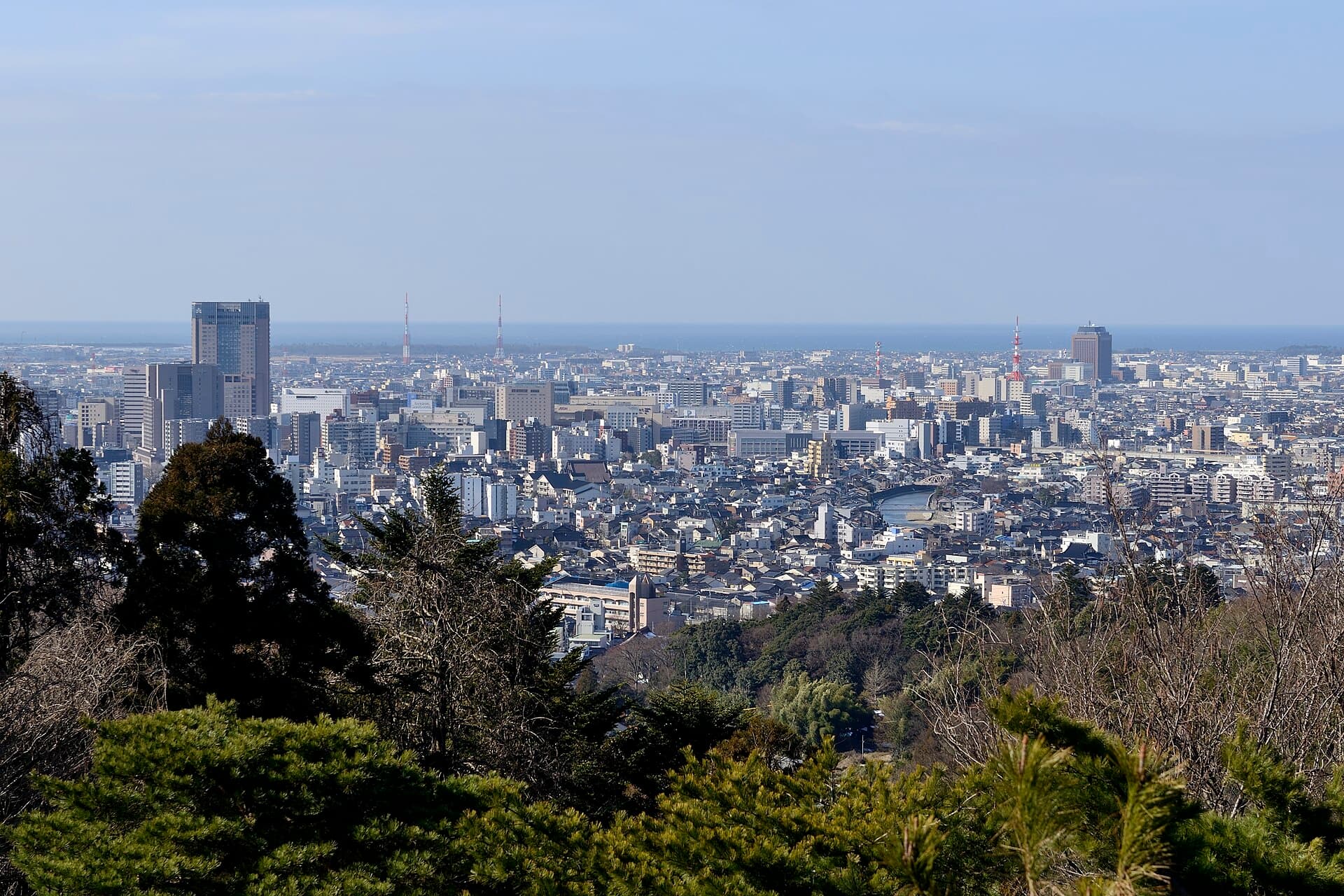 金沢市 / CC BY 2.1 jp, via Wikimedia Commons
Self-guided audio walking tour of Kanazawa — GPS route, offline playback, story-driven narration in 32 languages.
“Where Edo-period elegance converges with contemporary artistry and enduring golden customs.”
Not the postcards. The stories even locals don't know — whispered in your ear, right where they happened.
This seemingly ordinary temple conceals an astonishing array of defensive mechanisms.
One of Japan's 'Three Great Gardens' features an element predating any other of its kind in the nation.
The city's golden luminescence possesses a history forged in quiet defiance.
Discover every secret of Kanazawa
Every address, every reveal in full — in your ear, right where it happened.
You pick your stops. You walk. The voice reveals what the others miss.


Your self-guided audio tour of Kanazawa is ready — pick your landmarks, choose your language, and start the moment you arrive.
BuyLume has a built-in augmented-reality guide. Hold your phone up and its camera shows the street ahead of you, with a glowing arrow laid over the real view that always points to your next stop — no map to puzzle over, no wrong turns. Like everything in Lume, it works fully offline.
Kanazawa, the capital of Ishikawa Prefecture, rests on the Sea of Japan side of Honshu, presenting a distinctive fusion of historical preservation and modern artistic expression. Frequently referred to as 'Little Kyoto,' the city captivates with its meticulously maintained Edo-period districts, traditional gardens, and a flourishing contemporary art landscape. Unlike many Japanese cities, Kanazawa largely escaped the devastation of World War II, allowing its profound architectural heritage to endure.
Beyond its visual allure, Kanazawa functions as a center for traditional Japanese crafts, most notably its exquisite gold leaf production, which accounts for almost all of Japan's supply. The city's cultural depth is a direct inheritance from the formidable Maeda clan, who governed the Kaga domain for nearly three centuries and cultivated an environment where arts and culture prospered. This devotion to craftsmanship, coupled with a lively culinary scene, renders Kanazawa a compelling destination for those seeking an authentic and refined Japanese encounter.
The name 'Kanazawa' itself, signifying 'marsh of gold,' alludes to its storied past, originating from a local account of a peasant who discovered gold flakes while cleansing potatoes in a stream.
## The Ascent of a Castle Town Kanazawa's beginnings trace to the late 15th century as a fortified temple town, a stronghold for the Ikko-Ikki, a potent Buddhist sect. In 1580, Oda Nobunaga's forces vanquished the Ikko-Ikki, and by 1583, Maeda Toshiie, a prominent feudal lord, assumed command, establishing Kanazawa Castle and initiating the city's transformation into a thriving castle town.
## The Maeda Clan's Flourishing Era Under the Maeda clan's governance, the Kaga domain became one of Japan's most affluent and influential. Rather than solely concentrating on military might, the Maeda lords strategically invested in cultural and artistic development to demonstrate their allegiance and avert conflict with the Tokugawa Shogunate. This patronage drew skilled artisans, scholars, and merchants, leading to a population surge and the establishment of Kanazawa as a nexus for traditional crafts like gold leaf, lacquerware, and silk dyeing. By 1700, Kanazawa's population rivaled major European cities such as Rome and Amsterdam.
## Safeguarding the Past The Edo period (1603-1867) marked a time of relative tranquility and prosperity for Kanazawa, allowing its singular culture to deepen and its urban fabric to solidify. Crucially, Kanazawa was spared from significant conflicts and natural calamities for over 430 years, including the devastating bombardments of World War II. This fortunate history meant that many of its historic districts, such as the samurai residences of Nagamachi and the geisha teahouses of Higashi Chaya, have remained remarkably preserved, offering a tangible connection to its feudal past. In the modern era, Kanazawa continues to be recognized for its artistic heritage, earning a place in the UNESCO Creative Cities Network as a City of Crafts and Folk Art in 2009.
Begin your exploration at Kenrokuen Garden, celebrated as one of Japan's Three Great Gardens. Its expansive grounds showcase meticulously designed landscapes, seasonal flora, and the most ancient fountain in Japan. Adjacent to the garden is Kanazawa Castle Park, where you can explore the reconstructed castle structures and enjoy vistas of the city.
Journey back in time in the Nagamachi Samurai District, a beautifully preserved area with earthen walls and historic samurai residences. The Nomura Samurai House offers a glimpse into the daily life of a high-ranking samurai. For a different historical perspective, visit the Higashi Chaya District, one of Kanazawa's traditional geisha districts, distinguished by its wooden teahouses. Here, you can immerse yourself in the atmosphere of a bygone era and discover specialty shops selling gold leaf creations.
For a taste of Kanazawa's culinary landscape, Omicho Market is a bustling public market with over 170 shops, renowned for its fresh seafood from the Sea of Japan. Finally, encounter contemporary art at the 21st Century Museum of Contemporary Art, Kanazawa, known for its innovative architecture and interactive exhibits.
Kanazawa presents distinct allure throughout its four seasons. Spring (March to May) is ideal for cherry blossoms, which typically bloom from late March to early April, transforming Kenrokuen Garden into a glorious sight. Autumn (September to November) brings vivid fall foliage, with peak colors around mid-November, and comfortable weather for leisurely walks. Summers (June to August) are warm and humid, with occasional heatwaves, but offer festivals and fresh seafood. Winters (December to February) are cold and damp with considerable snowfall, creating iconic snowy landscapes, particularly in Kenrokuen Garden with its unique yukitsuri (rope supports for tree branches).
Kanazawa is a compact city, with most major attractions situated within a two-kilometer radius of Kanazawa Castle Park, making it easily walkable for many visitors. The city is well-served by a comprehensive bus network. The Kanazawa Loop Bus is particularly convenient for tourists, connecting Kanazawa Station with key sights in both clockwise and counter-clockwise directions. A 1-day bus pass is available for unlimited rides on the loop buses and most local buses in central Kanazawa. Regular city bus fares are 220 yen per ride.
Taxis are readily available and can be an economical choice for groups or during inclement weather due to short travel distances. Ride-hailing services like Uber and GO Taxi are also operational. Kanazawa Station, a significant attraction in itself with its impressive Tsuzumi-mon Gate, serves as the primary transportation hub. The Hokuriku Shinkansen high-speed rail connects Kanazawa to Tokyo in approximately 2.5 hours. For travel to nearby Shirakawa-go, highway buses are available, with mandatory seat reservations.
Kanazawa in Korean, in Chinese or in Hebrew — and 29 more languages, every stop narrated by a native voice. The widest language range of any self-guided audio tour.
Available in: